

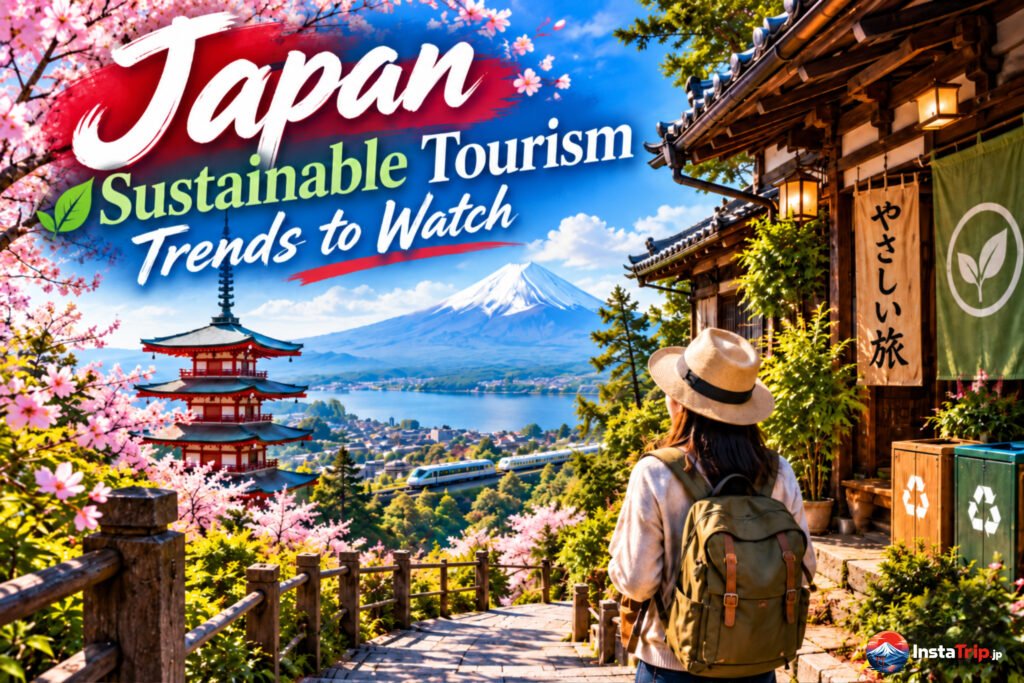
A quiet morning in a temple town, a regional train rolling past rice fields, a family-run inn serving vegetables from nearby farms: these experiences sit at the heart of Japan sustainable tourism trends. The change is not about making a journey feel smaller or less exciting. It is about making it richer – with more time for place, more benefit for local communities, and more care for landscapes and living traditions.
Japan’s most famous sights remain magnificent. Kyoto’s historic lanes, Tokyo’s electric neighborhoods, Mount Fuji’s striking silhouette, and the winter beauty of Hokkaido deserve their enduring appeal. Yet as international travel grows, travelers are asking a more thoughtful question: how can a visit support the Japan they came to experience rather than place pressure on it?
Japan Sustainable Tourism Trends Are Becoming More Local
One of the most meaningful shifts is the move beyond a short circuit of major cities. Tokyo, Kyoto, and Osaka can still form a captivating first journey, but regional destinations are gaining attention for reasons that go beyond avoiding crowds. They offer a closer encounter with local craft, food, history, and daily rhythm.
In Hokuriku, Kanazawa invites visitors into the refined world of gold leaf, gardens, samurai-era districts, and seafood shaped by the Sea of Japan. In Tottori, vast dunes meet coastal scenery and a quieter pace. In Shikoku and Kyushu, pilgrimage paths, hot springs, mountain villages, and dynamic regional cities reveal landscapes that cannot be understood from a station platform alone.

This does not mean every traveler should skip the classics. For a first-time visitor, Tokyo and Kyoto can be unforgettable introductions to Japan’s contrasts. The more sustainable choice may simply be to add two nights in a smaller city, take a local rail line, or stay long enough to eat at neighborhood restaurants rather than rushing through a checklist.
Spreading travel across the country can help distribute visitor spending, but it also requires humility. Smaller destinations may have fewer English-language services, less frequent transportation, and limited accommodation. That is not a flaw to overcome. It is a reason to plan patiently, learn a few useful Japanese phrases, and allow the destination to set the pace.
Longer Stays, Fewer Check-Ins
Fast itineraries once treated Japan as a collection of must-see photographs: morning in Nara, afternoon in Osaka, late-night return to Kyoto. A more considered travel style favors depth. Staying three nights in one neighborhood can reveal its changing moods – the first train, the school commute, the late-afternoon bakery, the glow of a lantern outside a small bar.
Longer stays reduce the constant churn of luggage, transfers, and rushed decisions. They also make it easier to choose locally owned accommodations, return to the same café, and understand the etiquette of a place. In a ryokan, for example, the experience is not only the tatami room or carefully arranged meal. It is the rhythm of hospitality, the seasonal ingredients, and the often intergenerational work behind it.

Timing Has Become Part of Responsible Travel
Japan’s spring cherry blossoms and autumn foliage are genuinely spectacular, but their popularity concentrates enormous demand into a few weeks. A sustainable itinerary increasingly means considering the seasons beyond the postcard peak.
Early summer brings luminous hydrangeas, fresh green maples, and festivals in many regions. Winter can be especially rewarding for hot spring towns, snow landscapes, museums, and urban food culture. Even in Kyoto, visiting temples early in the morning or exploring less central neighborhoods later in the day can create a calmer experience for both residents and guests.
Seasonal travel also connects visitors to the Japanese appreciation of transience. Sakura are moving partly because they do not last. The same sensitivity shapes the first autumn colors, the scent of plum blossoms, and summer evenings marked by cicadas. Respecting seasonal limits means accepting that the most meaningful moment may not be the busiest one.
Low-Impact Transport Is More Than a Train Ride
Japan’s rail network makes lower-impact travel unusually practical, particularly between major cities. The shinkansen is efficient and memorable, but local trains, buses, ferries, cycling routes, and walking paths often create the deeper connection. Traveling slowly through the Setouchi area, around Lake Biwa, or between small stations in rural prefectures turns the journey itself into part of the discovery.
Still, transportation choices depend on the route. A rental car can be useful in remote Hokkaido, Okinawa, or mountain regions where public transportation is limited. The more thoughtful approach is not strict purity. It is choosing the least disruptive option that allows access without treating roads, villages, and natural areas as a private playground.
When walking in historic districts, keep streets passable, avoid stopping in doorways, and follow signs around private property. When cycling, park only where permitted. On hiking trails, stay on the path and carry out what you carry in. These habits are modest, but they protect the atmosphere that makes a destination worth visiting.
Nature Travel With Real Boundaries
Japan’s forests, coasts, volcanoes, and alpine routes are increasingly central to travel planning. Yakushima’s ancient cedar forests, the dramatic trails around Kamikochi, and Okinawa’s blue coastal waters invite awe, but they are not backdrops without limits.
Choose operators and lodging that explain local rules clearly, especially in protected areas. Observe trail closures, weather warnings, and restrictions designed to safeguard wildlife or fragile terrain. Avoid collecting shells, plants, stones, or other natural materials as souvenirs. A photograph and a memory are lighter things to carry home.
The same care applies to onsens and beaches. Bathing etiquette in hot springs is part of respecting a shared space, while coastal travelers should be mindful of reef protection, waste, and marine conditions. Sustainable travel is often less about grand gestures than about recognizing that someone else lives, works, worships, or cares for the place being visited.
Culture Is Not a Consumable
The strongest sustainable tourism experiences create a fair exchange between visitor curiosity and local knowledge. Joining a workshop in indigo dyeing, pottery, washi paper, tea culture, or regional cooking can support skilled practitioners while giving travelers a more lasting understanding of the craft.
But cultural participation asks for more than booking an activity. Learn whether photography is welcome. Listen when a host explains a custom. At shrines and temples, observe posted guidance and remember that these are active spiritual spaces, not sets for social media. Dress and behave with consideration, especially during ceremonies, festivals, or memorial sites.
Shopping can also become more meaningful when it favors objects with a known maker, local food specialties, or traditional techniques over inexpensive souvenirs that could come from anywhere. A hand-thrown cup from a pottery town or a small textile from a regional workshop carries a story, but only if travelers value the labor and tradition behind it.
The Hotel Choice Matters More Than Travelers Think
Accommodation is one of the clearest ways to shape where travel money goes. A family-run minshuku, a historic machiya stay managed with community awareness, or a small hotel that sources food locally can connect a guest to the destination’s economy and character.
There are trade-offs. Smaller properties may not have 24-hour desks, extensive amenities, elevators, or the same consistency as international chains. In return, they may offer personal recommendations, regional breakfasts, and an intimate sense of place. Read house rules before booking, arrive when expected, and communicate dietary needs or accessibility requirements early.
Large hotels also have a role, particularly for travelers who need reliable accessibility features, convenient transit access, or specific services. Sustainability is not a contest to find the most picturesque accommodation. It is a series of practical decisions that respect both your needs and the destination’s capacity.
Japan Sustainable Tourism Trends: Policy and Practical Evidence
The Japan Tourism Agency’s JSTS-D framework gives local governments and destination-management organizations indicators for managing tourism. It draws on international destination criteria and considers both residents and visitors. It is a management framework, not a guarantee that every business in a participating area has been independently certified.
JNTO’s destination guide distinguishes destination awards, recognition programs and sustainability standards. Read what each designation actually assesses. A good-practice story, a village award and a certification are different forms of recognition.
A Practical Responsible-Travel Checklist
| Decision | Useful action | Question to ask |
|---|---|---|
| Itinerary | Reduce repeated long transfers and leave time in each base. | Can I combine nearby visits instead of crossing the country again? |
| Lodging | Look for specific measures and named suppliers. | What does the property actually do about waste, energy and local purchasing? |
| Activities | Book guides or workshops that explain local rules. | How are residents, makers and protected areas considered? |
| Transport | Compare workable rail, bus, walking and shared options. | Does this route need a car, or is there a reliable alternative? |
| Purchases | Buy useful items with known provenance. | Who made this, and will I use it after the trip? |
Choosing a quieter destination alone does not establish a lower environmental impact. Distance, transport, accommodation and activities all affect the trip. Likewise, a reusable item helps most when it replaces disposables over repeated use, rather than becoming another unnecessary purchase.
Watch: Sustainable Tourism Initiatives in Japan
This official film from the Prime Minister’s Office of Japan shows practical tourism initiatives, from exploring beyond crowded destinations to traveling with less luggage. Check local access rules and operator information when planning your trip.
Reuse What You Already Have
Bring your existing bottle and shopping bag if suitable. If you need replacements, choose durable items you expect to use regularly and confirm where drinking-water refills are available.
Useful travel items (paid links): Reusable water bottles · Foldable shopping bags.
Useful Japanese and Further Planning
もったいない (mottainai) expresses regret at waste; 里山 (satoyama) refers to landscapes shaped by relationships between communities and their surrounding nature. These ideas offer context, but a cultural term alone is not evidence of a business’s environmental performance.
Plan a slower stay with our Naoshima guide, or use our bathhouse etiquette guide to respect shared local spaces.
Sustainable Tourism in Japan: FAQ
Should I avoid Tokyo and Kyoto?
No. Choose realistic dates, respect residents and spread your visits where practical. Replacing a city with a remote stop does not automatically reduce your impact.
Does a small hotel always have a smaller footprint?
No. Ownership, building performance, operations and your access needs matter. Look for concrete measures rather than size alone.
What does JSTS-D mean for a visitor?
It is a destination-management standard. It can inform your research, but it is not a universal consumer certification for all hotels or tours in a destination.
Can I travel responsibly on a budget?
Yes. Respecting access rules, avoiding unnecessary transfers, reducing waste and making thoughtful local purchases do not require a luxury itinerary.
A More Thoughtful Japan Journey
The most promising trend is not a new attraction or a fashionable label. It is a change in attention. Travelers are beginning to measure a successful Japan trip not only by how much they saw, but by what they understood: why a local festival matters, how a town’s craft developed, why a mountain path has rules, and how a neighborhood feels after the day-trippers leave.
Before adding another stop, ask what an extra day might reveal. It may lead you to a morning market, a conversation with an innkeeper, a small museum, or simply the rare pleasure of watching ordinary life unfold in an extraordinary country.