
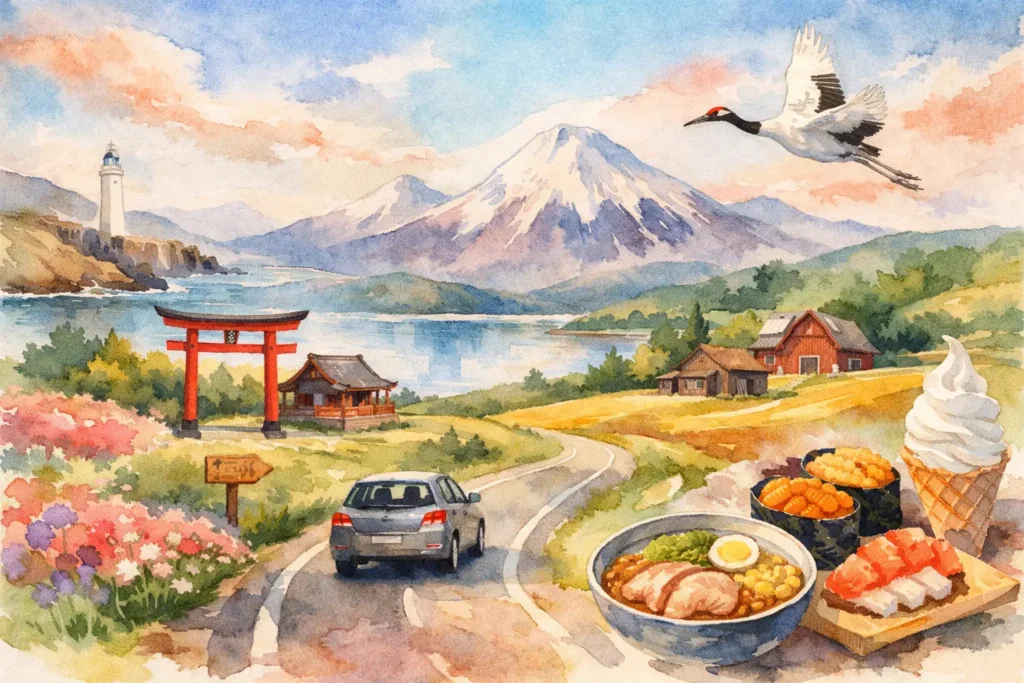
A Hokkaido road trip can take you from Sapporo’s lively ramen alleys to flower fields glowing beneath vast skies, volcanic calderas steaming in the distance, and fishing towns where the day’s catch still shapes dinner. Knowing how to plan a Hokkaido roadtrip is less about filling every hour than matching your route to the island’s immense scale, dramatic seasons, and quietly captivating local rhythms.
Hokkaido is Japan’s northern frontier, a place where driving offers a freedom that rail travel cannot always provide. Yet that freedom comes with real choices: whether to chase lavender in summer, powder snow in winter, or autumn color along the eastern lakes; whether to linger in one region or attempt a broad cross-island loop. Start with a route that leaves room to stop when the landscape asks you to.
1. Choose the Season Before You Choose the Route
Hokkaido changes character more dramatically than almost anywhere else in Japan. The best itinerary is therefore seasonal first, geographical second.

Summer, from June through August, is the easiest season for a first driving trip. Roads are clear, daylight lasts long into the evening, and central Hokkaido’s farms and flower landscapes are at their most colorful. Furano and Biei become especially alluring in July, when lavender, rolling fields, and patchwork hills create some of the island’s most recognizable scenes. Summer also makes the remote east, including Shiretoko and the Akan-Mashu region, much more accessible.
Autumn generally arrives earlier than many travelers expect. By late September and October, mountain areas and national parks can be painted in vivid red, gold, and amber. This is an excellent time for hot springs, hiking, and quieter roads, although weather can shift quickly.
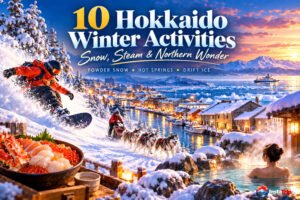
Winter is magnificent but should be planned with humility. Sapporo’s Snow Festival, Niseko’s ski slopes, Otaru’s snow-covered canal, and drift ice near Abashiri create an unforgettable atmosphere. But icy roads, whiteout conditions, and shorter days make winter driving suitable for confident drivers with a flexible schedule. If your main goal is skiing or urban winter scenery, it may be wiser to base yourself in a few places rather than drive long distances every day.
Spring arrives late, particularly in eastern and northern Hokkaido. Cherry blossoms often appear from late April into May, while cooler temperatures and fewer crowds make it a refreshing time for a leisurely western or central route.
2. Build Your Hokkaido Road Trip Around One Region
Hokkaido looks manageable on a map, but its distances are substantial. A drive from Sapporo to Shiretoko can take most of a day before allowing for rest stops, meals, weather, or scenic detours. Trying to see the entire island in five or six days often turns an inspiring journey into a sequence of highway exits.
For a first visit, a seven- to nine-day central and western route is a rewarding choice. Begin in Sapporo, then travel through Otaru, Niseko, Lake Toya, Noboribetsu, Furano, Biei, and Asahikawa before returning to Sapporo. This route combines dynamic city life, historic port atmosphere, mountain scenery, onsens, and Hokkaido’s celebrated food culture without punishing daily drives.
With 10 to 14 days, consider adding eastern Hokkaido. Lake Akan, Lake Mashu, the Kushiro wetlands, Abashiri, and Shiretoko reveal a wilder side of Japan, shaped by volcanic landscapes, forests, wetlands, and the Okhotsk coast. It is a remarkable extension, but give it time. The pleasure lies in its spaciousness.
A practical rhythm is to drive no more than two to four hours on most days. That may sound conservative, but Hokkaido rewards unplanned pauses: a roadside farm stand selling sweet corn, a small bakery in a rural town, a viewpoint above a caldera lake, or an onsen town best experienced after sunset.
3. Reserve the Right Car and Prepare to Drive in Japan
Most travelers rent a car at New Chitose Airport, which serves Sapporo and has a broad selection of rental counters. Picking up there can be simpler than navigating central Sapporo immediately, especially after a long flight. If you want time to enjoy the city first, spend one or two nights in Sapporo and collect the car when you leave.
Compact cars are adequate for couples traveling in warmer months, but choose a larger vehicle if you have substantial luggage, photography equipment, ski gear, or a family. For winter, confirm that the rental includes proper winter tires. Four-wheel drive can add reassurance, though it is not a substitute for slow, careful driving.
Japan drives on the left, and speed limits can feel modest compared with the wide, open roads. Follow posted signs, watch for pedestrians and cyclists in town, and do not assume a seemingly empty rural road is a place to hurry. Wildlife is another consideration, especially deer in more rural areas. Dusk and early morning require extra attention.
Drivers from the United States generally need a valid passport, home driver’s license, and an International Driving Permit issued under the 1949 Geneva Convention. Requirements vary by nationality, and some travelers need an official Japanese translation instead, so verify the rules that apply to your license before departure. Reserve an English-language GPS or navigation option and consider an ETC card for toll roads if your itinerary includes expressways.
Know the winter trade-off
Winter roads are not inherently impossible, but conditions can change fast. Snow can narrow lanes, obscure markings, and reduce visibility with little warning. If you are inexperienced on snow and ice, a winter itinerary focused on trains, airport transfers, and local shuttles may let you enjoy Hokkaido’s snowy beauty with far less stress.
4. Use Cities as Gateways, Not Just Overnight Stops
Sapporo is more than an arrival point. Its broad avenues, beer heritage, ramen culture, and energetic nightlife offer a vivid introduction to Hokkaido’s modern identity. Stay long enough to visit the Historic Village of Hokkaido or wander the evening food scene, where miso ramen and grilled jingisukan lamb reflect the region’s hearty culinary traditions.
Otaru, less than an hour from Sapporo, brings a different mood. Its canal and stone warehouses recall the city’s role as a prosperous trading port, while its glass workshops, music boxes, and sushi counters create an intimate, nostalgic atmosphere. It works well as a day trip, though an overnight stay lets you experience the canal after the daytime crowds have faded.
Asahikawa is another useful base rather than a mere transit point. The city provides access to Furano, Biei, and Daisetsuzan National Park, while its ramen scene is a local point of pride. Treating these cities as gateways gives your route cultural texture and reduces the temptation to change hotels every night.
5. Plan Scenic Stops, but Leave Space Between Them
Some Hokkaido places are famous because they are genuinely beautiful, and there is no need to avoid them. Biei’s Blue Pond, Furano’s flower farms, Lake Toya’s volcanic views, and Noboribetsu’s steaming Jigokudani, or Hell Valley, all deserve their reputation. The key is timing and pacing.
Visit popular sites early in the morning or toward evening, then balance them with less scheduled time. Drive a rural road through Biei without trying to photograph every hillside. Stop at a michi-no-eki, Japan’s roadside stations, for regional snacks, local produce, restrooms, and travel information. These stops are often small introductions to the agricultural character that defines much of Hokkaido.
National parks require the same respectful approach. Stay on marked trails, follow seasonal access notices, and remember that volcanic terrain and wildlife habitats are living environments, not just photo backdrops. In Shiretoko especially, rules around bears and trail access exist to protect both visitors and the ecosystem.
6. Let Food and Hot Springs Shape the Itinerary
A road trip in Hokkaido is one of Japan’s great food journeys. The island’s cooler climate and rich agricultural land are central to its identity, from dairy products and potatoes to sweet corn, melons, seafood, and high-quality beef. Rather than reserving every meal in advance, leave room for restaurants and markets you discover along the way.
In coastal towns, seek out seafood bowls, grilled scallops, crab when in season, and sushi. In central Hokkaido, farm cafes and ice cream stands turn local milk into a destination of its own. Sapporo is ideal for ramen and jingisukan, while Asahikawa’s soy sauce-based ramen has its own devoted following.
Hot springs provide a natural counterpoint to hours on the road. Noboribetsu is one of Hokkaido’s best-known onsen areas, with mineral-rich water and volcanic scenery, while Lake Toya and smaller rural resorts offer gentler, more secluded stays. An overnight ryokan with dinner and breakfast may cost more than a business hotel, but it can become the most restorative and culturally resonant night of the trip.
7. Book Flexibility Into Your Final Plan
Reserve cars and major accommodations early for July, August, peak foliage periods, ski season, and festival dates. This matters especially for popular onsen towns, Niseko, Furano, and Shiretoko, where choices can narrow quickly. Outside peak periods, you may have more freedom, but remote areas still offer limited lodging.
Build a route with one or two unscheduled blocks rather than treating every day as fixed. Rain may make a lake view disappear, while clear weather may invite an extra hike. A favorite roadside café may become a reason to slow down. Download offline maps, keep some cash for smaller businesses, and check road and weather conditions each morning in winter or during heavy rain.
The most memorable Hokkaido drives rarely come from checking off the maximum number of landmarks. They come from making time for the island’s spacious, elemental beauty: a field stretching to the mountains, steam rising through cold air, a quiet harbor at dawn, and the satisfying sense that Japan has opened into a wider, wilder horizon.
![[商品価格に関しましては、リンクが作成された時点と現時点で情報が変更されている場合がございます。]](https://hbb.afl.rakuten.co.jp/hgb/574e7357.8406d734.574e7358.eab5b197/?me_id=1409486&item_id=10000091&pc=https%3A%2F%2Fthumbnail.image.rakuten.co.jp%2F%400_mall%2Ff010006-hokkai%2Fcabinet%2Ff6s-0001-0199%2Fr_f6s_145_1.jpg%3F_ex%3D128x128&s=128x128&t=picttext "[商品価格に関しましては、リンクが作成された時点と現時点で情報が変更されている場合がございます。]")