

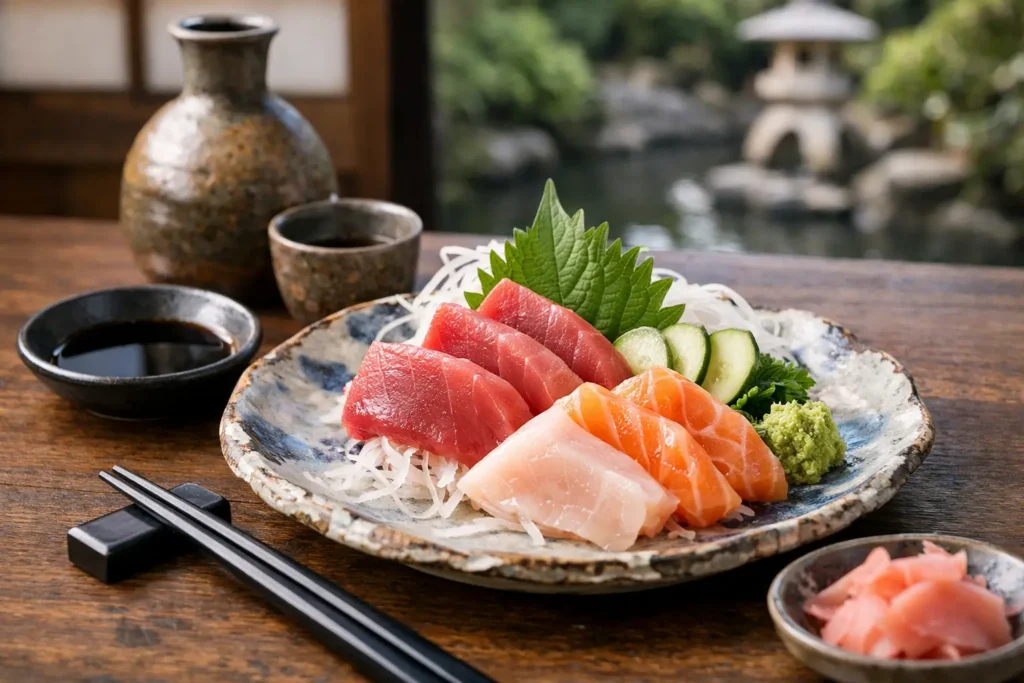
At a skilled Japanese counter, sashimi (刺身) arrives with remarkable restraint: a few gleaming slices of fish, perhaps a curl of daikon radish, a green shiso leaf, and freshly grated wasabi. Yet this spare presentation contains an entire culinary philosophy. The quality of the catch, the timing of the season, the temperature of the fish, and the chef’s knife work all have a voice on the plate.
For travelers, sashimi is one of the most immediate ways to experience Japan’s deep relationship with the sea. It can be celebratory and refined at a Kyoto kappo restaurant, energetic beside a Tokyo market, or relaxed over drinks at a neighborhood izakaya. More than “raw fish,” it is a captivating expression of seasonality, precision, and attention to natural flavor.
What Sashimi Really Means
Sashimi refers to carefully prepared slices of raw seafood, most often fish, served without rice. The word is commonly written with the characters 刺身, and while its exact history has several explanations, the dish itself has long been connected to Japan’s coastal food culture and highly developed traditions of fish preparation.
The distinction between sashimi and sushi matters. Sushi is defined by seasoned vinegared rice, called shari, which may be paired with raw fish, cooked seafood, vegetables, or egg. Sashimi has no rice beneath it. That difference directs attention toward texture, aroma, fat content, and the subtle sweetness of the seafood itself.

Sashimi is not limited to tuna and salmon, though those are familiar favorites. Depending on the restaurant, the time of year, and the region, a platter may include pearly tai, or sea bream; delicate hirame, or flounder; firm, clean-tasting aji, or horse mackerel; tender scallop; sweet shrimp; octopus; squid; sea urchin; or glistening ikura salmon roe. Some seafood is served raw, while items such as octopus may be gently cooked before slicing and still appear in a sashimi selection.
Sashimi (刺身) Begins Long Before the Plate
The magnificence of sashimi lies partly in what the diner does not see. A chef must understand how each species changes after it is caught, how to preserve it, and when it has reached its best condition. Freshness is essential, but it is not the only measure of quality. Certain fish develop deeper umami after controlled aging, a practice known as jukusei.
This is why a fish caught that morning is not automatically the finest possible sashimi. Some lean white fish can gain complexity after resting under careful refrigeration, while richly marbled tuna may be served at a temperature that lets its fat soften on the tongue. The best moment depends on the species and the chef’s judgment.

Season Shapes the Experience
Japan’s food calendar is closely tied to the changing seasons, and sashimi makes that connection vivid. In colder months, fatty fish can become especially luxurious. Winter yellowtail, known as buri, is prized for its rich texture, while seasonal crab and sweet shrimp bring a different kind of sweetness to the table.
Spring often highlights sea bream and small, silver-skinned fish. Summer can bring aji, bonito, and conger eel, while autumn is closely associated with the bold flavor of sanma, or Pacific saury. Availability varies by region and by year, so a restaurant’s recommendations are often more valuable than arriving with a fixed list of what to order.
A seasonal assortment, often called omakase when left to the chef’s choice, can be an inviting option for first-time diners. It offers a progression of flavors that might begin with mild white fish, move toward richer tuna, and finish with an ingredient whose texture is the main attraction, such as uni or squid.
The Knife Is Part of the Flavor
The cut of sashimi is never incidental. A chef may slice fish straight across, at an angle, or in fine, delicate strips. The direction of the cut can soften fibrous flesh, create a more tender bite, or highlight a particular texture. Even the thickness changes the experience: a lean fish may be cut slightly thicker to give it presence, while fatty tuna may be thinner so it melts more elegantly.
Different sashimi styles reflect this attention. Hira-zukuri is a familiar rectangular slice, often used for firm fish. Usu-zukuri presents white fish in nearly translucent slices, arranged like petals across a broad plate. Ito-zukuri uses exceptionally fine threads, a technique that can make squid feel light and almost silky.
The garnish also has a purpose beyond appearance. Daikon radish refreshes the palate, shiso adds a clean herbal note, and citrus may brighten a fish with pronounced richness. These details turn a simple plate into a balanced, sensory experience.
How to Eat Sashimi With Confidence
There is no need to be anxious about formal rules, especially in a casual restaurant. Still, a few habits show appreciation for the chef’s work and help preserve each ingredient’s flavor.
Use chopsticks to pick up one piece at a time. If soy sauce is served, dip the fish lightly rather than soaking it. Too much soy sauce can conceal the sweetness and character that made the ingredient worth serving in the first place. In many settings, the chef may season the sashimi already, perhaps with a brush of soy sauce, salt, citrus, or a small touch of wasabi. When that happens, taste it before adding anything else.
Wasabi is meant to complement fish, not overpower it. Rather than stirring it into the soy sauce, place a small amount directly on the fish if the chef has not done so. Freshly grated wasabi has a vivid aroma and a quick, clean heat that differs dramatically from the harsher paste many diners know outside Japan.
Pickled ginger, or gari, is more closely associated with sushi, but it may appear alongside sashimi as well. Think of it as a palate cleanser between different fish, not a topping for every bite. A sip of green tea, a crisp Japanese beer, or sake chosen with the meal can also refresh the palate, though water works just as well when the focus is on subtle flavors.
Where to Experience Sashimi in Japan
Japan offers sashimi in settings for nearly every budget and travel style. At an izakaya, it is often ordered as a shared plate alongside grilled dishes, vegetables, and drinks. The mood is lively, social, and ideal for sampling several varieties without the formality of a multi-course meal.
A sushi counter offers a more focused encounter. Here, the chef may explain the day’s catch, the source of a particular fish, or why one piece is served with salt instead of soy sauce. Reservations can be worthwhile for sought-after counters, particularly in Tokyo, Kyoto, and Osaka, but small local shops can be just as memorable.
For a more market-driven experience, coastal cities and fishing towns offer exceptional opportunities to try regional seafood close to its source. Hokkaido is celebrated for scallops, sea urchin, salmon roe, and crab. Kanazawa’s proximity to the Sea of Japan brings seasonal treasures such as sweet shrimp and nodoguro, a prized blackthroat seaperch. In Kyushu, diners may encounter vibrant local preparations of mackerel, squid, and other seafood shaped by nearby waters.
The most rewarding choice is often not the most famous fish. Ask what is best that day, and be open to an unfamiliar name. A modest local catch, handled with care and served at its seasonal peak, can become one of the most unforgettable meals of a Japan journey.
A Thoughtful Approach to Raw Seafood
Reputable restaurants in Japan handle seafood with strict attention to sourcing, storage, and preparation. Even so, raw seafood is not right for every traveler. Those who are pregnant, immunocompromised, have seafood allergies, or have been advised to avoid raw foods should choose cooked dishes and speak with restaurant staff when needed.
It is also wise to select busy, well-regarded establishments, especially when ordering raw shellfish or less familiar items. This is not about chasing a vague label such as “sushi-grade,” which is not a universal official standard. It is about trusting restaurants where careful handling, knowledgeable staff, and a strong daily rhythm of service are visible.
Sashimi invites a slower kind of travel attention. Pause before the first bite, notice the sheen of the fish and the fragrance of shiso, then let a single slice reveal its texture and quiet depth. In that small, precise moment, Japan’s sea, seasons, and culinary artistry feel wonderfully close.
![[商品価格に関しましては、リンクが作成された時点と現時点で情報が変更されている場合がございます。]](https://hbb.afl.rakuten.co.jp/hgb/574e7449.ecc51887.574e744a.47daaa92/?me_id=1355206&item_id=10000016&pc=https%3A%2F%2Fthumbnail.image.rakuten.co.jp%2F%400_mall%2Fmizutanisuisan%2Fcabinet%2Fitem01%2Fimgrc0103155375.jpg%3F_ex%3D128x128&s=128x128&t=picttext "[商品価格に関しましては、リンクが作成された時点と現時点で情報が変更されている場合がございます。]")