
Roppongi changes character after sunset. The neighborhood’s glass towers catch the last copper light, museum façades glow against the sky, and its streets fill with diners, artists, office workers, travelers, and night owls moving between intimate bars and high-energy venues. This Roppongi nightlife guide looks beyond the district’s famous late hours to reveal a more layered experience: contemporary Tokyo culture, refined drinks, live music, late-night food, and the small courtesies that make an evening feel at home in Japan.
Roppongi has long been one of Tokyo’s most international neighborhoods, but it is not a single kind of night out. A polished cocktail lounge near Roppongi Hills can feel worlds apart from a tiny basement jazz bar or a casual izakaya tucked along a side street. The best approach is not to chase everything. Choose a mood, leave room for detours, and let the neighborhood unfold gradually.
Roppongi Nightlife Guide: Choose Your Evening
For an elegant beginning, arrive before the streets become crowded. The Roppongi Hills and Tokyo Midtown areas offer a cinematic introduction to the neighborhood, where architecture, public art, designer storefronts, and broad plazas create a distinctly contemporary atmosphere. If your visit coincides with an evening museum opening or special exhibition, beginning with art adds a memorable dimension to the night. Roppongi is one of the few Tokyo districts where major cultural institutions and nightlife sit so naturally side by side.

From there, settle into a bar with intention. Tokyo’s bartending culture is known for precision, but it is also wonderfully varied. Some venues focus on classic cocktails made with remarkable care, while others highlight Japanese whisky, craft gin, sake, or wine. A quieter bar is ideal for travelers who want to absorb the details: the ice cut by hand, the restrained design, the calm exchange between bartender and guest.
For a livelier evening, the streets around Roppongi Station bring more motion and choice. You will find casual pubs, music venues, dance floors, and late-opening restaurants within a short walk. The trade-off is simple: the closer you are to the busiest intersections, the more energetic and tourist-oriented the scene can become. Those looking for a more local, unhurried atmosphere often do better by walking a few blocks away from the main thoroughfares.
Start with food, not just drinks
A Japanese night out often begins around the table. An izakaya meal creates an easy, social rhythm before heading somewhere else, whether you order grilled skewers, seasonal sashimi, tofu dishes, or small plates designed for sharing. Roppongi’s dining landscape is exceptionally broad, so reservations can be useful for popular restaurants, especially on Friday and Saturday evenings.
Do not rush the meal. In Tokyo, a restaurant can be the main event rather than a stop before it. Ordering a drink, sharing several dishes, and lingering over conversation is a satisfying way to experience the city’s evening culture. If you prefer a quieter setting, look for a small counter restaurant or a sake-focused spot rather than a large, busy dining room.
Where Roppongi’s Energy Feels Most Distinctive
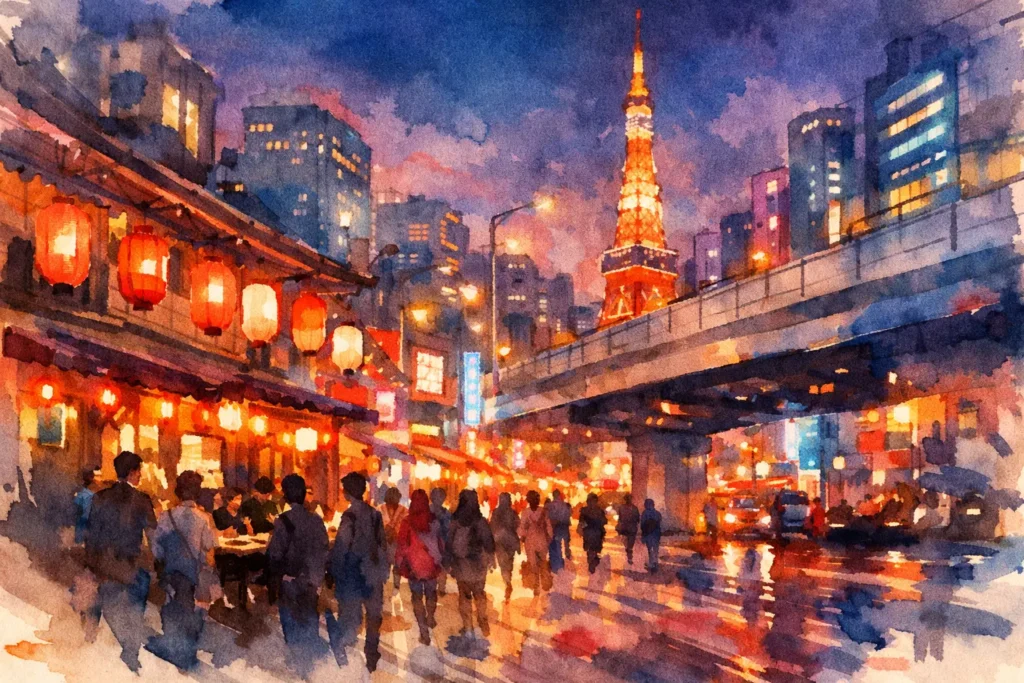
Roppongi’s appeal lies in contrast. It can be glossy and international one moment, then intimate and distinctly Tokyo the next. A short walk can take you from a dramatic tower complex to narrow streets where glowing signs, bicycle-lined sidewalks, and compact storefronts create a more spontaneous urban scene.
Cocktail bars and Japanese whisky
For many visitors, a well-made drink is the most rewarding part of a Roppongi evening. Japanese bartenders often bring an almost ceremonial attention to familiar classics, making even a simple highball feel considered. If whisky is your interest, ask about Japanese expressions as well as the bar’s wider selection. The best choice depends on whether you want a formal experience, a relaxed neighborhood bar, or a place where conversation with the bartender is part of the pleasure.
Keep expectations flexible. Some of Tokyo’s smaller bars have limited seating, may allow smoking, or operate with a cover charge. These are not necessarily inconveniences; they reflect the compact, independent character of the city’s bar culture. Checking the entrance for policies and asking politely before taking a seat will help avoid surprises.
Jazz, DJs, and live sound
Roppongi has an enduring relationship with music. Jazz clubs offer a more focused, atmospheric night, often with a cover charge and a listening-room sensibility. Arrive early enough to settle in before the performance begins, and treat the music as the center of the experience rather than background noise.
Elsewhere, DJ-led venues and dance clubs offer a more electric side of the district. These can be enjoyable for travelers who want a late night and a broad mix of people, but the experience varies widely by venue, event, and day of the week. Look for clear information about admission, dress expectations, and music style before committing. A room that is exciting for one traveler may feel too loud or crowded for another.
The quiet late-night ritual: ramen
After midnight, Roppongi becomes softer around the edges. The towers remain bright, but the pace shifts toward small groups searching for a final bowl of ramen, soba, curry, or a comforting rice dish. Late-night ramen is less about checking off a famous food and more about participating in a Tokyo ritual: warm broth, close seating, and the welcome pause between a long evening and the journey home.
If you have had drinks, keep the last stop simple. Order, eat, and give yourself time before leaving. It is a modest moment, but often one of the most memorable.
Etiquette That Makes the Night Better
Roppongi is friendly to international visitors, yet a little awareness goes a long way. Tokyo nightlife is generally orderly because people share a strong sense of space and consideration, even in busy places. Speak at a volume that fits the room, especially in small bars and restaurants. Avoid blocking entrances or narrow sidewalks while deciding where to go.
At a bar, it is polite to wait to be seated if the room is compact. In restaurants, group members often share dishes, and a brief “kanpai” before the first sip is a cheerful gesture. Tipping is not customary in Japan; attentive service is already part of the experience. Instead, a warm thank-you – arigato gozaimasu – is always appreciated.
Be cautious with unsolicited invitations on the street. The most comfortable choice is usually a venue you selected yourself, with transparent prices and a clear entrance. This is practical advice, not a reason for anxiety. Roppongi is easy to enjoy when you make deliberate choices and stay aware of your surroundings.
Plan Your Return Before the Last Train
Tokyo’s rail system is the easiest way to reach Roppongi and usually the smartest way to leave, but trains do not run all night. Check the last train for your route before your evening begins, particularly if you are staying outside central Tokyo. Missing it does not end the night, but it changes the plan: taxis can be expensive, and waiting until morning may be less appealing than it sounds.
The neighborhood is walkable, though Tokyo distances can become deceptive after a few hours out. Wear shoes that can handle stairs, station corridors, and an unplanned walk to your next stop. Carry a charged phone, your hotel address in Japanese if possible, and enough time to navigate without rushing.
Weeknights bring a more relaxed balance of after-work diners and bar regulars. Fridays and Saturdays are more vibrant, with longer lines and a stronger party atmosphere. Neither is better. It depends on whether you want a calm conversation over whisky, a museum-and-dinner evening, or the kinetic pleasure of Tokyo at full volume.
Roppongi rewards curiosity without demanding a fixed itinerary. Begin with art or dinner, follow the sound of live music or the glow of a bar you genuinely want to enter, and leave space for that final bowl of ramen. In a city of magnificent contrasts, this is where Tokyo’s contemporary energy stays awake long enough for you to feel part of it.
![[商品価格に関しましては、リンクが作成された時点と現時点で情報が変更されている場合がございます。]](https://hbb.afl.rakuten.co.jp/hgb/574e3107.38c21b6e.574e3108.03167e3d/?me_id=1402903&item_id=10000190&pc=https%3A%2F%2Fthumbnail.image.rakuten.co.jp%2F%400_mall%2Ff131067-taito%2Fcabinet%2Fhenrei%2Ftravel%2F8000-002-t03.jpg%3F_ex%3D128x128&s=128x128&t=picttext "[商品価格に関しましては、リンクが作成された時点と現時点で情報が変更されている場合がございます。]")