
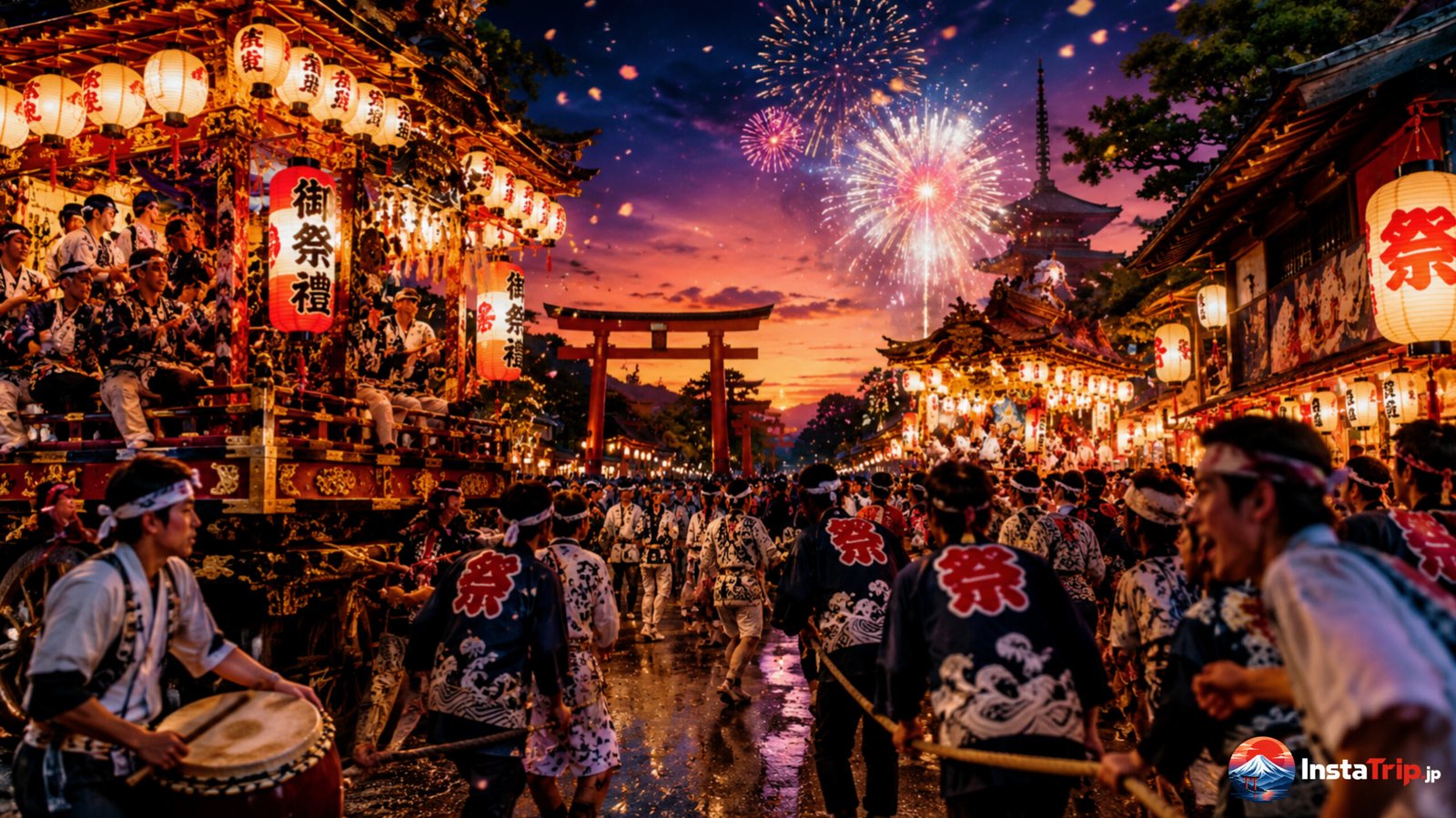
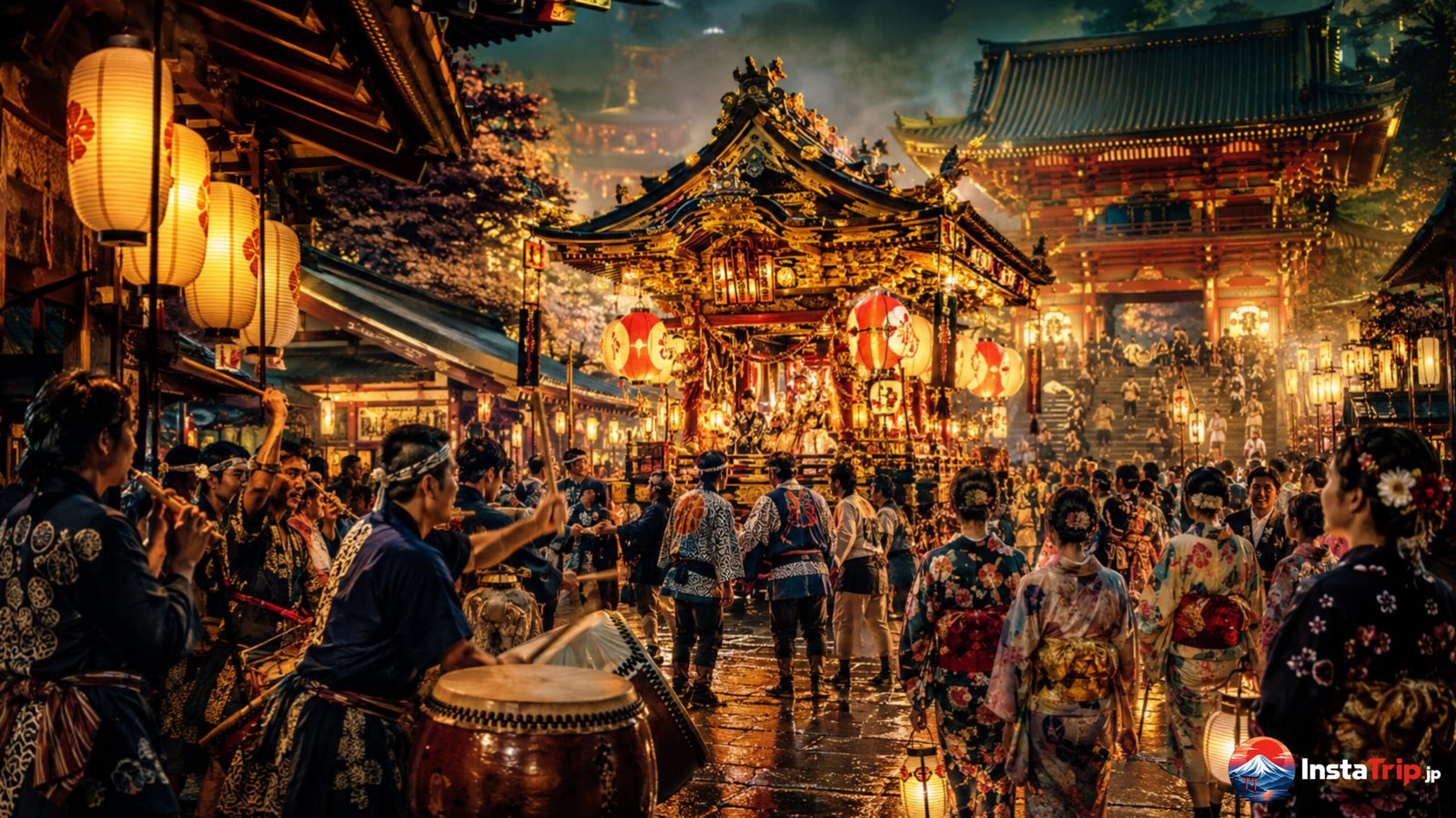
A street suddenly fills with the steady pulse of taiko drums. Paper lanterns glow above food stalls, the scent of grilled yakitori hangs in the evening air, and a portable shrine moves through the crowd on the shoulders of neighbors calling in rhythm. Japanese festivals, known as matsuri, are among the most vivid ways to encounter the country not as a collection of sights, but as a living culture shaped by season, place, faith, and community.
For travelers, a matsuri can be the unforgettable highlight of a Japan itinerary. Yet its greatest appeal lies beyond spectacle. Many festivals are connected to Shinto shrines or Buddhist temples, agricultural cycles, local history, and the shared work of the people who prepare for them all year. To stand along a lantern-lit street is to see tradition in motion – magnificent, noisy, joyful, and deeply local.
What Japanese Festivals Mean
Matsuri is often translated simply as “festival,” but the word carries a wider meaning. Traditionally, it refers to acts of reverence, offerings, and celebration connected to kami, the sacred presences honored in Shinto belief. A shrine festival may ask for protection from illness, give thanks for a harvest, welcome spring, or mark the changing of the seasons.

That spiritual foundation remains meaningful even when a festival feels like a vibrant neighborhood celebration. A mikoshi, or portable shrine, may be carried through local streets so that the shrine’s deity can symbolically visit and bless the community. Priests perform rituals, participants wear happi coats, and longtime residents take on roles passed through families and associations.
Not every matsuri follows the same pattern. Some are quiet and contemplative, centered on prayer, fire, flowers, or lanterns. Others are dynamic public events with vast parades, elaborate floats, dancers, musicians, and thousands of visitors. The variety is exactly the point: Japanese festivals reveal how individual regions express their own histories and identities.
Japanese Festivals Follow the Rhythm of the Year
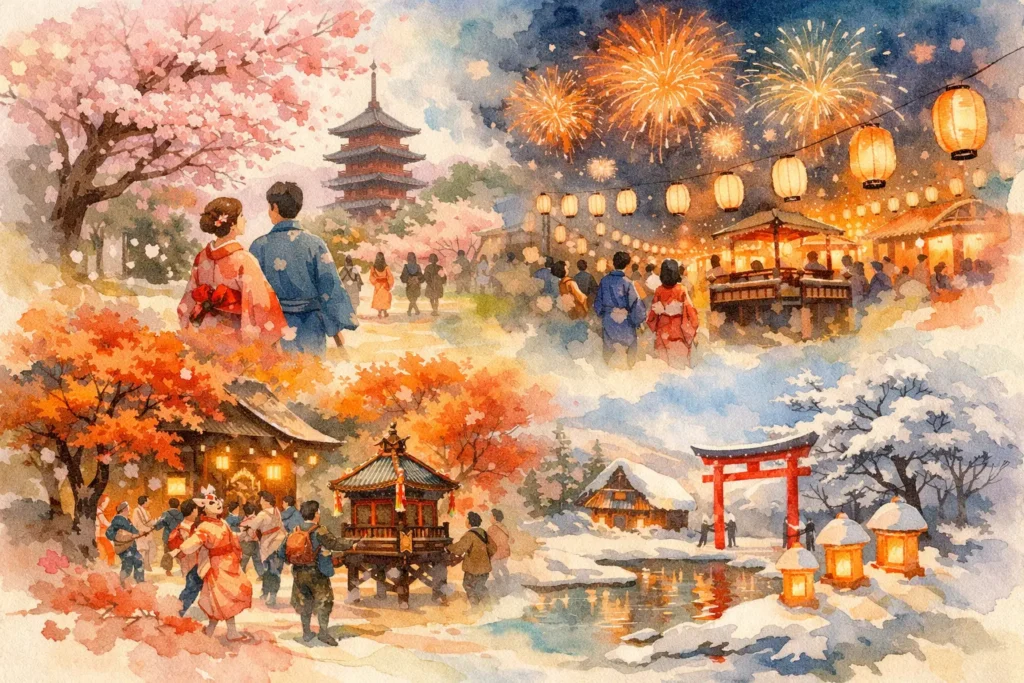
Japan’s seasonal awareness gives matsuri a special atmosphere. Cherry blossoms, humid summer nights, autumn harvests, and winter snow are not simply backdrops. They shape the reason a festival happens and the way it feels.

Spring: Renewal, Flowers, and Processions
Spring brings a sense of renewal after winter, and many communities celebrate with shrine rites, parades, and blossom-viewing gatherings. In Kyoto, the Aoi Matsuri in May recreates the refined pageantry of the Heian period, with participants dressed in courtly costume making their way between the Imperial Palace and the Kamo shrines. Its elegance offers a striking contrast to the more physical energy of summer festivals.
In Tokyo’s Asakusa, the Sanja Matsuri transforms the historic streets around Sensō-ji and Asakusa Shrine into a thrilling sea of movement each May. Teams carry mikoshi through the district with remarkable intensity, while spectators gather near old shopping streets, temple gates, and food stalls. It is a powerful example of how Tokyo’s ancient neighborhood life still thrives beside its modern metropolis.
Summer: Lantern Light and Electric Energy
For many visitors, summer is the classic matsuri season. Evenings become a celebration of sound and color: yukata cotton robes, goldfish-scooping games, shaved ice, festival drums, and lanterns swaying above packed streets. The heat can be demanding, especially in cities, but the atmosphere after sunset is captivating.
Kyoto’s Gion Matsuri, held throughout July, is one of Japan’s most renowned festivals. Its origins reach back more than a thousand years, when rituals were performed to appease deities believed to cause epidemics. Today, the festival is especially famous for its towering yamaboko floats, many decorated with exquisite textiles, carvings, and objects from Japan and beyond. The main processions are spectacular, but the evenings beforehand can feel just as memorable, when central streets fill with visitors viewing the floats up close.
In northeastern Japan, the Aomori Nebuta Matsuri brings a wholly different visual world. Huge illuminated floats depict warriors, mythical figures, and dramatic scenes with bold color and expression. Dancers known as haneto leap through the streets to rhythmic chants, creating a festival that feels almost theatrical in scale. It is a reminder that regional festivals can be as artistically distinctive as a museum collection, only alive with music and motion.
Autumn: Gratitude and Local Craft
Autumn festivals often carry connections to harvest and thanksgiving, although each community observes the season in its own way. As the air cools, festivals can feel more intimate, with illuminated floats, traditional performances, and local specialties taking center stage.
The Takayama Festival in Gifu Prefecture is celebrated in spring and autumn, and its autumn edition is admired for ornate yatai floats. Their detailed lacquerwork, metalwork, and carvings reflect the extraordinary skill of local craftspeople. Evening processions, when floats move through Takayama’s preserved streets under lantern light, create an atmosphere that is both timeless and remarkably close to the people watching.
Winter: Fire, Snow, and New Beginnings
Winter matsuri can be serene or exhilarating. In Sapporo, the Snow Festival turns the city into a temporary gallery of monumental snow and ice sculptures. It began with local students in the 1950s and has grown into an internationally recognized celebration of Hokkaido’s winter landscape.
Elsewhere, fire festivals and New Year observances offer a more spiritual side of the season. At temples and shrines, purification rites, prayers for the year ahead, and the first shrine visit of the year, called hatsumode, draw people into spaces lit by flame, candles, and winter night skies.
How to Experience a Matsuri Respectfully
The best approach is to arrive curious rather than expecting a performance designed solely for visitors. A festival may be welcoming and festive, but it can also include sacred moments, crowded processions, and neighborhood customs with rules that are not always obvious.
Start by observing the atmosphere. If people bow before entering a shrine area, keep voices low during a ritual, or step back when a procession passes, follow their lead. Photography is usually part of the experience, but avoid blocking participants, climbing barriers, using flash during ceremonies, or treating worshippers as scenery. Ask before taking close portraits, especially of children, performers at rest, or shrine staff.
Festival food is one of the pleasures of the evening, from savory okonomiyaki and karaage to sweet taiyaki and chilled kakigori. Bring cash, since smaller stalls may not accept cards, and carry a small bag for trash if bins are limited. Japan’s festival streets can be busy, but leaving the area clean is part of being a thoughtful guest.
Planning also matters. Major events can fill hotels and trains quickly, while smaller local matsuri may have limited English information or shifting schedules. Check dates carefully before building an itinerary, particularly for processions that occur only on one or two days. Rain plans, route changes, and safety restrictions are possible, so flexibility is useful.
Beyond the Famous Festivals
Japan’s best festival experience is not always the one with the largest crowd. A small shrine celebration in a coastal town, a neighborhood Bon Odori dance in Tokyo, or a local autumn parade may offer a closer view of communal life. You may see children practicing drums, elders arranging offerings, or shopkeepers greeting familiar faces from behind a stall.
Bon Odori, held during the Obon season in summer, is especially inviting for this reason. The dances commemorate ancestors, but they are also warm public gatherings where circles of dancers move around a raised yagura platform. In many places, visitors are welcome to join after watching the steps for a few minutes. The goal is not perfection. It is participation with care.
Japanese festivals make the calendar visible. They turn a neighborhood into a procession route, a street into a lantern-lit gathering place, and inherited rituals into something felt in the present tense. Whether you encounter an iconic Kyoto float, a Tokyo mikoshi, or a modest local dance under summer lights, let the occasion unfold at its own pace. That is where the most memorable Japan often appears.
![[商品価格に関しましては、リンクが作成された時点と現時点で情報が変更されている場合がございます。]](https://hbb.afl.rakuten.co.jp/hgb/574e7ec7.1edc65f6.574e7ec8.613934b3/?me_id=1409860&item_id=10000131&pc=https%3A%2F%2Fthumbnail.image.rakuten.co.jp%2F%400_mall%2Ff222054-atami%2Fcabinet%2F10275507%2F11547271%2Frtc005_01.jpg%3F_ex%3D128x128&s=128x128&t=picttext "[商品価格に関しましては、リンクが作成された時点と現時点で情報が変更されている場合がございます。]")