
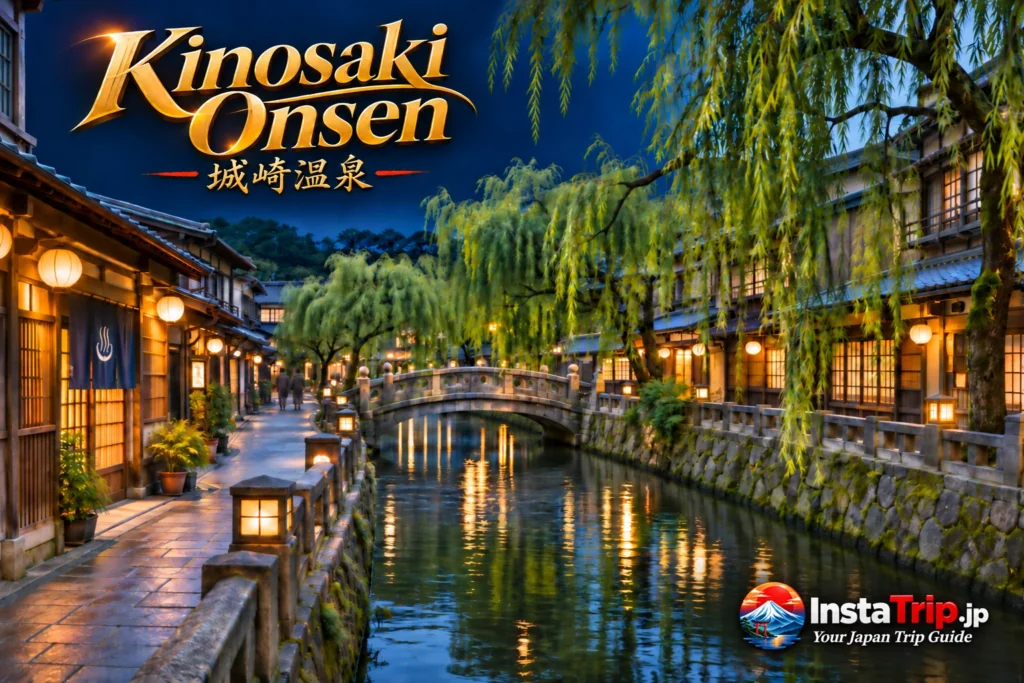
At dusk in Kinosaki Onsen (城崎温泉), willow branches hang over the canal and wooden geta (下駄) clack on the pavement. People step out of their ryokan (旅館) in yukata (浴衣), walk across a bridge and disappear into another bathhouse. That evening walk is the best argument for staying the night.
Is Kinosaki Onsen worth it? Yes, if you can stay one night and want a walkable hot spring town where bathing, dinner and the town itself are part of the same experience. A day trip works if you already have a convenient rail connection and only want lunch and a soak. From Kyoto or Osaka, the round trip can take about five hours by train; an overnight stay gives you time to enjoy the town after dark.
What makes Kinosaki Onsen feel different?
Kinosaki traces its hot spring tradition back about 1,300 years. Today, the sotoyu (外湯), or public bathhouses, are spread along the town’s streets. You can check in, leave your luggage at the inn and be back on the canal in minutes. There is no need to stay in the most expensive ryokan to experience that rhythm; for many visitors the baths, the bridges and the walk between them are the highlight.

Which baths are open, and how does the Yumepa pass work?
Bathhouse update, 14 November 2026: Of the town’s seven traditional public bathhouses, Satono-yu (さとの湯) remains closed for renovations with no reopening date listed. Kono-yu (鴻の湯) is back on the operating schedule after its 2026 renovation. Verify weekly closures and temporary notices on the official Kinosaki FAQ and Kono-yu’s updated listing before choosing your baths.
For a first evening, pick two baths with different settings. Goshono-yu (御所の湯) is a good choice for an outdoor soak, while Ichino-yu (一の湯) has a cave-style bath. If both are closed on your dates, try Jizo-yu (地蔵湯) near the station or Kono-yu at the quieter end of town. See the full Kinosaki bathhouse guide for a town overview and the local tourism association for bath-by-bath updates.
Day visitors: the Yumepa (ゆめぱ) day pass is listed at ¥1,500 for adults and ¥750 for children and can be bought at a public bathhouse counter. It covers the public baths operating that day. For one soak, compare the single-entry price at your chosen bath first. Overnight visitors: many local inns provide bath access with the room; ask whether your plan includes it. The tourism office lists the usual guest-pass hours as check-in until 1 p.m. on checkout day.
Can you enter Kinosaki Onsen with tattoos?
Yes. The town’s public bathhouses accept tattoos without requiring them to be covered. That rule applies to public sotoyu; a ryokan’s private or communal in-house baths may have different rules. Ask your accommodation ahead of time if that distinction affects your booking. See the official tattoo policy.

In the public baths, bathe without a swimsuit and use the designated men’s or women’s side. Wash and rinse before soaking, keep towels out of the bathwater and leave your phone in the locker and keep your voice down. If you would prefer to bathe with your travel companion, look for a ryokan that specifically offers a reservable kashikiri-buro (貸切風呂), or private bath. For the basics, see onsen and sento etiquette.
Is a ryokan worth the price in Kinosaki?
An overnight stay gives you a place to change, time to spend in the baths and a reason to stay out when the lanterns come on. If this is your first Japanese inn, compare what is included before comparing rates: bath pass, room type, dinner, breakfast and private-bath access. A simple room without dinner is worth considering if you would rather try a local restaurant. If your plan includes a meal, confirm your arrival and dinner times before choosing the train.
In colder months, some inns serve Matsuba crab (松葉ガニ); this menu can be a reason to visit on its own. Tajima beef (但馬牛) is another local specialty. Ask what your meal plan includes and discuss dietary needs when booking. For more, see Kinosaki’s local food guide and how to book a ryokan.
A realistic one-night itinerary for first-time visitors
- Midafternoon: arrive at Kinosaki Onsen Station, leave your bags at the inn and confirm bath hours. If the ryokan serves dinner, ask how late you can check in.
- Before dinner: walk the canal and take your first bath. Make Goshono-yu your outdoor option if it is open.
- After dinner: leave room for a second bath or a slow walk. Bring a small towel if your inn does not lend one. A quick-dry travel towel packs easily (paid links).
- Next morning: choose a quieter soak, or visit Onsenji (温泉寺) and the ropeway area before your train. Check operating hours if this is your only chance to see the temple.
One night usually makes sense on a first trip. Choose two if you want time for the ropeway or a nearby town without giving up your afternoon in the baths. If you only have a day and a long train ride on both ends, a hot spring closer to your base may fit better.
When to visit Kinosaki Onsen
Spring and autumn are good for walking between baths in mild weather. Winter is rewarding if you are planning around crab and cold-weather atmosphere, but snow is never guaranteed and popular meal plans can fill quickly. Summer works if you enjoy canal walks after the heat of the day; save the longer bath visits for after the day has cooled. Check Visit Kinosaki’s seasonal guide before choosing dates.
How to get to Kinosaki Onsen from Kyoto or Osaka
Search for Kinosaki Onsen Station (城崎温泉駅) in Toyooka, Hyogo. There are JR limited express services from Kyoto and Osaka, with a journey of roughly 2½ hours on convenient direct trains. Allow more time on connections and check the timetable for your exact date. If you are staying for dinner, book a train that arrives well before your inn’s last check-in. Use the official access guide and check the return train as well if you are coming for the day.
Open Kinosaki Onsen Station in Google Maps · Walking directions from the station to Goshono-yu
Our recommendation: pick an inn, check which two baths are open on your date and save an hour for the canal after dark. That hour is what makes the stay feel different from a day at a hot spring.