
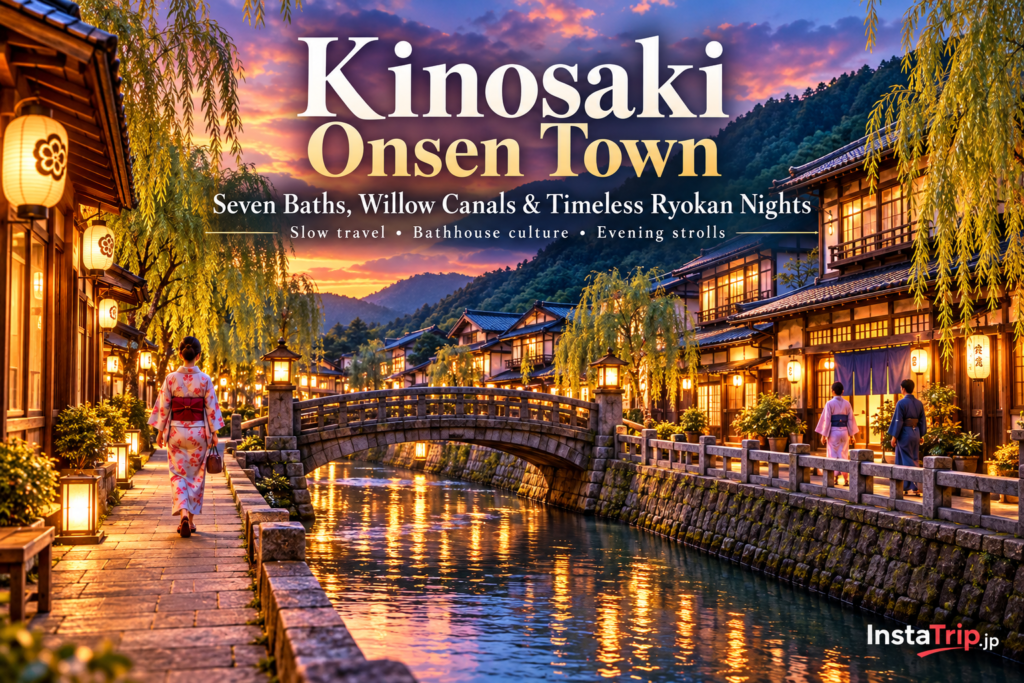
By late afternoon, the center of Kinosaki Onsen (城崎温泉) begins to move at the pace of wooden geta (下駄) sandals: a crisp clack along stone streets, a pause beneath willow branches, then another small procession toward steam and warm mineral water. In this pocket of northern Hyogo Prefecture (兵庫県), the evening stroll is not a break between attractions. It is the experience.
Kinosaki is one of Japan’s most captivating hot spring destinations because it has preserved a rare kind of rhythm. Guests trade street clothes for a yukata (浴衣), walk between their inn and the town’s communal bathhouses, and let the boundaries between accommodation, neighborhood, and ritual gently disappear. For travelers drawn to Japanese traditions that can still be lived rather than merely observed, this is an unforgettable place to slow down.
Why Kinosaki Onsen Town Feels Different
Many Japanese hot spring resorts are built around one large hotel complex. Kinosaki developed around a shared townscape. Its seven public bathhouses, known as sotoyu (外湯), are spread across the compact center, connected by lanes, bridges, small shrines, cafés, and ryokan inns. Rather than remaining inside a single property, visitors become part of the town’s evening current.
The tradition reaches back more than 1,300 years. Kinosaki’s hot springs are closely associated with Onsenji Temple, whose history is tied to the belief that the waters were brought forth through Buddhist prayer. The temple still stands on a hillside above town, a meaningful reminder that bathing here has long carried associations with care, gratitude, and restoration, not simply leisure.

That history gives Kinosaki a timeless atmosphere, but it is not a museum piece. Couples in matching yukata photograph the canal lights. Families stop for sweets after a bath. Local shops open onto streets where visitors walk in robes without feeling out of place. The town is most vivid after check-in, when the formalities of travel give way to a quieter, more local rhythm.
The Seven Baths of Kinosaki Onsen Town
Kinosaki’s seven sotoyu are the heart of the experience. A stay at many ryokan includes a pass for them, although arrangements vary, so confirm with your accommodation. Each bathhouse has its own character, architecture, and atmosphere. Visiting several open baths can be a satisfying part of a stay, but it is not necessary to understand Kinosaki. Two or three, chosen slowly, can be even more rewarding.
Jizo-yu is easy to recognize by its distinctive facade and has a relaxed, approachable feel. Ichino-yu, said to resemble a traditional kabuki theater, is among the most photogenic, while Yanagi-yu is smaller and intimate, named for the willow trees that define the townscape. Goshono-yu feels especially elegant, with an exterior inspired by Kyoto’s Imperial Palace and an open-air bathing area that makes the experience feel wonderfully expansive.
Kono-yu (鴻の湯) is associated with a white-stork healing legend, while Mandara-yu (まんだら湯) has a traditional atmosphere. Do not plan Satono-yu (さとの湯) as a station-side bathing stop: the official tourism site lists it as closed indefinitely for renovations from April 1, 2024. Kono-yu is also scheduled to remain closed for renovation through October 30, 2026. Check the official bathhouse notices before your visit.

Opening hours and regular closing days differ by bathhouse and can change, so it is wise to check locally once you arrive. This is one reason not to plan a rigid bath-by-bath schedule. Kinosaki rewards room for detours.
Bathing etiquette that makes the ritual work
The pleasure of a Japanese onsen comes partly from the shared respect that keeps it calm. Wash your body thoroughly at the shower station before entering the bath. Keep your small towel out of the water, tie up long hair, and speak quietly. Swimwear is not worn in traditional public baths, and phones should stay in the locker area.
The official Kinosaki FAQ confirms that the town’s public bathhouses welcome decorative tattoos. This policy does not automatically apply to private accommodation baths; ask your ryokan (旅館) about its own rules.
The Yukata Stroll Is Part of the Journey
A Kinosaki ryokan stay usually begins with slipping into a cotton yukata provided in your room. The robe is practical, but it also changes the way the town is experienced. With a small bath bag in hand and geta on your feet, even a five-minute walk to the next bathhouse becomes a small ceremony.
There is a simple etiquette to wearing yukata: wrap the left side over the right, then secure it with the obi. The opposite arrangement is reserved for funerary dress. If you are uncertain, ryokan staff are accustomed to helping guests and will usually explain the basics with warmth.
The main canal is especially lovely in the evening, when willow fronds soften the light and bridges frame the water. Pause for a drink, browse a small craft shop, or try an onsen tamago, an egg gently cooked by geothermal heat. Kinosaki does not demand a checklist. Its most memorable moments often arrive in the spaces between baths.
Stay at a Ryokan for the Full Experience
A day trip can introduce Kinosaki, but an overnight stay reveals its real character. Ryokan are not simply hotels with tatami floors. They create a sequence: remove shoes, settle into a room with woven mats, change into yukata, bathe, dine, sleep on futons, then wake to a Japanese breakfast. The experience is structured, yet it feels deeply restful.
Dinner may feature Tajima beef, a prized regional wagyu, seasonal vegetables, local seafood, and carefully composed small dishes. In winter, the region is particularly celebrated for Matsuba crab, a local name for male snow crab landed along the San’in coast. Crab-focused meals are a major draw, though they can be expensive and are best reserved well ahead during the peak season.
There is a trade-off. Traditional ryokan often cost more than standard hotels, especially when dinner and breakfast are included. Yet for many visitors, the meals, bath access, personal service, and evening atmosphere make the stay itself the destination. Travelers on a tighter budget can seek simpler inns, visit on a weekday, or stay nearby while enjoying the public baths.
Beyond the Steam: Temple, Nature, and Stone
When you are ready to step beyond the bath circuit, begin with Onsenji Temple. Reached by ropeway or a climb uphill, it offers a calmer perspective on the town and a stronger sense of the spiritual history surrounding the springs. The temple’s dignified setting is a welcome counterpoint to the cheerful energy of the central streets.
For a striking geological excursion, Genbudo Park lies a short distance away along the Maruyama River. Its dramatic basalt columns were formed by ancient volcanic activity, creating walls of dark hexagonal stone that look almost architectural. It is a fascinating stop for travelers who want to see another side of the region beyond ryokan culture.
The surrounding Tajima area also rewards a slower itinerary. Rural scenery, coastal food traditions, and small local communities give Kinosaki a setting that feels far removed from Japan’s dynamic megacities. This contrast is precisely part of its appeal.
When to Visit Kinosaki
Kinosaki is inviting throughout the year, but each season changes the mood. Winter brings steam rising into cold air, crab cuisine, and occasional snow that makes the town feel quietly cinematic. It is also the busiest and most expensive period, particularly on weekends and holidays.
Spring adds blossoms and gentler temperatures, while summer brings lush greenery and festival energy. Autumn is ideal for crisp walks, seasonal food, and warm baths after a cool day outdoors. If tranquility matters most, consider a weekday outside major holiday periods. The town is compact, and crowds are felt more strongly here than in a sprawling city.
From Kyoto, limited express trains typically reach Kinosaki Onsen Station in around two and a half hours; journeys from Osaka generally take around three hours. The station is close enough to the center that arriving by rail feels remarkably easy. Once there, walking is the best way to understand the town.
Kinosaki asks for a different kind of attention than Japan’s headline destinations. Leave an evening open, choose the bathhouse whose doorway draws you in, and follow the sound of geta along the canal. The most meaningful souvenir may be the rare feeling of having nowhere else to be.
Plan a Relaxed One-Night Kinosaki Stay
| Time | Suggested plan | Before you go |
|---|---|---|
| Arrival afternoon | Check in, leave luggage and explore the canal | Confirm dinner time and which bath pass your booking includes. |
| Before dinner | Choose one open public bath | Check the bathhouse’s weekly closing day and renovation notice. |
| Evening | A short yukata stroll and, if desired, another bath | Keep enough time for your inn’s meal arrangements. |
| Next morning | Breakfast, a walk or a temple visit | Ask when your pass expires and where you can leave luggage. |
For a first stay, two comfortable bathing visits and an unrushed dinner can be more enjoyable than chasing every doorway. Check the official seven-bath guide for current opening notices. The historic seven-bath circuit should not be read as seven baths available on every date.
Read our onsen versus sento guide for the terminology and our shoe-removal guide before entering a traditional inn.
Watch: A Kinosaki Onsen Walk in 4K
This street-level film from 4K Japan – Tripig shows the town’s canal-side atmosphere. It previews the outdoor stroll rather than the bathing experience. Use the official notices above for today’s bath availability.
Kinosaki Onsen FAQ
Are all seven public baths open?
No. Satono-yu remains listed as closed indefinitely; Kono-yu has a renovation closure scheduled through October 30, 2026. Other baths also have weekly closing days. Recheck the official guide for your travel date.
Are tattoos allowed?
The public bathhouses welcome tattoos. Accommodation baths can have different policies, so confirm with the inn.
Can I visit without staying overnight?
Yes. Ask an operating public bath about a day pass, and check its conditions. An overnight stay gives you more time for the evening townscape.
Should I book dinner?
If you want a ryokan meal, choose an accommodation plan that includes it and confirm the arrival deadline. Do not assume a room-only booking can add dinner on arrival.
Useful travel items (paid links): If needed, browse a compact travel towel or a small bath bag. Use suitable items you already own.
Kinosaki Onsen Map and Key Stops
Start with the town center and station, then open individual stops below. Bath pins identify locations, not whether a bath is open; check the notices above.