

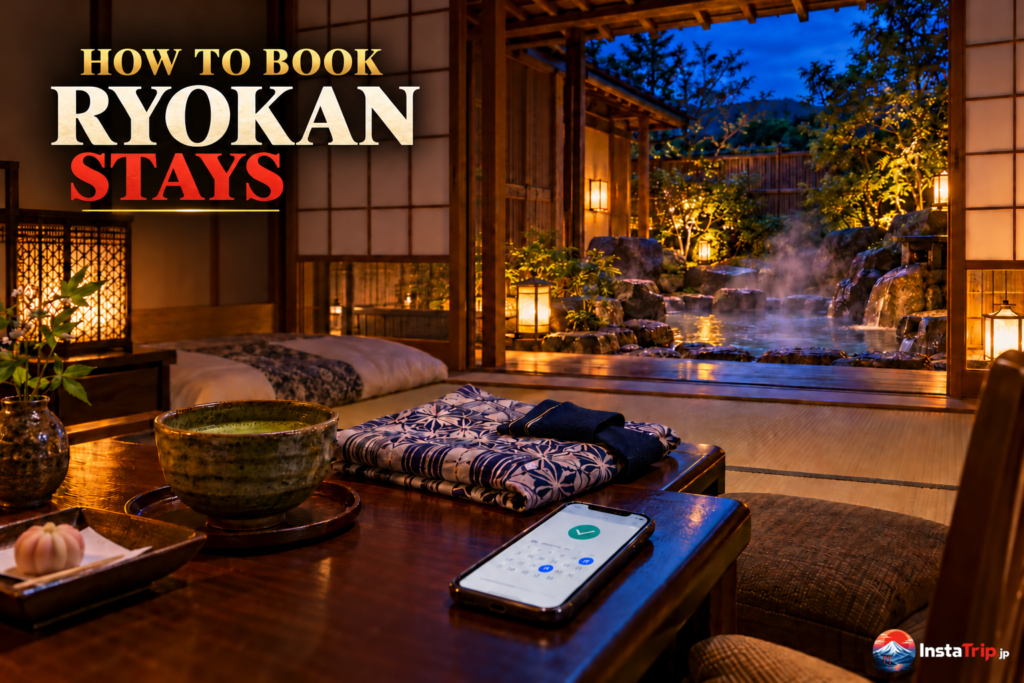
A ryokan stay can begin with the quiet scent of tatami, continue with a seasonal dinner served course by course, and end in the mineral-rich steam of an onsen beneath mountain air. But the experience is shaped long before check-in. Knowing how to book ryokan stays means choosing not just a room, but a particular rhythm of Japanese hospitality – one that may include set dining times, carefully prepared bedding, bathing customs, and a deeply local sense of place.
Unlike a standard hotel, a ryokan is often part accommodation, part restaurant, part bathhouse, and part cultural encounter. Some are historic wooden inns in hot-spring towns such as Hakone or Kinosaki Onsen; others are refined contemporary retreats overlooking the sea, forest, or a Kyoto garden. The best choice depends on what you hope to feel: restorative seclusion, regional food, easy access to sightseeing, or the rare pleasure of doing very little.
Start With the Ryokan Experience You Want
Before comparing prices, decide which version of a ryokan stay suits your itinerary. A traditional inn may have tatami-floored rooms, futon bedding laid out in the evening, shared indoor and outdoor baths, and elaborate dinner service. A modern ryokan may retain the essential warmth of omotenashi, Japanese hospitality, while offering Western-style beds, private bathrooms, and a more flexible schedule.
Location matters as much as the room. In Hakone, a ryokan can turn a Mount Fuji or art-museum visit into an overnight retreat, especially if it has its own hot-spring water. In Kyoto, a smaller machiya-style inn may be more about quiet lanes, temples, and seasonal cuisine than bathing. In snow country, a ryokan stay can make the landscape itself part of the experience, with a steaming rotenburo, or open-air bath, framed by winter white.

Think about your travel pace, too. If you are arriving late from Tokyo or leaving at dawn for another city, a full-service ryokan with dinner may feel rushed. For one or two unhurried nights, however, it can become one of the most memorable parts of a Japan journey.
How to Book Ryokan Stays: Choose the Right Plan
The most confusing part of booking a ryokan is often the meal plan. Rates are commonly listed as room only, breakfast included, or two meals included. The last option, often described as half-board, usually includes breakfast and dinner and is worth considering when the inn is known for its cuisine or located far from restaurants.
Dinner is not simply a convenient add-on. At many ryokan, it is a seasonal expression of the region: seafood near the coast, mountain vegetables in rural valleys, delicately prepared tofu in Kyoto, or locally raised beef in a countryside inn. Service may take place in your room, a private dining room, or a communal restaurant space. The setting varies, so check the listing rather than assuming a private in-room meal.
A room-only plan offers more freedom and can be a smart choice in lively onsen towns with excellent restaurants nearby. Still, do not book it casually. Smaller towns may have limited late-night dining, and some restaurants require reservations. If food is a central reason for staying at a ryokan, the two-meal plan is often the more complete experience.

Check Dinner Times Before You Pay
Ryokan kitchens run to a schedule. Dinner service may begin in the early evening, often between 5:30 and 7:00 p.m., and some properties cannot serve guests who arrive after a stated cutoff. Always check the latest arrival time, especially when traveling by limited express train, bus, or rental car through mountain areas.
Tell the property about dietary needs when booking, not at check-in. Many ryokan can accommodate some requests with advance notice, but availability depends on the kitchen, ingredients, and the nature of the restriction. Vegetarian, vegan, halal, allergy-friendly, and gluten-free meals should never be assumed. A clear request made early gives the ryokan the best chance to respond honestly and thoughtfully.
Read the Room Details, Not Just the Photos
A beautiful photograph of a cedar bath can conceal an important distinction: is it in your room, reservable for private use, or part of the shared bathing area? Read each room description closely.
Traditional Japanese-style rooms generally have tatami mats and low tables by day, with futons prepared at night. They are atmospheric and comfortable for many travelers, but guests with mobility concerns may prefer a room with beds and chairs. Bathrooms also vary widely. Some classic ryokan rooms have a toilet and sink but no shower or bathtub because guests are expected to use the communal onsen. This is normal, though it may not suit everyone.
Private open-air baths, sometimes called rotenburo, are among the most sought-after features and usually raise the rate significantly. They offer privacy and freedom to bathe whenever you wish, but they are not automatically better than a shared bath. A large communal outdoor bath surrounded by forest, stone, or mountain views can be a magnificent part of the ryokan tradition. It depends on your comfort level and the atmosphere you want.
Also look for details on smoking policy, elevator access, children, parking, shuttle service from the nearest station, and whether the property accepts credit cards. In remote areas, these practical points can shape the entire stay.
Understand Onsen Rules Before Reserving
For many travelers, the onsen is the heart of a ryokan visit. Bathing is typically done nude, after washing thoroughly at the shower stations before entering the bath. Swimsuits are generally not worn in traditional communal onsen. Small towels are for washing or modesty outside the water, not for soaking in the bath.
Most communal baths are separated by gender, although some ryokan offer private family baths that can be reserved for a timed session. If you would prefer to bathe alone or with a partner, confirm whether a private bath is included, available for an additional fee, or must be booked upon arrival.
Tattoo policies differ. Some ryokan welcome tattooed guests without issue, while others restrict entry to communal baths or ask that small tattoos be covered. Properties with private in-room baths or reservable family baths can be a good option when policies are uncertain. Checking before booking avoids an awkward surprise and respects the house rules of the inn.
Book Early for Weekends and Seasonal Escapes
The most characterful ryokan are often small, with only a handful of rooms. Reserve well ahead for weekends, Japanese national holidays, cherry blossom season, autumn foliage, ski season, and popular festival periods. A room with a private bath may sell out months before ordinary rooms, particularly in Hakone, Kinosaki Onsen, Kusatsu, and other celebrated hot-spring destinations.
Travelers with flexible dates can find a different kind of reward in quieter periods. Weekdays are often less expensive and more peaceful. The rainy season can make a garden ryokan feel lush and contemplative, while winter brings extraordinary bathing weather in many hot-spring regions. A lower rate may also make it possible to choose a better room or add dinner.
When comparing prices, confirm what is included. Ryokan rates may be quoted per person rather than per room, especially when meals are part of the stay. Taxes, hot-spring taxes, service charges, and private-bath fees may appear separately. A seemingly high price often includes a multi-course dinner, breakfast, bathing facilities, and a level of personal service that would be charged separately elsewhere.
Watch: A Ryokan in Shima Onsen
This official introduction from Kashiwaya Ryokan offers a visual example of a Japanese inn. Facilities and booking conditions shown belong to this property; check your chosen ryokan separately.
Ryokan Booking Checklist and Japanese Terms
- 旅館 (ryokan): Japanese inn; facilities vary by property.
- 一泊二食 (ippaku nishoku): one night with dinner and breakfast; confirm the exact plan.
- 素泊まり (sudomari): room-only stay.
- 貸切風呂 (kashikiri-buro): a bath reserved for private use; check booking rules and fees.
- 露天風呂 (rotenburo): open-air bath; the term alone does not mean private or natural hot-spring water.
Before paying, confirm the number of guests, meal inclusions, arrival deadline, bed type, bath access, taxes and cancellation deadline. The Japan Tourism Agency’s ryokan guide explains common meal and payment arrangements. For a destination example, read our Hakone ryokan guide.
Pack Light for Your Ryokan Stay
Ask what amenities the inn supplies before packing. A small toiletry pouch and packing cubes help organize an overnight bag without bringing unnecessary bath accessories.
Amazon picks (paid links): Travel toiletry pouches · Packing cubes.
How to Book Ryokan Stays: FAQ
Are ryokan prices per person or per room?
Either is possible. Check the total for your full party and selected meal plan, including any additional taxes or charges.
Does every ryokan have an onsen?
No. A ryokan is an accommodation type. Confirm whether the baths use natural hot-spring water and whether bathing facilities are communal, reservable or in your room.
Can guests with tattoos use the baths?
Policies vary by property and bath. Contact the inn before booking; private bath access also needs confirmation.
Is dinner included?
Only if it is included in your chosen plan. Check the dinner time and arrival deadline, especially when arriving from another city.
Confirm the Details and Arrive Ready to Slow Down
Once you have chosen a ryokan, save the address in both English and Japanese if possible, along with arrival instructions and the property’s contact information. Check train and bus connections carefully, as rural services can be infrequent. If a pickup shuttle is offered, it may need to be reserved in advance.
A few days before departure, review the cancellation policy. Many small inns prepare meals and assign staff around confirmed reservations, so cancellation terms can be stricter than those of large hotels. Let the ryokan know promptly if your arrival time changes.
At check-in, you may be offered a welcome tea and asked to choose a dinner time. Change into the provided yukata if you wish, but treat it as comfortable inn wear rather than a costume. Follow the property’s guidance on where it is appropriate to wear it, and enjoy the small rituals: slippers at the entrance, tea in the room, the transformation of the room from sitting space to sleeping space.
The real art of booking a ryokan is leaving enough room in your itinerary to experience it. Choose an inn whose meals, baths, setting, and pace genuinely appeal to you, arrive before the evening settles in, and let one night in Japan become more than a place to sleep.