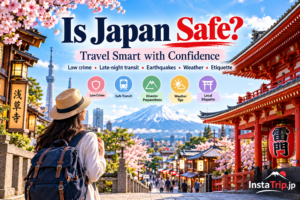

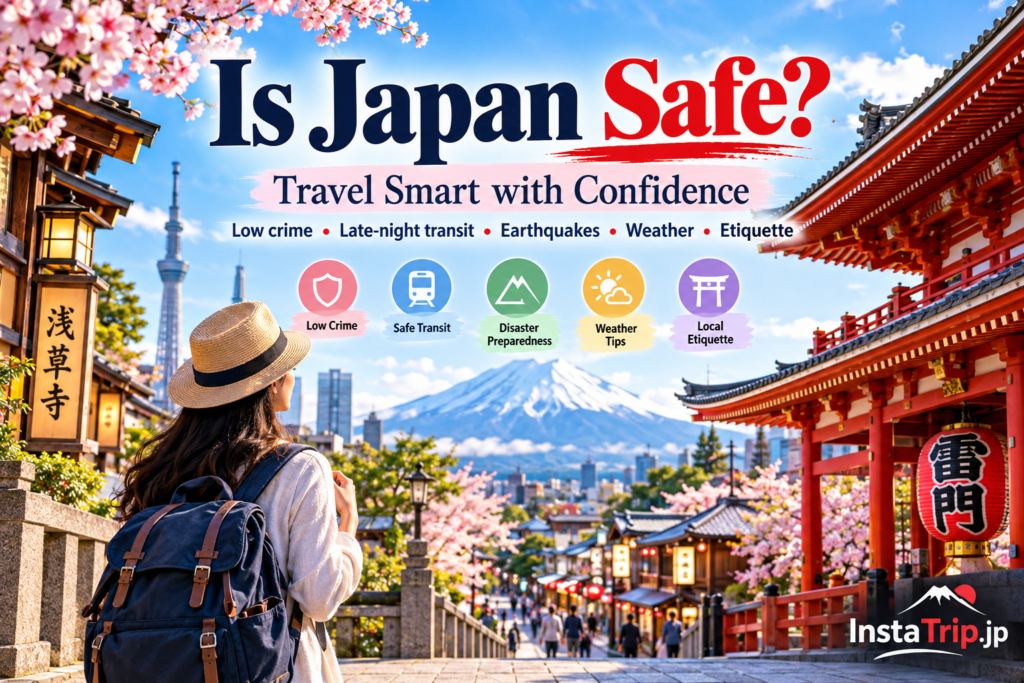
A quiet Tokyo (東京) side street at 11 p.m., a train platform in Kyoto (京都) before sunrise, a lantern-lit approach to Sensō-ji (浅草寺) – these are the moments that lead many visitors to ask, is Japan safe? For most travelers, the answer is yes. Japan is widely regarded as a comfortable country to explore, including independently and after dark. Yet a memorable trip depends on more than low crime rates. It also means understanding natural hazards, city etiquette, nightlife judgment, and the small practical habits that help you move through Japan with confidence.
Is Japan Safe for First-Time Visitors?
Japan often feels reassuring from the first day. Major cities are clean, public transportation is organized, and even the immense rush of Shinjuku (新宿) or Osaka’s (大阪) Dotonbori (道頓堀) has a sense of shared order. Visitors frequently notice everyday details: a lost item handed to a station employee, children commuting on local trains, or neighborhoods that remain lively without feeling threatening.
That atmosphere is real, but it should not be mistaken for a promise that nothing can go wrong. Japan’s low overall crime does not eliminate theft or loss: bags can still be misplaced, bicycles can be stolen, and crowded festival streets create the same need for awareness as crowds anywhere. Keep passports, cards, and cash secure, especially in busy transit hubs, shopping districts, and nightlife areas.
The practical advantage is that Japan is generally easy to navigate once you slow down. Train stations have substantial English signage in major destinations, convenience stores are everywhere, and staff will often make a genuine effort to help even when language is limited. A charged phone, an offline map, and the address of your accommodation saved in Japanese characters can turn a moment of confusion into a manageable detour.

The Safety Picture Changes by Place and Time
Tokyo is not one experience. The peaceful, temple-centered rhythm of Asakusa differs from the neon energy of Shibuya, the electronic buzz of Akihabara, or the late-night crowds of Shinjuku. Kyoto’s historic lanes can be wonderfully calm after day-trippers leave, while a remote trail in Hokkaido or a coastal path in Okinawa calls for a different kind of preparation.
In urban areas, the greater risks tend to be ordinary ones: getting too tired, missing the last train, drinking more than intended, or following an aggressive bar solicitation into an unfamiliar venue. In popular nightlife zones, avoid establishments that pressure passersby to come inside or make vague promises about prices. Choose places with clearly displayed menus and charges, and leave if the atmosphere feels uncomfortable.
Solo travelers, including women, often find Japan welcoming and manageable. Still, standard precautions matter. Stay aware of your drink, use well-lit routes late at night, and move away from anyone who ignores personal boundaries. On crowded trains, women-only cars may operate during designated hours on some lines, offering an additional option during busy commutes.
Natural Disasters Are the Safety Issue to Plan For
The question “is Japan safe” deserves a fuller answer because the country sits in a region shaped by powerful natural forces. Earthquakes, typhoons, heavy rain, volcanic activity, summer heat, and winter snow can affect travel more meaningfully than crime.
Earthquakes are part of life in Japan, and buildings, transit systems, and public procedures reflect extensive preparedness. If you feel shaking indoors, protect your head, move away from glass or unsecured objects, and follow instructions from staff or official alerts. Do not rush outside during the shaking unless directed to do so. Hotels commonly provide evacuation information, so take a minute to locate exits and review it when you arrive.
Coastal travelers should take tsunami (津波) risks seriously. After strong shaking or weak shaking that lasts a long time near the coast, evacuate immediately to higher ground or a designated tsunami evacuation location; do not wait for a warning. The Japan Meteorological Agency explains that a nearby tsunami can arrive before a warning is issued. Follow evacuation instructions and remain away from the coast until the warning is lifted.
Typhoon season can bring dramatic rain, wind, canceled flights, delayed trains, and landslide risks, particularly in mountainous or coastal regions. Before traveling to Hakone, Mount Fuji, Okinawa, or rural areas during unsettled weather, check official local conditions through your hotel, transportation operator, or municipal notices. A scenic itinerary is never worth overriding a closure.
Summer deserves its own caution. Tokyo, Kyoto, Osaka, and many other destinations can be intensely hot and humid. Heat exhaustion can arrive faster than travelers expect when a day involves temple walks, station stairs, and long outdoor queues. Carry water, pause in air-conditioned spaces, wear breathable clothing, and treat convenience-store sports drinks and shaded rest stops as part of the itinerary, not a delay to it.
Everyday Habits That Make a Big Difference
Japan’s safety is supported by a strong culture of consideration in shared spaces, and visitors benefit when they join that rhythm. Stand to the side before stopping in a busy station, keep voices low on trains, and avoid blocking narrow sidewalks while checking directions. These are not merely etiquette details. They reduce stress in fast-moving places and make it easier to notice what is happening around you.
Carry enough cash for small businesses and local transport, but keep money and payment cards securely arranged. Foreign tourists should carry their passport, as stated in the Tokyo Metropolitan Police visitor guidance. Keep a backup copy separately for reference; it does not replace the document you are required to carry.
Late-night transportation deserves planning. Trains in major cities do not run all night, and taxi rides across Tokyo can be expensive. Check the last train before settling into an evening in Roppongi, Shinjuku, or Yokohama. If you miss it, use a licensed taxi or stay at a reputable accommodation rather than wandering in search of a cheap solution.
For medical or police emergencies, dial 119 for an ambulance or fire response and 110 for police. The language barrier can feel intimidating in a stressful moment, but hotel staff, station staff, tourist information centers, and many larger hospitals can help connect visitors with assistance. Travel insurance that covers medical care and disruptions is a practical safeguard, particularly if your plans include skiing, hiking, or remote islands.
Respect Helps You Travel More Safely
Some of the best safety decisions in Japan are also the most respectful ones. At shrines and temples, follow posted signs, remain quiet where worshippers are praying, and do not cross barriers for a photograph. On mountain trails, in bamboo groves, or along historic streets, stay on marked paths and respect closures. Japan’s captivating landscapes and sacred spaces are not backdrops to be conquered – they are places with communities, histories, and environmental limits.
Photography also calls for awareness. Avoid photographing strangers closely without permission, and take particular care in residential lanes, traditional neighborhoods, and places of worship. The more attentively you travel, the more likely you are to experience the warmth behind everyday encounters: a shopkeeper explaining a local sweet, a station attendant pointing you toward the right platform, or an early morning walk through a neighborhood before the city gathers speed.
A Confident Way to Experience Japan
Japan is not safe because it is frictionless or because travelers can abandon common sense. It feels safe because thoughtful systems, public order, and everyday courtesy often make exploration easier. Prepare for weather, know your route home, keep an eye on your belongings, and listen when local authorities change plans.
Then give yourself room to enjoy the extraordinary details: the glow of a Tokyo vending machine on a rainy evening, the stillness of a Kyoto garden, the sea air at Enoshima, or the first glimpse of Mount Fuji between clouds. With calm preparation and cultural respect, Japan offers not just a secure journey, but a deeply rewarding one.
Japan Travel Safety: Save These Contacts
| Need | Contact | How to use it |
|---|---|---|
| Police emergency | 110 | For urgent incidents requiring police assistance. |
| Ambulance or fire | 119 | Give your location and describe the emergency. |
| Visitor assistance | 050-3816-2787 From overseas: +81-50-3816-2787 | JNTO Japan Visitor Hotline, available 24/7 in English, Chinese and Korean. |
The official Japan Visitor Hotline page explains its assistance service. For an immediate emergency, contact the appropriate emergency service first. Save your accommodation’s Japanese address, telephone number and a nearby landmark. A data-only travel eSIM may not support ordinary voice calls; check your phone service before you need it and ask nearby staff for help if necessary.
A Short Preparation Checklist
- Save your hotel address and a route home that works before the last train.
- Keep your passport securely with you, with a backup copy stored separately.
- Download the Safety tips app and official travel resources, and review the alert settings.
- Check your accommodation’s exits and ask about local evacuation instructions.
- Use the transport operator’s latest notices before a weather-sensitive journey.
A nearby kōban (交番), or police box, can help with lost belongings and other police matters. For travel planning, our Japan IC card guide, Tokyo subway guide and Japan connectivity guide cover useful everyday preparations.
Watch: Earthquake Preparation Through Animation
This English-language animation from Tokyo Metropolitan Foundation TSUNAGARI explains earthquake precautions and preparation. It is an educational film from a Japanese public-interest organization, with no travel presenter. Follow current local instructions during an actual event.
Watch this video on YouTube. More resources are available on the official disaster-awareness video page.
Is Japan Safe? FAQ
Is Japan suitable for a first solo trip?
Many visitors find it manageable, especially with planned transport and accommodation. Low overall crime does not remove the need to protect belongings, respect personal boundaries and avoid street touts.
Should I leave my passport in the hotel safe?
Foreign tourists should carry their passport, as explained in the police guidance linked above. Keep a separate backup copy for reference.
Should I wait for a tsunami alert after coastal shaking?
No. Strong shaking or weak but prolonged shaking near the coast is a reason to evacuate immediately. A tsunami can arrive before a warning.
Do hazard maps show current warnings?
A planning map and a live warning serve different purposes. Check the map before your stay and use official alerts and local instructions when conditions change.
Useful travel items (paid links): If needed, browse a compact power bank or a secure document pouch. Use suitable items you already own.
Official Hazard Maps for Your Stay
Use Japan’s official hazard-map tool to search around your accommodation and choose the relevant hazard layer. Its interface is mainly Japanese. Open it in a separate window for more space, and use the English guide below to understand the map and legend.
Open the official interactive hazard map.
- Find your municipality’s published hazard maps.
- Read the English guide to hazard maps.
- Check official weather and disaster information.
A map is a preparation aid, not a declaration that a place is safe or a substitute for evacuation instructions. Ask your accommodation about the appropriate location and route for the specific hazard.