
A closed knot. A flash of gold thread. A wish that travels quietly in someone’s bag. Omamori (お守り), Japan’s protective amulets, make the invisible feel unexpectedly tangible. At a Shinto shrine (神社, jinja) or Buddhist temple (寺, tera), these small objects connect a place of worship with the worries and hopes people carry beyond its gates.
You may choose one for an exam, a safe journey or someone you love. Understanding its purpose makes the encounter more meaningful than choosing by colour alone.
Quick answer: Omamori are religious amulets received at Japanese shrines and temples and commonly carried for protection or a particular wish. Keep a closed pouch closed, handle it respectfully and follow the issuing institution’s guidance about renewal and return. Their protective significance belongs to religious belief; it is not a guarantee of a particular outcome.
What does omamori mean?
The word is connected with 守る (mamoru), “to protect”; the initial o adds politeness. You may see the spelling お守り or 御守 on an amulet. The embroidered name of a shrine or temple helps identify where it came from.
Omamori belong to living religious traditions. A visitor might first notice the fabric and decorative knot, while the person receiving it may be thinking about childbirth, an important test or a relative’s journey. That private intention is part of what makes such a small object compelling.
The Association of Shinto Shrines distinguishes portable omamori from お神札 (ofuda), sacred talismans enshrined at home. The association also explains that having amulets from different shrines does not mean their deities will quarrel. Religious practices vary, so an individual institution’s instructions remain the best guide.
For the wider context, read our guide to Japanese temples versus shrines. Understanding which kind of sacred space you are visiting helps you approach its objects and customs with care.

Why is an omamori pouch kept closed?
The closed pouch is part of the fascination: its significance is not something you need to inspect. Fukushima Inari Shrine’s official explanation asks visitors to refrain from looking inside because the amulet is sacred.
Leave the knot tied and the pouch intact. There is no need to cut it open to check authenticity or satisfy curiosity. If yours becomes damaged, ask the shrine or temple that issued it how to proceed rather than trying to repair its contents.
Also avoid assuming every omamori is a little fabric bag. The category includes different forms. Meiji Jingū, for example, offers a wooden amulet with a remarkable connection to the shrine’s own history, described below.
Omamori types: read the wish before choosing the colour
These are examples of labels listed by Sensō-ji’s official amulet guide. Designs and wording differ elsewhere. The purposes below describe the prayers associated with the objects.
| Japanese label | Reading | Associated wish |
|---|---|---|
| 厄除守 | Yakuyoke-mamori | Protection against misfortune |
| 交通安全守 | Kōtsū-anzen-mamori | Traffic and road safety |
| 良縁守 | Ryōen-mamori | Good relationships or a favourable match |
| 安産守 | Anzan-mamori | A safe childbirth |
| 雷門合格守 | Kaminarimon gōkaku-mamori | Success in examinations; this name is specific to Sensō-ji’s offering |
| 学業守 | Gakugyō-mamori | Study and academic progress |
| 心願成就守 | Shingan-jōju-mamori | Fulfilment of a heartfelt wish |
An exam charm and a study charm are related, but their labels emphasise different intentions. Likewise, a road-safety amulet has a more specific purpose than the English phrase “good luck.” Ask about the exact item rather than inferring its meaning from a photograph.
How to choose and receive an omamori
Start with the place and the intention. Would you like something connected with the shrine you have just visited? Is it for your own journey, or a thoughtful gift for a student? A clear answer makes the display less overwhelming.
- Visit respectfully. Take time to understand the sacred space. Our Japanese shrine prayer guide explains the basic shrine etiquette.
- Find the institution’s own counter. At shrines, look for 授与所 (juyosho), a place where sacred items are distributed. Check signage rather than assuming every nearby souvenir shop belongs to the shrine.
- Read the purpose and displayed amount. At Shinto shrines you may encounter 初穂料 (hatsuhoryō), an offering. There is no single nationwide price for every amulet.
- Ask before choosing. Pointing politely to the label can be more useful than asking for the “strongest” charm. Follow any instructions given with the item.
For a simple question, try: これは何のお守りですか。 Kore wa nan no omamori desu ka? — “What is this amulet for?” You can also show staff the written purpose you are looking for. Do not assume English assistance will always be available.
The Association of Shinto Shrines explains the religious meaning of offerings. Treating the exchange with that context in mind gives it more depth than an ordinary purchase.
How to carry an omamori, and choosing one as a gift
Portable amulets are intended to accompany their recipients. Choose a secure place appropriate to the item and follow the issuing institution’s advice. Think practically, too: a charm dangling outside a backpack may catch on something, while one kept with your belongings should be protected from spills and loss.
A gift can be especially thoughtful when its purpose fits the recipient. Explain the label and where it came from, and include any instructions. Before giving a childbirth or relationship amulet, consider whether that subject is welcome and personal to the person receiving it.
Let the story of the place do the work. You do not need to promise that an amulet will deliver a result, or pressure someone to adopt your interpretation of it.
Do omamori expire? Renewal, return and common worries
Renewing an amulet after about a year is a common practice, but “expiry date” is a misleading way to think about it. The Association of Shinto Shrines allows keeping one until a wish is fulfilled. An annual custom is not a countdown to something bad happening.
Sugiyama Shrine’s FAQ gives useful nuance: amulets connected with exams or childbirth may be kept until that purpose is fulfilled, and a meaningful one may continue to be treasured. Its guidance also addresses visitors who wish to keep an amulet as a travel memento: handle it with respect.
When you are ready to return one, begin with the original shrine or temple. Ask about its designated collection point and any conditions. If you live abroad, contact the institution before posting anything; do not assume it accepts international returns.
Not every return box accepts every religious item. Tanashi Shrine explicitly accepts amulets from other Shinto shrines but excludes Buddhist temple items. This is a good reason to check locally rather than dropping everything into the first box you find. Do not burn an amulet yourself.
Lost one? Jishu Shrine’s FAQ says losing an amulet is not a bad omen and that forgetting to return one does not bring divine punishment. A respectful practice should not become a source of fear.
Two places to encounter omamori in Tokyo
Meiji Jingū (明治神宮): a century-old torii, carried forward
At Meiji Jingū, the 除災招福守 (josai-shōfuku-mamori) has an unusually tangible story. According to the shrine’s official description, it is made using wood from the former first torii near Harajuku. That gate welcomed visitors for a century before being replaced for the shrine’s 2020 centennial.
The idea is quietly powerful: material that once marked the boundary of sacred ground takes a new form that someone can carry. Check the current offering at the counter; availability should not be assumed.
Location: 1-1 Yoyogi Kamizono-chō, Shibuya, Tokyo. Use the official grounds map to orient yourself. Plan to visit the counter during its operating hours rather than assuming it remains open whenever the grounds are accessible.
Sensō-ji (浅草寺): choose by intention in Asakusa
Sensō-ji provides a Buddhist setting for understanding omamori. Its official list includes the labels in the table above and asks visitors to inquire directly about their meanings. Compare the names slowly: the distinction between study, relationships and protection is more revealing than a quick glance at the colours.
Location: 2-3-1 Asakusa, Taitō, Tokyo. Consult Sensō-ji’s official visitor information before visiting. Meiji Jingū and Sensō-ji are in different parts of Tokyo; treat them as separate stops rather than neighbouring sights.
Watch: rain and quiet paths at Meiji Jingū
This ambient walking video by Tokyo Twilight introduces the atmosphere of Meiji Jingū in heavy rain. It accompanies the place described above; it is not an amulet-making tutorial.
Map: plan your Tokyo visits
Open each location for directions. Check the institution’s current notices before travelling.
Meiji Jingū directions · Sensō-ji directions
Explore further: books and decorative keepsakes
Browse these related selections on Amazon.com (paid links):
Commercial decorative charms should not be assumed to be religious amulets issued by a shrine or temple. For an omamori connected with a particular place of worship, receive it directly from that institution or use its official distribution channel.
Before you leave the counter
Know what the amulet is for, keep any instructions and remember its place of origin. Those small details matter more than collecting the largest number of charms.
The mystery of omamori can remain intact. You can understand the words on the outside, respect what stays unseen and carry away something more personal than a souvenir: a reminder of a place, a moment and a hope.
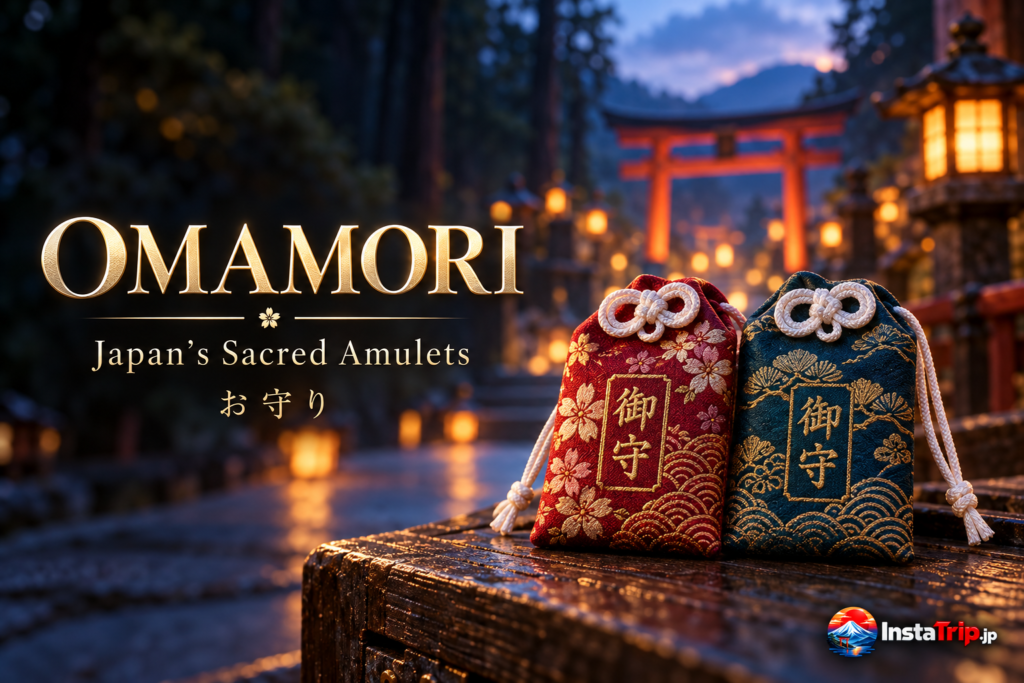
Research note: This guide draws on the official shrine, temple and Association of Shinto Shrines pages linked above. Customs, designs, availability and counter hours vary. The featured image is an editorial illustration.