
At Shinjuku Station, Tokyo’s restless energy does not fade when the sun goes down – it changes color. Giant screens glow above the crossings, lanterns flicker in narrow alleys, and a simple dinner can become a long, fascinating night of small bars, live music, karaoke, and steaming ramen. This Shinjuku nightlife guide is for travelers who want more than a checklist: a way to feel the rhythm of one of Tokyo’s most dynamic districts while moving through it with curiosity and respect.
Why Shinjuku Feels Different After Dark
Shinjuku (新宿区) is not one nightlife district with one personality. It is a mosaic of nighttime worlds gathered around one of the busiest railway stations on earth. A few blocks can take you from polished hotel lounges and department store basements to alleys barely wide enough for two people to pass, then onward to neon-lit entertainment streets alive with conversation and music.
That contrast is part of Shinjuku’s appeal. Tokyo is often admired for precision and futuristic scale, but Shinjuku after dark also reveals the city’s intimate side. In a tiny izakaya, office workers, longtime regulars, and visitors may sit shoulder to shoulder over grilled skewers and beer. In another corner, a jazz bar might ask guests to listen quietly as a carefully selected record fills the room. The evening is less about racing from landmark to landmark than choosing a mood and allowing the neighborhood to unfold.

Start With an Izakaya in Omoide Yokocho
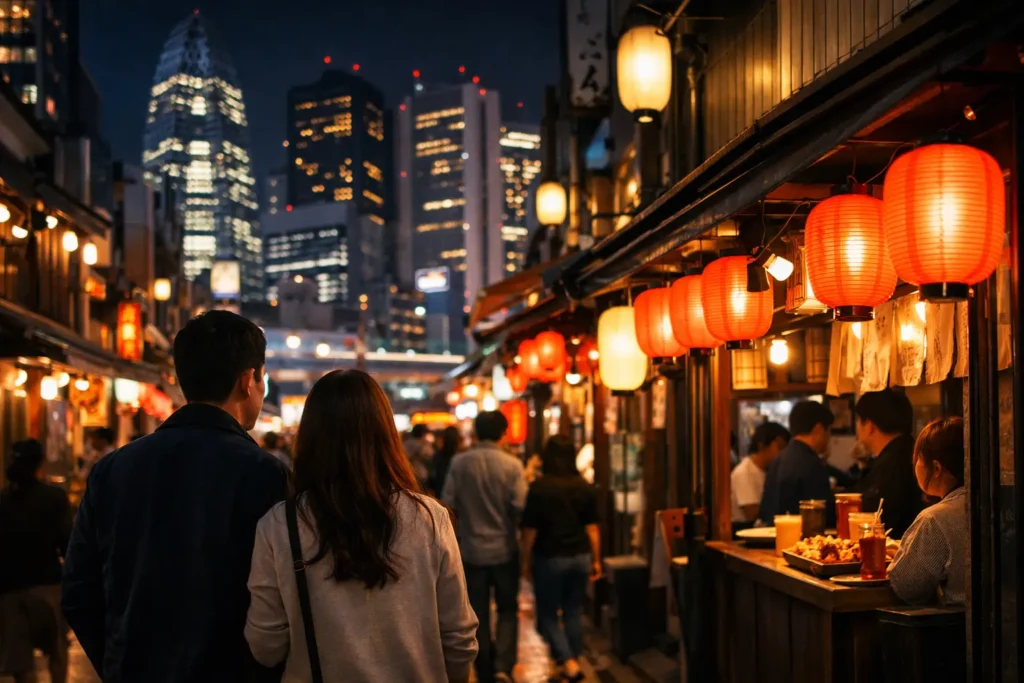
Just northwest of the station, Omoide Yokocho (思い出横丁) offers one of Shinjuku’s most atmospheric introductions to the night. Its name translates as Memory Lane, and the compact network of alleys has a postwar character that feels strikingly different from the towers surrounding it. Lanterns, smoke from charcoal grills, and small counters create a scene that is lively but human in scale.
Many places specialize in yakitori and other grilled dishes, often paired with beer, highballs, sake, or shochu. Seating can be close, menus may be concise, and the setting is best enjoyed without rushing. If you are unsure what to order, begin with a few skewers, a vegetable dish, and a drink, then add more as the evening develops.
Omoide Yokocho is popular, so the trade-off is clear: its atmosphere is magnificent, but it can be crowded. Go earlier for a calmer meal, or accept the bustle as part of the experience. Since spaces are compact, it is courteous to keep bags close, avoid blocking the alley, and follow each restaurant’s photo policy.

A small word about Japanese bar charges
At some izakaya and bars, you may receive a small appetizer called otoshi or tsukidashi. This is commonly a cover charge rather than a dish you specifically selected. It is a normal part of the dining culture in many casual drinking establishments, but prices and policies vary. Check the menu or ask politely before settling in if anything is unclear.
Golden Gai and the Art of the Tiny Bar
East of the station, Golden Gai (ゴールデン街) is Shinjuku’s legendary cluster of narrow lanes and exceptionally small bars. The area was shaped in the decades after World War II and became associated with writers, artists, musicians, and filmmakers. Its scale remains remarkable: many venues seat only a handful of guests, which turns a drink into a close encounter with a particular owner’s tastes, records, décor, and conversation.
Golden Gai is not a single bar crawl to complete. It rewards attention. One doorway may lead to a warmly lit counter covered in handwritten notes; another may reveal walls of movie posters, shelves of vinyl, or a quiet room devoted to a niche musical genre. Some bars welcome first-time visitors, while others reserve their limited seats for regulars or have specific entry rules. A sign at the door is usually the best guide.
The most respectful approach is simple. Enter only when invited, ask before taking photos, order at least one drink, and do not assume every bar is designed for loud groups. If a venue feels too full or too private, thank the staff and choose another. There are plenty of doors, and the pleasure lies in finding the one that suits your night.
Kabukicho: Neon, Screens, and Constant Motion
Kabukicho (歌舞伎町) is the visual heart of Shinjuku nightlife: a dense entertainment district where illuminated signs, cinemas, restaurants, arcades, karaoke venues, and late-night crowds create an unmistakably Tokyo scene. It is loud, bright, and intensely photogenic, especially around the main avenues where the neighborhood’s futuristic energy is at its peak.
This is a place to wander with awareness rather than a rigid itinerary. Stop for a casual meal, browse an arcade, sing in a private karaoke room, or simply take in the spectacle from a side street. Kabukicho can feel overwhelming on a first visit, particularly late at night, so keep your plans straightforward. Choose venues with clearly displayed prices, and decline unsolicited invitations or offers from street solicitors.
That advice is not about avoiding Kabukicho. It is about enjoying its energy on your own terms. The district is at its best when you treat it as a living piece of contemporary Tokyo – dazzling, theatrical, and full of different kinds of entertainment – while making thoughtful choices about where you spend your time and money.
Find Your Sound: Jazz, Listening Bars, and Live Houses
Shinjuku has long been important to Tokyo’s music culture. For travelers who want an evening with more focus than a bustling izakaya, the area offers jazz clubs, live houses, DJ spaces, and listening bars. A listening bar is built around attentive music appreciation, often with an exceptional sound system and a carefully curated collection of records. Conversation is usually softer there than in a standard pub.
Live houses, meanwhile, are intimate music venues where emerging bands and established performers share compact stages. Schedules shift frequently, and the genre can range from rock and indie pop to jazz, electronic music, and experimental sounds. Many venues charge admission and may include a required drink purchase. It depends on the place, but arriving before the first set is usually wiser than appearing late and trying to find space in a packed room.
These settings offer a meaningful perspective on Tokyo’s cultural life. The city’s music scenes are not confined to huge arenas or global pop exports. They also thrive in small rooms, through devoted audiences and venue owners who have spent years developing a distinctive sound and community.
A Shinjuku Nightlife Guide to Timing and Getting Home
A satisfying Shinjuku night often begins around dinner, reaches its most animated point later in the evening, and winds down with noodles or coffee before the last train. Tokyo’s rail network is excellent, but most trains do not run all night. Check the final service for your route before your first drink, especially if your hotel is outside central Tokyo.
If you plan to stay out beyond the trains, decide in advance whether you will take a taxi or wait until morning services begin. Taxis can be convenient but are considerably more expensive late at night. Keep your hotel address saved in Japanese as well as English, carry a charged phone, and bring enough cash for smaller establishments that may not accept every card.
Shinjuku is generally easy to navigate when you stay observant, but its station is famously vast. Before heading out, note which exit is closest to your destination. West Shinjuku is associated with skyscrapers, hotels, and a more polished pace; the east side leads toward Kabukicho, Golden Gai, and Omoide Yokocho. That one detail can save a surprising amount of nighttime wandering.
End With Ramen, Not a Rush
Late-night ramen is one of Shinjuku’s most comforting rituals. After hours of walking and conversation, sitting at a counter over a bowl of hot broth offers a quiet reset amid the city’s brilliant noise. You will find many styles, from rich tonkotsu to soy-based shoyu and dipping-style tsukemen. Choose the queue that looks inviting, follow the ordering system, and enjoy the moment without treating it as merely a final stop.
The best Shinjuku nights leave room for chance: a lantern-lit counter that catches your eye, a song drifting from an upstairs room, a bowl of ramen that becomes part of the memory. Go with a loose plan, good manners, and enough time to let this captivating corner of Tokyo reveal its many after-dark faces.
![[商品価格に関しましては、リンクが作成された時点と現時点で情報が変更されている場合がございます。]](https://hbb.afl.rakuten.co.jp/hgb/574e5040.dd9cd744.574e5041.4735a116/?me_id=1398305&item_id=10000433&pc=https%3A%2F%2Fthumbnail.image.rakuten.co.jp%2F%400_mall%2Ff420000-nagasaki%2Fcabinet%2Frtc%2Frtc005_01.jpg%3F_ex%3D128x128&s=128x128&t=picttext "[商品価格に関しましては、リンクが作成された時点と現時点で情報が変更されている場合がございます。]")