

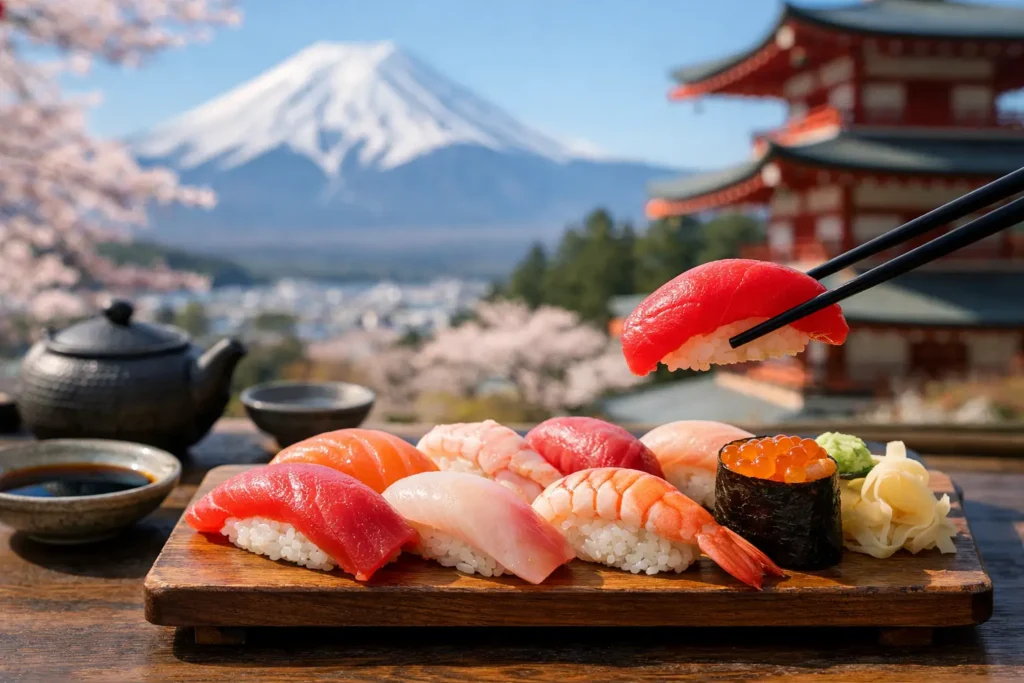
A piece of sushi (寿司) can feel wonderfully simple: a small mound of seasoned rice, perhaps topped with glistening fish, a ribbon of nori, or a bright slice of egg. Yet that compact form carries centuries of Japanese history, an intimate relationship with the seasons, and a remarkable attention to balance. To encounter sushi in Japan is not merely to order a famous dish. It is to experience a living food culture shaped by coastal landscapes, local markets, craftsmanship, and changing city life.
Sushi (寿司) Begins With the Rice
The most common misunderstanding about sushi is that it means raw fish. It does not. Sushi is defined by its rice, known as shari or sumeshi, prepared with vinegar, sugar, and salt. The topping or filling may be seafood, vegetables, cooked egg, tofu, or other ingredients. Sashimi, by contrast, is sliced raw seafood served without vinegared rice.
That distinction reveals why exceptional sushi is so memorable. Fish may be the visual star, but the rice establishes the rhythm of every bite. Its warmth, grain texture, seasoning, and gentle pressure all matter. At a skilled counter, the chef shapes each piece just before serving so the rice remains light enough to separate on the tongue while still holding its form.
Vinegar has a deeper role than flavor. Long before modern refrigeration, fermentation and vinegar helped preserve fish. Early forms of sushi developed from preservation methods in which fish was fermented with rice, often over long periods. Over time, Japanese cooks created faster styles that made the rice part of the meal rather than something discarded after preservation.

From Edo Street Food to a Global Icon
The sushi many travelers recognize today, nigirizushi, flourished in Edo, now Tokyo, during the nineteenth century. Fast-paced urban life helped make hand-pressed sushi popular as convenient food. It was larger than many pieces served today and was sold from stalls, offering Edo residents a quick, flavorful meal made from the seafood of Tokyo Bay and nearby waters.
This Edo-style tradition, often called Edomae sushi, still shapes the city’s sushi culture. Its meaning goes beyond geography. Edomae techniques historically included curing, simmering, marinating, and brushing seafood with sauces to heighten flavor and preserve ingredients. A piece of silver-skinned fish may be lightly cured with salt and vinegar; anago, or conger eel, may be tenderly simmered and finished with a sweet-savory glaze. The result is not simply fresh fish, but fish transformed through knowledge and restraint.
Tokyo remains one of the world’s most captivating places to eat sushi, from quiet counter restaurants in Ginza to lively neighborhood shops and casual conveyor-belt restaurants. Still, sushi is not only a Tokyo story. Across Japan, local waters and regional traditions create entirely different expressions.

In Kansai, pressed sushi known as oshizushi has a long history, with rice and toppings shaped in wooden molds. Kyoto’s saba-zushi, made with mackerel, reflects the city’s historic relationship with preserved fish brought inland. In Hokkaido, cold northern waters provide a magnificent range of seafood, while Kyushu offers its own rich selection of local fish and distinctive preparations. Sushi is national, but its character remains intensely local.
The Many Forms on a Sushi Menu
The variety can seem daunting at first, especially when a menu uses Japanese names. Once you understand the basic forms, however, ordering becomes far more enjoyable.
Nigiri is the classic hand-pressed style: a topping, called neta, placed over a small oval of rice. Maki-zushi is rolled sushi, usually wrapped in nori seaweed. Hosomaki are slender rolls with one central filling, while futomaki are thicker, more colorful rolls with several ingredients. Temaki, shaped like a cone, is meant to be eaten by hand soon after it is made.
There are also gunkan-maki, or “battleship” sushi, in which a band of nori surrounds rice to hold softer toppings such as sea urchin, salmon roe, or chopped tuna. Inari-zushi consists of vinegared rice tucked into a sweet-savory pouch of fried tofu. Chirashi-zushi presents rice in a bowl or box with an artful scattering of seafood, egg, vegetables, and other seasonal ingredients.
These styles are not competing levels of authenticity. A humble inari or a bowl of chirashi can be as culturally meaningful and satisfying as a refined omakase meal. What matters is the care given to the rice, ingredients, and occasion.
Seasonality Makes Every Visit Different
Japanese cuisine is deeply attentive to shun, the period when an ingredient is at its finest. Sushi menus shift with the year, and that changing sequence is part of their appeal. Spring may bring delicate shellfish and young sea bream. Summer often highlights eel and bright, refreshing flavors. Autumn welcomes richer fish and prized roe, while winter is celebrated for fatty tuna, yellowtail, crab, and other cold-weather delicacies.
This is one reason an omakase experience can feel so personal. Omakase means “I leave it up to you,” giving the chef freedom to serve what is best that day. At a small counter, the meal may unfold one piece at a time, with the chef deciding the order based on texture, richness, temperature, and season. A mild white fish might arrive before a more luxurious piece of tuna, followed by a warm cooked course or a hand roll designed to be eaten immediately.
Omakase is not automatically the best choice for every traveler. It can be expensive, reservations may be difficult, and the formal pace may not suit a busy day of sightseeing. A neighborhood sushi shop, market counter, or kaiten-zushi restaurant with sushi traveling on a conveyor system can offer a lively, delicious introduction at a more relaxed price. Japan’s sushi culture has room for ceremony and spontaneity.
Sushi Etiquette, Without the Anxiety
Sushi etiquette is less rigid than many visitors fear. Nigiri can be eaten with either fingers or chopsticks. If you use soy sauce, lightly dip the fish side rather than the rice, which can absorb too much sauce and fall apart. In many chef-led meals, pieces are already seasoned, so additional soy sauce may not be necessary.
Pickled ginger, or gari, is generally enjoyed between different pieces as a palate cleanser, not placed on top of the sushi. Wasabi is another area where preference and context matter. A chef may already add the appropriate amount between fish and rice, particularly in an omakase setting. If you prefer more, use it sparingly so it supports rather than overwhelms the ingredient.
The most considerate habit is also the simplest: eat each piece soon after it is served. Sushi is carefully timed. Temperature changes quickly, nori loses its crispness, and a chef may have shaped the rice for that precise moment. If a counter meal feels unfamiliar, watch the pace of the room and ask a polite question when needed. Curiosity is welcome.
Choosing Sushi With Care
Seafood sustainability is a meaningful consideration, especially for travelers drawn to tuna, eel, and other popular species. There is no single rule that makes every choice responsible, because availability and fishery conditions vary by region and season. A thoughtful approach is to try a wider range of local species, appreciate cooked and vegetable-based sushi, and ask staff for recommendations when appropriate.
This approach can lead to better meals as well as more mindful ones. Instead of ordering only familiar salmon or tuna, you might discover sweet shrimp, needlefish, mackerel, squid, clams, or a seasonal white fish you had never encountered before. The pleasure of sushi often begins when expectation gives way to attention.
Whether you find it at a polished Tokyo counter, a family-run shop near a station, or a vibrant market in Hokkaido, sushi invites you to slow down for a few moments. Notice the rice, the season, the hands that formed it, and the place that brought those flavors together. That small, beautiful bite can become one of Japan’s most lasting memories.
![[商品価格に関しましては、リンクが作成された時点と現時点で情報が変更されている場合がございます。]](https://hbb.afl.rakuten.co.jp/hgb/574e757f.efb11665.574e7580.70bdd4ee/?me_id=1315299&item_id=10000005&pc=https%3A%2F%2Fthumbnail.image.rakuten.co.jp%2F%400_mall%2Fyoshinobba%2Fcabinet%2Fctgr_event%2Fsuper_sale%2Fss_kaki5_20.jpg%3F_ex%3D128x128&s=128x128&t=picttext "[商品価格に関しましては、リンクが作成された時点と現時点で情報が変更されている場合がございます。]")