

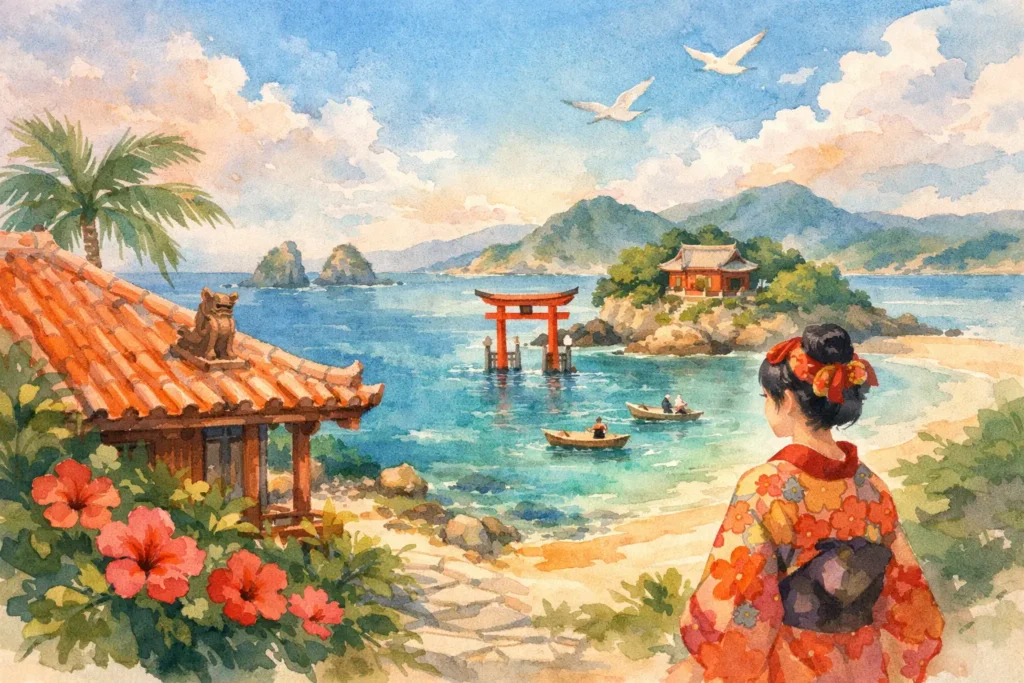
The first thing that may surprise you about Okinawa is not the color of the water, though its coral-blue horizons are magnificent. It is the atmosphere: a slower, warmer rhythm shaped by island life, deep hospitality, and a cultural history that feels distinct within Japan. Here, stone castles rise above subtropical greenery, local songs carry the sound of the sanshin, and everyday meals reflect generations of wisdom about living well.
Okinawa is not one single destination but a vast island prefecture stretching across Japan’s southern seas. The main island offers a compelling blend of history, city energy, beaches, and village traditions, while smaller islands reveal quieter shores, dense forests, world-class snorkeling, and star-filled nights. For travelers who want Japan with a different tempo, Okinawa is an unforgettable place to begin.
Okinawa and the Legacy of the Ryukyu Kingdom
To understand Okinawa, begin with the Ryukyu Kingdom. From the 15th through the 19th centuries, this independent kingdom flourished through maritime exchange with Japan, China, Korea, and Southeast Asia. Its position in the sea made it a crossroads of trade and ideas, creating a visual and cultural identity unlike that of Japan’s former imperial capitals.

That legacy remains visible in the graceful curves of traditional architecture, the bold colors of bingata textile dyeing, and the distinctive music of the three-stringed sanshin. The Ryukyuan language traditions, local spiritual practices, and food culture also carry this history forward. Okinawa became part of Japan in 1879, but the island’s heritage should not be treated as a decorative footnote. It is central to what makes the region so fascinating.
On the main island, Shuri Castle in Naha is the essential place to encounter this story. Once the royal seat of the Ryukyu Kingdom, its vermilion gates and hilltop setting express a court culture shaped by connections across Asia. The castle has endured devastating loss, including a major fire in 2019, and its continuing restoration carries powerful meaning. A visit offers more than a view of historic architecture. It is a chance to see how Okinawa protects and rebuilds its cultural memory.

Sacred places shaped by nature
Okinawan spirituality has long been closely connected to the natural landscape. Sacred groves, springs, caves, and stone sites known as utaki have traditionally been places where communities honor ancestors and spiritual forces. Sefa Utaki, on the southeastern part of the main island, is among the most significant of these sites.

Visitors should approach such places with quiet attention. This is not simply a scenic stop. The paths, rock formations, and forest light create a powerful sense of place, but their importance comes from living belief and historical reverence. Dress appropriately, follow posted guidance, and let the setting set the pace.
Beyond the Beach in Okinawa
Okinawa’s beaches are celebrated for good reason. The sea around the Kerama Islands can appear almost unreal, shifting from pale turquoise near the shore to rich sapphire farther out. From the main island, these islands are a popular escape for swimming, diving, and watching the winter migration of humpback whales.
Yet reducing Okinawa to a beach vacation misses its most rewarding contrasts. Naha, the prefectural capital, is dynamic and compact, with markets, cafés, small bars, galleries, and neighborhoods where daily life unfolds at street level. Kokusai-dori is its lively central avenue, but the side streets are often where the city feels most personal: old-fashioned shops, casual eateries, pottery displays, and the lingering scent of grilled pork and sweet brown sugar.

For a more contemplative experience, northern Okinawa offers forests, coastal drives, and villages set between green hills and the sea. Yanbaru, the forested northern region of the main island, is home to rare wildlife and a wilder landscape than many first-time visitors expect. Travel here rewards patience. A rental car provides flexibility, but narrow roads, changing weather, and the need to respect protected habitats mean that a slower itinerary is usually better than trying to see everything in a day.
Further south and west, the outer islands each have their own character. Miyakojima is known for dramatic bridges and luminous beaches. Ishigaki is a gateway to the Yaeyama Islands, where mangroves, coral reefs, and remote communities shape the experience. Iriomote, much of it covered in subtropical forest, feels especially elemental. These islands are not interchangeable, and choosing one or two rather than rushing through several will make the journey far richer.
A Food Culture Built on Island Wisdom
Okinawan food is generous, colorful, and deeply connected to the region’s history. The cuisine has been influenced by Ryukyuan court traditions, trade networks, and the practical demands of island life. It is often associated with longevity, but that should not turn it into a health trend detached from its cultural setting. The pleasure lies in its balance of flavor, seasonality, and shared meals.
Try goya champuru, the beloved stir-fry of bitter melon, tofu, egg, and often pork. Its bitterness can be surprising at first, but it is precisely what gives the dish its memorable character. Okinawa soba, made with thick wheat noodles in a savory broth, is another essential meal. Despite its name, it differs from the buckwheat noodles many travelers associate with soba elsewhere in Japan.

Slow-cooked rafute pork, sea grapes called umi budo, island vegetables, and purple sweet potato sweets reveal the breadth of local ingredients. Awamori, a distilled rice spirit unique to Okinawa, is part of the island’s drinking culture and is often aged to develop depth and softness. If you try it, enjoy it as locals do: with food, conversation, and an unhurried evening.
Markets are especially good places to understand this food culture. Rather than only ordering familiar dishes, look for ingredients you have not seen before, ask what is in season, and notice how locals shop. The most vivid travel memories are often found in these ordinary, delicious moments.
History, Memory, and Respectful Travel
Okinawa also holds one of the most difficult chapters of modern Japanese history. The Battle of Okinawa in 1945 caused immense suffering among civilians and left a lasting mark on the islands. Places such as the Okinawa Prefectural Peace Memorial Park offer space to reflect on the human cost of war and on the enduring value of peace.
This dimension of Okinawa deserves time and care. It can sit alongside a joyful itinerary of beaches, music, and food, but it should not be hurried past. The island’s beauty and its history are not competing stories. Together, they give Okinawa a depth that is both moving and essential to understand.
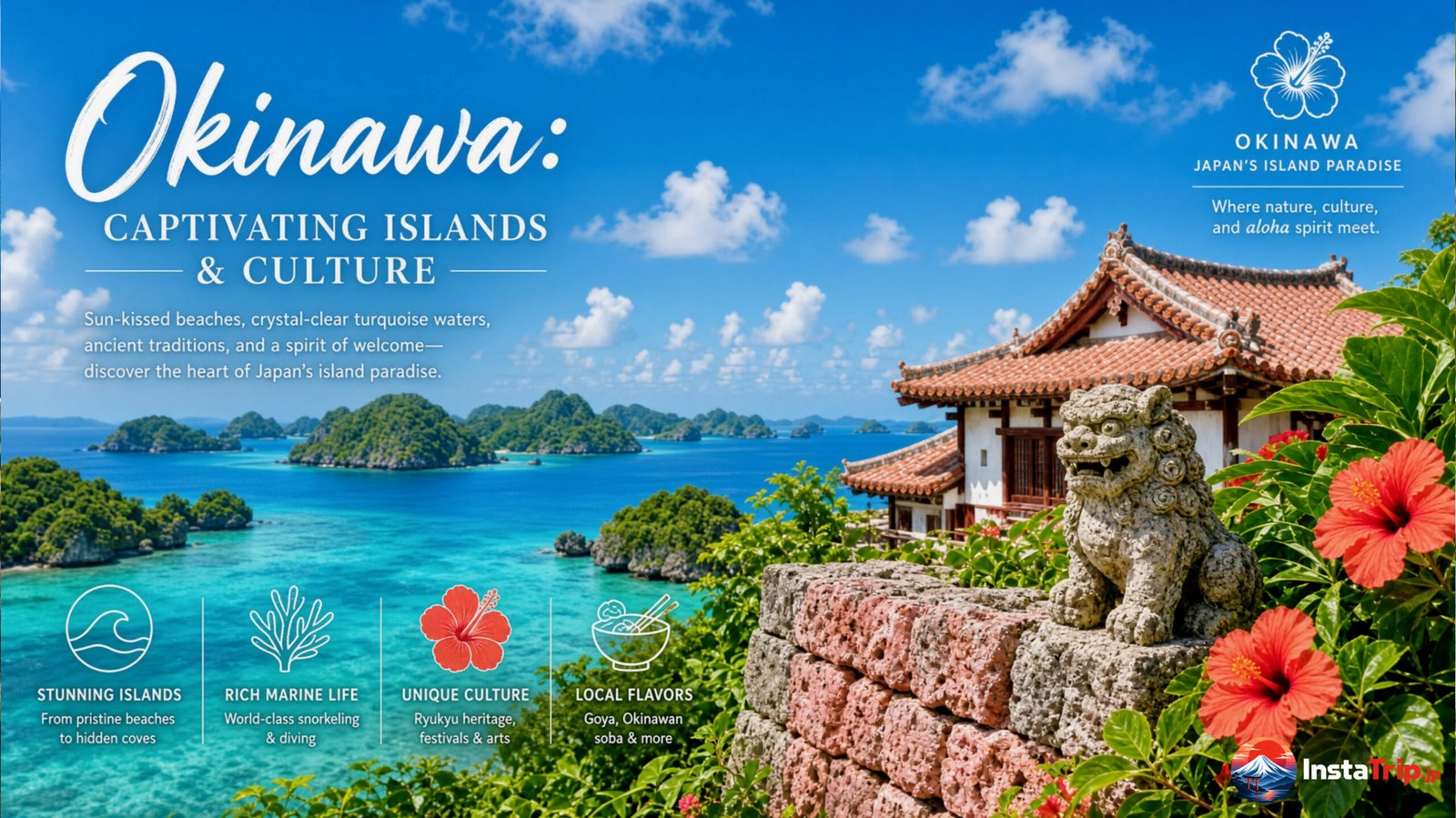
When to Go and How to Travel Well
Spring and late fall are often the most comfortable seasons for exploring, with milder temperatures and fewer weather concerns than peak summer. Summer brings brilliant sea conditions, festivals, and high energy, but also intense heat, humidity, and the possibility of typhoons. Winter is quieter and can be appealing for culture-focused travel, though the water may be too cool for some beach plans.
The best transportation depends on your route. Naha is easy to explore with the Okinawa Urban Monorail and on foot, while much of the main island is easier with a rental car. On smaller islands, advance planning matters, especially during popular travel periods. Ferry and flight schedules can shape an itinerary as much as a map does.
Most of all, leave room for the unscripted parts of Okinawa: an evening sanshin performance drifting from a restaurant, a roadside stand selling fresh fruit, the hush of a sacred forest after rain, or a sunset that turns the East China Sea copper and violet. Come for the dazzling coast, certainly, but stay curious about the stories carried by every island.
![[商品価格に関しましては、リンクが作成された時点と現時点で情報が変更されている場合がございます。]](https://hbb.afl.rakuten.co.jp/hgb/574e08c7.e227f3a8.574e08c8.16e38b3b/?me_id=1398273&item_id=10000426&pc=https%3A%2F%2Fthumbnail.image.rakuten.co.jp%2F%400_mall%2Ff472018-naha%2Fcabinet%2F10509088%2Fimgrc0097989361.jpg%3F_ex%3D128x128&s=128x128&t=picttext "[商品価格に関しましては、リンクが作成された時点と現時点で情報が変更されている場合がございます。]")