
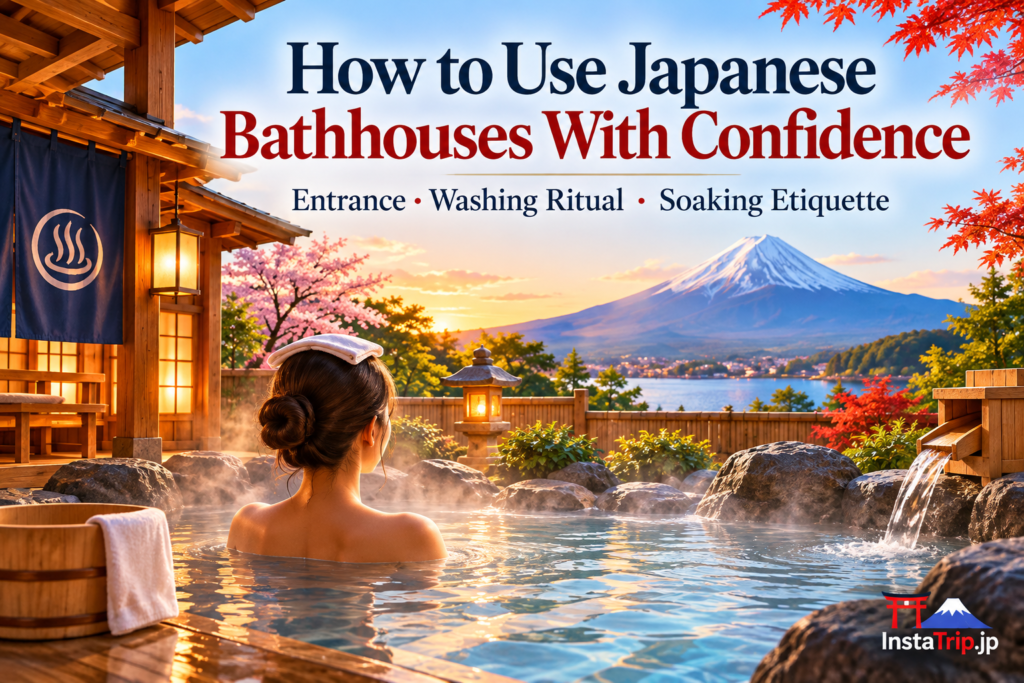
The first surprise inside a Japanese bathhouse is often the quiet. Beyond the changing room, steam softens the air, water ripples across tiled pools, and the hurried rhythm of the street seems very far away. Learning how to use Japanese bathhouses means understanding a small but meaningful ritual: one built around cleanliness, consideration, and the simple pleasure of slowing down.
For visitors, the rules can seem intimidating from a distance. In practice, the routine is clear, welcoming, and deeply relaxing once you know its order. Whether you visit a neighborhood sento in Tokyo, a hot-spring bath in Hakone, or a modern bath complex after a day of exploring, a little preparation will help you enjoy one of Japan’s most restorative everyday experiences.
Japanese Bathhouses: Sento and Onsen
Japan has several kinds of public bathing spaces, and the distinction matters. A sento is a public bathhouse, traditionally supplied by heated tap water. For generations, sento have been part of neighborhood life, offering a place to wash, warm up, and briefly step away from daily routines. Many historic sento still feature painted murals, high ceilings, colorful tilework, and an atmosphere that feels wonderfully local.
An onsen uses naturally heated mineral spring water. These baths appear in famous hot-spring towns and mountain retreats, but also in cities, where mineral water may be brought in from another source. Different springs are associated with different minerals, colors, and sensations, from milky sulfurous water to clear, silky baths.

The practical etiquette at a sento and onsen is nearly identical. The largest differences are usually the setting, water source, price, and bathing options. A large facility may also include outdoor baths, saunas, cold plunges, relaxation rooms, and restaurants. A small sento may offer only a few pools, but that simplicity can be part of its timeless charm.
How to Use Japanese Bathhouses Step by Step
Enter, pay, and choose the correct changing room
At the entrance, remove your outdoor shoes and place them in a shoe locker. Keep the key with you if the facility uses one. Then pay at the front desk or a ticket machine. Admission policies vary, but staff may ask whether you have tattoos or whether it is your first visit.
Bathhouses are generally separated by gender, with signs often marked by the characters for women, 女, and men, 男. Curtains at the entrance may also be red or blue, though color is not universal, so always read the sign. Some facilities switch the men’s and women’s sides on different days, especially when one side has a particular outdoor bath or sauna.
You may bring your own small towel and toiletries, or rent and buy them at the desk. The small towel is for washing and modestly covering yourself while walking around the bathing area. It does not go into the bathwater.
Undress in the changing room
After entering the appropriate changing room, place clothes and belongings in a locker or basket. Japanese bathhouses are normally enjoyed nude. Swimsuits are not worn in standard gender-separated bathing areas, and entering the water in one would be considered unusual and unhygienic.
This can feel vulnerable for first-time visitors, especially for travelers from cultures where communal nudity is uncommon. Yet bathhouse etiquette creates an atmosphere of privacy without isolation. People tend to focus on washing, soaking, and relaxing rather than looking at one another. Follow the routine calmly, and you will soon feel less conspicuous than you expected.
Bring only your small towel, and perhaps your toiletries, into the bathing area. If you have long hair, tie it up before bathing so it cannot touch the water.
Wash thoroughly before soaking
This is the essential rule. The bath is for soaking, not washing. Before entering any shared pool, sit at one of the low washing stations and clean your body carefully.
You will usually find a stool, a bucket or basin, a handheld shower, and dispensers of shampoo, conditioner, and body wash. Rinse the stool first if needed, sit down rather than standing under the shower, and wash from head to toe. Sitting helps keep water from splashing onto neighboring stations, a small act of consideration that shapes the peaceful atmosphere.
Rinse away every trace of soap and shampoo when you finish. If the bathhouse provides a bucket, use it to rinse your space and return the stool neatly. Only then are you ready to enter the pools.
Soak quietly and follow the water’s rhythm
Step into the bath slowly. Japanese baths can be hot, commonly around 104°F to 108°F, and the heat may feel intense at first. Ease in, especially if you have just come from a cool day in Kyoto or an energetic afternoon in Tokyo. There is no prize for enduring the hottest pool.
Keep your towel out of the water. Many bathers fold it and balance it on their head, or place it on the pool’s edge. Do not swim, splash, shave, or wash in the soaking pools. Conversation is welcome when kept low, but this is not a place for loud calls, music, or photos. Cameras and phones are generally prohibited in bathing and changing areas for obvious privacy reasons.
If there are several pools, begin with a moderate temperature before trying a hotter bath, an outdoor rotenburo, a cold plunge, or a sauna. A cold bath can feel exhilarating after heat, but it is optional. Listen to your body. Leave the water if you feel lightheaded, overheated, or unwell.
Dry off before returning to the locker room
Before stepping back into the changing room, use your small towel to dry your body as much as possible. This prevents puddles and keeps the shared space comfortable for the next person. Finish drying with your larger towel at your locker, get dressed, and take a moment to rehydrate.
Many bathhouses sell water, milk drinks, tea, or fruit beverages near the exit. It is a modest post-bath ritual, but after a long soak it can feel remarkably satisfying.
Tattoos, Health, and Other Details to Check First
Tattoo policies are one of the few areas where you should never assume a single rule applies everywhere. Some Japanese bathhouses welcome tattooed guests without question. Others ask guests to cover small tattoos with patches, while some still do not permit tattoos in shared bathing areas. These policies have historical roots, but they are changing, particularly at facilities accustomed to international visitors.
If you have tattoos, check the bathhouse policy before making the trip. Staff may be able to explain the rules clearly even if signs are limited, and a private bath can be a beautiful alternative. Known as kashikiri-buro, private baths are especially appealing for couples, families, or travelers who want more privacy. They may require advance reservations and cost more than communal bathing.
Bathing also comes with sensible health considerations. Avoid soaking if you are feeling ill, have consumed too much alcohol, or have an open wound. Pregnant travelers, people with heart conditions, or anyone concerned about heat exposure should ask a medical professional for personal guidance. Onsen water can be wonderfully soothing, but mineral-rich water is not a substitute for medical treatment.
Young children are welcome at many bathhouses, often with a parent, but rules and age policies vary. If you are traveling as a family, a larger facility or a reservable private bath may be the easiest choice.
What to Bring to a Japanese Bathhouse
- A small washing towel and a larger towel for drying.
- Soap and shampoo if the facility does not supply them.
- Cash or another accepted payment method.
- A change of clothes and a pouch for damp items.
Confirm opening hours, admission, towel rental and whether sauna access costs extra. Read the Tokyo Sento Association’s bathing guide and the Kyoto bathhouse association’s instructions for local context; facilities differ.
Useful travel items (paid links): Small cotton towels · Travel toiletry pouches.
Bathhouse Signs and Useful Japanese
- 銭湯 (sento): public bathhouse.
- 温泉 (onsen): hot spring.
- 男湯 (otokoyu) / 女湯 (onnayu): men’s / women’s bath.
- 貸切風呂 (kashikiri-buro): reservable private bath.
- 撮影禁止 (satsuei kinshi): photography prohibited.
- タオルは借りられますか? (Taoru wa kariraremasu ka?): Can I rent a towel?
Watch: Public Bathing Etiquette
This sento introduction is published by Tokyo’s TIPS information service for foreign residents. Use it to familiarize yourself with the routine before visiting, and follow the individual bathhouse’s instructions.
How to Use Japanese Bathhouses: FAQ
Are swimsuits allowed?
Standard communal bathing areas normally require nude bathing. A mixed bathing or leisure facility may have different rules; check the specific venue.
Are tattoos always prohibited?
No. Rules differ between neighborhood sento, onsen and larger spa complexes. Contact the facility beforehand instead of assuming that a patch will be accepted.
Do towels go in the pool?
No. Keep the towel out of the shared water and keep long hair tied up.
Can I take photos if the bath looks empty?
Do not use cameras or phones in bathing or changing areas without explicit facility authorization. An apparently empty room does not remove privacy rules.
Can I book a private bath?
Some facilities and ryokan offer reservable baths, with their own fees and time slots. Read our ryokan booking guide to compare private and communal options.
The Cultural Meaning Behind the Routine
Japanese bathing is often described as cleansing, but it is not simply about hygiene. The sequence of washing first and soaking afterward separates the practical task of getting clean from the restorative pleasure of the bath. Shared water stays clean because everyone takes responsibility for it.
That idea carries through the whole experience. The low voice, the carefully rinsed stool, the towel kept out of the pool, and the dry floor near the lockers are all small gestures of awareness toward other people. You do not need to perform the ritual perfectly. You only need to notice the rhythm of the room and participate with care.
For travelers, a bathhouse can reveal a quieter side of Japan than a landmark or busy shopping street. It is an everyday tradition, sometimes humble and sometimes magnificent, where architecture, water, routine, and community meet. A gleaming modern spa has its pleasures, but an old sento with a Mount Fuji mural can be just as memorable.
When you finally lower yourself into the warm water after washing away the day, let the experience be unhurried. Watch the steam gather, feel your shoulders release, and allow a familiar routine to become a vivid part of your own Japan journey.