

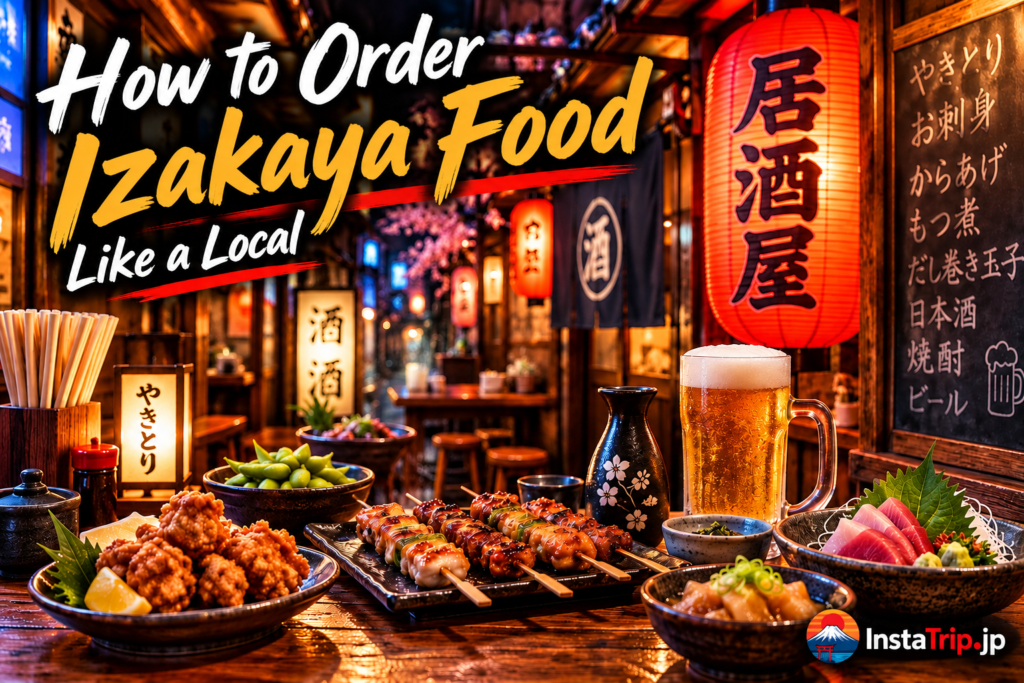
The first cold beer arrives, the room hums with conversation, and plates of sizzling yakitori pass between friends at the next table. Knowing how to order izakaya food turns this captivating scene from a menu-reading challenge into one of Japan’s most memorable everyday experiences. An izakaya is not simply a restaurant or a bar. It is a lively, communal place where food, drink, conversation, and the slow unfolding of an evening belong together.
From compact neighborhood counters in Tokyo to timber-lined rooms in Kyoto and energetic standing bars in Osaka, izakaya come in many forms. Some specialize in chicken skewers, regional sake, or fresh seafood; others offer an expansive menu that moves from sashimi to fried favorites and late-night rice dishes. The essential rhythm is the same: order a few things, share them, then let the table decide what sounds good next.
Start With the House Rhythm
After being seated, you may be served a small appetizer before you have ordered anything. This is called otoshi, and it commonly appears as a small charge on the bill. It might be chilled tofu, simmered vegetables, potato salad, or a seasonal bite that introduces the kitchen’s style. Think of it as part of the izakaya experience rather than an unexpected extra, though policies can vary by venue.
In many izakaya, the first order begins with drinks. Beer is a classic opening choice, but highballs, shochu, sake, plum wine, tea, and nonalcoholic options are widely available. If you are unsure, a draft beer, known as nama biiru, or a Japanese whisky highball is an easy place to begin. You do not need to drink alcohol to enjoy an izakaya. Oolong tea, green tea, sparkling water, and soft drinks are perfectly normal orders.

Once drinks are chosen, add two or three shareable dishes. Avoid treating the menu like a Western entrée list where every diner selects one complete meal. The pleasure is in variety: something fresh, something grilled, something crisp or fried, then perhaps a comforting dish later in the evening.
How to Order Izakaya Food From the Menu
Menus range from picture-filled and multilingual to handwritten boards that change with the day’s catch. Even when English is limited, a little structure makes the choices much less mysterious. Look for familiar categories, photographs, or display cases near the entrance. Staff are often accustomed to visitors, particularly in larger cities, but patience and a friendly approach go far.
A useful first round might combine edamame or cucumber salad with yakitori, karaage fried chicken, grilled fish, or a tofu dish. If you eat seafood, sashimi is especially rewarding at an izakaya known for its fresh local ingredients. Ask what is recommended by saying, “Osusume wa nan desu ka?” – “What do you recommend?” Pointing to an item and adding “kore onegaishimasu” – “this one, please” – is also completely acceptable.
Do not feel pressured to decipher every item at once. Izakaya ordering is usually incremental. Start with enough for the table, wait for the first plates to arrive, and then order again. This pacing gives you time to notice what neighboring tables are enjoying, adjust for hunger, and follow the kitchen’s seasonal specialties.

Build a Table With Contrast
The most satisfying izakaya spread balances flavors and textures rather than follows a strict course order. A bright dish such as chilled tomato, cabbage with miso, or vinegared seaweed can cut through the richness of karaage or pork belly. Charcoal-grilled skewers bring smoky depth, while sashimi offers a clean, delicate counterpoint.
Yakitori menus deserve a closer look because the names often describe specific chicken cuts. Momo is thigh meat, negima combines chicken and scallion, tsukune is a seasoned chicken meatball, and tebasaki means chicken wing. Adventurous diners may see liver, gizzard, or skin. There is no expectation to order every part of the bird. Choose what appeals to you, and ask for shio for salt seasoning or tare for a sweet-savory glaze when the option is offered.
For a group of two to four, consider one light starter, one grilled dish, one fried dish, and one vegetable or tofu plate. That is enough to begin without crowding the small table. Larger groups can add a sashimi platter or a hot pot if the restaurant offers one.
Share Freely, But Read the Setting
Izakaya food is designed for sharing, and many portions are intentionally modest. Plates may arrive whenever they are ready rather than in the order you requested them. This is normal. Make space in the middle of the table, take a portion onto your small plate, and let everyone try what they like.
Still, sharing is not a rigid rule. At a counter seat, one person may order ramen, grilled mackerel, or a rice bowl as their own meal. In a casual standing bar, guests may simply order one skewer and one drink at a time. Watch the scale of the venue and follow its atmosphere. A quiet, family-run izakaya calls for a different pace than a vibrant basement pub near a major station.
When food is placed in the center, use the serving utensils provided and move your portion onto a small plate. If there are no serving utensils, ask staff for an extra pair of chopsticks. This keeps shared dishes comfortable for everyone at the table.
Know What Happens After the First Round
In busy izakaya, staff may not return automatically as soon as your glass is empty. Catch someone’s attention with a polite “sumimasen,” meaning “excuse me.” In some restaurants, a call button sits at the table. Use it without hesitation. It exists precisely because the dining room is lively.
A second order is often where the meal becomes more personal. If you began with familiar favorites, try a seasonal special written on the wall. In spring, you may find mountain vegetables or young bamboo shoots; summer menus can lean toward chilled dishes and grilled seafood; autumn invites mushrooms, sweet potato, and rich sake pairings; winter brings warming oden and hot pots. Seasonal ingredients are one of the most fascinating pleasures of eating in Japan, and an izakaya offers an approachable way to encounter them.
Toward the end of the evening, many diners order a final filling dish known informally as shime, or “the finish.” This could be grilled rice balls, fried noodles, rice with tea poured over it, or a small bowl of ramen. It is not mandatory, especially if you are already full. But sharing a warm bowl of yakisoba or onigiri after several small plates can be a wonderfully comforting finale.
Dietary Needs and Ordering With Care
Vegetarian, vegan, gluten-free, and allergy-friendly dining requires extra attention at izakaya. Fish stock, bonito flakes, soy sauce, egg, and meat-based broths appear in dishes that may seem plant-forward at first glance. Even vegetable dishes can be prepared with dashi, a traditional stock often made with bonito.
If you have a serious allergy or dietary restriction, communicate it clearly before ordering, ideally with a written translation that names the ingredient and explains the level of risk. Do not rely on broad labels alone. “Vegetarian” may be interpreted differently, while a specific statement such as “I cannot eat fish, including fish stock” is much easier for staff to understand and assess.
It also helps to choose an izakaya with a menu you can review in advance when possible. Specialists in seafood, yakitori, or offal may have fewer flexible options than larger modern izakaya. That is not a failure of hospitality – it is simply the nature of a kitchen built around a particular craft.
Useful Izakaya Japanese: Ordering and Checking Charges
| Japanese | Reading | Meaning |
|---|---|---|
| 居酒屋 | izakaya | Japanese pub |
| おすすめは何ですか? | Osusume wa nan desu ka? | What do you recommend? |
| これを二つお願いします。 | Kore o futatsu onegaishimasu. | Two of these, please. |
| 取り皿をお願いします。 | Torizara o onegaishimasu. | Small sharing plates, please. |
| お通し代はいくらですか? | Otoshi-dai wa ikura desu ka? | How much is the appetizer charge? |
| お会計をお願いします。 | Okaikei o onegaishimasu. | The bill, please. |
Before sitting down, check any seating charge, minimum order or time limit. For 飲み放題 (nomihodai), ask which drinks are included and when the last order is taken. Do not assume the otoshi can be declined without a charge. Check portions too: a skewer price may be per piece, while a platter may serve several people.
For sharing etiquette and menu ideas, consult the JNTO Izakaya Dining Guide. Ask for serving chopsticks when sharing rather than assuming everyone is comfortable using personal utensils. For quick daytime food, see our konbini food guide.
Prepare for an Izakaya Evening
A pocket phrasebook and a compact power bank can help with menu translation and the journey home. Save your return route before the evening starts.
Useful travel items (paid links): Japanese travel phrasebooks · Compact power banks.
Watch: Ueno Izakaya Food Tour
SAMURAI JUNJIRO Channel explores izakaya around Ueno and Ameyoko, with ordering examples and dishes to recognize. The video is a visual companion; confirm current menus, prices and opening hours with each venue.
How to Order Izakaya Food: FAQ
Can I visit an izakaya without drinking alcohol?
Many offer tea and soft drinks. Check the venue’s minimum-order policy before taking a seat.
Why did an appetizer arrive without my order?
It may be otoshi, a charged appetizer associated with seating. Ask about the charge and ingredients before accepting a seat, especially with dietary restrictions.
Should I order everything at once?
Start with a few dishes and add another round after they arrive. Fixed courses and all-you-can-eat plans follow their own rules.
Can I eat alone?
Yes, where the venue welcomes solo diners. Counter seats and standing bars can suit a small order.
Settle the Bill Gracefully
When you are ready to leave, ask for the check with “okaikei onegaishimasu.” In some places, the bill is brought to the table and paid at a register near the entrance. In others, you pay at the table. Look for the small check folder or ask staff if you are uncertain.
Splitting bills varies by restaurant. Friends in Japan often divide the total evenly, but some small establishments prefer one payment. Cash remains useful, although cards and contactless payments are increasingly common in cities. Tipping is not customary in Japan, so simply pay the stated amount and offer a warm “gochisousama deshita” – a phrase of thanks for the meal – as you leave.
An izakaya evening is at its best when it feels less like ordering dinner and more like joining a local rhythm for a few hours. Begin with curiosity, order in small waves, and leave room for the dish you did not plan to try. Often, that unexpected plate becomes the flavor you remember long after the lanterns outside have faded from view.