

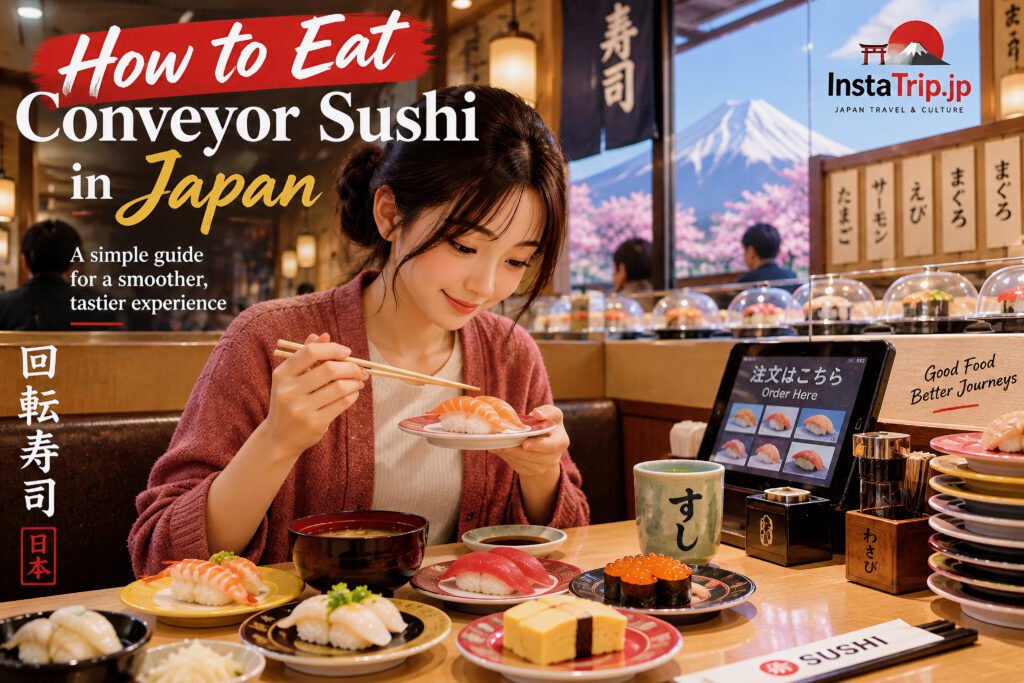
The first plate glides past: glossy salmon, a neat mound of tuna, perhaps a bright yellow tamago egg sushi. Around you, plates move through a lively kaitenzushi restaurant, screens flash with orders, and the scent of warm rice and green tea fills the room. Knowing how to eat conveyor sushi turns this fast-moving Japanese meal into one of travel’s most relaxed, captivating food experiences.
Conveyor-belt sushi, called kaitenzushi in Japanese, is built around choice. You can take a plate the moment something catches your eye, order a freshly made piece from a touchscreen, or combine both. It is casual, efficient, and wonderfully visual, but a few small customs will help you enjoy it with confidence and respect.
What Makes Kaitenzushi So Fascinating
Kaitenzushi emerged in postwar Osaka, where restaurateur Yoshiaki Shiraishi adapted the moving-belt idea from a brewery. His goal was practical: one chef could serve many guests without requiring a large staff. What began as an inventive solution became a dynamic part of everyday dining across Japan.

Today, the experience ranges from modest neighborhood counters to polished chains with multilingual ordering screens, automated delivery lanes, and plate-return systems. The core pleasure remains the same. Sushi is no longer hidden behind a formal counter or reserved for a long, expensive meal. It passes right in front of you, inviting curiosity one plate at a time.
That accessibility does not mean the food is careless. Many restaurants prepare rice frequently, make popular items to order, and use covered conveyors or monitored systems to maintain freshness. Quality varies by restaurant, as it does anywhere, so treat kaitenzushi as its own category: often excellent for variety, spontaneity, and value, rather than identical to an intimate chef-led sushi counter.
How to Eat Conveyor Sushi: Your First Steps
After entering, you may receive a numbered ticket or be shown to a counter seat or table. At many modern restaurants, a small touchscreen sits at each place setting. It may offer English, Chinese, Korean, and other language options, though this is not guaranteed everywhere.
Look around your setting before reaching for the belt. You will usually find chopsticks, soy sauce, pickled ginger, and a small dish for soy sauce. Green tea is often self-service: add powdered tea to a cup, then use the hot-water tap at the table. Be careful with the tap, as the water is extremely hot.

The plates traveling on the main belt are available to take unless a restaurant indicates otherwise. Lift one gently and place it at your seat. Never touch a plate and return it to the belt, and do not reach across another guest’s space. If a sushi item arrives on a separate upper lane after you order, take only the plate designated for your seat. Those speedy deliveries are often headed to a specific table.
Some restaurants place a small sign, marker, or colored alert on the belt when a plate has been circulating for too long. In that case, leave it alone. If a favorite item has not appeared, ordering it fresh is usually the best choice.
Start With What Looks Best
There is no required sequence, and the old idea that everyone must progress from light fish to rich fish is more useful at a formal omakase meal than at a lively kaitenzushi restaurant. Begin with what appeals to you. Salmon, tuna, shrimp, seared beef, squid, scallop, and tamago are familiar starting points, while eel, mackerel, salmon roe, and seasonal fish offer more adventurous possibilities.
Pay attention to the small details. A neatly shaped piece of nigiri should have rice that holds together without being packed too tightly. Fish should look moist and clean, not dry around the edges. If you are unsure about an unfamiliar topping, order one plate rather than committing to several. The conveyor is an invitation to explore, not a test of expertise.
Using Soy Sauce, Wasabi, and Ginger
Sushi etiquette is less rigid than many first-time visitors expect. Nigiri can be eaten with chopsticks or clean hands. Sashimi is generally eaten with chopsticks. Either way, avoid rubbing disposable wooden chopsticks together, which can suggest you think the restaurant has provided a poor-quality utensil.
For nigiri, use only a light touch of soy sauce. If possible, turn the piece slightly and dip the fish side, not the rice. Rice absorbs soy sauce quickly and can fall apart, while a soy-soaked bite hides the delicate balance of fish, vinegar-seasoned rice, and any seasoning the chef has already added.
Wasabi is another place where less is often more. Some nigiri comes already seasoned with wasabi between the fish and rice, while other pieces do not. Add a small amount directly to the sushi if you want more heat. Mixing a large cloud of wasabi into the soy sauce is common outside Japan, but it overwhelms both flavors and is best avoided.
The pale pink or yellow slices of pickled ginger are called gari. They are a palate cleanser, meant to be eaten between different kinds of sushi rather than piled on top of every piece. A bite of ginger between rich eel and clean-tasting white fish can make the next plate feel newly vivid.
Ordering Fresh Sushi From the Screen
The touchscreen is often the easiest part of the meal. Select an item, choose the number of plates, and confirm your order. A freshly prepared plate may arrive on a dedicated express lane, often with a cheerful sound or screen notification. Remove it promptly, then send the tray back if there is a button or clearly marked return control.
Ordering is especially useful for warm or time-sensitive dishes such as miso soup, chawanmushi steamed egg custard, noodles, fried items, and desserts. It is also a considerate way to request popular sushi without waiting for it to circle the room.
Do not assume every item is raw fish. Kaitenzushi menus are broad and welcoming, with cooked shrimp, egg, cucumber rolls, fried chicken, corn salad sushi, grilled fish, and children’s favorites alongside more traditional choices. This variety makes conveyor sushi an easy shared meal for groups with different tastes, though diners with allergies should ask staff directly or review ingredient information carefully. Sauces, roe, shellfish, and fried items can contain ingredients that are not obvious at a glance.
Understanding Plates and Paying the Bill
At many kaitenzushi restaurants, plate color or pattern corresponds to price. A stack of different plates can therefore represent different price tiers. Other restaurants charge a flat price for most sushi, with premium items priced separately. Check the menu or signage before you begin, especially if you plan to sample freely.
Keep your empty plates stacked neatly at your seat. In some restaurants, a staff member counts them at the end. In others, you insert plates into a slot at the table, where they are automatically counted. Certain chains turn this into a playful ritual, occasionally triggering a small animation or prize game, but that feature is far from universal.
When you are finished, use the call button, touchscreen bill function, or ask staff for the check. Depending on the restaurant, you may pay at the table or take a printed slip to a central register. Tipping is not customary in Japan. A simple “arigato gozaimasu” is a warm and appropriate way to thank the staff.
Small Habits That Make the Meal Better
The most graceful way to eat at a conveyor sushi restaurant is also the simplest: take only what you intend to eat, order when freshness matters, and let the rhythm of the restaurant guide you. Avoid taking excessive plates simply because the selection is exciting. You can always order more.
If you are sharing a table, use the serving end of shared chopsticks when available, or let each person take pieces directly from their own plate. Keep your belongings close, especially at compact counter seats, and be mindful that the belt is part of a shared dining space rather than a display to handle.
A conveyor sushi meal is not about memorizing rules. It is about participating in a wonderfully modern Japanese ritual, where careful food preparation meets movement, technology, and the pleasure of an unexpected plate appearing at just the right moment. Take your time, try something unfamiliar, and let each small bite become part of your own instant trip through Japan’s vibrant everyday food culture.
|
![[商品価格に関しましては、リンクが作成された時点と現時点で情報が変更されている場合がございます。]](https://hbb.afl.rakuten.co.jp/hgb/578bd563.1a5ec743.578bd564.4adb6009/?me_id=1269065&item_id=10001145&pc=https%3A%2F%2Fthumbnail.image.rakuten.co.jp%2F%400_mall%2Fkouragumi%2Fcabinet%2F10531638%2Fsusigift1200.jpg%3F_ex%3D128x128&s=128x128&t=picttext "[商品価格に関しましては、リンクが作成された時点と現時点で情報が変更されている場合がございます。]")