
A morning café stop in Japan can begin with the deep, roasted aroma of siphon coffee, continue with a precisely arranged plate of thick toast, and end in a sunlit room designed for lingering quietly. Japanese café culture trends are changing the experience, but they are not replacing its enduring spirit. Across Tokyo, Kyoto, Osaka, and smaller cities, a new generation of cafés is building on a long affection for thoughtful service, beautiful objects, and the restorative pleasure of taking a pause.
For travelers, cafés offer more than caffeine between landmarks. They reveal how contemporary Japan interprets craft, community, privacy, seasonality, and design. One door may lead to a decades-old kissaten with velvet seats and jazz on low volume. Another may open onto a bright minimalist counter where single-origin beans are treated with the same focus a chef gives a seasonal ingredient. Both belong to the same captivating story.
Japanese Café Culture Trends: Tradition Meets a New Rhythm
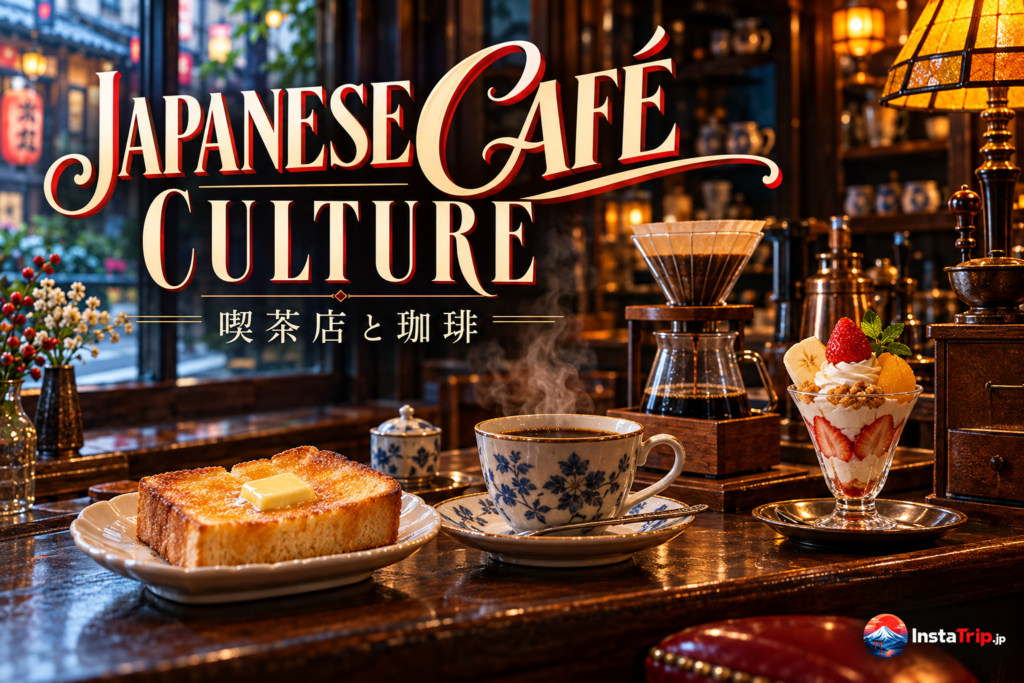
Japan’s café scene has always held several worlds at once. The classic kissaten, a traditional coffeehouse, emerged as a distinctive urban refuge during the twentieth century. Many are intimate, independent places with dark wood, carefully chosen cups, and a calm that encourages conversation, reading, or simply watching the afternoon unfold. Coffee may arrive from a cloth filter or siphon brewer, and a morning set might include toast, egg, salad, and coffee at a remarkably welcoming price.
That ritual remains deeply valued. Yet specialty coffee has brought a different vocabulary: roast profiles, direct relationships with growers, hand-poured brews, and menus that explain flavor with the precision of wine. Rather than treating this shift as a battle between old and new, many Japanese cafés draw from both. A barista may serve an elegant Ethiopian pour-over in a space that still feels hushed and unhurried. A historic coffee shop may refine its beans while holding tightly to its familiar counter and ceramic cups.

The result is not one uniform trend but a broader attention to intention. In Japan, the drink, the vessel, the lighting, the music, and the pace of service can all be part of the experience. This is why a small café can feel as memorable as a major gallery or neighborhood temple. Its atmosphere has been composed.
The kissaten revival is about atmosphere, not nostalgia alone
Kissaten are attracting younger visitors, creatives, and travelers who want an alternative to fast-moving city life. Their appeal lies partly in retro details: stained-glass lamps, leather banquettes, parquet floors, hand-lettered menus, and the occasional parfait that looks wonderfully untouched by time. But the revival is more meaningful than a vintage aesthetic.
These spaces preserve a form of hospitality built around unhurried presence. There is often no pressure to optimize a visit, photograph every corner, or turn a quiet hour into content. Some kissaten have smoking sections or allow smoking, while others do not, so travelers sensitive to smoke should check before settling in. They can also be cash-focused and may have rules around photography, laptop use, or group size. Respecting those small customs is part of entering the room on its own terms.
A kissaten is especially rewarding after a morning in a lively district such as Asakusa, or Shinjuku. The city does not disappear outside, but its tempo changes at the table.

Coffee has become a craft encounter
Contemporary roasters and barista-led cafés have made coffee travel a genuine reason to explore different neighborhoods. Tokyo is a dynamic center for this movement, from compact counters in former industrial areas to polished roasteries with spacious communal tables. Kyoto’s cafés often pair coffee ambition with an acute sensitivity to architecture, whether the setting is a renovated machiya townhouse or a restrained concrete space framed by a small garden.
The best experiences invite curiosity rather than performance. Ask what the staff recommend, especially if the menu distinguishes espresso blends from filter selections. A lightly roasted coffee can taste surprisingly tea-like, bright, or floral, while a darker profile may suit the fuller, bittersweet character many people associate with traditional Japanese coffee. Neither is inherently better. It depends on whether you want a contemplative cup, a milk drink, a classic toast set, or a brief stop before the next train.
The visual language of specialty cafés can feel strikingly modern: stainless steel, pale timber, glass, carefully spaced seating. Still, their appeal is often rooted in a familiar Japanese appreciation for restraint. Empty space is not a lack of atmosphere. It gives attention back to the aroma rising from the cup, the sound of the grinder, and the changing light near the window.
Beyond Coffee: Tea, Sweets, and Seasonal Color
Coffee may dominate the image of the Japanese café, but tea-focused spaces are shaping the scene just as strongly. Matcha cafés range from ceremonial-minded counters to playful dessert destinations, while hojicha, sencha, and Japanese black tea are appearing in more inventive drinks and sweets. The difference matters. Matcha is not simply a green-flavored ingredient, and a carefully prepared tea deserves the same attention a café may give to its coffee beans.
Seasonality brings another layer. Spring may inspire strawberry parfaits and sakura-tinted drinks; summer brings kakigori, the finely shaved ice dessert that can be ethereal when made with fresh fruit syrup, milk, or tea; autumn welcomes chestnut, sweet potato, and deep roasted flavors. Winter is a season for warm puddings, rich cocoa, and fruit sandwiches enjoyed indoors as streets turn crisp.
Parfaits remain one of the most magnificent expressions of café artistry. In a well-made version, layers of fruit, cream, jelly, ice cream, cake, and crunchy elements are balanced rather than simply piled high. Many cafés use regional ingredients or build menus around a brief harvest window. If a particular fruit is in season, order it. The limited nature of the menu is often the point.
Design-Led Cafés and the Search for a Third Place
A growing number of cafés are designed as destinations in themselves. Some inhabit renovated warehouses, old homes, bookshops, galleries, or carefully restored wooden buildings. Others embrace futuristic minimalism, with precise geometry and almost gallery-like calm. Japan’s architectural range makes this trend especially vivid: a café can be a stage for local materials, a preservation project, or a bold contemporary statement.
For visitors, the temptation is to chase the most photogenic room. Yet the most rewarding café is not always the one with the longest line or the most recognizable dessert. Social media has helped independent places reach global audiences, but it has also made some tiny cafés difficult to enjoy at peak hours. Arriving shortly after opening, visiting on a weekday, or choosing a neighborhood a little beyond the headline attractions can lead to a more relaxed experience.
Cafés also serve as a version of the “third place” – somewhere between home and work. In dense cities, a single seat beside a window can offer welcome breathing room. Some cafés welcome remote work, with outlets and Wi-Fi; others intentionally protect a quieter, screen-light atmosphere. Signs about time limits and laptop use are not obstacles. They tell you what kind of space the café hopes to be.
Regional character is becoming more visible
The most exciting café culture is not confined to Tokyo. In Kanazawa, local craft traditions can shape the choice of ceramics and sweets. In Hokkaido, dairy-rich desserts and roasteries speak to the region’s ingredients and colder climate. In Okinawa, tropical fruit, brown sugar, and local tea create a different flavor landscape. Coastal towns and mountain communities are also seeing small roasteries and cafés become gathering points for residents, makers, and travelers.
This regional dimension is worth seeking because it resists the idea that every excellent café should look or taste the same. A coffee shop in a restored machiya, a seaside café near Enoshima, and a tiny retro counter in a northern city can all offer care and imagination while expressing entirely different surroundings.
A Café Walk in Kiyosumi-Shirakawa (清澄白河)
For a concrete taste of today’s café culture, start at Kiyosumi-Shirakawa Station on the Hanzōmon or Ōedo Line. The surrounding streets pair small coffee roasters with older residential lanes, Kiyosumi Gardens and the Museum of Contemporary Art Tokyo. Choose one cup to drink at the counter, then walk before trying another style; the neighborhood is best experienced at an unhurried pace.
Tokyo’s official Kiyosumi-Shirakawa guide covers access and nearby attractions. Check each café’s opening days, seating rules and photography policy before setting out. If you want a different kind of morning, look for a mōningu sābisu (モーニングサービス) at a kissaten: a drink with toast or other breakfast items, especially associated with Nagoya. The set and pricing depend on the individual shop, so read the menu rather than assuming every café offers it.
Map: Kiyosumi-Shirakawa Café Area
See the Neighborhood
This quiet 4K walk shows the streets and atmosphere around Kiyosumi-Shirakawa. It is a neighborhood preview rather than a ranking of cafés.
Paid links
To recreate a little of the café ritual at home, browse a pour-over dripper or a matcha whisk (茶筅).
How to Enjoy Japan’s Café Scene Respectfully
A little awareness makes the experience richer. Many small cafés have limited seating, so avoid treating them as waiting rooms for a large group. Keep voices gentle in spaces with a quiet atmosphere, ask before photographing staff or other guests, and be patient when a single owner is preparing every drink. If a menu is only in Japanese, a gesture and a warm “osusume wa?” – what do you recommend? – can open an easy exchange.
Most of all, leave room for the unexpected. The café you remember may not be the one you planned to visit. It may be a modest storefront near a station, a hand-thrown cup chosen with care, or a seasonal parfait enjoyed while rain softens the view outside. In Japan, a café break can become a small but vivid form of travel: a chance to slow down long enough for a place to reveal itself.