
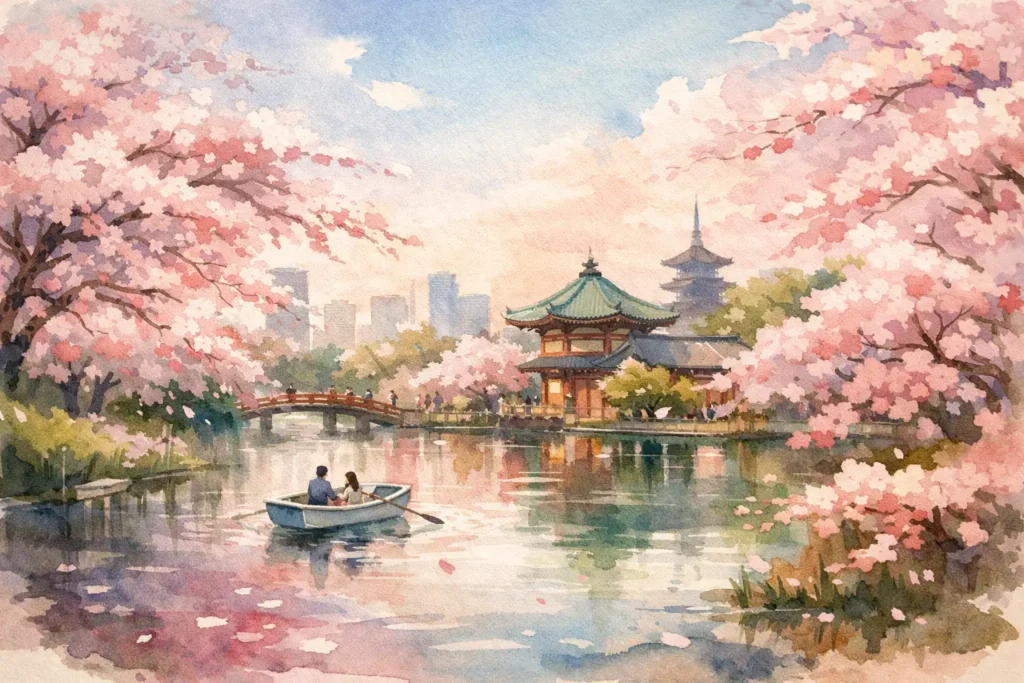
Ueno Park does not ease into spring quietly. For a brief, luminous stretch each year, its broad central path becomes a tunnel of pale pink, filled with the fragrance of food stalls, the clink of picnic cups, and the excited rhythm of Tokyo residents gathering beneath the trees. The best time for cherry blossoms in Ueno is usually late March to early April, but the most rewarding visit depends on what you hope to see: fresh pink buds, a full canopy of flowers, or petals drifting across the park like confetti.
Ueno is one of Tokyo’s most celebrated places for hanami, the Japanese custom of appreciating cherry blossoms. It is also one of the city’s busiest. Knowing when to go can turn a beautiful visit into a genuinely memorable encounter with a tradition that has shaped Japanese springtime for centuries.
When Is the Best Time for Cherry Blossoms in Ueno?
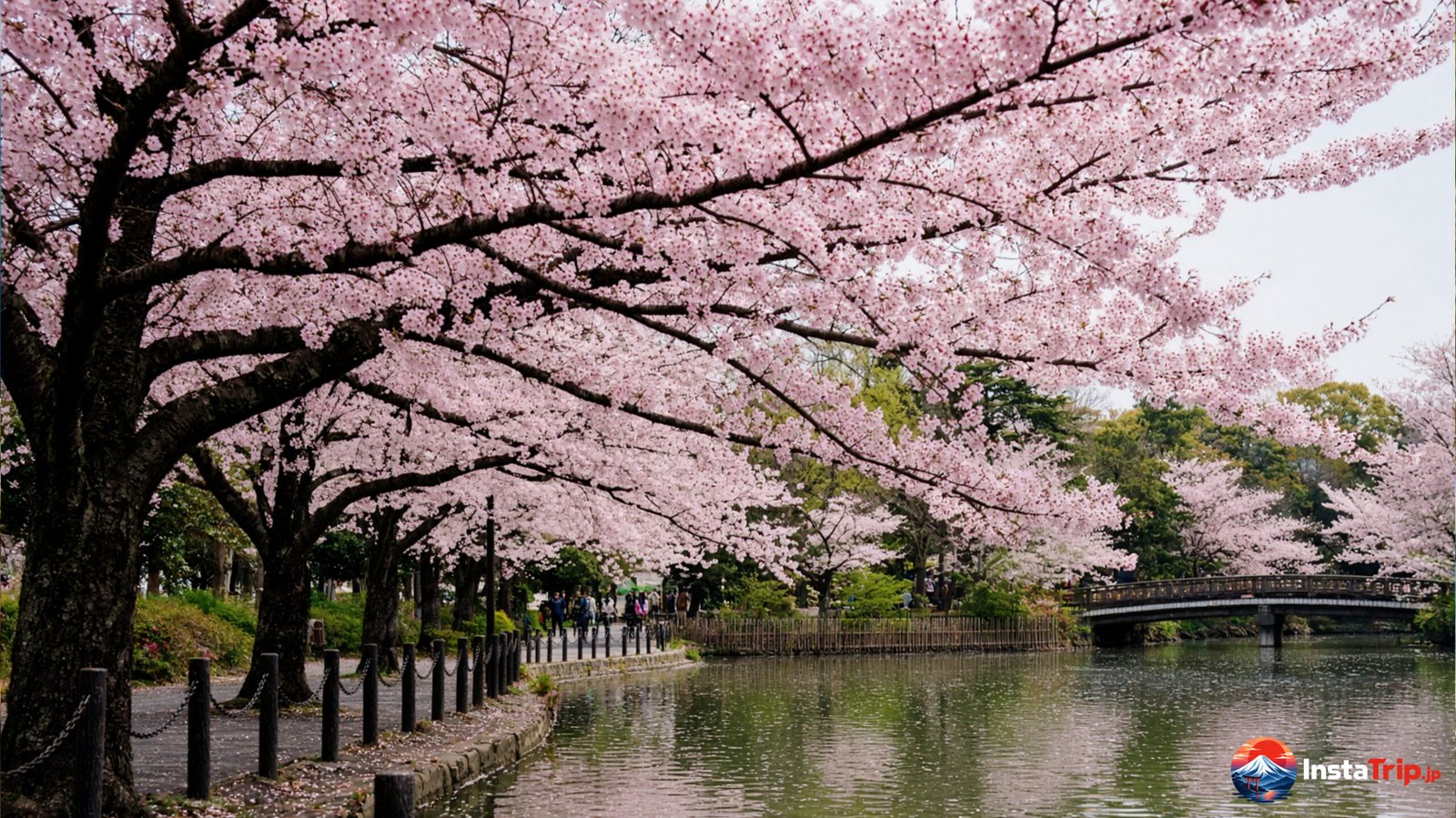
In an average year, Tokyo’s Somei Yoshino cherry trees begin flowering around the last week of March. Ueno Park typically reaches its most photogenic full bloom about five to seven days later, often between March 30 and April 5. This is the window most travelers imagine: branches heavy with soft blossoms, crowds strolling beneath them, and a vibrant festival atmosphere from morning into evening.

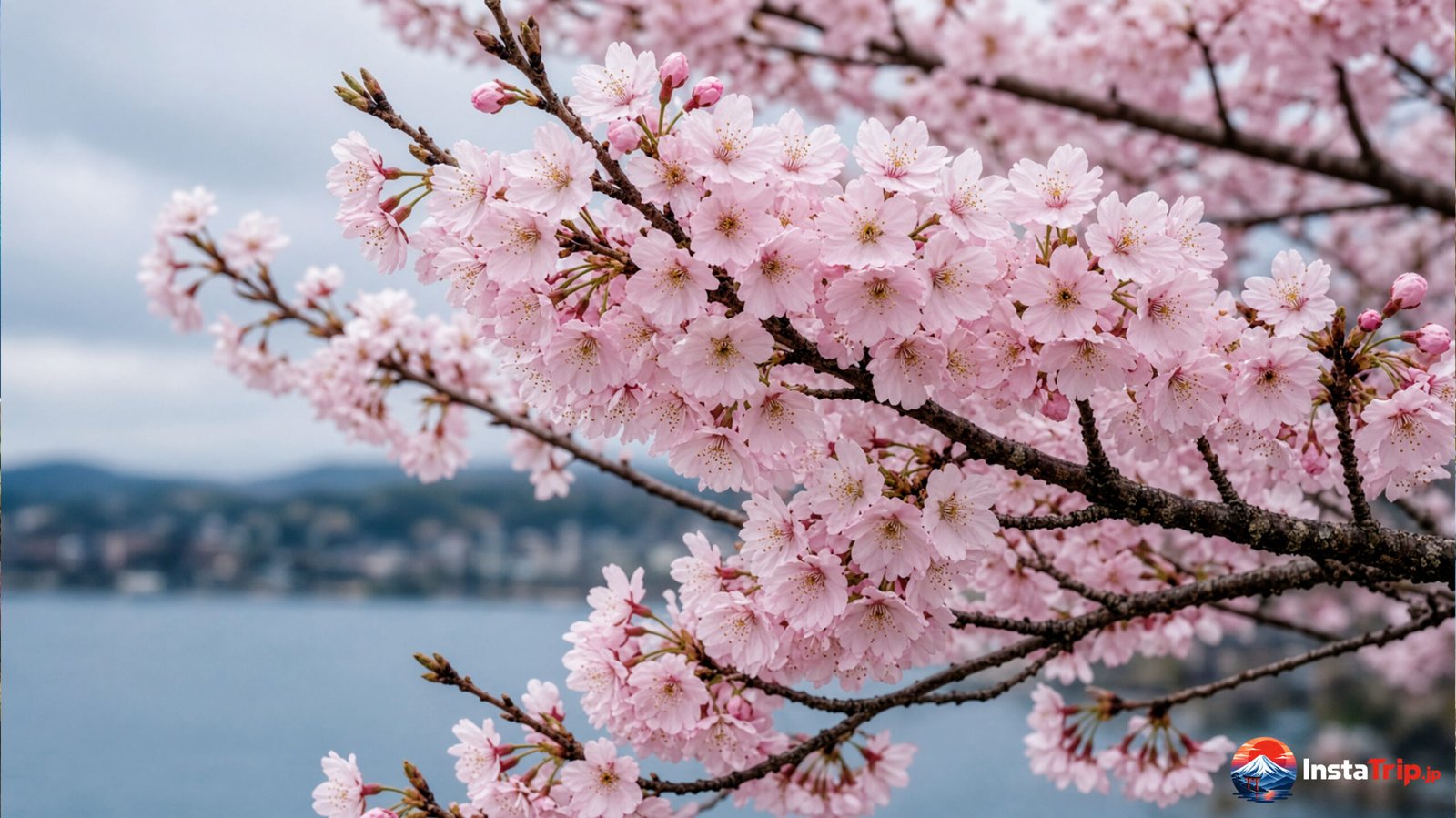
Nature does not follow a fixed calendar, however. A warm March can bring blossoms earlier, while a cold spell may delay them into early April. Rain and strong wind can also shorten the peak. If your Tokyo dates are flexible, plan for the final week of March through the first week of April and check the seasonal forecast shortly before your visit.
For many visitors, the ideal moment is not necessarily the first day of full bloom. Two or three days after the trees reach their peak, the petals often begin to float gently through the air. In Japanese, this fleeting scene is sometimes described as hanafubuki, or a flower blizzard. At Ueno, where hundreds of trees line the park’s main avenues, it can feel magnificent.
A simple guide to the bloom stages
Before full bloom, usually in the last days of March, the park feels anticipatory. Buds open in clusters, and there is more space to observe the trees, visit museums, or wander toward Shinobazu Pond without being swept into the largest crowds.

At full bloom, Ueno becomes an exuberant spring gathering place. Choose this stage if you want the classic hanami atmosphere, abundant blossoms in photographs, and the energy of one of Tokyo’s great seasonal traditions.
A few days after peak bloom, the ground and water begin to collect fallen petals. The flowers may no longer look pristine, but the scene gains a gentle, transient beauty. This is often a wonderful choice for travelers drawn to quieter details rather than perfect postcard branches.
Why Ueno Park Is Such a Special Hanami Destination
Cherry blossoms have been admired in Japan for more than a thousand years, celebrated in poetry, painting, courtly gatherings, and ordinary neighborhood life. Their short season has long carried associations with renewal, impermanence, and the preciousness of passing moments. Hanami is joyful, social, and profoundly seasonal, but it also invites a pause to notice how quickly beauty changes.
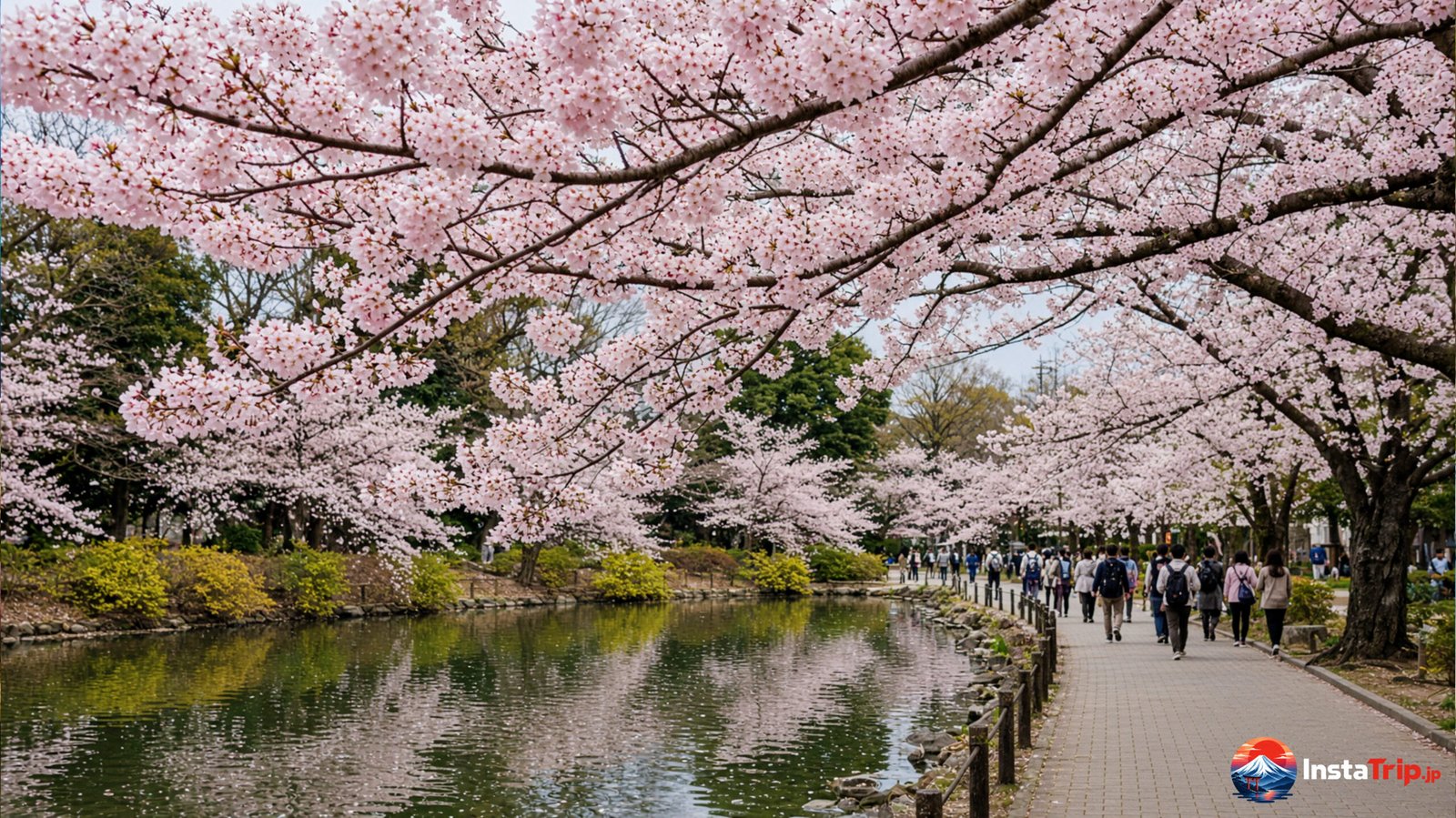
Ueno Park brings that cultural feeling into a distinctly Tokyo setting. The park’s cherry-tree avenue is lively and democratic, welcoming office workers, families, students, photographers, and visitors from around the world. Blue picnic sheets appear beneath the branches, while stalls sell familiar festival favorites such as yakisoba, grilled skewers, and sweet snacks. It is not a silent garden experience. It is a city celebrating spring together.
The park also has unusual depth beyond its blossoms. Ueno developed as a major cultural and recreational area after the grounds of Kan’ei-ji Temple were transformed into a public park in the 19th century. Today, important museums, a zoo, shrines, and the spacious Shinobazu Pond surround the cherry-viewing routes. A visit here can move naturally from a moment under the blossoms to an afternoon with art, history, or a peaceful waterside walk.
How to Avoid the Biggest Crowds at Ueno
Ueno’s popularity is part of its appeal, yet it comes with a trade-off. Midday and early evening during full bloom can be intensely crowded, especially on weekends. If you want room to take photographs or simply absorb the atmosphere, arrive early.
Weekday mornings are the strongest option. The light is soft, the branches are easier to see before picnic groups settle in, and the park feels more reflective than hectic. Arriving around opening hours also leaves time to enjoy the neighboring Ameyoko shopping district later, when its market lanes are fully alive.
If an early start is not possible, try a weekday after 3 p.m. The crowds remain, but the tone changes as the light warms and people begin gathering for evening hanami. Nighttime blossom viewing, known as yozakura, can be captivating when seasonal illuminations are offered. Check local event information close to your travel dates, as lighting schedules and festival arrangements can vary from year to year.
Weekend visitors should embrace the bustle rather than expect solitude. Keep your itinerary light, allow extra time to move through the main promenade, and avoid treating Ueno as a quick stop between tightly scheduled attractions. Spring crowds here are not an obstacle to the experience – they are part of the story.
Planning Your Cherry Blossom Visit to Ueno Park
Ueno Station is the most convenient gateway, and the park is only a short walk from its exits. Because the station is a major rail hub, it is easy to combine Ueno with other parts of Tokyo. Still, during peak sakura season, give yourself more time than a map suggests. The route from station to blossoms may be short, but the crowds, food stalls, and irresistible photo stops can stretch it considerably.
Dress for changing spring weather. Tokyo can be pleasantly mild during the day but cool after sunset, and occasional rain is common. Comfortable shoes matter more than usual, since the best experience involves wandering rather than rushing from one landmark to another.
If you plan to picnic, be considerate of the people sharing the park. Hanami is communal, and good etiquette helps preserve its warm spirit. Use designated spaces when available, take your trash with you or sort it carefully, avoid blocking walking paths, and keep noise at a respectful level. Popular parks may set temporary rules for alcohol, tents, or large group gatherings, so follow posted guidance.
Photographers should look beyond the famous central avenue. The main path delivers the grand, crowded spectacle, but quieter moments can be found around the park edges and toward Shinobazu Pond. A low angle beneath the branches can make the canopy feel endless; a wider view can place the blossoms against museum architecture and the energetic movement of the city.
What If You Miss Peak Bloom?
Missing Ueno’s peak by a few days does not mean missing spring in Tokyo. Early bloom can be lovely for travelers who prefer open buds and fewer people, while post-peak petals create some of the season’s most evocative scenes. The cherry trees do not offer a single perfect day. They offer a changing performance.
If you arrive after the main Somei Yoshino blossoms have fallen, look for late-blooming varieties in parks and gardens around the city. Their colors can be deeper pink, their petals fuller, and their timing more forgiving. Ueno itself remains worth visiting for its museums, pond, temples, and lively neighborhood character, even after the central avenue has turned green again.
The most satisfying way to experience Ueno in spring is to leave room for chance. Come early if you can, follow the blooms rather than a rigid itinerary, and pause when the city seems to slow beneath the trees. Whether you find perfect full bloom or a path scattered with petals, Ueno offers a vivid reminder that Japan’s most cherished seasonal moments are beautiful precisely because they do not last.
![[商品価格に関しましては、リンクが作成された時点と現時点で情報が変更されている場合がございます。]](https://hbb.afl.rakuten.co.jp/hgb/574e6153.9f184dbe.574e6154.25981e94/?me_id=1384396&item_id=10001319&pc=https%3A%2F%2Fthumbnail.image.rakuten.co.jp%2F%400_mall%2Ff262129-kyotango%2Fcabinet%2Fphoto%2Ftravel%2Frt00004_01.jpg%3F_ex%3D128x128&s=128x128&t=picttext "[商品価格に関しましては、リンクが作成された時点と現時点で情報が変更されている場合がございます。]")