

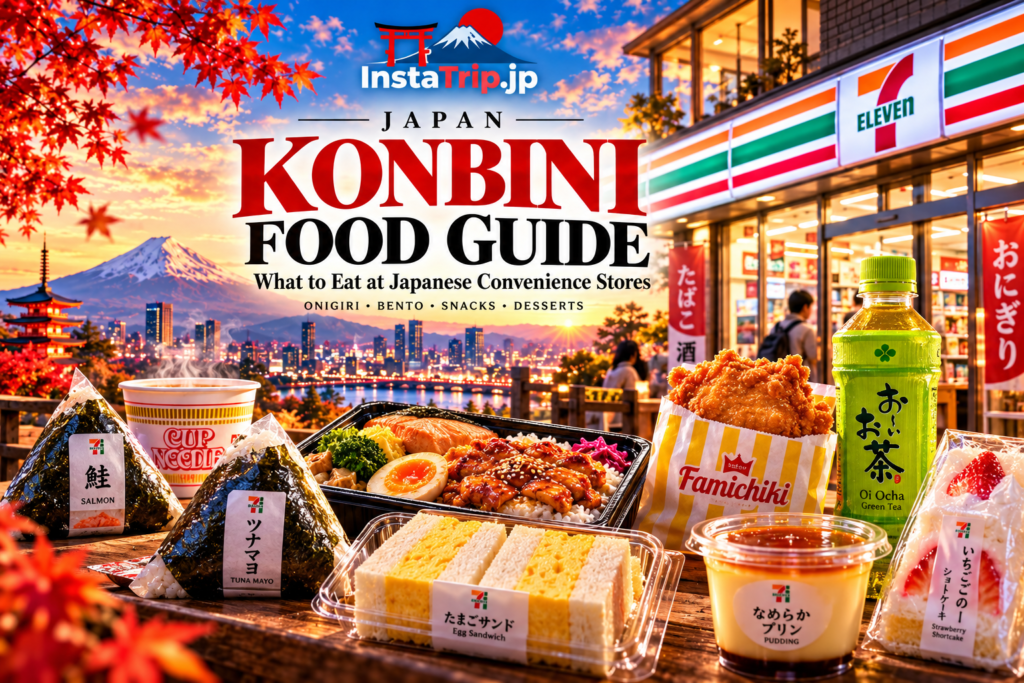
A crisp sheet of nori, a warm chicken snack, an egg sandwich before the first train: some of Japan’s most memorable small meals begin at a convenience store. Known as konbini (コンビニ), stores such as 7-Eleven, FamilyMart, and Lawson make it easy to fit breakfast, lunch, or a late-night bite around your sightseeing.
This Japanese convenience store food guide explains what to buy, how to order and heat your food, and what to check on the label. Start with a familiar flavor, then leave room for one seasonal discovery.
What to Buy at a Konbini: A Quick Guide
| What you need | Try this | Before you eat |
|---|---|---|
| A quick breakfast | Salmon or tuna-mayo onigiri with tea | Follow the numbered tabs if the wrapper has them. |
| Something soft and familiar | Tamago sando, a Japanese egg sandwich | Check the filling and keep chilled as directed. |
| A filling lunch | A bento or rice bowl, plus a side salad | Ask about heating before leaving the register. |
| A hot snack | Fried chicken or a croquette from the counter | Point to the item or say its name and quantity. |
| A refreshing meal | Chilled soba or udon | Open the sauce and toppings separately; follow the packet directions. |
| A small dessert | Purin custard pudding, a cream puff, or a seasonal sweet | Check whether it needs refrigeration. |
Budget: The Japan National Tourism Organization suggests around ¥500–¥1,000 for a simple meal at a convenience store or casual restaurant. Treat this as a planning range, rather than a fixed meal deal: drinks, desserts, premium items, and your appetite change the total. Check shelf prices and availability in the store.
Why Konbini Food Feels So Distinctly Japanese
Japan’s convenience store culture grew alongside dense cities, long commutes, and a high expectation for freshness and presentation. The result is food designed to be eaten quickly without feeling careless. A rice ball is wrapped so the nori stays crisp until the last moment. A bento is arranged with color and balance in mind. Even a simple egg sandwich can feel surprisingly precise.

That does not mean every item is artisanal or that a konbini replaces a neighborhood restaurant. It does, however, offer an unusually accessible introduction to everyday Japanese flavors: soy sauce, dashi, grilled fish, pickled vegetables, sesame, matcha, and seasonal fruit. It is also a useful counterpoint to destination dining. After an evening in Shinjuku or a morning around Kyoto’s historic lanes, a quiet breakfast from the local store can reveal another side of the country.
Japanese Convenience Store Food Guide: Start Here
Onigiri: the essential first choice
Onigiri are rice triangles or rounds, often filled and wrapped in seaweed. For an easy first choice, look for salmon (鮭, sake or shake) or tuna mayonnaise (ツナマヨ, tsuna mayo). For a different flavor, try kombu kelp (昆布), spicy mentaiko (明太子), or pickled plum (梅, ume), which brings a sharp, salty-sour bite. The filling name is useful shorthand, but read the full ingredient label if you have dietary restrictions.
The packaging can seem mysterious at first. Many onigiri have numbered tabs: pull them in sequence to remove the plastic barrier separating rice and nori. The ritual is satisfying, and it preserves the seaweed’s crackle. If you prefer something warming and substantial, choose grilled onigiri, whose soy-glazed surface adds a smoky, savory note.
Bento and rice bowls for a fuller meal
For lunch or dinner, the refrigerated cases offer bento boxes, rice bowls, curry, and pasta. A classic bento may include karaage fried chicken, rice, a small portion of vegetables, and pickles. Other dependable choices include oyakodon, chicken and egg over rice; gyudon, beef over rice; and katsu curry, a comforting combination of breaded cutlet, Japanese-style curry, and rice.

These meals are convenient, but their richness varies. A fried-chicken bento after a long day of walking can be wonderfully satisfying; on a humid summer afternoon, cold soba with dipping sauce may feel far more refreshing. Look for meals with vegetables or a side salad if you want more balance, and remember that some prepared dishes can be high in sodium.
Noodles, soup, and the pleasure of something warm
Konbini noodle options range from chilled soba and udon to microwaveable ramen and soup. For cold noodles, remove the separate sauce and topping packets before eating. Use the tsuyu dipping sauce as directed on the package; do not assume it is concentrated or needs water. Some packs include a separate liquid to help loosen the noodles.
For a hot meal, choose a product labeled for microwave heating. Staff may warm it at the counter, or direct you to a self-service microwave. Follow the heating time for the machine’s wattage and any instructions about lids or removable packets. If the cashier asks “Atatamemasu ka?” (“Would you like it heated?”), “Hai, onegaishimasu” means “Yes, please.”
The hot case: quick comfort with local character
Near the register, you may find karaage, croquettes, yakitori-style chicken, sausages, and seasonal fried snacks. FamilyMart’s Famichiki, a crisp boneless fried chicken cutlet, has become an icon for good reason, while other chains offer their own popular chicken and croquette variations.
This is the section to treat as a supplement rather than your entire meal. Pair a hot snack with onigiri and tea, or add it to a simple salad. In Hokkaido, for example, dairy-rich desserts and locally inspired ingredients may appear more often; in Okinawa, you may spot regional flavors that feel distinct from the standard Tokyo selection. Availability changes constantly, which is part of the pleasure.
Breakfasts, Desserts, and Drinks Worth Your Attention
Japanese convenience store breakfast can be as light or elaborate as your plans require. A soft egg sandwich, yogurt, fruit cup, or onigiri works well before a packed sightseeing day. The egg sandwiches are celebrated for their pillowy white bread and gently seasoned filling, but they are usually made with mayonnaise, so they are not suitable for everyone.
Save room for the dessert shelf. Seasonal sweets often feature strawberry in spring, citrus in winter, chestnut in autumn, or sakura-inspired flavors around cherry blossom season. You might find delicate roll cakes, cream puffs, purin custard pudding, mochi, and matcha desserts. These are small pleasures, but they reflect Japan’s broader appreciation for seasonality, visual detail, and limited-time offerings.
For drinks, cold green tea, barley tea, coffee, and bottled water are easy choices. Try a hot canned coffee on a chilly morning or a chilled tea after a summer walk. Alcohol is widely sold, but public drinking rules and local expectations differ by place, so choose discretion and avoid assuming that a convenience store purchase makes every setting appropriate.
How to Buy, Heat, and Enjoy Your Food
- Choose your meal, then order counter snacks. Pick up packaged foods yourself; ask staff for items in the hot display. “Famichiki hitotsu, kudasai” means “One Famichiki, please.” FamilyMart’s official Famichiki page has current product information in Japanese.
- Ask about heating and utensils. “Atatamete kudasai” means “Please heat it,” and “Ohashi o kudasai” means “Chopsticks, please.” Store arrangements vary. 7-Eleven provides chopsticks at the register on request, so do not assume they are already inside your meal’s packaging.
- Pay using the options displayed. Cash and cards are common; many stores also accept transport IC cards such as Suica or PASMO. Check the terminal’s symbols. If you brought your own bag, “Fukuro wa irimasen” means “I don’t need a bag.”
- Choose a suitable place to eat. Use an available eat-in area according to the store’s instructions, a permitted picnic spot, or your accommodation. Keep entrances clear. Use labeled sorting bins where provided and carry your packaging with you if there is no suitable bin.
Read the label before heading out
Check 消費期限 (use-by date/time) and 保存方法 (storage instructions), especially if you plan to carry a sandwich, dessert, or prepared meal during a long day out. Buy chilled foods close to when you will eat them and follow their storage directions.
Vegetarian, vegan, and allergy considerations
A vegetable filling does not guarantee that the whole product is vegetarian or vegan: sauces and seasonings can contain fish-based dashi or other animal ingredients. The JNTO vegetarian and vegan guide is a useful starting point. Inspect the complete ingredient list, including separate dressings and sauces.
For allergies, use the packaging and the manufacturer’s current allergen information, such as 7-Eleven’s allergen guidance. A translation app can help you read a label, but it cannot confirm that a product is safe for your particular allergy. If you cannot verify the ingredients or cross-contact information you need, choose something else.
Watch: A Practical Guide to Japanese Convenience Stores
For a visual companion to this guide, watch 10 Essential Tips for Japanese Convenience Store by SAMURAI JUNJIRO Channel. Use it to get familiar with the konbini experience before your first visit; products, prices, and store facilities may differ when you travel.
Useful gear for konbini stops
An insulated bottle and washable travel cutlery can be useful between meals. Follow the storage instructions on chilled food; a bottle does not keep your lunch refrigerated.
Amazon picks (paid links): Insulated bottles · Reusable travel cutlery.
Japanese Convenience Store Food FAQ
Can you eat inside a konbini?
Only where the store provides an eating area and permits its use. Some branches have no seating; check before buying a meal you plan to eat immediately.
Is konbini food vegetarian?
Check each product. Rice dishes, soups and sauces can contain fish stock or meat ingredients. An unfamiliar label is a reason to ask staff and consult the manufacturer’s ingredient information.
Can staff heat my bento?
Ask at the register whether heating is available and suitable for that product. Follow the package instructions and remove anything the instructions say to remove.
Make the Konbini Part of the Journey
The most rewarding convenience store meal is often tied to a moment: an onigiri before the first train to Nikko, hot coffee outside a rain-swept station in Hakone, or a limited-edition sweet after an evening of neon and music in Osaka. Visit at different times of day, because the shelves shift with commuter routines and fresh deliveries.
Choose one familiar favorite, then add one item you cannot quite identify. That small act of curiosity turns a quick stop into an everyday encounter with Japan’s vibrant, meticulous food culture – one wrapped rice ball, warm bowl of noodles, or seasonal dessert at a time.