
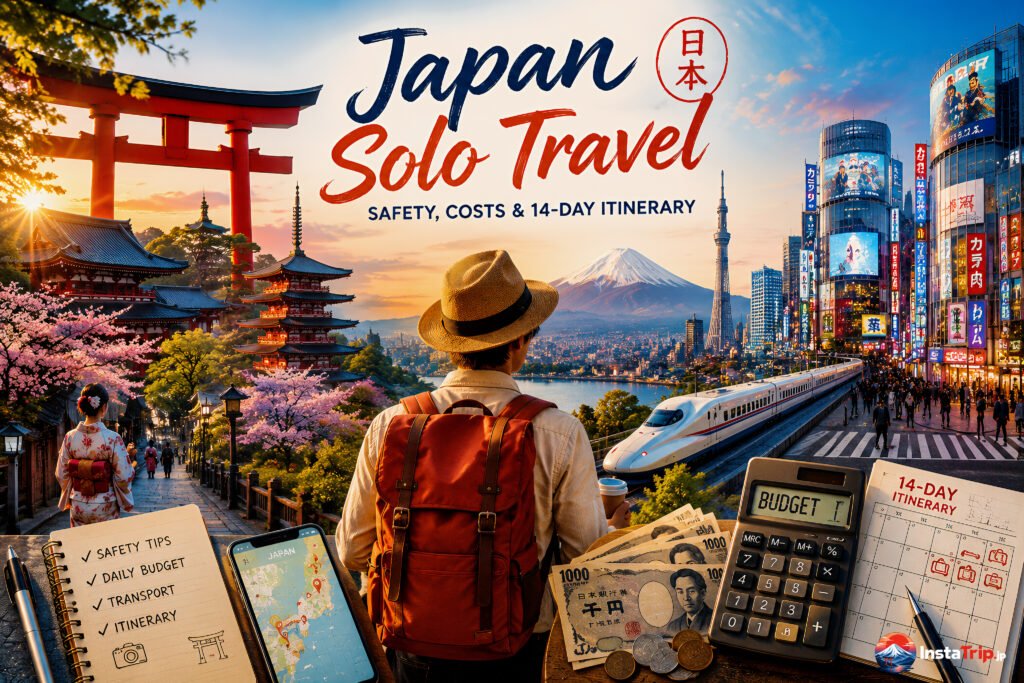
A bowl of ramen at a compact counter, the first bell at a temple gate, the glow of Shinjuku after dark: Japan is wonderfully suited to independent discovery. Solo travel in Japan: safety, costs and a 14-day itinerary is less about racing between famous sights and more about giving yourself room to notice the country’s remarkable contrasts – from the dynamic energy of Tokyo to Kyoto’s timeless lanes and the peaceful waters of Miyajima.
Is Japan Safe for Solo Travelers?
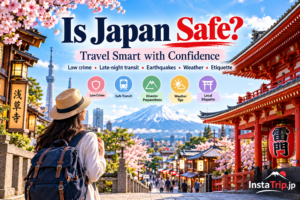
Japan is widely regarded as a safe destination for independent travelers, and its orderly public transport, clear signage, and abundance of convenience stores can make daily travel feel reassuring. Walking alone in busy neighborhoods after dark is generally comfortable, and trains are dependable enough to support a flexible itinerary.
Still, safe does not mean risk-free. Keep your passport, cash, and phone secure in crowded stations and nightlife districts, particularly around late-night entertainment areas. Avoid following aggressive touts into bars or clubs, watch your belongings in packed trains, and reserve accommodations with recent, reliable reviews. If something feels unclear, step into a station office, hotel, police box known as a kōban, or convenience store and ask for help.

Japan’s natural conditions deserve equal attention. Earthquakes can occur with little warning, while summer heat, typhoons, and heavy rain may affect travel plans. Turn on emergency alerts, check weather forecasts before mountain or coastal excursions, and keep a small amount of cash, water, and a portable charger with you. Travel insurance remains sensible, especially for medical care and itinerary disruptions.
For many solo visitors, the greatest adjustment is social rather than practical. Japan often values calm shared spaces: keep calls quiet on trains, stand on the correct side of escalators where local signs indicate, and observe the rhythm of a temple or shrine before entering. These small gestures create a more respectful, rewarding connection with the places you visit.
What Does a 14-Day Solo Trip to Japan Cost?
Your budget depends heavily on season, lodging style, and how far you travel by shinkansen. A comfortable independent trip usually falls around ¥18,000 to ¥30,000 per day, excluding international flights. That range can cover a simple but well-located business hotel or guesthouse, local transit, casual meals, admission fees, and a few memorable splurges.
Travelers watching every yen can often spend ¥12,000 to ¥17,000 daily by choosing hostels, capsule hotels, supermarket breakfasts, and neighborhood restaurants. At the other end, ¥35,000 or more per day allows for stylish hotels, elaborate kaiseki meals, taxis, and special experiences. Tokyo and Kyoto tend to command higher room rates during cherry blossom season, autumn foliage, Golden Week, and year-end holidays.
A realistic two-week mid-range budget, before flights, is roughly ¥280,000 to ¥420,000. Build in extra room for intercity trains. The Tokyo-Kyoto-Osaka-Hiroshima route involves significant rail costs, so compare individual tickets and regional passes based on your exact plans rather than assuming a nationwide rail pass is automatically the best value.
Eating alone is easy and often excellent. Counter seating at ramen shops, soba restaurants, sushi counters, and izakaya offers an intimate view of everyday food culture. Convenience stores are useful for quick breakfasts and picnic supplies, but make time for regional dishes: Hiroshima-style okonomiyaki, Kyoto tofu cuisine, Osaka street food, and seasonal wagashi sweets reveal as much about a place as its monuments.
A 14-Day Japan Solo Travel Itinerary
This route begins in Tokyo and moves west through Kanagawa, Hakone, Kyoto, Osaka, and Hiroshima before returning to the capital. It balances headline destinations with moments to slow down, wander, and absorb the atmosphere that makes Japan so captivating.
Days 1-3: Tokyo’s historic, creative, and electric sides
Begin in Asakusa, where Sensō-ji introduces Tokyo through incense, vermilion gates, and centuries of living devotion. Walk toward Ueno for museums and parkland, then spend your first evening in a small local restaurant rather than trying to see everything at once.
On day two, follow Tokyo’s contemporary pulse from Meiji Jingu and Harajuku to Shibuya’s vivid crossings and Shinjuku’s illuminated streets. The contrast is part of the experience: a forested shrine precinct can sit only minutes from fashion, music, and high-rise city life.
Use day three for Ginza’s refined architecture and galleries, the waterfront atmosphere of Odaiba, or the technology and pop-culture energy of Akihabara. Solo travelers have a useful advantage in Tokyo: you can change direction whenever a side street, exhibition, or tiny café catches your attention.
Day 4: Kamakura and Enoshima
Take a day trip to Kamakura, a former political center whose temples, gardens, and Great Buddha carry the quiet weight of medieval Japan. Continue to Enoshima if the weather is clear. Its coastal paths, sea views, and glimpses toward Mount Fuji offer a refreshing counterpoint to Tokyo’s vertical intensity.
Day 5: Hakone’s volcanic landscape
Travel to Hakone for hot springs, mountain air, and views across Lake Ashi. An overnight stay in a ryokan is a meaningful place to spend more: tatami rooms, yukata, and a communal or private bath can turn a transit stop into a cultural experience. Follow bathing instructions carefully, and remember that many facilities have specific rules concerning tattoos.
Days 6-8: Kyoto beyond the postcard
Arrive in Kyoto early enough to explore Higashiyama on foot. The lanes around Kiyomizu-dera are busiest in the middle of the day, so begin at dawn or linger into the evening, when lantern-lit streets feel more reflective. Gion is a historic entertainment district, not a stage set, so respect private lanes, photography rules, and local residents.
Give day seven to Arashiyama. The bamboo grove is famous, but the area becomes richer when paired with Tenryū-ji’s garden, the Hozu River, and quieter temple paths. On day eight, explore the philosophical and artistic Kyoto of Nanzen-ji, the Philosopher’s Path, or a tea ceremony and craft workshop. Kyoto rewards patience far more than a checklist.
Day 9: Nara and Osaka after dark
Visit Nara as a day trip to encounter Tōdai-ji’s monumental Great Buddha and the old temple landscape of Nara Park. The deer are fascinating but remain wild animals, so do not tease or crowd them. Continue to Osaka for the evening, when Dotonbori’s canal lights and food stalls reveal the city’s lively, generous character.
Day 10: Osaka’s everyday energy
Spend a full day in Osaka. Choose between the powerful stone walls and museum of Osaka Castle, the retro streets of Shinsekai, or the creative shops of Nakazakichō. Save space for takoyaki, kushikatsu, or an unhurried meal at a counter. Osaka’s appeal is direct and sociable, with an everyday warmth distinct from Kyoto’s formal grace.
Days 11-12: Hiroshima and Miyajima
Take the shinkansen to Hiroshima and visit Peace Memorial Park, the museum, and the Atomic Bomb Dome with time and emotional care. This is not a place to rush through. Its message is rooted in remembrance, loss, and a lasting wish for peace.
The following day, take the ferry to Miyajima. Its celebrated torii gate appears to float at high tide, while the forested slopes of Mount Misen offer a more elemental view of the Seto Inland Sea. Check ferry times and the tide schedule, then stay until the island becomes quieter in late afternoon.
Days 13-14: Return to Tokyo with room to choose
Return to Tokyo for your final two days. This is the moment to revisit a neighborhood, shop for thoughtful gifts, see a museum you missed, or ride up Tokyo Skytree as the city shifts from daylight to a vast field of lights. Keep your last day light enough for airport travel, packing, and one final meal.
The finest solo journeys in Japan are not measured by how many stations you pass through. Leave room for the unexpected temple garden, the neighborhood bakery, the conversation assisted by gestures, and the quiet train ride that makes the country’s magnificent layers come into focus.
![[商品価格に関しましては、リンクが作成された時点と現時点で情報が変更されている場合がございます。]](https://hbb.afl.rakuten.co.jp/hgb/574e412b.2d08f6ba.574e412c.ad8d9c10/?me_id=1395654&item_id=10000636&pc=https%3A%2F%2Fthumbnail.image.rakuten.co.jp%2F%400_mall%2Ff011002-sapporo%2Fcabinet%2Fitem%2F261%2Fhs261-010-s-r.jpg%3F_ex%3D128x128&s=128x128&t=picttext "[商品価格に関しましては、リンクが作成された時点と現時点で情報が変更されている場合がございます。]")