

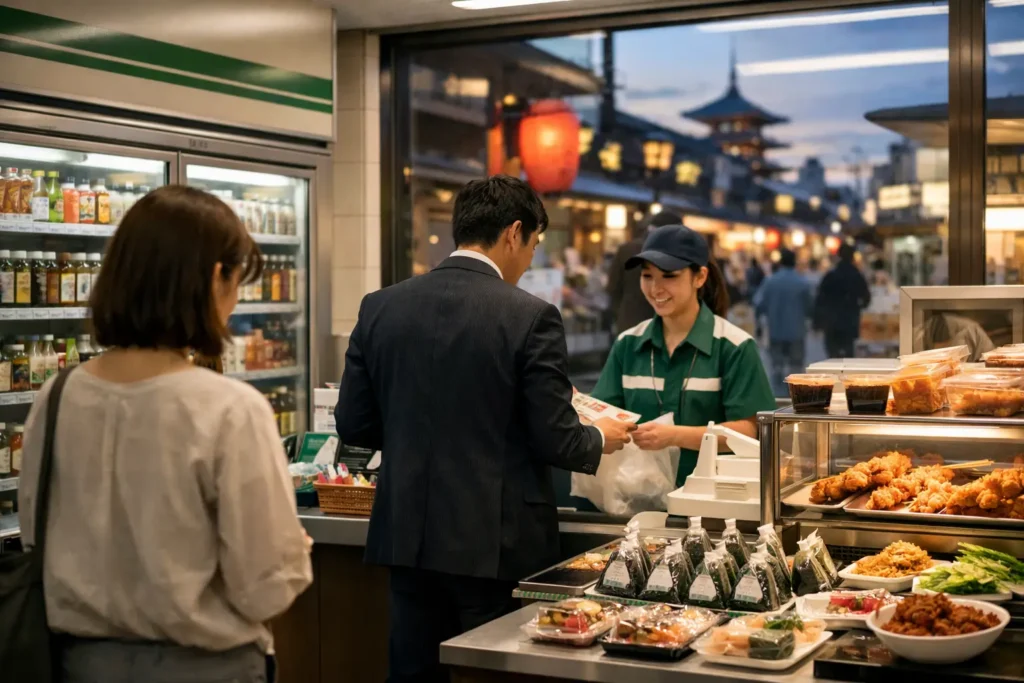
At 11 p.m. in Tokyo, when the last office workers drift toward the station and neon reflects on rain-darkened pavement, a convenience store (コンビニ) is still glowing. Behind its glass doors, you may find a commuter choosing dinner, a student printing documents, and a traveler discovering that a small, beautifully wrapped egg sandwich can be unexpectedly memorable. Japan’s konbini is not simply a place to buy necessities. It is one of the clearest windows into the country’s everyday rhythm.
Why Japan’s Convenience Store Culture Feels Different
Convenience stores exist around the world, but Japan has turned the format into something remarkably refined. The familiar signs of 7-Eleven, FamilyMart, Lawson, and other chains punctuate major city streets, quiet residential blocks, train-station neighborhoods, and rural roads. Their role is practical, certainly, but their presence also reflects a culture that values reliability, efficiency, seasonality, and close attention to small details.
A konbini can provide a quick breakfast at dawn, a hot meal after a late train, cash from an ATM, a place to pay a utility bill, and a parcel-shipping counter during the same visit. The experience is usually fast, orderly, and remarkably approachable for visitors. Shelves are compact yet carefully organized, products are consistently presented, and staff often anticipate the next small need before it is spoken aloud.

This does not mean every store is identical. A branch near Shinjuku Station may feel dynamic and crowded, stocked for commuters and late-night city life. One near a beach in Kanagawa or a country road in Hokkaido may carry a slightly different pace and a more local selection. That balance of national consistency and neighborhood character is part of the fascination.
A Convenience Store (コンビニ) Is a Food Destination
For many first-time visitors, the food is the revelation. Japanese convenience store meals are designed for real life, not as an afterthought. The choices range from onigiri – triangular rice balls wrapped in nori – to pasta, curries, salads, noodle bowls, fried chicken, desserts, and seasonal sweets. Packaging is functional but often polished, preserving texture and making meals easy to carry onto a train, back to a hotel, or into a nearby park where eating is permitted.
Onigiri are an ideal place to begin. Fillings might include grilled salmon, tuna mayonnaise, kombu seaweed, pickled plum, or cod roe. The wrapper has a clever numbered opening system that separates the crisp nori from the rice until the moment you unwrap it. It is a small piece of everyday design, and a reminder that ordinary objects in Japan often receive unusual care.
Then there are sandwiches, particularly the soft white-bread egg sandwich, fruit sandwiches filled with whipped cream, and cutlet sandwiches. Warm counter foods bring another side of konbini culture into view: fried chicken, korokke croquettes, nikuman steamed buns, and other comforting snacks that become especially welcome on a cold evening. Ask the cashier if a boxed meal can be heated; many will offer automatically, though this may vary by item and store.

The quality is high for convenience food, but it is still convenience food. A konbini meal should not replace the full experience of regional restaurants, neighborhood kissaten coffee shops, markets, or traditional dining. Instead, think of it as a delicious and revealing part of the larger food landscape – a practical meal that can also introduce you to Japanese flavors between bigger culinary adventures.
Seasonal shelves tell a quiet story
Japan’s attention to the seasons appears even under fluorescent lights. Spring may bring sakura-themed drinks and sweets. Summer brings chilled noodles, refreshing teas, and citrus flavors. Autumn shelves fill with chestnut, sweet potato, and pumpkin treats, while winter invites hot drinks, oden, and rich chocolate desserts.
These limited offerings can be playful, but they also reflect a deeper Japanese habit of marking the passage of the year through food. A quick stop for a snack becomes a modest way to notice the season unfolding around you.
Beyond Snacks: The Everyday Services Visitors Can Use
The konbini’s usefulness becomes most apparent when travel plans change. Need to print a museum reservation, scan a document, buy an umbrella before an unexpected shower, or pick up a transit-friendly drink before boarding a train? A convenience store is often close by.
Many locations have multifunction copy machines that can print, copy, scan, and sometimes assist with other digital tasks. ATMs are common as well, though foreign-card compatibility depends on the bank, machine, and card network. If one ATM does not work, do not assume cash is impossible to find. Try another branch or a different chain, and keep enough yen on hand for smaller shops and temples that may not accept cards.
You may also see payment counters, parcel services, ticket-related functions, toiletries, basic medicine, stationery, and travel accessories. These services are built for residents first, which is exactly why they are so helpful to travelers. The store fits naturally into daily Japanese life rather than performing as a tourist attraction.
How to Enjoy Konbini With Consideration
The ease of a konbini can make it tempting to treat it as a lounge or a sightseeing stop. A little awareness keeps the experience pleasant for everyone. During rush hour, choose your items efficiently and avoid blocking narrow aisles. If the store has an eating area, use it respectfully and clear your space afterward. Where there is no seating, avoid lingering at the entrance.
Trash disposal requires a bit more thought than it once did. Public bins can be limited in Japan, and store bins are generally intended for purchases from that store. Hold onto your packaging until you find an appropriate place to dispose of it, particularly when walking through residential areas, historic districts, or near shrines and temples.
At the register, a few simple moments of etiquette go a long way. Place cash or a card in the small tray if one is provided, wait for the cashier to complete the transaction, and use a brief “arigatou gozaimasu” if you wish. No Japanese is required, but courtesy is always understood. Staff may ask whether you need a bag, chopsticks, a fork, or heating for your meal; gestures and translation apps are perfectly acceptable when language feels uncertain.
The Small Details Worth Noticing
A konbini rewards curiosity. Look at the meticulous labels, the regional drink collaborations, the way chilled desserts are arranged by color, and the quiet choreography of restocking. Observe how people use the space: a rushed purchase before work, a carefully chosen dessert after dinner, a bottle of tea for a train ride, a quick errand completed between larger obligations.
These scenes reveal a Japan beyond famous landmarks. The country’s magnificent temples, captivating art districts, and vibrant nightlife deserve their place on any itinerary. Yet daily life is also shaped by humble spaces where food, design, service, and routine meet. The convenience store makes that meeting visible.
For travelers, the best konbini visit may be the unplanned one: stepping in after an evening walk, choosing a warm drink and a regional sweet, then returning to the street with a clearer sense of the neighborhood around you. Let that small ritual slow you down. Japan often reveals its most fascinating details not only in grand destinations, but in the thoughtful ordinary moments between them.
![[商品価格に関しましては、リンクが作成された時点と現時点で情報が変更されている場合がございます。]](https://hbb.afl.rakuten.co.jp/hgb/574e4b94.5bdc8e6d.574e4b95.2c082e69/?me_id=1274440&item_id=10006413&pc=https%3A%2F%2Fthumbnail.image.rakuten.co.jp%2F%400_mall%2F500works%2Fcabinet%2Fsale50%2F50230240-0245img01.jpg%3F_ex%3D128x128&s=128x128&t=picttext "[商品価格に関しましては、リンクが作成された時点と現時点で情報が変更されている場合がございます。]")