
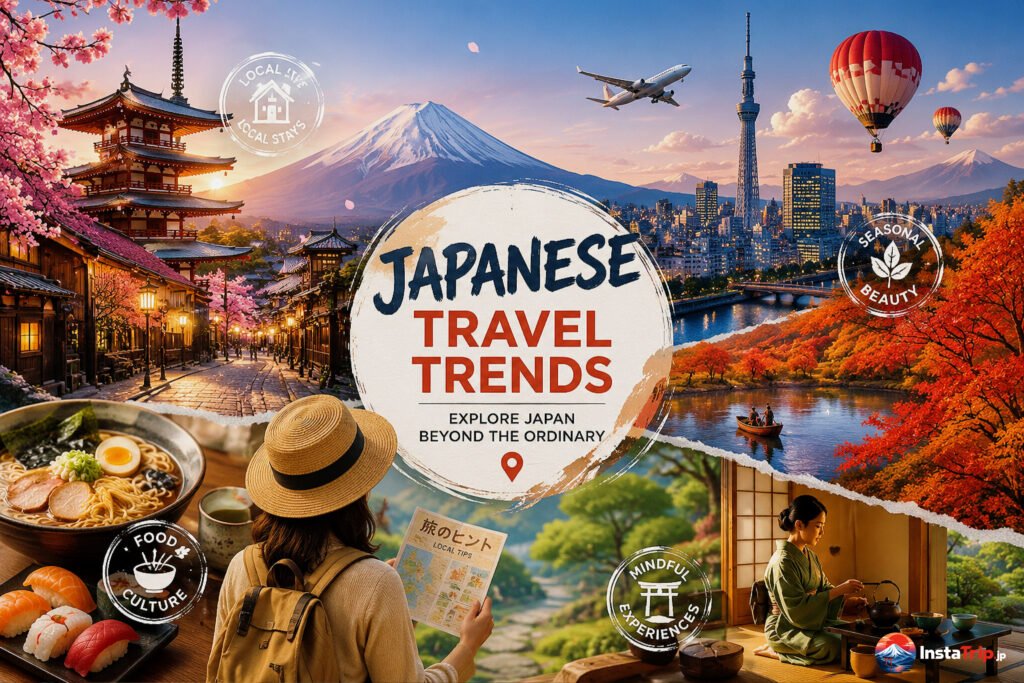
A sunrise walk through Kyoto before the lanes fill, an afternoon spent tracing ceramic traditions in Kanazawa, a quiet night in a hot spring town beneath the mountains: Japanese travel trends are increasingly defined by these more personal moments. Japan’s celebrated landmarks still inspire first-time visitors, from Sensō-ji to the neon energy of Shinjuku. Yet many travelers now want an experience that feels less like collecting stops and more like understanding the atmosphere, craft, season, and daily rhythms behind each destination.
This shift does not mean skipping Tokyo, Kyoto, or Osaka. It means approaching them with more curiosity, then allowing time for the neighborhoods, regional cities, and cultural encounters that make a journey feel memorable long after the photographs are taken.
Japanese Travel Trends: From Fast Itineraries to Deeper Stays
For years, the classic first journey to Japan followed a rapid route through Tokyo, Kyoto, and Osaka. It remains a magnificent introduction, especially for travelers drawn to Tokyo’s dynamic urban contrasts, Kyoto’s temple landscapes, and Osaka’s exuberant food culture. But the pace is changing. Rather than moving every one or two nights, many visitors are choosing longer stays in one base and making thoughtful day trips.

Tokyo offers a perfect example. A traveler can see the grandeur of Tokyo Skytree, browse the electric world of Akihabara, and spend an evening in Roppongi, but a slower visit also makes room for Ueno’s museums, Asakusa’s early-morning calm, Ginza’s design details, and the everyday restaurants found on a neighborhood side street. The city becomes less overwhelming when it is experienced district by district.
The same principle is reshaping trips beyond the capital. Yokohama can be more than a quick stop from Tokyo, with its waterfront architecture, international port history, and evening views. Kamakura rewards travelers who remain after the busiest hours, when temple paths and coastal streets regain a quieter character. Hakone is not simply a Mount Fuji viewpoint but a layered landscape of art museums, volcanic scenery, ryokan hospitality, and bathing culture.
Longer stays bring a practical benefit as well: flexibility. A rainy day can become a museum day; a crowded shrine can be revisited at dawn; a local festival spotted on a poster can become the highlight of the week.

The Appeal of Japan Beyond the Headline Cities
Regional discovery is one of the most captivating travel movements in Japan. Visitors are looking past the most photographed streets toward destinations where local identity is especially vivid. This is not a search for places that are “undiscovered” by the people who live there. It is a more respectful desire to spread attention, spend time locally, and encounter Japan’s many regional cultures on their own terms.
Kanazawa continues to appeal through its surviving castle-town atmosphere, refined gardens, gold-leaf artistry, and strong relationship with traditional crafts. Hiroshima invites a different kind of reflection, pairing profound history with a lively food scene and easy access to the spiritual landscape of Miyajima. In Fukuoka, yatai food stalls, contemporary city life, and the gateway to Kyushu create a welcoming alternative to a tightly scheduled central Japan itinerary.
Nature-centered trips are expanding too. Hokkaido draws visitors for expansive winter landscapes, ski culture, flower fields, and seafood, while Okinawa offers a distinct island history, subtropical coastlines, and Ryukyuan cultural heritage. In Tottori, vast sand dunes transform expectations of Japan’s geography. Around Nikko, cedar-lined approaches, ornate shrines, waterfalls, and mountain air reveal how closely architecture, spirituality, and landscape can be intertwined.
There is a trade-off. Smaller cities may have fewer late-night transport options and less English-language information, while popular sites still concentrate visitors at peak times. A little advance planning matters. Learn local transit schedules, reserve limited-capacity experiences where needed, and leave space for the slower pace that makes regional travel rewarding.
Seasonal Travel Is Becoming More Intentional
Cherry blossoms remain an enduring dream, but travelers are increasingly building trips around a wider calendar of seasonal beauty. Spring also brings wisteria, fresh mountain greenery, and regional festivals. Summer can mean fireworks over rivers, lively matsuri streets, and cool escapes to higher elevations, though heat and humidity require realistic planning. Autumn turns temple gardens and mountain valleys into glowing scenes of red and gold. Winter opens the door to snow festivals, hot springs, illuminated streets, and foods best enjoyed in the cold.
The most meaningful seasonal travel is not only about finding the perfect foliage forecast or blossom peak. It is about noticing how seasonality shapes everyday Japan: a limited-edition sweet in a department store basement, summer noren curtains at a restaurant entrance, or the first steaming bowl of nabe as evenings cool. These details offer a more intimate connection than any checklist can provide.
Food, Craft, and the Return to Hands-On Experiences
Another defining trend is the desire to participate rather than simply observe. Travelers are seeking experiences that reveal the patience and skill inside Japanese food and craft traditions. A tea ceremony, wagashi-making class, sake tasting, knife workshop, indigo dyeing session, or pottery visit can turn a beautiful object or dish into a story with human depth.
Food travel is evolving in the same direction. Japan’s famous ramen counters, sushi restaurants, and street-food districts remain essential pleasures, but visitors are also following regional specialties with greater purpose. Okonomiyaki in Hiroshima, miso-based flavors in Nagoya, Hakata-style ramen in Fukuoka, and seafood in Hokkaido each reflect local ingredients, climate, and culinary history.
Respect is part of the experience. Reservations should be honored, small counters should not be treated as photo sets, and staff guidance matters, especially at places with particular dining customs. It is perfectly fine not to know every rule. A calm greeting, patience, and attention to the setting go a long way.
Wellness Travel With Cultural Context
Japan’s wellness appeal is growing, but the most rewarding version is grounded in place rather than packaged as a vague escape. Onsen towns invite travelers to slow down through bathing, seasonal meals, and evenings in a ryokan. Forest walks, temple stays, garden visits, and time beside the sea can offer a restorative counterpoint to the energy of Japan’s great cities.
Bathing etiquette deserves care. Wash before entering the shared bath, keep towels out of the water, speak quietly, and check each facility’s policies in advance. These customs help preserve a comfortable communal environment. Travelers with tattoos may find that policies vary, so confirming ahead prevents disappointment.
Spiritual sites also call for a thoughtful approach. Shrines and temples are living places of worship, not merely scenic backdrops. Visitors do not need to be experts in Shinto or Buddhism to appreciate them, but observing posted guidance, dressing appropriately, and allowing space for worshippers reflect the respect these places deserve.
Better Planning Is Part of the Experience
The newest Japanese travel trends are not only about where people go. They are about how they plan. Timed-entry tickets, advance restaurant reservations, luggage forwarding, transit passes chosen for a specific route, and hotel locations near the right station can dramatically improve a trip. In heavily visited areas, early mornings and weekday visits often provide a more peaceful experience than trying to push through the peak afternoon crowd.
At the same time, overplanning can flatten a journey. Leave one open afternoon in each destination. Follow the scent of grilled skewers down a lantern-lit lane. Step into a small gallery in Naoshima, a kissaten in Tokyo, or a covered shopping street in Osaka. These unscripted moments often reveal the texture of local life.
Japan rewards attention. Travel with a few well-chosen anchors, then give each neighborhood, meal, temple path, or train-window view enough time to become more than a stop on an itinerary. That is where the country’s vibrant modern life and timeless traditions begin to feel beautifully connected.
![[商品価格に関しましては、リンクが作成された時点と現時点で情報が変更されている場合がございます。]](https://hbb.afl.rakuten.co.jp/hgb/574e3f3b.71c9ddf1.574e3f3c.0fa1fd04/?me_id=1339907&item_id=10002278&pc=https%3A%2F%2Fthumbnail.image.rakuten.co.jp%2F%400_mall%2Ff462012-kagoshima%2Fcabinet%2F09284857%2Ftravel%2Fk-30000-s-80.jpg%3F_ex%3D128x128&s=128x128&t=picttext "[商品価格に関しましては、リンクが作成された時点と現時点で情報が変更されている場合がございます。]")