
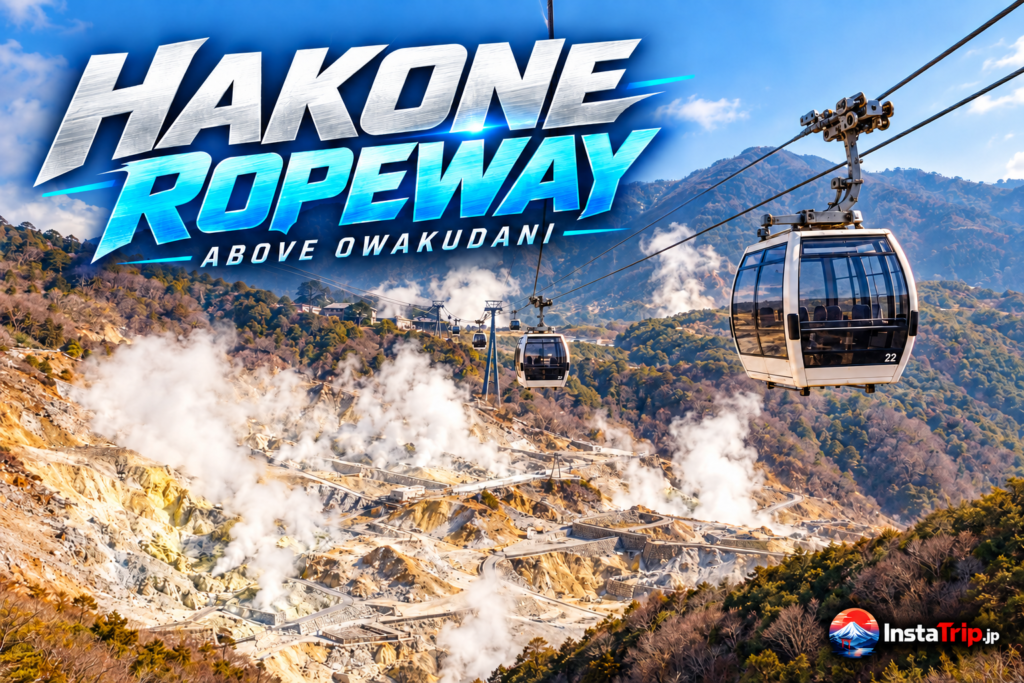
A cabin rises above the dark, steaming folds of Owakudani, and suddenly Hakone feels less like a day trip from Tokyo than a living volcanic landscape. This Hakone ropeway review looks beyond the postcard view to answer the useful question: is the ride genuinely worth building into your itinerary? For most travelers, absolutely – provided you approach it as part of Hakone’s magnificent mountain journey rather than a quick attraction between stops.
The Hakone Ropeway connects the lakeside area around Togendai with Sounzan, passing through Ubako and Owakudani. Its approximately 30-minute end-to-end journey glides above cedar forest, sulfurous vents, and broad mountain slopes, with views toward Lake Ashi and, on clear days, Mount Fuji. It is one of those rare forms of transport that feels inseparable from the destination itself.
What Makes the Hakone Ropeway Special
Hakone has long been a place of retreat, pilgrimage, and artistic inspiration. Its hot springs drew travelers during the Edo period, while its mountain passes and lakes became enduring images in Japanese print culture. The ropeway introduces a more dramatic chapter to that landscape: Owakudani, a volcanic valley created by the eruption of Mount Hakone roughly 3,000 years ago.
From inside the large aerial cabins, the valley appears almost theatrical. White vapor curls from the earth, pale mineral-stained slopes break through the greenery, and the air around Owakudani can carry a distinct scent of sulfur. This is not manicured nature. It is a powerful reminder that the quiet ryokan towns and serene lake cruises of Hakone sit within an active volcanic region.

The perspective also changes as the cabin descends toward Togendai. The land opens out, Lake Ashi comes into view, and the journey begins to feel like a transition from raw geology to the more tranquil, water-centered side of Hakone. That contrast is the ropeway’s real appeal. It captures several versions of Hakone in one memorable ride.
Hakone Ropeway Review: The Views and the Reality
The views are exceptional, but they are not guaranteed. Clear, crisp mornings offer the best chance of seeing Mount Fuji, particularly from the Togendai side and around Lake Ashi. Clouds can gather rapidly in the mountains, though, even when the weather looks promising elsewhere in the region. A misty day can still be atmospheric, with steam and cloud blending around Owakudani, but travelers visiting mainly for Fuji should keep expectations flexible.
The cabins are modern, spacious, and designed for sightseeing, with broad windows on all sides. Standing near a window makes a noticeable difference, especially as the route crosses the valley. At peak times, however, you may share the cabin with a full group. This is a popular route for day-trippers, tour groups, and travelers following Hakone’s classic circular course.
Queues are the main trade-off. Weekends, holidays, and the busiest autumn color periods can mean a wait at Sounzan, Owakudani, or Togendai. The ride remains worthwhile, but it feels more magical when you are not rushing to catch the final boat or train connection. Start early if possible, and avoid treating each stop as a box to check.

Another reality is that the ropeway can suspend service because of strong winds, lightning, maintenance, or volcanic safety measures. Owakudani’s conditions are monitored carefully, and access policies can change. Check operating information on the day you travel, particularly if this connection is central to a tightly timed itinerary. In Hakone, adapting to the mountain weather is part of the experience.
How to Ride It as Part of a Hakone Day
The most rewarding direction depends on your starting point, but the classic route has a natural rhythm. Travelers arriving from Hakone-Yumoto often take the mountain railway and cable car up to Sounzan, then board the ropeway toward Togendai. From there, a Lake Ashi sightseeing cruise can lead toward Moto-Hakone or Hakone-machi, where the iconic torii of Hakone Shrine and views across the water create a calm counterpoint to Owakudani’s volcanic energy.
Going from Sounzan to Togendai has one small advantage: the landscape gradually opens toward the lake, creating a satisfying sense of arrival. Going in the other direction is equally scenic and can be smarter if you begin near Lake Ashi or want to reach Gora earlier in the day. There is no wrong choice, only the itinerary that gives you the most unhurried time.
Owakudani is the essential stop. Step off here to see the volcanic valley from the observation areas, browse the small shops, and try the famous black eggs, or kuro tamago. The shells turn black through cooking in the area’s sulfur-rich hot spring water, while the eggs themselves remain ordinary boiled eggs inside. Local tradition associates them with added longevity, but their real charm is simple: eating one while looking over the steaming valley is a distinctly Hakone moment.
Allow more time here than you think. Even a brief stop can take 30 to 45 minutes once you factor in walking, photographs, lines, and returning to the boarding area. If the weather is clear, the time is particularly well spent. If the valley is shrouded in cloud, the visitor facilities and the strange beauty of the steam still make it a worthwhile pause.
Tickets, Passes, and Timing
For travelers following several Hakone transport routes in one day or across a short stay, the Hakone Freepass can be a practical choice. It generally covers the ropeway along with key local transport, making it easier to move through the region without buying individual tickets at each connection. Whether it saves money depends on your route, so compare it with your planned railway, bus, cruise, and cable car use rather than buying it automatically.
Individual ropeway tickets suit visitors making a more selective journey, such as those staying beside Lake Ashi or arriving by car. Ticket prices and operating hours can change by season and service conditions, so confirm them shortly before departure. The final departures matter more than many travelers realize. Missing a late connection can turn a relaxed mountain afternoon into a complicated bus journey.
For photography, aim for the first half of the day. Morning light can reveal sharper outlines of Fuji and Lake Ashi, while afternoon haze is common. Autumn brings captivating color, but also heavier crowds. Winter often offers clearer skies and crisp views, although it can be very cold at the higher stations. Spring and early summer bring fresher greenery, while rainy-season weather gives the valley a moody, cloud-wrapped character.
Route, Map, and Current Service
The full ropeway connects Sōunzan (早雲山) → Ōwakudani (大涌谷) → Ubako (姥子) → Tōgendai (桃源台). Travelers coming from Gōra (強羅) use the Hakone Tozan Cable Car to reach Sōunzan. At Ōwakudani, allow time to get off and look around, then follow station signs for the onward ropeway to Tōgendai by Lake Ashi. A through journey is roughly half an hour in ordinary service, excluding queues and a sightseeing stop.
Before leaving, check the operator’s live transport status and ropeway information. Wind and volcanic conditions can interrupt sections at short notice. Compare an individual fare with the Hakone Freepass for your own route; there is no universal cheapest choice. Follow posted restrictions at Ōwakudani rather than walking toward steam vents.
Map: Ōwakudani Station
See the Ride
A quiet 4K ride toward Ōwakudani gives a better sense of the cabin view and terrain than a still photograph.
Paid links
For a day with changing mountain weather, consider a packable rain jacket or a compact power bank.
Who Will Enjoy the Ride Most?
The Hakone Ropeway is ideal for first-time visitors who want to understand why Hakone is more than an onsen escape. It also rewards photographers, families, and repeat visitors who enjoy seeing a familiar region from a fresh angle. The cabin ride itself is gentle and accessible for many travelers, though those sensitive to heights may find the open spans above the valley uncomfortable.
It is less compelling if you are deeply opposed to queues, have only a narrow window before a reserved train, or are visiting on a day when low cloud completely hides the scenery. In that case, spending longer in a museum, an onsen, or a lakeside café may create a richer Hakone experience. The ropeway is spectacular, but Hakone does not need to be rushed to be meaningful.
For most itineraries, the ride earns its place because it turns the practical act of getting from one side of Hakone to the other into a vivid encounter with the region’s elemental character. Let yourself linger at Owakudani, watch the steam move across the slopes, and keep your plans loose enough for the mountains to set the pace.