
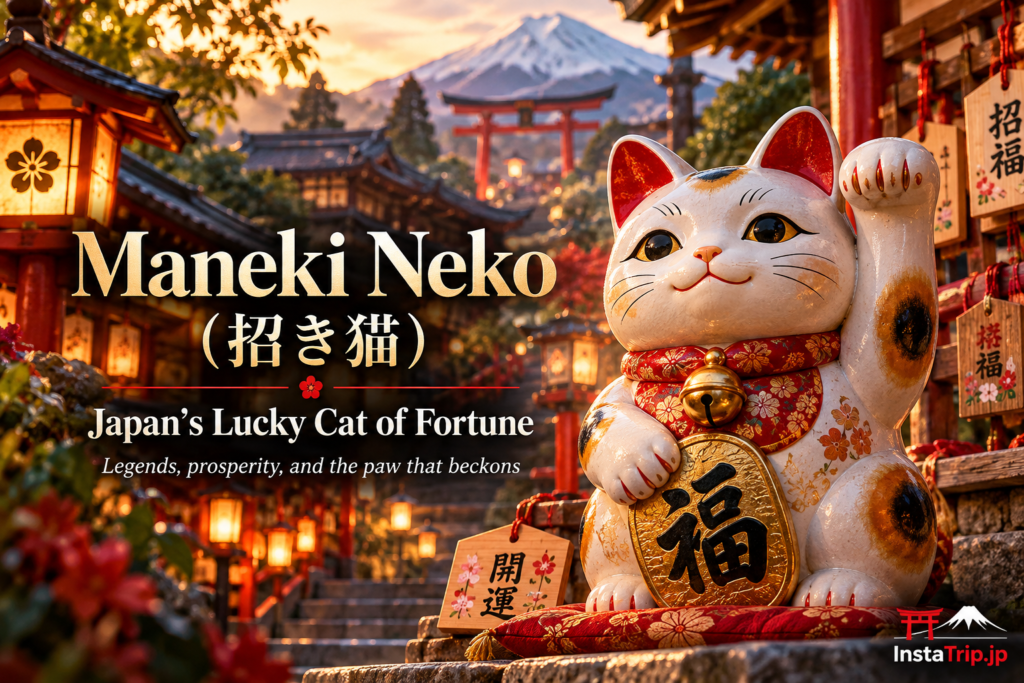
In a quiet Japanese shop, a small ceramic cat raises one paw toward the door. It looks playful, almost mischievous. Yet behind that familiar gesture lies a centuries-old world of storm legends, prophetic dreams, craftsmanship, and hope. The maneki neko (招き猫) may be Japan’s most recognizable lucky charm—but what, exactly, is it inviting into your life?
What Does Maneki Neko (招き猫) Mean?
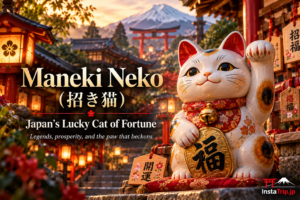
Maneki neko means “beckoning cat”: maneku (招く) means to invite, and neko (猫) means cat. The raised paw echoes a Japanese beckoning gesture, typically made with the palm facing down. This explains why some visitors mistake the cat for waving goodbye when it is actually welcoming someone inside.
Maneki neko appear in restaurants, stores, homes, and reception desks. They symbolize hopes for good fortune, connections, customers, and prosperity—not a guaranteed source of wealth. Their appeal lies in making an invisible wish visible.
The Temple Cat and the Lord Caught in a Storm
One of the most beloved origin stories belongs to Gōtokuji Temple (豪徳寺) in Tokyo’s Setagaya ward. According to the temple’s own telling, the feudal lord Ii Naotaka was returning from falconry when a cat appeared to invite him through the temple gate. Naotaka followed. During his visit a thunderstorm broke, but he had found shelter, and his encounter with the priest left a lasting impression. In 1633, Naotaka supported the temple’s reconstruction.

Modern retellings sometimes add a dramatic lightning strike at the exact spot where the lord had stood. That flourish is not part of every version: Gōtokuji’s official account emphasizes the beckoning cat, the shelter from the storm, and the fortunate meeting.
The temple honors its cat as Shōfuku Manekineko, a bringer of fortunate connections. Strikingly, Gōtokuji’s white cats raise their right paws but do not carry gold coins. The temple explains that the cat brings an opportunity to connect with others; what you do with that opportunity is up to you.
The Woman, the Dream, and the Cat That Changed Her Life
There is more than one origin tradition. Another tale, associated with Imado ware in old Edo, tells of an impoverished woman who could no longer afford to keep her cat. After she let it go, the cat appeared in a dream and inspired her to make and sell small ceramic figures in its likeness. Their success supposedly transformed her circumstances.
The Embassy of Japan in Singapore discusses this story alongside an 1852 woodblock depiction of lucky-cat ornaments. Scholars and cultural historians do not identify one universally proven inventor of the maneki neko. It is more accurate—and more interesting—to recognize how several regional legends shaped the symbol.

Left Paw or Right Paw: What Is the Difference?
- Left paw raised: traditionally invites visitors, customers, and social connections—often associated with businesses.
- Right paw raised: traditionally associated with money, financial luck, and prosperity.
- Both paws raised: sometimes marketed as symbolizing protection or an abundance of good fortune, although interpretations vary.
These are traditional associations, not universal rules. Gōtokuji’s coinless right-paw cat is a wonderful reminder that Japan’s lucky-cat culture is more diverse than a single chart of meanings.
Maneki Neko Colors and Their Meanings
The classic calico cat—white with black and orange patches—remains an especially recognizable design. Modern figurines also come in many colors, with commonly marketed associations such as:
- White: general good fortune and purity.
- Gold: financial prosperity and business success.
- Black: protection against evil or bad luck.
- Red: protection, traditionally including against illness.
- Pink: love and relationships.
- Green: study and academic success in some contemporary interpretations.
These meanings can differ by maker, region, and period. They express cultural hopes and popular symbolism, not established supernatural effects.
Why Does the Lucky Cat Hold a Golden Coin?
Many figurines clutch a koban (小判), an oval gold coin associated with Japan’s Edo period. The coin became a visual shorthand for wealth. Some souvenir designs show exaggerated amounts, emphasizing abundance and optimism rather than historical currency values. Others carry a mallet, fish, fan, or other auspicious object.
Watch: Japan’s Lucky Cat Temple in 4K
Take a quiet virtual walk through Gōtokuji Temple in Tokyo, a place closely associated with the maneki neko tradition. Video by VIRTUAL JAPAN; playback starts only when selected.
Where to See Maneki Neko in Japan
Gōtokuji Temple, Tokyo — 豪徳寺
This Setagaya temple is famous for its densely arranged white beckoning-cat offerings. Explore its peaceful grounds and look for feline details around its pagoda. Respect personal offerings and temple rules, and check the temple’s official information before visiting.
Tokoname, Aichi — 常滑
The pottery town of Tokoname developed into a major center of ceramic lucky-cat production in the twentieth century. Its signature cats have round bodies, prominent ears, and expressive eyes. Travelers can explore Maneki Neko-dōri, a street displaying dozens of artists’ lucky-cat works. The Japan Tourism Agency documents Tokoname’s contribution to the modern cat’s familiar form.
Find Maneki Neko Street on Google Maps
Where Should You Place a Maneki Neko?
In shops, owners often place their lucky cat near an entrance or counter, where it can symbolically welcome visitors. At home, some people choose a clean, visible spot near the entryway or in a living space. There is no single placement rule that everyone in Japan follows. The cat is first and foremost an expression of hospitality, aspiration, and personal meaning.
Is Maneki Neko Shinto or Buddhist?
The lucky cat belongs primarily to Japanese popular folk culture. Its stories intersect with Buddhist temples, regional craft traditions, and everyday customs of wishing for good fortune. It should not be treated as an official doctrine of either Shinto or Buddhism.
From Daruma to Maneki Neko: Different Faces of Hope
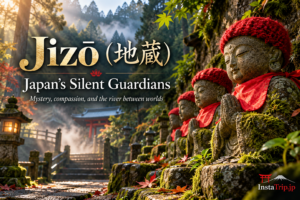
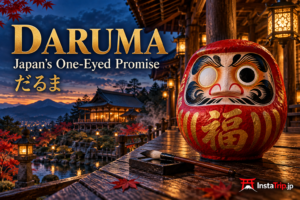
These symbols tell complementary stories. A Daruma doll reminds us to persevere toward a goal; Jizō statues express care and compassion; and the beckoning cat welcomes connections and possibility. To explore Japan’s deeper spiritual landscape, see our guide to Japanese mythology, gods, and yōkai.
Explore Traditional Lucky Cats
Interested in the different styles of maneki neko? Explore ceramic figurines and Japanese craft designs. (paid links):
- Traditional Japanese maneki neko (Amazon)
- Ceramic lucky cat figurines (Amazon)
- Golden maneki neko figurines (Amazon)
The Quiet Invitation Behind the Raised Paw
The Japanese lucky cat has endured not because anyone can prove that it delivers riches, but because it embodies a hopeful idea: fortune can begin with a chance encounter. Whether placed on a shop counter, offered at a temple, or crafted by hand in Tokoname, maneki neko keeps extending its small, irresistible invitation.
Sources and Further Reading
- Gōtokuji Temple — Gotokuji and Manekineko (official)
- Japan Tourism Agency — Tokoname Maneki Neko
- Embassy of Japan in Singapore — The Luckiest Cat in the World