
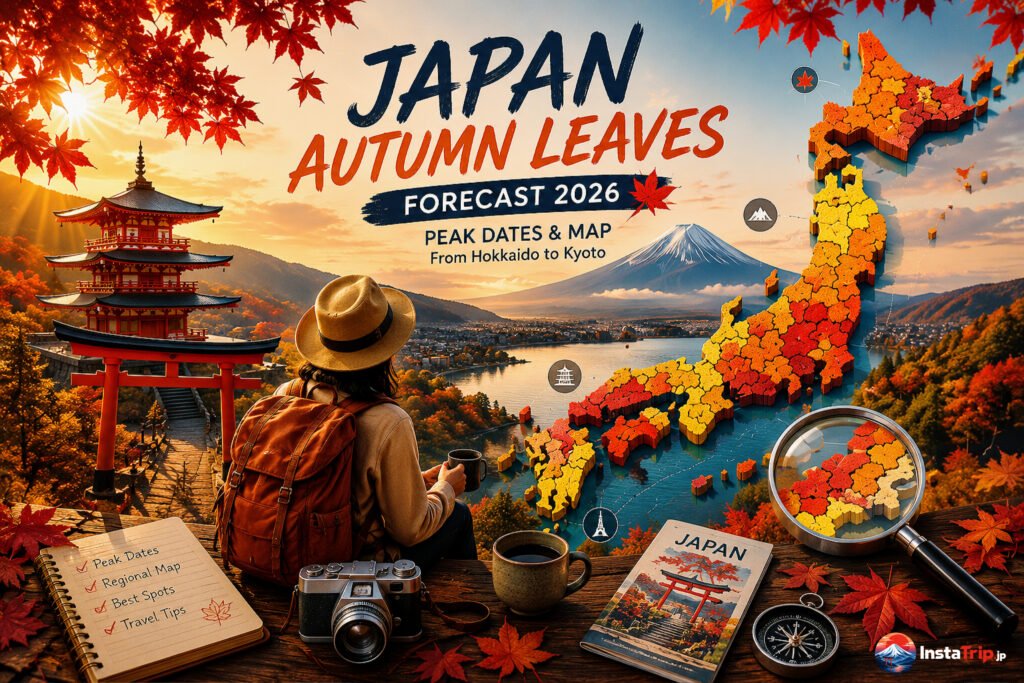
Japan does not experience autumn as a single event. It arrives like a slow, magnificent wave, painting volcanic highlands, temple gardens, city parks, and quiet mountain roads in changing shades of crimson, amber, and gold. This Japan autumn leaves forecast 2026 is designed to help you follow that wave, whether you dream of Hokkaido’s first fiery maples or Kyoto’s lantern-lit gardens at their most captivating.
Known as koyo, the season is shaped by elevation, latitude, rainfall, and the timing of autumn cold. That means exact peak color cannot be guaranteed months ahead. The dates below are planning windows based on typical seasonal patterns, not fixed appointments. As fall approaches, temperature trends can move the best viewing period by a week or more.
Japan Autumn Leaves Forecast 2026: Peak Dates by Region
For most travelers, the essential rule is simple: northern Japan and high elevations color first, while warmer cities farther south reach their most vibrant period later. The following regional guide turns that seasonal movement into an itinerary-friendly overview.
🍁 Hokkaido
Daisetsuzan, Sapporo, Noboribetsu
Typical peak: Late September to late October – Japan’s earliest dramatic foliage, with mountain slopes turning first.

🍁 Tohoku
Aomori, Hachimantai, Sendai
Typical peak: Mid-October to early November – Wild valleys, onsen towns, and brilliant mountain scenery.
🍁 Nikko and Northern Kanto
Typical peak: Mid-October to early November – Waterfalls, lakes, shrines, and layered autumn color at changing elevations.
🍁 Mount Fuji, Hakone and the Central Highlands
Typical peak: Late October to mid-November – Maple-framed views, lakes, ropeways, and crisp mountain air.
🍁 Tokyo, Yokohama and Kamakura
Typical peak: Late November to early December – Golden ginkgo avenues, temple grounds, gardens, and luminous urban parks.

🍁 Kyoto, Nara, Osaka and Kobe
Typical peak: Mid-November to early December – The classic temple-and-maple season, often one of Japan’s busiest autumn periods.
🍁 Chugoku and Shikoku
Hiroshima, Miyajima, Okayama
Typical peak: Mid-November to early December – Refined gardens, sacred island scenery, and gentler late-season color.
🍁 Kyushu
Fukuoka, Dazaifu, Kuju
Typical peak: Mid-November to early December – A final warm-season chapter, especially vivid in mountainous and upland areas.
Think of these dates as a north-to-south guide rather than a promise that every tree will turn at once. A mountain lookout may already be past peak while a lower temple garden nearby is only beginning to glow. That variation is not a planning problem; it is one of the pleasures of chasing autumn across Japan.
The Early Season: Hokkaido and Tohoku
Late September brings the first signs of fall to Hokkaido’s Daisetsuzan National Park, where high ridges often color before much of the country has left summer behind. By early to mid-October, the palette travels toward Sapporo, Jozankei, and the island’s lake and hot-spring landscapes. It is an exhilarating time for travelers who prefer broad wilderness, cool air, and fewer crowds than the Kyoto peak.
Tohoku follows with a deeply atmospheric season from mid-October into early November. Here, foliage often feels inseparable from the landscape itself: beech forests, mountain passes, steaming onsen, and valleys brushed with red maples. The trade-off is weather. Northern Japan can turn cold quickly, and rain or strong wind may shorten the display in exposed areas. Build a little flexibility into any road trip or rail itinerary.
When Nikko, Hakone and Mount Fuji Turn Brilliant
Nikko is one of Japan’s most compelling autumn destinations because its elevations create a long viewing season. Color can begin around higher areas such as Lake Chuzenji and Ryuzu Falls in October, then descend toward the historic shrine and temple complex later in the month. The result is a journey where sacred architecture and brilliant forests share the same frame.
Around Mount Fuji and Hakone, late October through mid-November is the usual sweet spot. Expect a blend of red maple, golden Japanese larch, and cool blue water around the Fuji Five Lakes. Hakone adds another dimension: art museums, traditional inns, and mountain transport set against wooded slopes.
Clear mornings can be especially rewarding, although views of Mount Fuji always depend on cloud cover. Travelers with flexible schedules often have the best chance of combining clear mountain views with peak autumn color.
Tokyo’s Gold and Kyoto’s Crimson Finale
Tokyo’s autumn arrives later than many first-time visitors expect. In many years, the most photogenic period in central parks and garden landscapes falls from late November into early December.
Ginkgo is a major part of the city’s seasonal identity, turning avenues and temple approaches into glowing corridors of gold, while maples bring deeper red tones to places such as Rikugien and Koishikawa Korakuen.
Kamakura and Yokohama often follow a similar rhythm, making the greater Tokyo area an excellent choice for travelers visiting in late November or early December. Kamakura’s temples offer a quieter, more contemplative setting than the capital, where maple leaves gather around stone steps, gardens, and old wooden halls.
Kyoto, Nara, Osaka, and Kobe form the celebrated late-autumn heartland. Mid-November to early December is the broad planning window, though individual sites vary significantly.
Kyoto’s Japanese gardens in autumn (紅葉), hillside temples, and narrow historic lanes create unforgettable scenes, but they also attract intense crowds at peak color. Visit at opening time, choose a weekday when possible, and keep one less-famous temple or garden in reserve for a more reflective experience.
Nara offers a different mood. Deer move through the open spaces of Nara Park beneath turning trees, while Kasuga Taisha’s forest paths and the precincts around Todai-ji bring a sense of living continuity between nature, spirituality, and history.
Osaka and Kobe, meanwhile, are ideal for travelers who want foliage by day and dynamic city evenings after dark.
How to Read the Autumn Leaves Forecast Before Booking
A peak date is best treated as the center of a viewing window, not the only day worth traveling. Color often remains beautiful before full peak, when green, yellow, orange, and red overlap in a more varied landscape.
A few days after peak can also be magical, especially in temple gardens where fallen leaves create a vivid carpet across moss, stone, and water.
If your trip dates are fixed, choose an area with varied elevations. Nikko, Hakone, the Fuji region, and Kyoto’s surrounding mountains give you more options than a single lowland city.
If flexibility is possible, book accommodations near convenient rail lines and decide on the exact foliage excursion closer to your travel date. This gives you a better chance of following the strongest autumn colors rather than being tied to a single location.
Also separate maple forecasts from ginkgo forecasts. Maples are often the image people imagine when they picture Japanese autumn, but ginkgo can be just as spectacular.
Tokyo and Osaka’s golden tree-lined boulevards may peak on a different schedule from nearby maple gardens. A mixed itinerary gives the season more depth and improves your chances of seeing memorable color.
A More Meaningful Way to Experience Koyo
Autumn leaf viewing in Japan is not simply a hunt for the brightest photograph. It carries an appreciation for transience, a feeling often connected to mono no aware – the quiet awareness that beauty is intensified by its passing nature.
A garden, shrine path, or mountain valley becomes more moving precisely because its color will soon be gone.
Make time for the details that sit beyond the headline view: a cup of tea after a chilly morning walk, the sound of leaves moving above a temple roof, the scent of cedar on a mountain trail, or the contrast between a contemporary city skyline and a centuries-old ginkgo tree.
Those small moments are where an autumn trip becomes a personal encounter with Japan.
For 2026, plan around the regional windows, monitor local weather as your departure nears, and leave room for a detour when a hillside suddenly turns luminous. Japan’s autumn season is most rewarding when the forecast guides your journey without making it feel scripted.
![[商品価格に関しましては、リンクが作成された時点と現時点で情報が変更されている場合がございます。]](https://hbb.afl.rakuten.co.jp/hgb/574e4425.6b900d58.574e4426.133b16e5/?me_id=1333930&item_id=10001205&pc=https%3A%2F%2Fthumbnail.image.rakuten.co.jp%2F%400_mall%2Ff281000-kobe%2Fcabinet%2F10264962%2Frtc005_01.jpg%3F_ex%3D128x128&s=128x128&t=picttext "[商品価格に関しましては、リンクが作成された時点と現時点で情報が変更されている場合がございます。]")