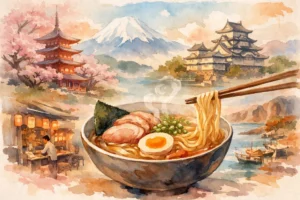

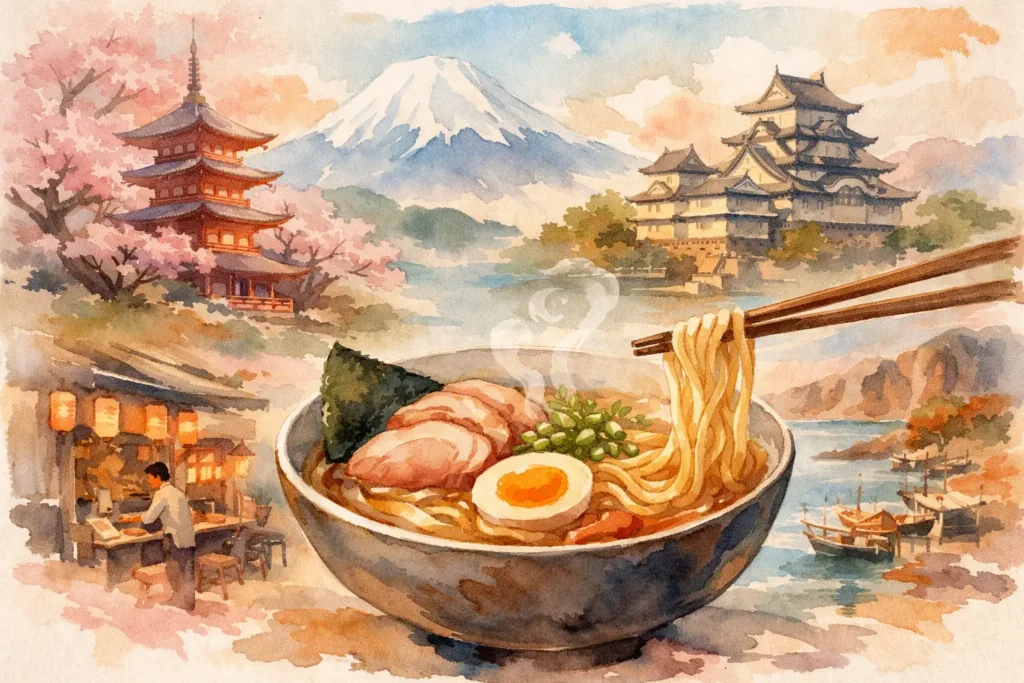
Steam clouds the window of a tiny noodle shop. Behind the counter, a cook lowers a nest of noodles into boiling water, then sends out a bowl fragrant with soy sauce, pork, scallions, and toasted sesame. Ramen (ラーメン) is one of Japan’s most immediate pleasures, but it is never just a quick meal. Each bowl carries the character of its city, the instincts of its cook, and a food culture built around care, speed, comfort, and fiercely personal taste.

For travelers, ramen offers a delicious way to understand Japan beyond its landmark views. It belongs to late-night city streets, station neighborhoods, snow-covered northern towns, and family-run shops whose recipes have been refined for decades. You may eat an unforgettable bowl in ten quiet minutes, shoulder to shoulder with strangers, then spend the rest of the day thinking about the broth.
Ramen (ラーメン) Is More Than Noodles
Ramen began as a Japanese adaptation of Chinese-style wheat noodles and developed into something unmistakably its own. During the 20th century, it became increasingly woven into everyday life, especially as urban dining culture expanded and affordable wheat flour became widely available after World War II. Over time, cooks across the country transformed the basic idea into a vast regional language of broth, tare seasoning, noodles, toppings, and technique.
The apparent simplicity is part of the fascination. A ramen bowl usually brings together noodles, soup, tare, aromatic oil, and toppings, yet every element changes the final impression. Tare is the concentrated seasoning that gives a bowl its central direction, often based on soy sauce, salt, or miso. The broth provides depth and body, while oil carries fragrance and richness across the surface. Even the noodle’s thickness, curl, firmness, and water content are chosen to suit a particular soup.
That is why two bowls described as shoyu ramen can feel entirely different. One may be clear, light, and chicken-forward, with a graceful aroma of soy sauce. Another may be darker and more assertive, built around pork, fish, or roasted vegetables. The best bowl is not necessarily the richest or most elaborate. It is the one in which every choice feels intentional.
A Map of Japan in a Bowl
Japan’s ramen landscape rewards curiosity because it is deeply regional. A local specialty may reflect climate, nearby ingredients, a city’s working rhythms, or the preferences of generations of regulars.
In Sapporo, miso ramen became famous for its warming, full-bodied style, often enriched with fragrant fat and finished with corn, bean sprouts, or butter. It makes particular sense in Hokkaido’s cold winters, when a hot, savory bowl feels almost restorative. Sapporo ramen is not a single fixed recipe, though. Shops vary widely in sweetness, spice, pork richness, and the intensity of their miso.
Fukuoka is celebrated for Hakata ramen, a style centered on creamy tonkotsu broth made from pork bones and slender, straight noodles. Many shops offer a noodle firmness choice, and diners who finish their noodles may order kaedama, an extra serving added to the remaining broth. Tonkotsu can be wonderfully rich, but it is not automatically heavy. At its best, it has a clean, focused pork flavor and a lively aroma.
Tokyo’s ramen culture is remarkably diverse, yet shoyu ramen remains one of its defining expressions. Clear brown soup, springy noodles, sliced chashu pork, bamboo shoots, scallions, and nori can appear modest at first glance. The beauty is in balance. A refined Tokyo-style bowl can reveal layers of chicken, pork, dried seafood, and soy sauce without any single note overpowering the others.
In Kitakata, Fukushima Prefecture, broad, wavy noodles meet a gently flavored soy sauce broth, creating an inviting, unpretentious bowl with a devoted following. Yokohama is known for iekei ramen, a bold style that combines pork and chicken broth with soy sauce, thicker noodles, spinach, chashu, and nori. Meanwhile, Kyoto has its own range of memorable ramen, from delicate chicken-based soups to richer styles shaped by the city’s dynamic student and late-night dining scenes.
These labels are useful starting points, not rules. A shop may honor a local tradition while pushing it in a new direction. That ongoing conversation between inheritance and experimentation is one reason ramen remains so captivating.
The Rhythm of a Japanese Ramen Shop
A ramen meal is often fast, but it should not feel rushed. Many popular shops have a ticket machine near the entrance. You select and pay before sitting down, then hand the ticket to the staff. Machines can feel intimidating if the buttons are in Japanese, but photos, English labels, and staff guidance are increasingly common in major travel areas. When in doubt, choose the shop’s standard bowl, usually marked as recommended or most popular.
Counter seating is common because ramen is designed to be eaten at its peak. The noodles continue to soften in the hot broth, so the bowl arrives with an unspoken invitation: begin now. Take a sip of soup first if you wish, then move between noodles, broth, and toppings. Chopsticks and soup spoon work together naturally, and lifting noodles close to your mouth helps prevent splashing.
Slurping is widely accepted in Japan and can help cool hot noodles while drawing in their aroma. It is not a test of cultural knowledge, however. Eat comfortably and respectfully. The more meaningful etiquette is practical: avoid lingering when there is a line, keep bags from blocking narrow walkways, and wait for staff direction in compact shops. A simple thank you, or gochisousama deshita after the meal, is always appreciated.
Condiments deserve restraint. Garlic, chili paste, vinegar, pepper, and sesame may sit on the counter, especially in ramen shops known for customizable flavor. Taste the bowl as served before changing it. The cook has built a particular balance, and a small adjustment can be more revealing than immediately turning the soup into something else.
How to Choose a Bowl You Will Love
The menu may offer shoyu, shio, miso, and tonkotsu, but these terms only tell part of the story. Shoyu means soy sauce seasoning and often delivers a savory, aromatic profile. Shio means salt and can be remarkably clear and delicate, though it may also be deeply layered. Miso tends toward rounder, earthier flavor. Tonkotsu refers to pork-bone broth, while other broths may be based on chicken, seafood, beef, vegetables, or combinations of several ingredients.
If you prefer clean, nuanced flavors, start with shio or shoyu at a shop known for clear broth. If you want comforting richness, try miso in Sapporo or tonkotsu in Fukuoka. If your ideal bowl includes pronounced seafood depth, look for gyokai, meaning seafood-based, or double soup styles that blend animal and fish broths. Travelers who do not eat pork should ask carefully, since pork can appear not only in toppings but also in soup, oil, and seasoning.
A memorable ramen experience also depends on timing. Visit a celebrated shop right at opening, after the main lunch rush, or later in the evening if it stays open. Some renowned counters have long lines, and waiting can be worthwhile when a shop’s specialty truly speaks to you. But Japan also rewards the spontaneous choice: a neighborhood ramen shop near your hotel, filled with local regulars, may become the bowl you remember most vividly.
Let the Bowl Lead You Further
Ramen invites a different kind of travel planning. Rather than treating it as one meal between major sights, let it guide an evening walk through Shinjuku’s glowing side streets, a pause after exploring Yokohama’s waterfront, or a warming stop on a winter day in Sapporo. Notice the details around the bowl: the handwritten menu, the rhythm of the kitchen, the salary workers at the counter, the chef’s concentration as each portion is timed.
Japan’s most compelling food experiences often live in these ordinary, brilliant moments. Choose a bowl that suits your appetite, eat it while it is hot, and let the flavors give the neighborhood a new memory.