
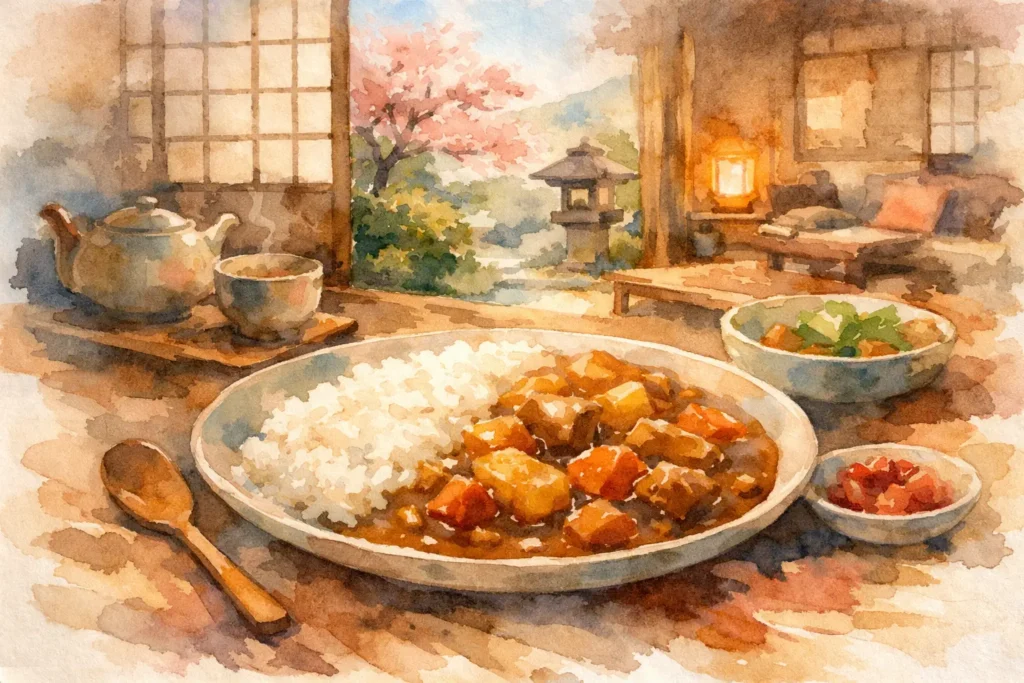
The aroma arrives before the plate does: warm spices, sautéed onion, and a deep, savory sweetness rising from a glossy brown sauce. In Japan, curry (カレー) is not a rare occasion meal or a niche culinary curiosity. It is the dependable comfort food of family kitchens, school cafeterias, neighborhood diners, train stations, and late-night counter restaurants.

For travelers, Japanese curry offers one of the most immediate ways to experience everyday life. It is familiar enough to approach without hesitation, yet distinctly Japanese in its texture, balance, and remarkable variety. One bowl can feel wonderfully simple. Another can reveal the history of global exchange, regional pride, and the quiet precision that makes even casual Japanese cooking so captivating.
How Curry Became Part of Japan
Japanese curry did not arrive directly from India. It entered Japan during the Meiji era, when the country was opening to international ideas and trade, through British naval cuisine. The British version had already adapted South Asian spice traditions into a thick, flour-based stew, and this style proved especially practical for the Japanese navy: it was filling, easy to prepare in large quantities, and could be served with rice.
Over time, Japan made curry entirely its own. The spice profile became gentler and sweeter than many South Asian curries, while a roux gave the sauce its signature velvety thickness. Potatoes, carrots, and onions became classic additions, and rice replaced bread as the natural companion. By the 20th century, curry rice had moved far beyond naval kitchens and into homes, cafés, and public dining halls across the country.
That history still gives curry a special place in Japanese food culture. It is an imported idea transformed through local tastes, much like other beloved dishes that now feel inseparable from Japan’s culinary landscape. Its presence is especially vivid on Fridays in some Maritime Self-Defense Force settings, a custom associated with keeping track of the days while at sea.
The Character of Japanese Curry (カレー)
The first surprise for many visitors is the sauce. Japanese curry is often less fiery than expected, but it is far from bland. Its flavor is rounded and layered: toasted spices, fruit-like sweetness, earthy vegetables, and umami from stock or meat. The heat level can range from mild to genuinely hot, particularly at curry specialists, but the central pleasure is richness rather than a sharp burn.
Its texture matters just as much. A classic curry roux clings to each grain of rice and turns an ordinary spoonful into something deeply satisfying. Boxed roux blocks are a familiar pantry item in Japanese homes, making curry a popular meal for busy weeknights. Yet the same dish can become highly refined in restaurants where onions are slowly caramelized, spices are blended in-house, and sauces simmer for hours.
Curry’s adaptability is part of its enduring appeal. It welcomes pork cutlets, chicken, beef, seafood, seasonal vegetables, cheese, fried eggplant, or a simple soft-boiled egg. It can be served at a quick counter or presented with extraordinary care in a small chef-led restaurant. There is no single definitive bowl, and that is precisely why seeking it out in Japan is so rewarding.
Curry Rice, Katsu Curry, and More
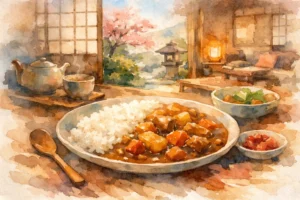
Curry rice, or kare raisu, is the essential starting point: rice topped or surrounded by curry sauce, often with chunks of meat and vegetables. It is the version that evokes home cooking for many people in Japan. Pickles such as fukujinzuke, usually a bright red or brown mix of finely chopped vegetables, are often served alongside. Their crisp sweetness cuts through the rich sauce beautifully.
Katsu curry adds a breaded, deep-fried cutlet, usually pork or chicken. The contrast is irresistible: crisp panko coating, tender meat, soft rice, and silky curry. This is a substantial meal, but it is not only about indulgence. The care given to a properly fried cutlet reflects Japan’s larger affection for texture, where crunch and softness are deliberately balanced in one bite.
Then there is curry udon, a bowl that brings curry into the comforting world of noodles. Thick udon absorbs the sauce while retaining its springy chew, often in a broth that is lighter and more aromatic than curry rice. Curry pan, a fried bread filled with curry, turns the same familiar flavor into a portable snack. Even convenience stores and bakeries can offer satisfying versions, proof of how thoroughly curry belongs to daily life.
Regional Bowls Worth Seeking Out
Japan’s curry culture is nationwide, but certain places have developed especially distinctive interpretations. In Yokosuka, Kanagawa, naval curry is closely associated with the city’s maritime history. Restaurants offer their own takes on the hearty, approachable style, often accompanied by a small milk drink in homage to naval meal traditions.
In Hokkaido, soup curry takes the dish in a lighter, more aromatic direction. Rather than a thick roux, the curry is a spice-forward broth filled with large, colorful vegetables, chicken, and sometimes seafood. It feels vibrant and warming at once, especially after a day exploring Sapporo’s dynamic streets or Hokkaido’s magnificent natural landscapes. Because the broth is looser, rice is often eaten in spoonfuls with the soup rather than buried beneath it.
Osaka is also celebrated for curry, with a lively mix of longstanding shops and creative modern counters. Here, as elsewhere, the best choice depends on what you want from the meal. A dark, slow-cooked beef curry can be intensely savory, while a lighter spice curry may highlight individual aromatics and seasonal produce. Travelers looking for a particular style should not assume every curry restaurant serves the same thing.
How to Order With Confidence
Curry is one of Japan’s easiest meals to order, but a few choices shape the experience. At casual chains and specialist shops, you may be asked to choose your rice portion, spice level, and toppings. Start at mild or regular if you are unsure. Japanese labels such as “medium hot” do not always translate to a universal standard, and a shop known for spice curry may be considerably hotter than a family restaurant.
If you prefer a balanced first experience, try a standard curry rice or katsu curry with pickles on the side. If you are curious about regional character, choose soup curry in Sapporo or naval curry in Yokosuka. Vegetarian travelers should check carefully, since many curry sauces contain meat stock, beef extract, or animal-based ingredients even when the visible toppings are vegetables.
Curry also makes an excellent solo meal. Counter seating is common, portions are usually generous, and the atmosphere tends to be relaxed rather than ceremonial. That said, some of Japan’s most memorable curry restaurants are small and popular, with limited seating or lines at peak hours. Arriving early or eating slightly outside standard lunch and dinner times can make the experience more leisurely.
A Familiar Dish That Reveals Japan
Japanese curry is often described as simple, but its simplicity is earned. It carries the warmth of a home meal, the efficiency of a quick lunch, the ingenuity of a cuisine that adapts influences with confidence, and the regional imagination of cooks who continue to reshape a beloved classic.
On your travels, make room for curry not as a backup meal between famous sights, but as a delicious pause within the rhythm of Japan. Follow the scent of onions and spices into a small local shop, order the bowl that sounds most inviting, and let that first spoonful introduce you to a flavorful, deeply everyday side of the country.