
The first sound is not simply heard – it lands in your chest. At Okinawa Eisa Matsuri, immense taiko drums answer one another across the night, dancers surge forward in vivid costumes, and the bright, quick voice of the sanshin carries melodies shaped by the Ryukyu Islands. For a few exhilarating days, Okinawa City becomes a stage for one of the prefecture’s most powerful living traditions.

This is not a performance designed to sit quietly in front of. Eisa is movement, rhythm, memory, and community in full color. The festival offers visitors a captivating way to experience Okinawa beyond its celebrated beaches: through the energy of its neighborhoods, the pride of its youth groups, and an art form that continues to evolve without losing its roots.
What Makes Okinawa Eisa Matsuri So Special?
Okinawa Eisa Matsuri, often known in English as the Okinawa Zento Eisa Festival, brings together eisa groups from across Okinawa Prefecture. It is generally held in Okinawa City around late summer, with major events centered on the area around Koza Sports Park. Dates, venues, and program details can shift from year to year, so travelers should confirm the current schedule before building an itinerary around it.
Eisa is closely connected to Obon, the Japanese period of honoring ancestral spirits. In Okinawa, eisa developed as a community dance performed by young people who moved through local streets, accompanying chants and prayers with drums and sanshin music. Its history is often linked to the spread of Buddhist devotional songs in the Ryukyu Kingdom era, but its identity was shaped locally over generations. What began as a neighborhood observance became one of Okinawa’s most recognizable expressions of cultural vitality.
At the festival, that origin remains present even when the atmosphere feels more like a magnificent open-air spectacle. Teams of dancers do not just demonstrate technical precision. They represent the places where they live and practice, bringing their own arrangements, costume details, formations, and sense of character to the performance.
The Drums, Dances, and Costumes of Eisa
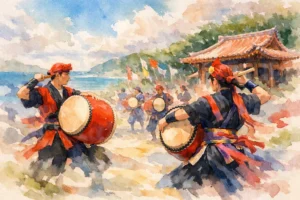
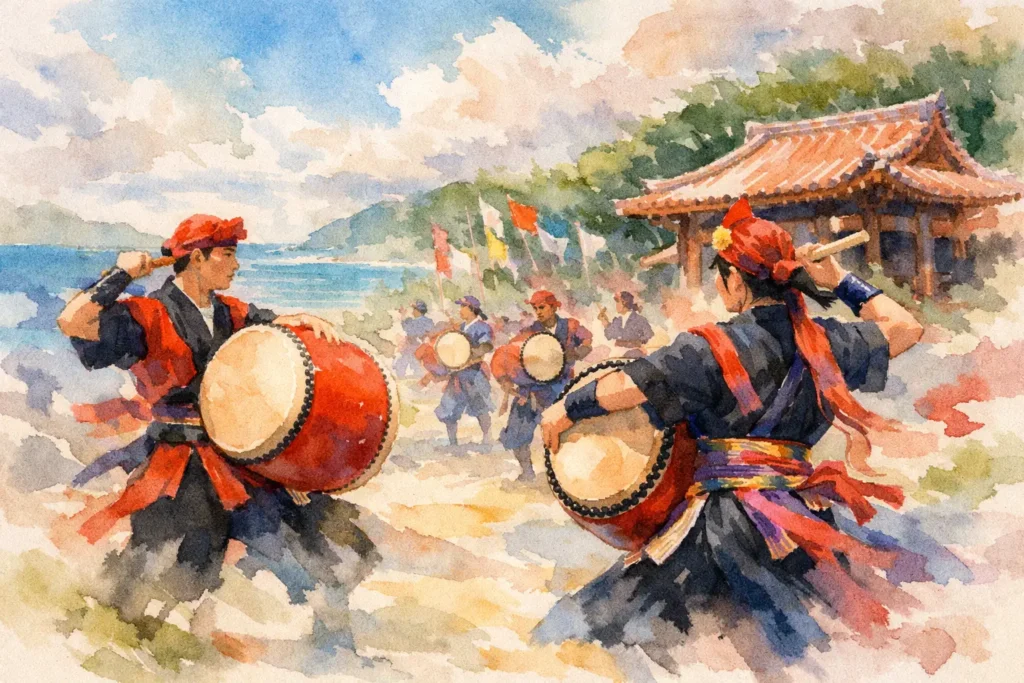
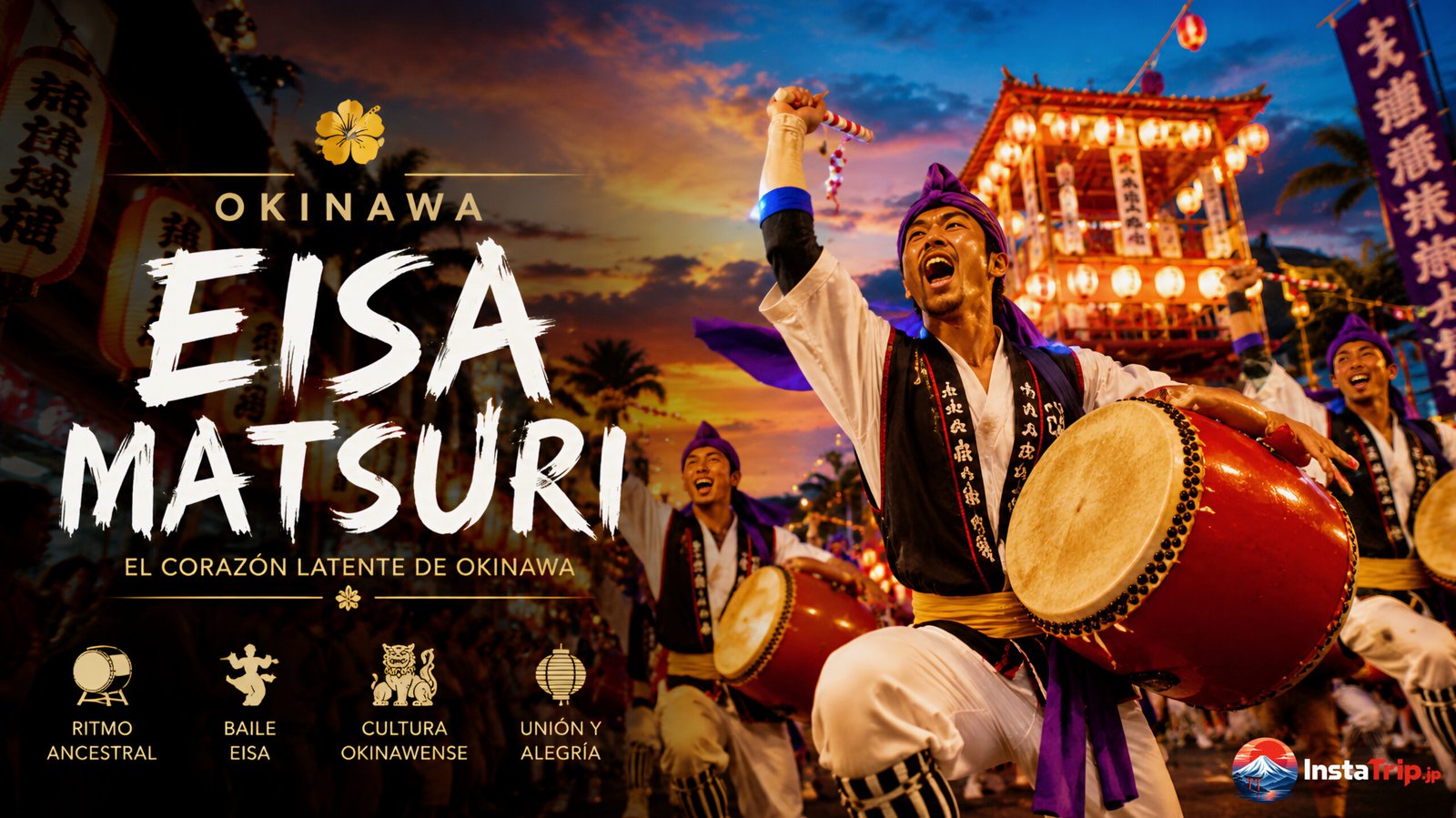
Eisa’s visual impact comes from the way many traditions move together at once. Dancers wearing brightly colored bin-gata-inspired garments, headscarves, and distinctive clothing patterns sweep through synchronized formations. Some carry the larger odaiko drum, strapped across the body and played with dramatic, athletic motions. Others use the smaller shimedaiko, whose sharp rhythmic accents keep the ensemble driving forward.
Then there is the paranku, a compact hand drum often used by dancers whose fast footwork gives eisa its buoyant, kinetic feel. Each instrument has a different role, and the contrast is part of the excitement: deep bass beats, crisp percussion, chanting voices, and the lyrical twang of the three-stringed sanshin.
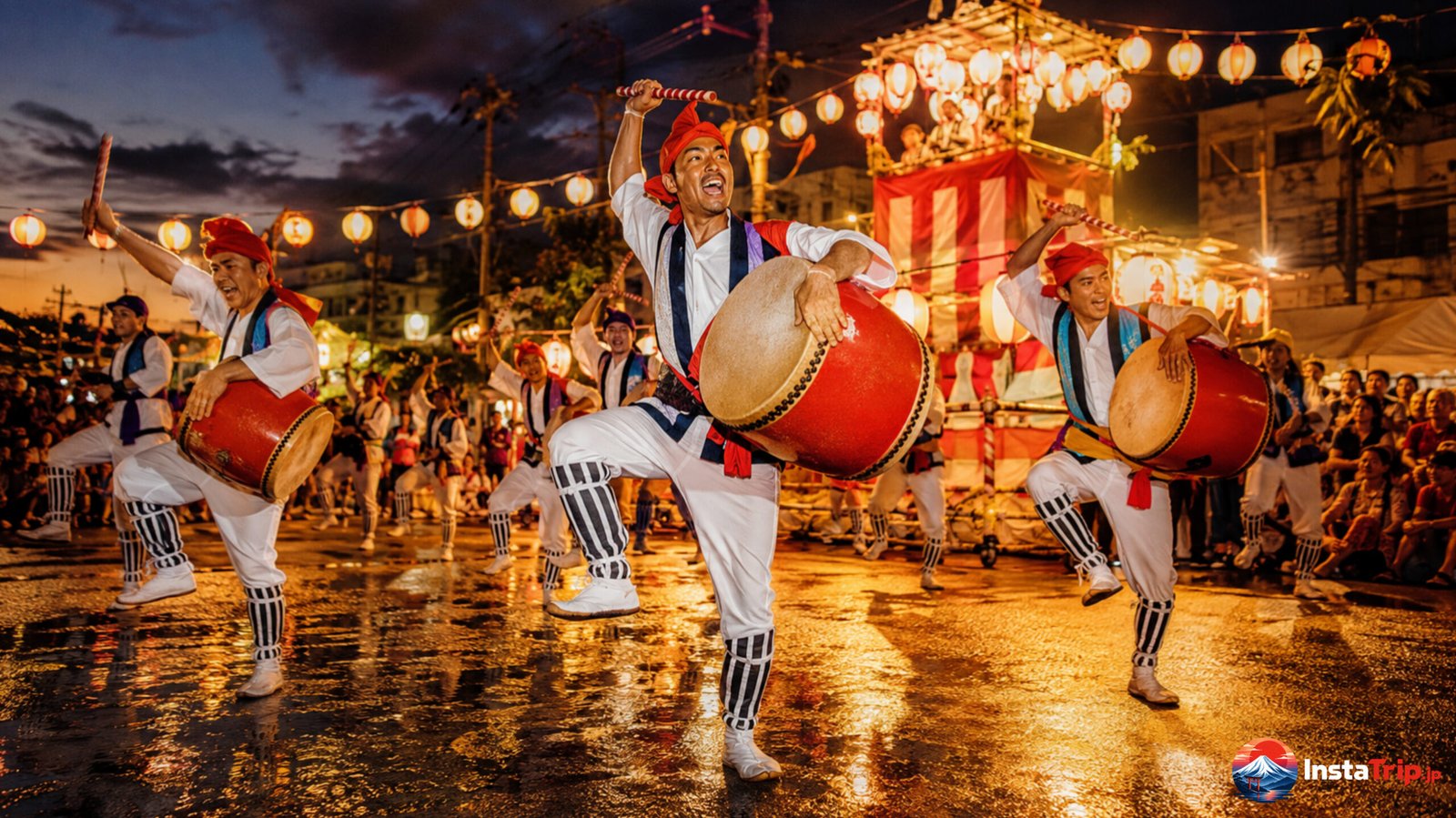
The choreography can be joyful, forceful, playful, or almost ceremonial. A troupe may shift from precise lines into spinning circles, then break into gestures that feel spontaneous even after countless hours of rehearsal. The best way to watch is to follow both the whole formation and a single performer. Across a large group, unity is striking. Up close, facial expressions and individual timing reveal just how demanding the dance can be.
Traditional eisa and creative eisa
Travelers may hear people distinguish between traditional eisa and creative eisa. Traditional styles are deeply tied to particular communities and established local repertoires. Creative eisa, while still grounded in the form’s rhythms and spirit, may introduce more theatrical staging, new musical arrangements, elaborate costumes, or contemporary choreography.
Neither category is inherently more authentic than the other. They serve different purposes. Traditional groups preserve regional continuity and local practice, while creative groups demonstrate how eisa has remained dynamic for younger generations and modern audiences. At a major festival, seeing both offers a fuller picture of Okinawa: respectful of inherited forms, yet never frozen in time.
How the Festival Feels After Sunset
As evening settles over Okinawa City, the festival’s atmosphere intensifies. Stage lights catch the rich reds, yellows, blues, and purples of the costumes. Drum patterns gather momentum. The crowd’s applause rises as each troupe enters, and a warm summer night becomes charged with collective anticipation.
This is where Okinawa Eisa Matsuri feels distinct from a museum presentation or a short cultural demonstration. The sound is physical, the crowds are animated, and the performers bring the focus and exuberance of people dancing for something that belongs to them. You may see families cheering for local teams, children copying drum gestures at the edge of the audience, and longtime fans recognizing a favorite group from the first few beats.
Okinawa City itself adds another layer. The city, historically known as Koza, has long been a crossroads of Okinawan life, music, and postwar urban culture. Its festival setting reflects that lively character. Eisa belongs to an older ceremonial calendar, yet it also feels completely at home amid the city’s contemporary nightlife, restaurants, and music scene.
Planning a Meaningful Visit
The festival is a rewarding experience for first-time visitors, but a little preparation makes it much more enjoyable. Okinawa’s late-summer heat and humidity can linger well into the evening, so light clothing, water, and patience in crowded areas go a long way. Outdoor events can also be affected by weather, especially during typhoon season, making schedule checks essential.
Arrive earlier than you think you need to if you want a good viewing position. The central performance areas can become busy, while parade-style moments may reward visitors willing to stand along the route and let the action come to them. If seating is offered, availability and reservation rules may vary, so do not assume every event can be watched the same way.
Photography is welcome in many public festival settings, but good etiquette matters. Avoid blocking people who have waited for a view, keep clear of performers and staff, and be especially considerate when families and older spectators are behind you. Flash can distract dancers during nighttime performances, so it is better left off. A short video may capture the rhythm, but put the phone down for at least one full routine. Eisa is best understood through the body as much as the eyes.
Food stalls and local vendors often add to the occasion, offering an easy way to sample the social side of a Japanese summer festival. Still, the festival should not be reduced to a checklist of snacks and photo opportunities. Pause when a troupe begins. Notice the call-and-response between drums, the disciplined timing, and the fierce happiness of the dancers. Those details are where the event becomes memorable.
Make room for Okinawa’s wider cultural landscape
Eisa Matsuri can be the centerpiece of a trip through central Okinawa, but it also invites deeper curiosity. Explore Okinawan music, listen for the distinct sound of the sanshin, and seek out local performances at other times of year. Learn a little about the Ryukyu Kingdom and the islands’ separate historical identity, which helps explain why Okinawan culture has such a recognizable voice within Japan.
If your visit falls outside festival dates, do not treat that as a reason to skip Okinawa City. Smaller eisa events, community performances, and dance groups can appear throughout the year, particularly around Obon. A smaller setting may not deliver the same massed-drum spectacle, but it can offer a more intimate sense of how eisa lives within local communities.
The enduring beauty of eisa is that it asks people to gather – performers, neighbors, returning families, and curious visitors alike. Stand among the crowd at Okinawa Eisa Matsuri, let the taiko rhythm settle into your steps, and you may leave with more than images of a dazzling festival. You may carry away a new feeling for the islands themselves: proud, expressive, generous, and always in motion.