
Fukuoka (福岡) is a city that asks to be tasted street by street. Its most memorable meals rarely arrive as a single grand reservation: they emerge from a steaming bowl beside Hakata Station (博多駅), a fish counter at a morning market, a tiny izakaya (居酒屋) hidden behind a noren (暖簾) curtain, or a yatai (屋台) stall glowing beside the river after dark. These Fukuoka food neighborhoods reveal a city shaped by trade, the Genkai Sea, and a famously direct affection for good eating.
The pleasure lies in the contrast. One district moves at commuter speed, another feels like a late-night conversation; one celebrates impeccably fresh seafood, another serves pork-bone ramen with almost ritual focus. A short subway ride can change the mood completely. Come hungry, but also leave room for wandering.
Hakata (博多): The Essential Start for Fukuoka Food Neighborhoods
Hakata is both a historic name and a living food identity. Long before modern Fukuoka expanded around it, this was a port-facing merchant town with deep connections to the Asian mainland. That history still feels present in its compact streets, busy station district, temple-lined lanes, and appetite for fast, satisfying food.

Begin around Hakata Station, where regional specialties are especially easy to encounter. Hakata ramen (博多ラーメン), often called tonkotsu ramen (豚骨ラーメン), is the district’s signature: thin, straight noodles in a deeply savory broth made from simmered pork bones. The style is known for its speed as much as its richness. Many ramen shops offer kaedama (替え玉), an extra serving of noodles added to the remaining broth, a practical local custom for those who want to extend the bowl rather than order another meal.
A bowl here is not automatically the same as ramen elsewhere in Japan. Broth can range from clean and creamy to boldly aromatic, and diners may choose noodle firmness. If the fragrance of pork broth feels intense, try a lighter shop or arrive at lunchtime, when the atmosphere is energetic but less crowded than late evening.
Hakata is also a fine place for gyoza (餃子), especially compact bite-sized dumplings that suit a quick meal with beer, as well as mentaiko (明太子), seasoned pollock roe that has become one of Fukuoka’s most recognizable flavors. Served over rice, folded into omelets, or stirred into pasta at casual cafes, mentaiko shows how a local specialty can move easily between traditional and contemporary cooking.
Kushida Shrine (櫛田神社) and the Old Hakata Appetite
Near Kushida Shrine, narrow streets carry a more intimate rhythm. This is an evocative area for pairing food with a sense of place: visit the shrine, known for its connection to the vibrant Hakata Gion Yamakasa festival, then pause for sweets, udon, or an unhurried meal nearby. Hakata udon is typically softer than the firm, chewy styles found in some other regions. Its gentle texture and delicate broth make it an appealing counterpoint to tonkotsu ramen’s intensity.

Nakasu (中洲): Yatai Nights and Riverside Energy
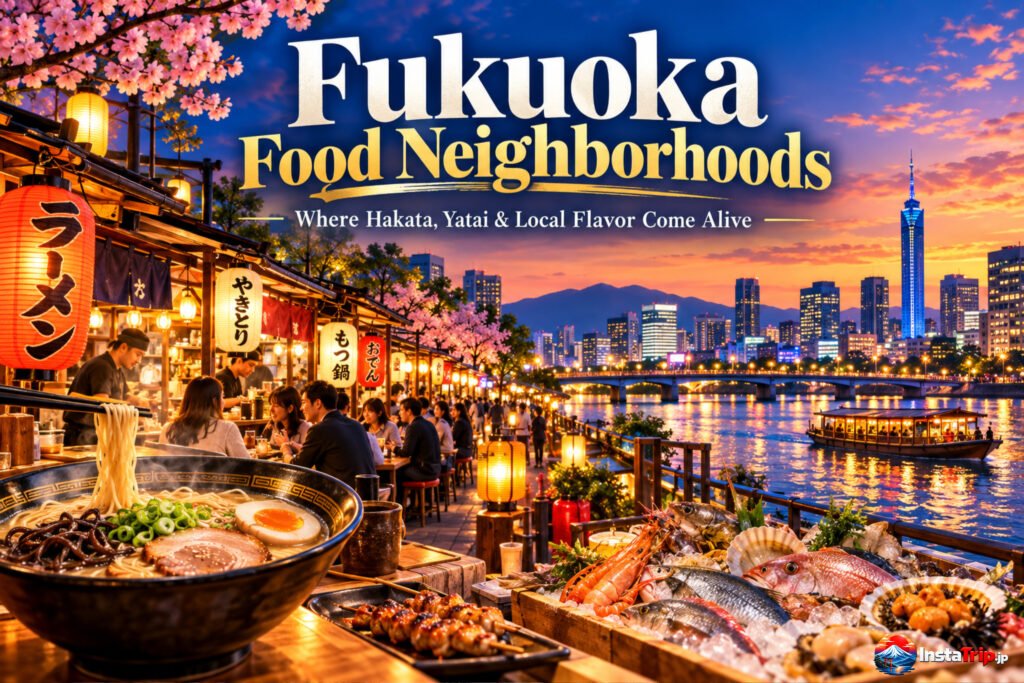
When evening arrives, Nakasu becomes one of Fukuoka’s most captivating food scenes. The island district between the Naka and Hakata rivers is known for nightlife, neon, and yatai, the small open-air food stalls that have become symbols of the city.
A yatai meal is as much about proximity as it is about flavor. Diners sit shoulder to shoulder at a narrow counter while the cook works a few feet away. Menus often include ramen, yakitori, oden, grilled seafood, gyoza, and simple seasonal dishes. The best choice is not necessarily the stall with the longest line. Look for a menu that appeals, a friendly atmosphere, and enough space to sit without rushing the experience.
Yatai culture is lively, but it is not an all-night free-for-all. Seating is limited, and guests are generally expected to order food and drink, keep bags compact, and make room for the next diners once they have finished. Cash remains useful. A little patience goes far, especially on weekends and during festival periods.
Nakasu is ideal for travelers who want the theatrical side of Fukuoka dining: steam rising into the night air, voices bouncing across the counter, and the river reflecting the city’s lights. Yet the trade-off is obvious. Prices can be higher than at a neighborhood restaurant, and the experience is less private. For many visitors, that is precisely the point.
Tenjin (天神) and Daimyo (大名): Fukuoka’s Dynamic Everyday Table
Across the river, Tenjin offers a different kind of abundance. As Fukuoka’s central shopping and business district, it is filled with department store food halls, basement restaurants, coffee shops, cocktail bars, and polished dining rooms. It is a useful neighborhood for travelers who want variety without needing to plan every stop in advance.
Department store basements, known as depachika (デパ地下), are particularly rewarding before a picnic, train journey, or hotel-room supper. Their counters display bento, grilled fish, sushi, beautifully packed sweets, seasonal fruit, and regional gifts. The experience is visual as well as culinary, showing the care Japanese food culture often gives to seasonality, presentation, and portability.
A short walk west brings you to Daimyo, where Fukuoka’s creative, youthful energy becomes more apparent. Vintage shops, galleries, small fashion boutiques, bakeries, espresso bars, and independent restaurants share the streets. This is a strong area for contemporary Japanese cooking, natural wine, stylish cafés, and inventive dishes that borrow from global ideas without losing local ingredients.
Daimyo does not demand a single famous specialty. Its value is its range. A traveler spending only one evening in Fukuoka may prefer Nakasu for yatai, but someone with time to linger will find Daimyo more revealing of the city’s evolving everyday tastes.
Yanagibashi (柳橋) and Nagahama (長浜): Where the Sea Reaches the Table
Fukuoka’s relationship with seafood is immediate. The Genkai Sea and surrounding waters supply fish and shellfish that appear in markets, sushi counters, izakaya menus, and morning rice bowls across the city. For a closer view of that connection, head toward Yanagibashi Rengo Market.
Often called Fukuoka’s kitchen, Yanagibashi is a compact market district where fishmongers, produce sellers, prepared-food shops, and small eateries create a lively daytime scene. This is not a staged attraction. It is a working market, and that is what makes it compelling. Arrive in the morning or around lunch, when counters are active and the ingredients feel closest to their source.
Try sashimi, grilled fish, seafood donburi, or a simple prepared side dish that catches your eye. Seasonal availability matters, so the best order depends on the day. Asking what is recommended can lead to an excellent meal, even when the menu is not fully in English.
Further north, Nagahama carries a long ramen association of its own. Nagahama ramen developed around the needs of workers connected to the former fish market, favoring quick service and fine noodles that cook rapidly. Today, the distinction between Hakata and Nagahama ramen can blur from shop to shop, but the neighborhood remains a meaningful stop for anyone interested in how work, port life, and convenience shaped a beloved Fukuoka bowl.
Yakuin (薬院) and Imaizumi (今泉): Slow Evenings, Thoughtful Plates
South of Tenjin, Yakuin and neighboring Imaizumi offer a more residential, relaxed food landscape. The streets are dotted with small bistros, intimate izakaya, dessert shops, wine bars, and restaurants where reservations can be worthwhile. This is where to go when the goal is not to collect famous dishes, but to settle into a long evening.
The atmosphere suits travelers who enjoy the details: ceramic tableware, a seasonal appetizer, a chef explaining the catch of the day, or a quiet counter meal that lasts longer than expected. Fukuoka’s food culture is celebrated for accessibility, but it also has considerable finesse. In Yakuin, that refinement often feels personal rather than formal.
For dinner, consider starting with sashimi or vegetable dishes, then moving to yakitori, grilled fish, or a seasonal course. If you have dietary needs, communicate them early and clearly. Smaller kitchens can be wonderfully accommodating, but last-minute substitutions are not always possible.
Choose a Fukuoka Food Neighborhood by Mood
| Area | Start with | Suggested timing |
|---|---|---|
| Hakata | Ramen, udon and regional specialties around the station | A convenient lunch or arrival-day meal |
| Nakasu | Yatai counters and a riverside walk | Evening, with a restaurant backup for poor weather |
| Tenjin and Daimyo | Food halls, cafes and independent restaurants | Lunch, shopping breaks or dinner |
| Yanagibashi | Market food and seasonal seafood | Daytime; check each shop’s opening hours |
| Nagahama | A ramen stop with local context | Match your visit to the chosen shop’s hours |
| Yakuin and Imaizumi | A relaxed restaurant or izakaya evening | Reserve ahead when the venue requires it |
A Flexible One-Day Fukuoka Food Route
Start with a daytime visit to Yanagibashi Rengo Market (柳橋連合市場), choose a modest lunch, then explore Tenjin and Daimyo with room for a cafe stop. In the evening, choose either a yatai meal in Nakasu or a restaurant in Yakuin. Treat these as alternatives if you prefer a relaxed pace; you do not need to eat a full meal in every district.
Check the opening hours of individual shops and the walk or subway journey between stops. Leave time for queues, and keep a restaurant option for a rainy evening.
Yatai Hours, Cash and Counter Etiquette
Fukuoka City’s guide says most yatai open around 6:30–7 p.m., though some start at 6 p.m., and many close around midnight. Days off vary and bad weather can prevent opening. Most accept cash, so bring yen rather than depending entirely on a card.
Travel with a small bag, wait to be seated, and check menu prices before ordering. Ordering at least one dish and one drink per person is the city guide’s etiquette advice. Some bar-style stalls have cover charges, so ask if you are unsure. Use the official yatai guide and current stall map to choose a location.
Watch: A Night Walk Through Nakasu, Fukuoka
This naniyalog city tour walk captures Nakasu’s evening streets, including its lively counter-dining and nightlife setting. Use it for a sense of the area; check current stall locations and opening days through the official map.
Useful Ordering Phrases at the Table
おすすめは何ですか? (Osusume wa nan desu ka?) means “What do you recommend?” お会計お願いします (Okaikei onegaishimasu) means “The bill, please.” Ask permission before photographing staff or nearby diners.
Fukuoka Food Neighborhoods FAQ
Where should I eat on my first evening?
Choose Nakasu for yatai atmosphere, Hakata for an easy station-area meal, or Tenjin for a broad range of restaurant options.
Can I count on yatai being open every night?
No. Opening depends on the stall, its schedule and the weather. Keep a nearby restaurant in mind.
Are yatai the right place to order sashimi?
The city’s guide says yatai do not serve raw food. Choose a suitable market eatery or restaurant for sashimi.
Is tonkotsu ramen suitable for a meat-free diet?
Its defining broth uses pork bones. Ask about the actual ingredients in any alternative; noodles, sauces and stock need checking too.
Prepare with our guide to cash and cards in Japan and convenience-store food.
Useful food-trip items (paid links): Japanese travel phrasebooks and small travel crossbody bags.
Eat With Time, Not Just a Checklist
The finest way to experience Fukuoka is to let each neighborhood set the pace. Have ramen in Hakata without treating it as a race. Visit Yanagibashi when the market is awake. Save Nakasu for a night when you are willing to wait for a counter seat, and give Yakuin an evening when conversation matters as much as the menu.
Fukuoka rewards curiosity because its food is not confined to celebrated dishes. It lives in the local timing of lunch, the seasonal catch on a handwritten board, the softness of udon, the extra noodles dropped into a ramen bowl, and the warm welcome of a small counter. Follow those moments, and the city begins to feel less like a list of restaurants and more like a delicious, living neighborhood.