

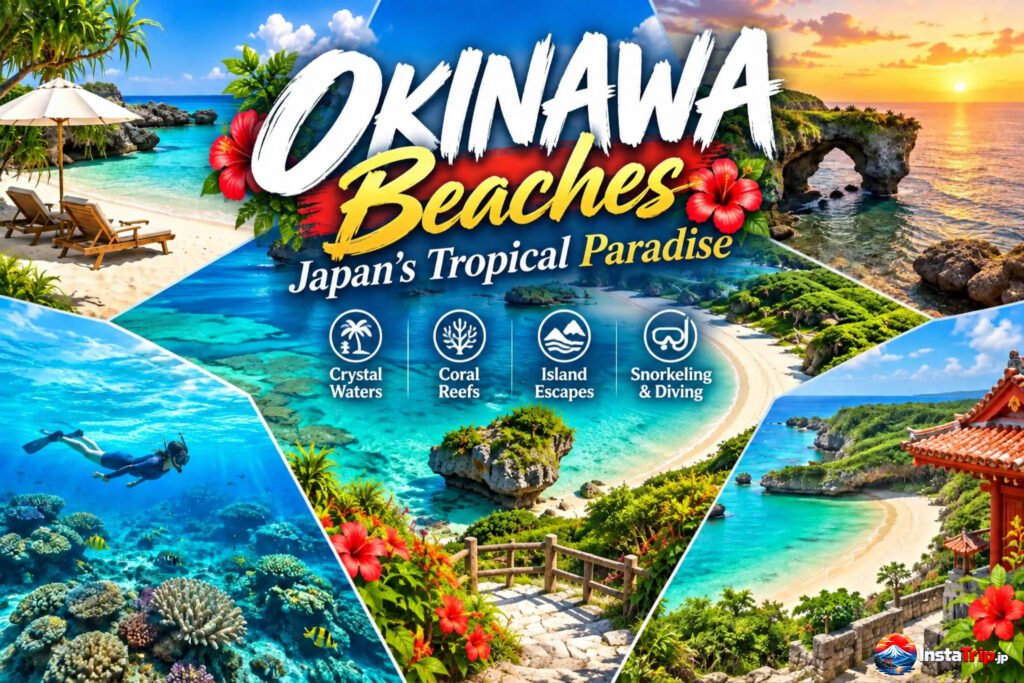
The first surprise of Okinawa beaches (沖縄のビーチ) is their range. One morning can begin with the soft bustle of a resort shore, continue through a village where fishing boats rest in shallow water, and end beside a nearly empty cove glowing coral-blue beneath the late sun. This is Japan at its most subtropical, shaped by the Ryukyu Islands’ (琉球諸島) distinct history, ocean traditions, and a pace that feels wonderfully removed from the country’s great cities.
Okinawa Prefecture stretches across a vast chain of islands, so there is no single beach experience. The main island offers easy access, restaurants, and family-friendly facilities. Smaller islands reward travelers with extraordinary clarity, quieter horizons, and a closer sense of life at the edge of the sea. Choosing well comes down to what you want from the day: swimming, snorkeling, photography, a sunset walk, or simply time to absorb a side of Japan that feels both familiar and entirely different.
Best Okinawa Beaches: Choose Your Island Day
| Beach | Good fit | Planning point |
|---|---|---|
| Emerald Beach (エメラルドビーチ) | A managed swim near Ocean Expo Park | Use only the designated swimming section; snorkels are prohibited |
| Manza Beach (万座ビーチ) | West-coast resort stays and water activities | Confirm visitor access, activity charges and operating hours |
| Zanpa Beach (残波ビーチ) | A coastal day around Yomitan | Check beach hours separately from a sunset visit to the cape |
| Yonaha Maehama (与那覇前浜) | Wide sandy views on Miyakojima | Choose Miyakojima as a separate flight-and-stay base |
| Sunayama (砂山) | A scenic photography stop | Respect rock-arch barriers; do not assume supervised swimming |
| Kondoi (コンドイ) | Shallow-water scenery and Taketomi village | Reach Taketomi via Ishigaki; check the tide and return boat |
| Aharen (阿波連) | A Kerama beach day and guided marine activities | Allow for the Naha ferry and a transfer from Tokashiki Port |
Choose your island base before booking accommodation. These beaches are spread across the prefecture; they are not stops on a single main-island road trip.

Okinawa beaches on the main island
For many visitors, Okinawa Main Island (沖縄本島) is the most practical starting point. It has an international airport in Naha (那覇), a broad range of stays, and coastal areas that can fit naturally around markets, historic sites, and local food. A rental car makes the greatest difference here, particularly once you head north, where the coastline becomes greener, calmer, and more dramatic.
Emerald Beach (エメラルドビーチ): a polished northern escape
Near Ocean Expo Park (海洋博公園) in Motobu (本部), Emerald Beach is one of the main island’s most recognizable stretches of sand. Its name is no exaggeration on a clear day: shallow water shifts from pale turquoise to a deeper green-blue, framed by the forested coast. The beach is divided into areas for swimming, viewing, and resting, making it especially approachable for families and travelers who prefer organized facilities.
Its appeal is not only visual. The northern setting places it near some of Okinawa’s most compelling attractions, so it works beautifully as part of a full day rather than an isolated stop. Visit early for a quieter atmosphere, or arrive in the late afternoon when the intense midday light softens and the sea becomes more photographic.
Manza Beach (万座ビーチ): resort energy and a famous cape
Manza Beach, in the Onna (恩納) area, delivers the vivid, polished image many travelers imagine when they picture Okinawa. The water is clear, the sand is bright, and Cape Manzamo’s (万座毛) distinctive limestone formations are nearby. This is a convenient choice for travelers staying in one of the west-coast resorts, especially those who want water activities close at hand.

The trade-off is popularity. During the warmer months, it can feel lively rather than secluded, and some sections are associated with resort facilities. Yet that convenience has real value: changing areas, food, equipment rentals, and supervised swimming can make a beach day feel easy, particularly for first-time visitors to Okinawa.
Zanpa Beach (残波ビーチ): wide horizons near Yomitan (読谷)
Zanpa Beach offers a little more breathing room. Near Cape Zanpa (残波岬) and its towering lighthouse, it has a broad shoreline and a western view that makes sunset the main event. The cape itself is known for rugged coral limestone cliffs, a striking contrast to the gentle water and pale sand nearby.
Yomitan also brings another layer to the day. The village is celebrated for pottery, and its creative, coastal character makes this a rewarding area for travelers who want more than a swim. Spend the afternoon by the water, then linger as the sky turns orange over the East China Sea. It is a simple ritual, but one that captures Okinawa’s unhurried magic.
Islands where the sea becomes the destination
The most unforgettable Okinawa beaches are often found beyond the main island. Ferries and short flights lead to islands where roads are quieter, the night sky is darker, and the water seems almost unreal. These places require more planning, but they offer the kind of island days that stay vivid long after a trip ends.
Yonaha Maehama Beach (与那覇前浜ビーチ): Miyakojima (宮古島) at its most luminous
On Miyakojima, Yonaha Maehama Beach is a magnificent sweep of powdery sand facing water in astonishing shades of blue. The beach looks toward Kurima Island (来間島) and the long bridge that connects it to Miyakojima, creating a horizon that feels expansive without losing its intimacy.
This is a beach for walking as much as swimming. The shore is long enough to find a quieter patch, and the shallow, clear water is inviting when conditions are calm. Still, beauty should not encourage carelessness. Currents, wind, and changing weather can affect any open coast, so pay attention to local notices and avoid venturing too far out.
Sunayama Beach (砂山ビーチ): a dramatic natural frame
Also on Miyakojima, Sunayama Beach is smaller but more theatrical. Visitors descend over a sandy rise before reaching a compact cove known for its natural rock arch. The view through the arch, with brilliant water beyond it, has made Sunayama a favorite for photographers.
The scenery is captivating, but this is not a place to treat as a private film set. Respect barriers, avoid climbing fragile formations, and give other visitors room to enjoy the view. Treat Sunayama as a scenic stop rather than assuming it is a supervised swimming beach. A calm-looking surface does not establish safe conditions. Stay outside fenced areas around the rock formation and follow current local notices.
Kondoi Beach (コンドイビーチ): Taketomi’s (竹富島) gentle rhythm
Kondoi Beach on Taketomi Island feels softer in every sense. Its broad, shallow water and relaxed shoreline are ideal for wading, floating, and watching the tide redraw the sandbars. Taketomi is small enough to explore by bicycle, with traditional Ryukyu-style homes, stone walls, and lanes where the island’s distinctive cultural landscape remains close at hand.
A visit here is most rewarding when treated with patience. The sea may retreat dramatically at low tide, changing both the view and swimming conditions. Rather than seeing that as a disappointment, let it shape the day: walk the exposed shallows, watch the colors shift, and return when the tide brings the lagoon back to life.
Aharen Beach (阿波連ビーチ): Tokashiki’s (渡嘉敷島) gateway to the Kerama Blue
The Kerama Islands (慶良間諸島) are celebrated for the luminous water often called Kerama Blue, and Aharen Beach on Tokashiki Island is one of the most accessible ways to experience it. Reached by ferry from Naha and a transfer across the island, Aharen combines white sand, a sheltered bay, and easy access to marine life.
Snorkeling is a major draw, but the coral reef is not an attraction to be consumed. Avoid standing on coral, keep a respectful distance from turtles and fish, and protect yourself from the sun with a rash guard and suitable sunscreen. Follow the operator’s guidance; a “reef-safe” product label alone does not guarantee that a product is harmless to marine life. These small choices help preserve the living color that makes the Keramas so remarkable.
When to plan a beach day in Okinawa
The swimming season generally extends from spring into fall, though the best conditions depend on the island and the weather. Late spring often brings warm water before the height of summer heat, while autumn can offer pleasant temperatures and fewer crowds. Summer delivers vivid skies and tropical intensity, but it also brings high humidity, strong sun, and the possibility of typhoons.
Winter is different rather than disappointing. Water temperatures may be too cool for a long, relaxed swim, yet coastal walks, whale-watching excursions around the Keramas, and bright beach photography can still be deeply rewarding. If swimming is the priority, check the beach’s official opening period and daily conditions before setting out.
Beach Season, Opening Hours and Swimming Rules
For Emerald Beach, the published 2026 swimming season runs from April 1 to October 31. From July 1 through October 31, the listed swimming hours are 8:30 a.m.–5 p.m. Swimming is limited to Asobi-no-hama (遊びの浜), the designated swimming section; snorkels are not permitted. Swimming and showers are free, while lockers and equipment rentals have separate charges. Check Ocean Expo Park’s current beach information before your visit.
Okinawa’s rainy season typically falls between mid-May and late June. Warm weather does not guarantee calm water: check forecasts, beach notices and ferry status before setting out. The official monthly weather guides help you plan around your travel dates.
Getting to Okinawa’s Island Beaches
For Aharen, boats depart from Naha’s Tomari Port (泊港) to Tokashiki Island. The high-speed crossing takes approximately 35 minutes and the regular ferry approximately 70 minutes, followed by a local transfer to the beach. Reserve the return journey as well as the outbound trip, and leave flexibility for weather cancellations. Consult the official Tokashiki access guide.
Miyakojima and Ishigaki (石垣島) require separate travel planning from Okinawa Main Island. Taketomi is reached by boat from Ishigaki. For a short stay, choose one island group and spend more time enjoying it rather than trying to cover every beach in this guide.
Swimming and Snorkeling Safely
Choose a managed beach with lifeguards, follow the marked swimming area and check which activities are permitted. For snorkeling, use a qualified local operator and a correctly fitted flotation device as instructed. Avoid entering the sea alone or after drinking alcohol. Natural beaches can have dangerous currents even when they look calm.
In Japanese notices, 遊泳禁止 (yūei kinshi) means swimming prohibited, and 立入禁止 (tachiiri kinshi) means no entry. For an emergency at sea, call 118 for the Japan Coast Guard. See the prefecture’s official ocean safety guide and beach facilities directory.
Watch: Aharen Beach and Village on Tokashiki Island
This Tokyo Explorer walking tour takes you through Aharen’s village and beach. Filmed in August 2018, it offers a sense of the island’s scenery; current facilities and operating rules may differ.
Watch the Aharen walking tour on YouTube.
Okinawa Beaches: Frequently Asked Questions
Which beach should I choose with children?
Start with a managed beach such as Emerald, then confirm its opening status, lifeguard arrangements and designated swimming zone. Shallow water alone does not establish that a beach is safe.
Can I snorkel at every beach?
No. Emerald Beach prohibits snorkels. Elsewhere, check the local rules and choose a guided activity appropriate to your experience and the day’s conditions.
Can I visit Miyakojima as part of a main-island driving trip?
No. It is a separate island group. Book the appropriate flight and local transport rather than treating it as another stop along Okinawa Main Island’s coast.
Are all beach facilities free?
No. Access, parking, showers, lockers, rentals and guided activities may have different charges. Confirm the facilities you need before choosing a beach.
What to Bring for an Okinawa Beach Day
Bring drinking water, a hat, sun protection, a towel and a bag for your belongings and rubbish. Follow the operator’s equipment instructions for any marine activity.
Useful beach items (paid links): UPF rash guards, beach dry bags and quick-drying travel towels.
Go beyond the shoreline with our guide to Okinawa’s islands and culture and Okinawa Eisa festivals. For refill planning, read our Japan tap water guide.
A more respectful way to enjoy Okinawa’s coast
Okinawa’s shorelines are beautiful because they are living environments and part of local communities, not simply backdrops for a vacation. Take all trash with you, follow posted safety guidance, and do not remove coral, shells, or other marine life. At small island beaches, bring water and supplies thoughtfully, but support local cafes and businesses where possible.
It also helps to remember that Okinawa’s identity reaches far beyond its scenery. The islands were once the Ryukyu Kingdom (琉球王国), with their own history, language traditions, performing arts, spiritual practices, and food culture. A beach day becomes richer when it shares space with that wider discovery: a bowl of Okinawa soba (沖縄そば) after a swim, a visit to a local market, or an evening listening to the gentle sound of sanshin (三線) music.
Choose one beach for the color of its water, another for the road that leads there, and another simply because it gives you time to slow down. Along Okinawa’s coasts, the most memorable moments are often found in the pause between the waves.