
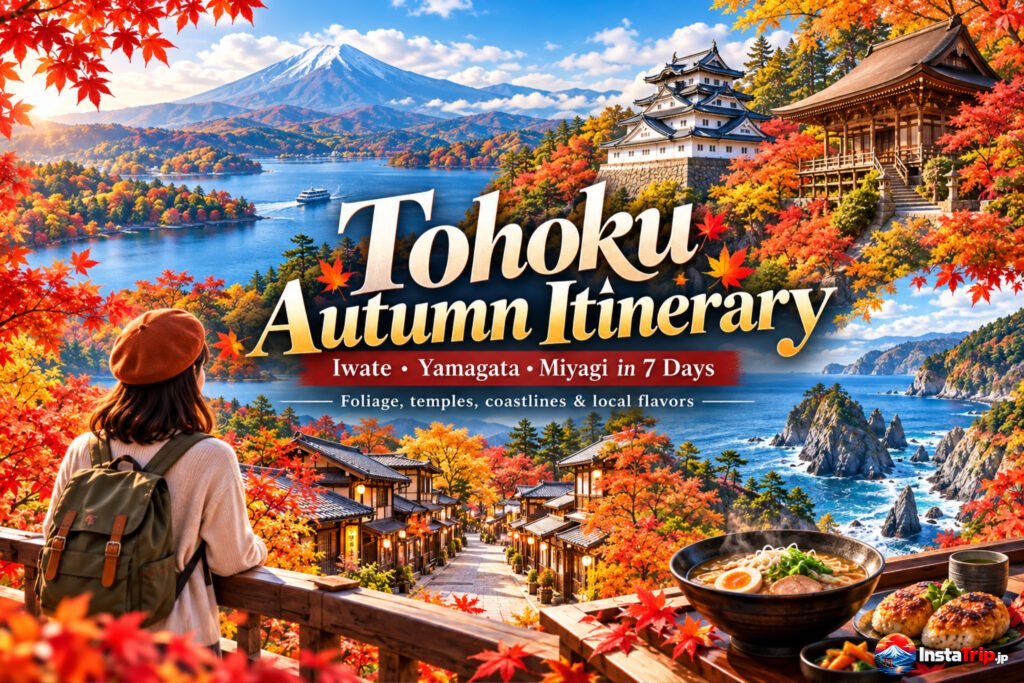
Autumn in Tohoku (東北) is not one fixed moment. It begins in the high mountains while summer still lingers in the cities, then travels south and downward through forests, temple valleys, and coastal islands. This Tohoku autumn itinerary: Iwate (岩手), Yamagata (山形) and Miyagi (宮城) in 7 days follows that shifting color, pairing sacred heritage with dramatic landscapes and the warm, restorative rhythm of northern Japan.
The route is designed for travelers arriving by rail from Tokyo and departing from Sendai. It moves at an unhurried but purposeful pace: one night in Morioka, three in Sendai for Miyagi’s cultural and natural highlights, and two in Yamagata before returning to Sendai on day seven. Rather than chasing every famous leaf-viewing spot, it leaves room for the details that make Tohoku captivating – a bowl of Morioka noodles, cedar-scented temple steps, steam rising from an onsen town, and a bay that feels luminous beneath an autumn sky.
When to Plan This Tohoku Autumn Itinerary
Mid-October through early November is the most balanced window for this route. Hachimantai and other highland areas in Iwate can reach their best color from late September into early October. Hiraizumi, Matsushima, Naruko Gorge, Yamadera, and Yamagata City generally become more vibrant from mid-October onward, while Sendai often holds color into November.
No seven-day trip can guarantee peak foliage across three prefectures because elevation and weather determine the season. Late October is the strongest compromise. If brilliant mountain color is your priority, travel earlier and add Hachimantai. If you prefer temple grounds, gorge walks, and city parks at their richest, aim for the final two weeks of October.

Days 1-2: Iwate’s Castle Town and Sacred Hiraizumi
Day 1: Morioka’s quiet energy
Ride the Tohoku Shinkansen north to Morioka, a compact city framed by mountains and shaped by clear rivers. It is an inviting first stop because it feels lived-in rather than staged. Start around Morioka Castle Site Park, where stone walls, maples, and gingko trees bring a vivid seasonal color to the center of town. The former castle itself is gone, but the grounds retain a reflective dignity.
Cross Kaiunbashi Bridge (開運橋) and wander toward the Kitakami River, where the broad water and distant peaks set a distinctly northern scene. For dinner, choose one of Morioka’s celebrated noodle traditions: wanko soba, served in small repeated portions; jajamen, thick noodles with savory miso; or reimen, a cool and chewy noodle dish with Korean roots. Reimen may sound unexpected in autumn, but its crisp broth and fruit garnish are part of Morioka’s food identity.
Day 2: Hiraizumi and Chuson-ji Temple
Travel south to Hiraizumi, the former center of the powerful Northern Fujiwara clan. In the 12th century, this area flourished as a wealthy cultural capital, and its surviving temples express an ambitious vision of Buddhist paradise amid the landscape.
Begin at Chuson-ji, approached through a long avenue of towering cedar trees. Autumn light filters through the canopy, and the walk itself feels like a gradual transition from the everyday into a more contemplative world. Konjikido, the Golden Hall, is the temple’s most celebrated treasure: a small, richly decorated structure covered in gold leaf, created as a memorial space for the Fujiwara rulers.

If time allows, continue to Motsu-ji, where a garden pond is arranged around the ideal of Pure Land Buddhism. Its open water, stones, and surrounding hills are especially graceful in fall. By late afternoon, take the train south to Sendai and settle in for three nights. This keeps the rest of the journey rail-friendly and avoids changing hotels every day.
Days 3-4: Miyagi’s Island Bay and Naruko’s Fiery Gorge
Day 3: Matsushima Bay’s timeless islands
Matsushima Bay has been admired for centuries for its pine-covered islets, scattered across calm water like a brush painting brought to life. It is not a destination defined by a single blaze of foliage. Its beauty is subtler: dark green pines, silver-blue water, distant hills, and warm autumn leaves framing temple paths.
From Sendai, Matsushima is an easy day trip. Visit Zuigan-ji, a Zen temple whose history reaches back more than a thousand years. Its caves and weathered rock faces recall the site’s early religious use, while the temple’s interiors reveal the refined artistry supported by the Date clan. Nearby Entsuin is smaller and more intimate, with a mossy garden that becomes particularly atmospheric in autumn.
Take time for local oysters if they are in season, then return to Sendai for the evening. The city’s specialty is gyutan, grilled beef tongue, commonly served with barley rice and clear oxtail soup. It is a deeply satisfying meal after a day by the water.
Day 4: Naruko Gorge and an onsen evening
Naruko Gorge is one of Miyagi’s great autumn spectacles. Its cliffs and ravine fill with layered reds, golds, and oranges, while the train line and viewing bridge add a dramatic human scale to the landscape. From Sendai, travel to Naruko Onsen, allowing plenty of time for connections and the walk to the gorge viewpoints.
The foliage here is often strongest from late October to early November, but weather can change the display quickly. Even outside the peak week, the gorge remains magnificent for its volcanic contours and deep forest. Wear shoes with grip, bring a light layer, and expect cooler temperatures than in Sendai.
Return to Naruko Onsen for a soak before heading back to Sendai. The town is known for its many mineral-rich springs and for naruko kokeshi, hand-painted wooden dolls with a simple, expressive form. They are not merely souvenirs: kokeshi are part of Tohoku’s folk-art tradition, shaped by local craftspeople and the region’s long culture of hot-spring travel.
Days 5-6: Yamagata’s Mountain Faith and Onsen Atmosphere
Day 5: Yamadera’s thousand stone steps
Take the JR Senzan Line (仙山線) from Sendai (仙台) toward Yamadera (山寺) and Yamagata (山形). For this route, visit Yamadera on the way and continue to Yamagata City afterward; the Yamagata Shinkansen does not provide a direct Sendai–Yamagata service. Officially called Risshaku-ji, this mountainside temple complex is one of Tohoku’s most unforgettable settings. More than a thousand stone steps climb through cedar forest toward halls perched along the cliffs.
The ascent is physical, but it is not a race. Pause at the lanterns, rock formations, and small devotional buildings along the way. At Godaido Hall, the view opens over the valley in a sweep of forest and distant ridgelines. In late October, autumn color intensifies the scene, but the spiritual atmosphere is present in every season.
Yamadera is associated with the poet Matsuo Basho, who visited in 1689 and wrote of the profound stillness he found among the rocks and cicada calls. That sense of stillness survives, especially if you arrive early before day-trip crowds gather. Spend the evening in Yamagata City, where local soba and imoni, a warming taro-and-beef stew, make a fitting seasonal dinner.
Day 6: Ginzan Onsen or Zao Onsen
This day depends on the experience you want most. For nostalgic architecture and a slow, cinematic atmosphere, choose Ginzan Onsen. Its wooden ryokan line a narrow river, and at dusk the gas lamps create a golden glow that feels almost suspended in time. Accommodation is limited and often reserved far in advance, so a day visit from Yamagata City may be the practical choice.
For mountain scenery and a more active day, choose Zao Onsen instead. The hot-spring village sits high above Yamagata City, with sulfurous waters and access to mountain landscapes that turn richly colored before the first snow arrives. The Zao Ropeway can offer expansive views when conditions are clear, though weather at elevation can be markedly colder and windier than in the city.
Both choices reveal a different side of Yamagata. Ginzan is about Taisho-era charm and the pleasure of slowing down; Zao is about volcanic terrain, open air, and the elemental pleasure of an outdoor bath. Stay one final night in Yamagata City or at your selected onsen.
The Seven-Day Route and Six Overnight Stays
This version starts in Morioka (盛岡), continues through Miyagi (宮城), then visits Yamagata (山形), with departure from Sendai on day seven. It uses six nights; add another only if your arrival or departure requires it.
| Day | Main visit | Overnight base |
|---|---|---|
| 1 | Morioka, Iwate (岩手) | Morioka |
| 2 | Hiraizumi (平泉), then south to Sendai | Sendai |
| 3 | Matsushima (松島) | Sendai |
| 4 | Naruko Gorge (鳴子峡) and nearby onsen | Sendai |
| 5 | Senzan Line to Yamadera, then Yamagata | Yamagata |
| 6 | Choose Ginzan Onsen (銀山温泉) or Zao Onsen (蔵王温泉) | Yamagata or a booked onsen stay |
| 7 | Return to Sendai and depart | No overnight required for the seven-day plan |
Transport and Autumn Access
Use the JR East Sendai timetable and Yamadera station timetable for the Senzan Line link between Sendai, Yamadera and Yamagata. Check services and disruptions for the actual travel date, and plan what to do with your luggage during the temple visit.
The official Naruko Gorge guide gives late October–early November as the usual foliage window, describes rest-house viewpoints and notes that the Ofukasawa Trail closes in winter. Seasonal color is not a prediction for every day. Confirm trail status, local buses and return connections before leaving your hotel.
Do not book both Ginzan and Zao into the same day just because they appear together in the guide. Choose the experience you value more. A weather change or missed connection is easier to absorb when one main excursion anchors the day. For bathing preparation, see our onsen versus sento guide.
Watch: Naruko Gorge in Autumn
This Japan Videography scenic film shows Naruko Gorge’s cliffs and autumn colors in 4K. It previews one stop on the itinerary, not the entire seven-day journey. The footage is not a live foliage report or evidence that a trail is open on your visit date.
Tohoku Autumn Itinerary FAQ
Does the route require seven hotel nights?
No. The plan above has six nights and departure on day seven. Add a night if it makes your onward journey more comfortable.
Can one week guarantee peak leaves everywhere?
No. Elevation and changing weather make simultaneous peaks unlikely. Choose dates around your priority area and allow other stops to offer different scenery.
Is a rail pass automatically the cheapest choice?
Compare your actual train fares against the current pass price, eligibility and coverage. Local buses, admission and accommodation also need their own budget.
Useful travel items (paid links): If needed, browse a lightweight warm layer or walking shoes with grip. Use suitable items you already own.
Day 7: Return to Sendai With Time for the City
Return to Sendai for an evening departure or an extra night before continuing onward. If your schedule allows, visit the wooded grounds of Osaki Hachimangu or walk the zelkova-lined Jozenji-dori avenue. Sendai is often treated as a transport hub, but its spacious streets, Date-era heritage, and relaxed café culture deserve a few unhurried hours.
This route works best with advance seat reservations for major trains and a flexible approach to the weather. A regional rail pass can be worthwhile if your travel dates and train choices fit its coverage, but individual tickets may be better if you are taking fewer long-distance journeys. For Ginzan Onsen, Zao, and Naruko Gorge, check local bus schedules carefully, particularly outside weekends and peak foliage season.
In Tohoku, autumn rewards travelers who leave a little space between plans. Let the color of a temple hillside, the steam of an onsen, or an unexpected local meal set the pace. The most memorable moments are often the ones that cannot be scheduled.
Tohoku Itinerary Map and Main Stops
This regional overview helps you locate the itinerary’s stops across Iwate (岩手), Miyagi (宮城) and Yamagata (山形). It is an orientation map, not a rail route; use the station timetable links above to plan transfers.