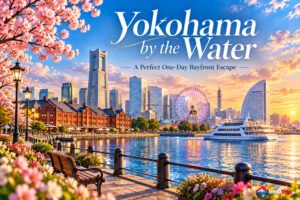

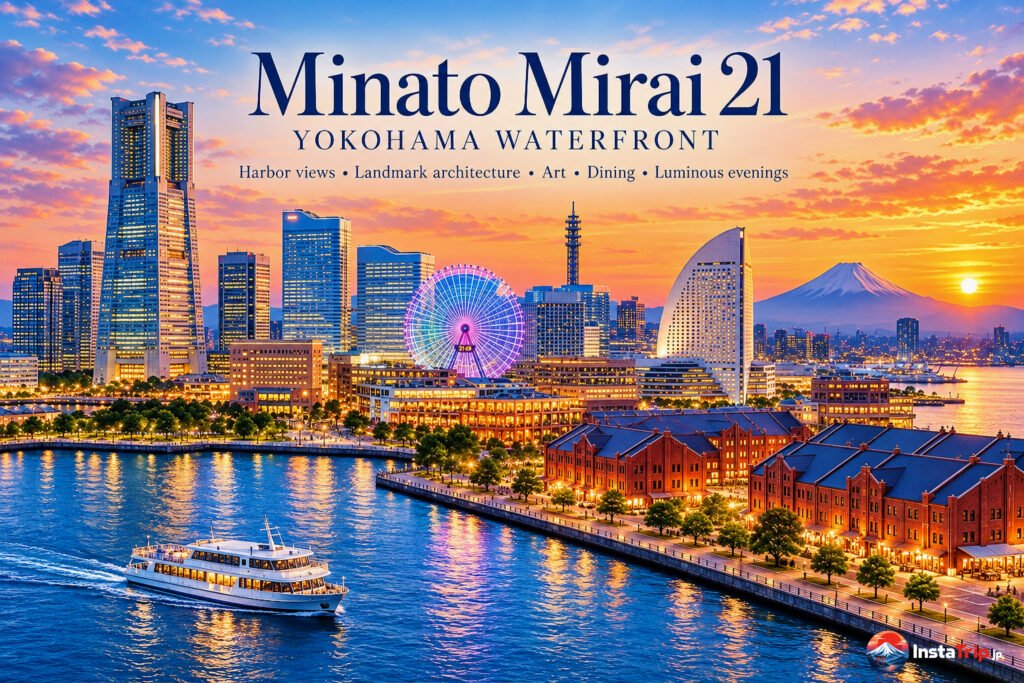
A Ferris wheel glows above the harbor, glass towers catch the late-afternoon sun, and ships move quietly beyond promenades designed for lingering. Minato Mirai 21 is Yokohama at its most cinematic: a waterfront district where Japan’s international port history meets bold contemporary architecture, public art, shopping, museums, and magnificent bay views.
This is not a historic quarter preserved behind ropes. It is a living redevelopment district, created on former docklands and rail yards, where old brick warehouses and industrial structures have been given a new purpose beside some of the city’s most recognizable modern landmarks. For travelers, Minato Mirai 21 offers an easy introduction to Yokohama’s character: open to the sea, shaped by global exchange, and distinctly more spacious and relaxed than central Tokyo.
Why Minato Mirai 21 Matters to Yokohama
Yokohama grew rapidly after its port opened to foreign trade in 1859. The city became one of Japan’s most important gateways to the world, a place where new goods, technologies, architectural ideas, and cultural influences arrived by sea. By the late 20th century, parts of the waterfront had become underused industrial land. In 1983, Yokohama began the Minato Mirai 21 project, envisioning a new urban center for the 21st century.

The name means “Port of the Future 21,” and it still captures the district’s ambition. Yet its appeal lies in more than futuristic skylines. The area was planned to connect business, leisure, culture, and the waterfront rather than isolate them. A visitor can step out of a station, pass through a shopping complex, encounter an art museum, walk beside historic docks, and arrive at the bay without ever losing sight of the city’s maritime identity.
That sense of openness is one of Minato Mirai’s greatest pleasures. Tokyo’s energy can feel wonderfully intense, but Yokohama gives the eye more room to travel. Wide pedestrian paths, water reflections, and long horizons make this a place to slow down between packed sightseeing days.
Landmarks That Define the Skyline
The 296-meter Yokohama Landmark Tower remains the visual anchor of Minato Mirai. Completed in 1993, it was Japan’s tallest building until 2014, and its observation floor offers a compelling perspective on the city, the port, and, on clear days, distant Mount Fuji. The view is especially rewarding near sunset, when the harbor turns silver and the city begins to illuminate below.
Beside it, the Cosmo Clock 21 is more than an amusement-park Ferris wheel. Its vast circular silhouette has become a symbol of Yokohama, particularly after dark, when changing lights add color to the waterfront. The surrounding Cosmo World amusement area has a lively, family-friendly atmosphere, though visitors seeking a quieter experience may prefer to admire the wheel from a nearby promenade rather than join the weekend crowds.
At the former Yokohama Shipyard Dock, the contrast between past and present becomes especially vivid. The preserved stone dock, known as the Dockyard Garden, sits dramatically below the surrounding skyscrapers. It is a compact reminder that this polished district was once defined by shipbuilding and heavy industry. Look down into the structure rather than rushing past it: the old dock gives Minato Mirai’s glass-and-steel landscape a deeper sense of scale.
A Waterfront Made for Walking
Minato Mirai rewards travelers who move through it on foot. Start around Sakuragicho Station, where the city opens toward the harbor, then follow the pedestrian routes through Landmark Plaza and the Grand Mall area. From there, the walk toward the waterfront reveals a changing sequence of plazas, broad sidewalks, sculpture, trees, and increasingly expansive views.
The route is straightforward, but it does involve more walking than the compact map might suggest. Comfortable shoes matter, particularly if you continue to the Red Brick Warehouses and the waterfront beyond them. The district is also exposed to wind and summer heat, so a clear spring or autumn afternoon is ideal. Rainy days, however, are not wasted here: covered passages, museums, cafés, and large indoor complexes make Minato Mirai one of Yokohama’s easiest areas to enjoy in unsettled weather.
Red Brick Warehouses and the Port’s Memory
The Yokohama Red Brick Warehouses are among the district’s most captivating contrasts. Built in the early 20th century as customs warehouses, these handsome brick buildings once handled cargo arriving through Yokohama’s busy port. Today, they contain shops, restaurants, event spaces, and seasonal attractions, but their thick walls, arched openings, and waterside position still retain the atmosphere of a working harbor.
They are worth visiting even if shopping is not on the agenda. The broad plaza in front of the warehouses often hosts markets, cultural events, and winter illuminations, while the surrounding area offers some of the best skyline views in Minato Mirai. Stand facing back toward Landmark Tower at dusk and the district’s layers come into focus: port infrastructure in the foreground, contemporary towers behind, and the Ferris wheel glowing between them.
There is a trade-off. The Red Brick Warehouses can be extremely busy on weekends and holidays, especially during major events. Go earlier in the day for photographs and a calmer walk, or visit later in the evening when many day visitors have left and the brick facades are beautifully lit.
Art, Design, and Everyday Culture
Minato Mirai is often described as a shopping and entertainment district, but that undersells its cultural dimension. The Yokohama Museum of Art brings major exhibitions and a striking architectural presence to the area, while the Cup Noodles Museum Yokohama uses the story of instant noodles to explore creativity, food culture, and Momofuku Ando’s inventive spirit. It is playful, but its subject also speaks to postwar Japanese design and the power of an everyday idea to travel around the world.
Architecture lovers should pay attention to the district itself. Landmark Tower projects late-20th-century confidence; the curving InterContinental Yokohama Grand resembles a billowing sail; and the Pacifico Yokohama convention complex stretches toward the bay with a distinctly maritime profile. These buildings were designed to be seen across open space, which is why the experience changes so much as you walk.
For a more intimate counterpoint, browse the smaller galleries, cafés, and design-focused spaces around the Red Brick area and nearby Marine & Walk Yokohama. The atmosphere here is less about finding a single must-see attraction and more about noticing how Yokohama turns former port land into places for everyday pleasure.
When to Visit Minato Mirai 21
Late afternoon into evening is the district’s most rewarding time. Begin while museums and indoor attractions are still open, walk toward the waterfront as daylight softens, then stay for the night view. The skyline becomes more dramatic without losing its calm, and the harbor breeze gives even a busy evening a refreshing edge.
Spring brings comfortable temperatures and seasonal events, while winter offers crisp visibility and elaborate illuminations. Summer can be humid, but it is also a festive time for waterfront events and fireworks on selected dates. If your schedule allows, visit on a weekday. The difference is noticeable at observation decks, restaurants, and the Red Brick Warehouses.
Minato Mirai is easy to reach from central Yokohama. Sakuragicho Station is a useful starting point for the Landmark Tower side, while Minatomirai Station places you closer to the district’s malls, museum area, and waterfront. It also pairs naturally with a broader Yokohama day that includes Chinatown, Yamashita Park, or the historic streets of Motomachi, though each deserves enough time to be enjoyed rather than hurried through.
Minato Mirai 21 may look like a vision of the future, but its most lasting impression comes from the conversation between eras. Pause by the old dock, watch the lights shimmer across the water, and Yokohama’s story feels present all at once: a port city that honors its past while continuing to imagine what comes next.
![[商品価格に関しましては、リンクが作成された時点と現時点で情報が変更されている場合がございます。]](https://hbb.afl.rakuten.co.jp/hgb/574e4ebe.b55a6785.574e4ebf.4b040b74/?me_id=1422081&item_id=10000001&pc=https%3A%2F%2Fthumbnail.image.rakuten.co.jp%2F%400_mall%2Ff141003-yokohama%2Fcabinet%2F13776317%2F6a961f9d6074a8587661.jpg%3F_ex%3D128x128&s=128x128&t=picttext "[商品価格に関しましては、リンクが作成された時点と現時点で情報が変更されている場合がございます。]")