

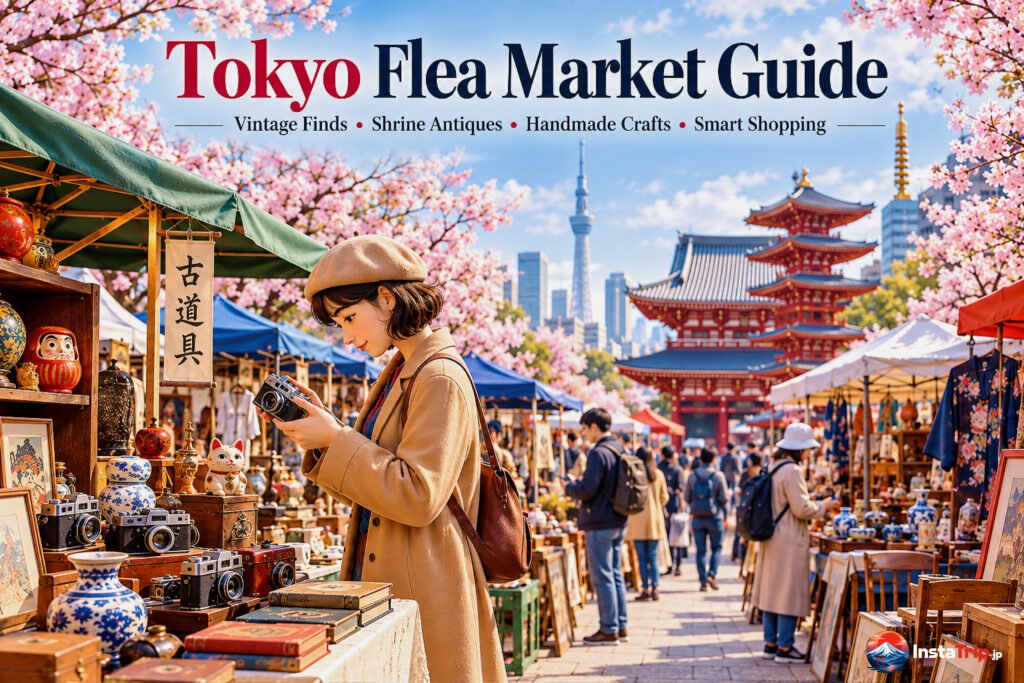
A Tokyo flea market guide is not simply about finding a bargain. It is an invitation into the city’s layered material history: hand-painted tea cups, Showa-era cameras, indigo textiles, old woodblock prints, playful character toys, and tools that once belonged to an ordinary Tokyo kitchen. Beneath the towers and neon, these markets reveal a more tactile side of the capital – one shaped by repair, reuse, craft, and the pleasure of giving beautiful objects another life.
What makes Tokyo flea markets special
Tokyo’s markets range from carefully curated antique fairs to lively community events where families clear out clothing, books, toys, and household goods. The atmosphere changes with the setting. A market beneath the trees at a shrine feels quiet and timeless, with tables of ceramics and lacquerware arranged near stone lanterns. A large urban market can feel far more dynamic, with rows of racks, retro fashion, handmade accessories, and vendors calling out cheerful greetings.
The key distinction is between a flea market, known as a furima, and an antique market, often called a kotto ichi. At a furima, expect contemporary secondhand goods, vintage clothing, small collectibles, and handmade pieces. At a kotto ichi, the emphasis shifts toward older objects: folk crafts, furniture, kimono, ceramics, prints, and decorative arts. In reality, the boundaries often blur, which is part of the fascination. A stall selling old postcards may stand beside hand-sewn bags, while a dealer in Taisho-period glassware shares an aisle with a seller of 1980s records.

For travelers, the appeal is not only what can be brought home. Browsing is a vivid way to see how objects move through Japanese daily life and how deeply the ideas of care, seasonality, and craftsmanship remain present in the city.
Tokyo flea market guide: where to hunt
Oedo Antique Market at Tokyo International Forum
For many visitors, Oedo Antique Market is the most accessible introduction to Tokyo’s antique scene. Set in the open plaza around Tokyo International Forum, near Yurakucho and Ginza, it brings together a wide spectrum of dealers in a central, polished setting. You may find vintage kimono, kutani and imari-style ceramics, old maps, silver jewelry, folk toys, Japanese and Western tableware, and compact pieces of furniture.
Its appeal lies in variety and atmosphere. The monumental glass-and-steel architecture of the Forum creates a striking contrast with weathered wooden boxes, delicate porcelain, and textiles from another era. It is an easy market to pair with a walk through Ginza, though serious collectors should arrive early. Market dates can change, so always confirm the schedule shortly before your visit.

Tomioka Hachimangu Antique Market
Near the atmospheric streets of Monzen-nakacho, Tomioka Hachimangu Shrine offers a more traditional setting for antique browsing. The shrine grounds lend a quiet sense of occasion to the experience, especially in the morning when the stalls are still being arranged and incense lingers near the worship hall.
This is a rewarding place for visitors drawn to smaller antiques and Japanese decorative arts. Look for tea utensils, old books, lacquerware, wooden trays, calligraphy tools, and kimono accessories. The market is not a museum, and not every object will have extensive documentation, but that is where patience matters. Ask questions, examine pieces closely, and enjoy the stories that experienced dealers are often happy to share.
Oi Racecourse Flea Market
Tokyo City Flea Market at Oi Racecourse is a different kind of adventure: broad, energetic, and rooted in the thrill of the unexpected. It is especially appealing for vintage clothing lovers and visitors who enjoy the hunt as much as the purchase. The scale means you can come across sneakers, denim, records, retro toys, kitchenware, cameras, bags, and beautifully chaotic boxes of small collectibles.
This is less about hushed antique shopping and more about spending a few unhurried hours wandering. Quality varies widely, so treat it as a place to browse with an open mind. If you are hoping for a specific collectible or a pristine heirloom, a specialist antique market may be more satisfying. If you want spontaneous discoveries, Oi can be memorable.
Setagaya Boro-ichi
Held on selected days in December and January, Setagaya Boro-ichi is one of Tokyo’s most captivating seasonal markets. With roots reaching back centuries, it fills a historic shopping street with hundreds of stalls and draws a vast local crowd. The name refers to boro, patched or worn textiles, but the market has long grown beyond fabric into food, crafts, household goods, antiques, and local specialties.
Boro-ichi is worth visiting as a cultural event even if you do not intend to buy anything. The narrow street becomes a vibrant procession of steam, conversation, color, and winter air. Go with time to spare, dress warmly, and expect crowds. It is not the best choice for a fast, targeted shopping mission, but it offers an unforgettable glimpse of Tokyo’s living market tradition.
Plan your visit around the right moment
The best arrival time depends on what you want. Early morning gives you first choice, particularly for ceramics, textiles, and distinctive one-of-a-kind pieces. Dealers are setting out their stock, and the market feels calm before the crowds arrive. Later in the day, some vendors may be more open to negotiating, especially if they would rather not pack a bulky item away again.
Weather also shapes the experience. Many Tokyo flea markets are outdoors, and rain or strong winds can lead to cancellations or smaller turnouts. Check the event schedule on the day before you go, then bring layers, a reusable bag, and enough cash for modest purchases. Digital payments are increasingly common in Tokyo, but cash remains the most dependable option at temporary stalls.
Avoid arriving with an oversized suitcase. A compact tote or backpack lets you move easily through narrow aisles and protects delicate purchases. If you fall for a fragile cup or old print, ask the seller whether they can wrap it securely. Many vendors are wonderfully prepared, but not every stall has packaging suitable for air travel.
How to browse with care and confidence
Tokyo market etiquette is simple and considerate. Ask before picking up anything fragile, do not unfold textiles or open boxes without permission, and ask before photographing a stall or its merchandise. A quiet “Kore wa ikura desu ka?” – “How much is this?” – is useful, but pointing politely and using a translation app is perfectly acceptable.
Bargaining exists, although it is generally more restrained than at some markets abroad. Rather than pushing aggressively, ask whether there is any flexibility in the price, especially if you are buying more than one item. A respectful offer may be welcomed; an insistence on a dramatic discount can feel uncomfortable. Many objects are priced according to condition, rarity, and the dealer’s knowledge, not simply a desire to clear stock.
Take time to inspect condition. Older ceramics may have tiny kiln marks that are part of their making, while cracks, chips, repairs, or discoloration may affect value. With textiles, check seams, lining, and areas exposed to wear. For woodblock prints and paper items, look for fading, foxing, tears, and signs of reproduction. If authenticity is essential, buy from a specialist dealer who can explain provenance and period rather than relying on appearance alone.
Be especially thoughtful with culturally significant objects. Temple-related items, family photographs, military memorabilia, and religious pieces deserve sensitivity, not novelty-seeking. Some materials, including ivory and certain animal products, can also create legal complications when crossing borders. When in doubt, choose an object whose story you understand and whose journey home will be straightforward.
Turn the market into a Tokyo day out
A flea market visit becomes even richer when it is connected to its neighborhood. Start at Oedo Antique Market, then wander toward Ginza’s galleries and department-store food halls. Visit Tomioka Hachimangu and continue through Monzen-nakacho for a more old-fashioned Tokyo mood, where small restaurants and traditional streets reward a slower pace. After a morning at Oi, you might head toward the waterfront for a contrasting view of Tokyo’s contemporary skyline.
Do not measure success by how much you buy. The finest market finds are often modest: a blue-and-white dish with a tiny imperfection, a stack of old Tokyo postcards, a piece of hand-dyed fabric, or a small object that carries the texture of another era. Leave room in your day for curiosity, and Tokyo’s markets may give you a souvenir with far more character than anything behind a display case.
|
![[商品価格に関しましては、リンクが作成された時点と現時点で情報が変更されている場合がございます。]](https://hbb.afl.rakuten.co.jp/hgb/04cf700b.9695f1fb.04cf700c.0009ead1/?me_id=1191294&item_id=10989647&pc=https%3A%2F%2Fthumbnail.image.rakuten.co.jp%2F%400_mall%2Famericanpie%2Fcabinet%2F2022_4%2Favls3.jpg%3F_ex%3D128x128&s=128x128&t=picttext "[商品価格に関しましては、リンクが作成された時点と現時点で情報が変更されている場合がございます。]")