
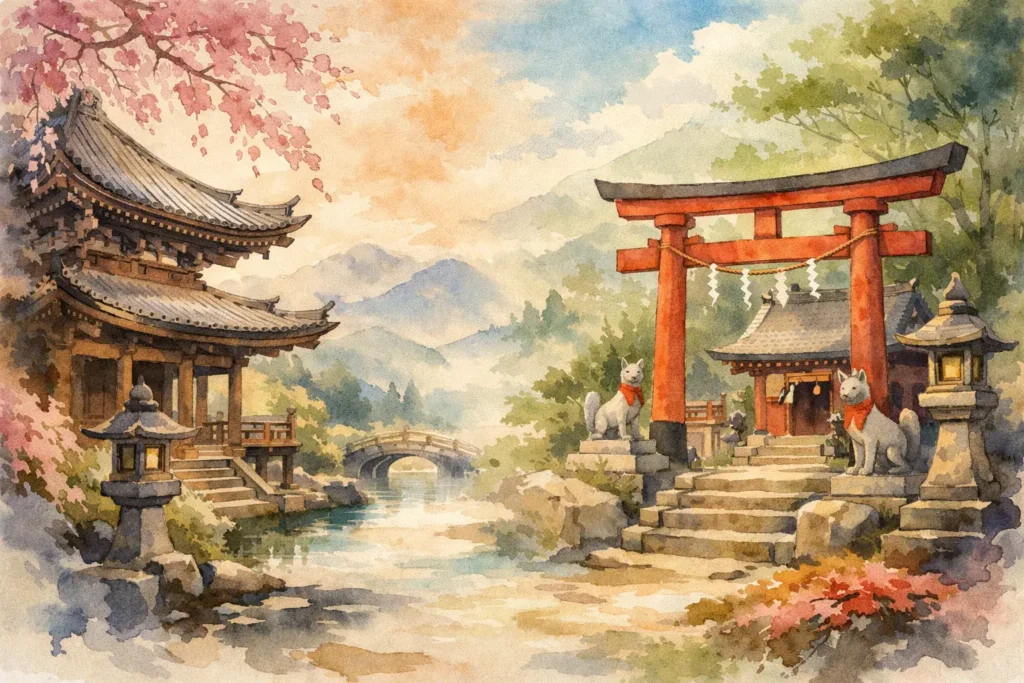
A vermilion torii gate rising from a forest path, incense curling before a monumental hall, a bell sounding across a hillside: Japan’s sacred landscapes can feel immediately captivating. Yet temples versus shrines is not simply a question of two photogenic styles of architecture. They reflect two spiritual traditions, each with its own atmosphere, rituals, symbols, and relationship to the natural and human worlds.
For travelers, understanding the distinction adds depth to every visit. A quiet neighborhood shrine in Tokyo, a vast Buddhist complex in Nara, and a mountain sanctuary in Kyoto are not interchangeable sightseeing stops. They are living places of worship, woven into the rhythm of Japanese communities, seasonal festivals, family milestones, and private moments of reflection.
Temples Versus Shrines: The Essential Difference
The clearest distinction is religious. Shrines, known as jinja, are associated with Shinto, Japan’s indigenous spiritual tradition. They enshrine kami – sacred presences connected with natural forces, places, ancestors, and aspects of life such as harvest, learning, safe travel, or prosperity. A shrine may stand beneath ancient cedars, beside the sea, or in the center of an electric city district, creating a vivid reminder of Shinto’s connection to place.

Temples, known as tera or ji, are Buddhist institutions. Buddhism arrived in Japan from the Asian continent in the sixth century and developed into a magnificent part of Japanese religious and artistic life. Temples may honor a Buddha, a bodhisattva, or another Buddhist figure. They are places for prayer, memorial observances, teachings, and contemplation, often filled with treasures of sculpture, painting, calligraphy, and architecture.
That said, Japan’s religious history resists overly neat categories. For centuries, Shinto and Buddhism were deeply intertwined in a tradition often called shinbutsu shugo, the blending of kami and Buddhist thought. During the modern era, the two were formally separated by government policy, but historical traces remain visible. Some sacred sites retain details that reveal this long shared history, and local practice can be more fluid than a simple label suggests.
How to Recognize a Shinto Shrine
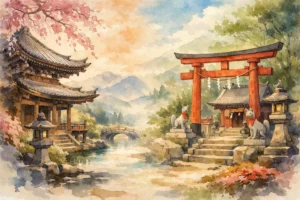
The most familiar sign of a shrine is the torii, the gate that marks a transition from ordinary space into the kami’s sacred precinct. It may be an unpainted wooden structure weathered by rain, a brilliant vermilion gate, or a monumental stone gateway framing a city street. Passing beneath it can feel like stepping into a calmer, more attentive version of the surrounding world.
Beyond the torii, visitors commonly find a temizuya or water pavilion for symbolic purification. The main worship building is often divided into the haiden, where visitors pray, and the honden, the innermost sanctuary where the kami is enshrined. The honden is usually not open to the public, which gives many shrines a sense of quiet mystery.
Shrines are especially associated with community festivals, called matsuri. During these vibrant occasions, portable shrines known as mikoshi may move through local streets, accompanied by music, processions, food stalls, and neighbors celebrating together. The atmosphere can be energetic and joyful, but the festival remains rooted in honoring the local kami and renewing ties within the community.
In Tokyo, Meiji Jingu offers a powerful introduction to the shrine experience. Its broad gravel paths and immense forest create a striking contrast with nearby Harajuku’s fashion, crowds, and color. In Kyoto, the thousands of vermilion torii at Fushimi Inari Taisha form one of Japan’s most unforgettable sacred walks, leading visitors up wooded slopes dedicated to Inari, a kami associated with rice, agriculture, and business.
Shrine Etiquette: A Simple, Respectful Approach
At the water pavilion, take the ladle with your right hand and rinse your left hand. Switch hands and rinse your right. Then pour water into your cupped left hand to rinse your mouth discreetly. Do not drink directly from the ladle, and do not return water from your mouth to the basin.
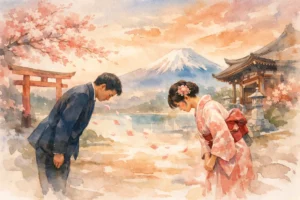
At the worship hall, it is common to make an offering, bow twice, clap twice, make a quiet prayer, then bow once more. Customs can vary, however, and posted guidance always takes priority. Avoid walking down the center of the approach path, as it is traditionally considered the route of the kami.
What Makes a Buddhist Temple Distinctive
A Buddhist temple often announces itself with a sanmon, a formal gate, rather than a torii. Inside, the visual language may include tiled roofs, incense burners, lanterns, guardian figures, graceful pagodas, and a main hall called the hondo. A temple complex can feel monumental and ceremonial, especially at famous historic sites, yet even a small urban temple may offer a moment of remarkable stillness.
Incense is one of the most recognizable temple experiences. Visitors may light a stick of incense, place it in a large burner, and briefly draw the fragrant smoke toward themselves. This is a devotional act, not a performance or a photo opportunity. The aroma, the low ringing of a bell, and the glow of candles can create a deeply sensory atmosphere that has shaped Japanese sacred art and architecture for centuries.
Temples also have an important relationship with remembrance. Many families visit temples for memorial services honoring deceased relatives, and graveyards are often located within temple grounds. This can make a temple visit feel reflective and intimate, even when the buildings are grand.
Sensō-ji in Asakusa is Tokyo’s oldest temple and one of its most dynamic. The journey from the thunder gate through Nakamise’s bustling approach leads to a vast Buddhist precinct alive with visitors, smoke, prayer, and seasonal celebrations. In contrast, Kiyomizu-dera in Kyoto seems to float above a wooded hillside, its celebrated wooden stage opening toward sweeping views of the city and the changing colors of the seasons.
Temple Etiquette: Follow the Rhythm of the Hall
At a temple, visitors may purify their hands at a water pavilion, much as they would at a shrine. Near the main hall, make a small offering if you wish, light incense only where permitted, and bow before praying. Clapping is generally associated with shrine worship, so it is not usually part of Buddhist temple practice.
Some temples have a large bell, but do not ring it unless visitors are specifically invited to do so. Photography rules also vary, particularly inside halls containing sacred images. If a sign asks visitors not to take photos, put the camera away and let the space speak through its sound, scent, and atmosphere instead.
Architecture Tells Part of the Story
The visual contrast between temples and shrines is useful, but not absolute. Shrines often emphasize gateways, open courtyards, rope decorations, and buildings with a distinctive Shinto roofline. Temples may feature pagodas, large halls, statues, painted interiors, and incense burners. Yet both traditions have produced extraordinary wooden architecture, carefully maintained across generations.
Look closely at the details. At shrines, shimenawa ropes with zigzag paper streamers, called shide, mark sacred space. At temples, you may see Buddhist guardians, lotus motifs, carved dragons, or statues of Jizo, a beloved bodhisattva often associated with travelers and children. These details are more than decoration. They express the beliefs and stories held within the grounds.
When the Difference Matters for Your Visit
Knowing whether you are visiting a temple or shrine helps with etiquette, but it also shapes what you may experience. A shrine visit might center on a wish for success, health, a new beginning, or safe travel. You may see colorful ema wooden prayer plaques or purchase an omamori amulet connected with a particular hope. A temple visit may invite a slower encounter with Buddhist art, a garden, a meditation hall, or the memory of a historical figure.
Both temples and shrines can offer goshuin, beautiful handwritten sacred stamps collected in a dedicated book. Treat the book with care. It is better understood as a record of worship and pilgrimage than as a conventional souvenir, and staff may pause the service during ceremonies or busy periods.
The best approach is curiosity paired with restraint. Dress appropriately, keep voices low in worship areas, do not enter restricted buildings, and give people praying space. Japan’s sacred sites welcome visitors, but they are not preserved sets. Their enduring power comes from being actively used, cherished, and renewed.
Whether you pause beneath a torii in a hidden Tokyo lane or stand before an incense-filled hall in an ancient capital, let the place set the pace. A few unhurried minutes of attention can turn a beautiful landmark into a more meaningful encounter with Japan’s living spiritual heritage.