

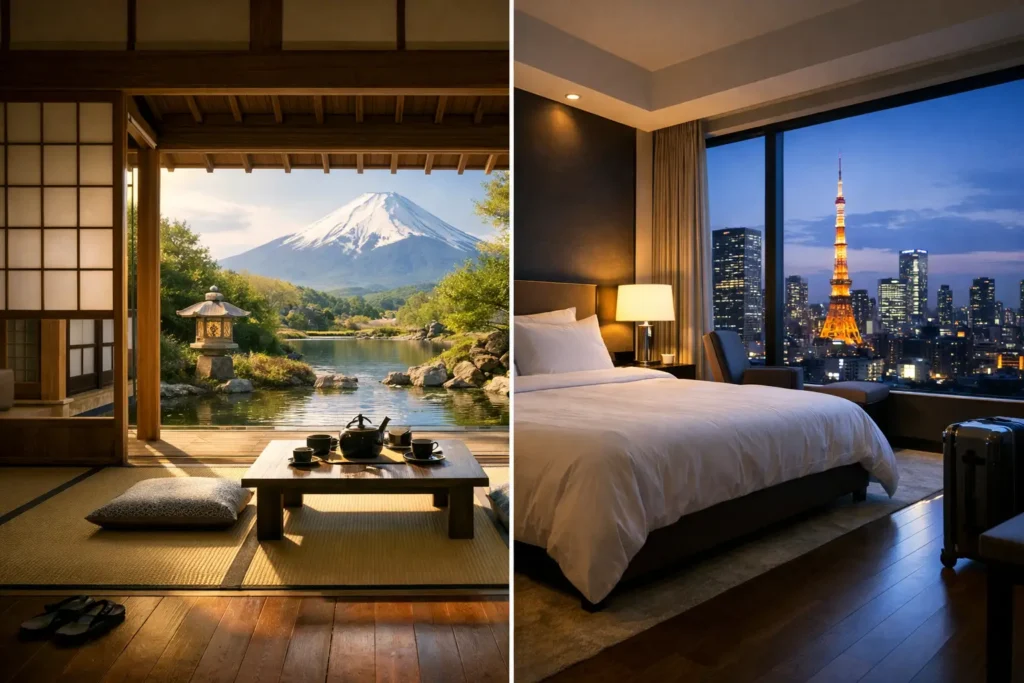
A tatami room cooled by mountain air, a yukata folded beside the door, and dinner arriving course by course can change the rhythm of a Japan itinerary. That is the heart of the ryokan versus hotels question: not simply where to sleep, but what kind of relationship you want with the place around you.
A hotel may place you steps from Tokyo Station’s dynamic rail network, Kyoto’s captivating evening lanes, or Osaka’s vibrant food districts. A ryokan, by contrast, often asks you to slow down. Its rituals – removing shoes, bathing before dinner, settling into a futon after the meal – make the overnight stay part of the destination itself.
Neither is automatically better. The right choice depends on your route, budget, comfort preferences, and how much time you can give to the experience. Understanding the distinction will help you choose a stay that feels considered rather than convenient by default.

Ryokan Versus Hotels: The Essential Difference
A ryokan is a traditional Japanese inn, though that simple description can undersell its cultural depth. Many ryokan center the guest experience around Japanese-style rooms, seasonal cuisine, attentive hospitality, and, in some regions, restorative hot-spring bathing. Their origins reach back centuries, when travelers needed places to rest along major roads and pilgrimage routes. Today, they range from modest family-run inns to magnificent properties where every detail is carefully composed.
A hotel follows a more familiar international model. Rooms typically have beds, private bathrooms, Western-style furnishings, flexible check-in routines, and a broad range of sizes and prices. Japan’s hotels are often exceptionally efficient and polished, from compact business hotels near train stations to design-forward city properties and refined luxury stays.
The difference is less about old versus new than about the purpose of the overnight stay. Hotels generally support an active itinerary. Ryokan invite you to make time for arrival, bathing, dinner, and quiet.

What a Ryokan Stay Feels Like
At a ryokan, the room may initially appear spare: tatami flooring, a low table, floor cushions, sliding doors, and a hanging scroll or flower arrangement in the alcove. Yet this simplicity is intentional. The room is designed to shift with the day. It is a living and dining space in the afternoon, then becomes a bedroom when futons are laid out in the evening.
Service can be more personal than at a standard hotel, particularly at smaller inns. Staff may show you to the room, explain the bath schedule, and serve meals in your room or a private dining space. This does not mean every ryokan operates identically. Some contemporary properties offer independent check-in and restaurant dining, while others retain a more formal, traditional pace.
The most memorable element is often the food. A kaiseki-style dinner may highlight local fish, mountain vegetables, handmade tofu, wagyu beef, or a regional specialty, presented in a sequence that reflects the season. Breakfast is often Japanese-style as well, with rice, miso soup, grilled fish, pickles, egg dishes, and small accompaniments. For travelers eager to encounter regional food culture beyond restaurant menus, this can be reason enough to book a ryokan.
Then there is the bath. In hot-spring areas such as Hakone, Kinosaki Onsen, Kusatsu, Beppu, or Noboribetsu, an onsen ryokan can turn an overnight stop into a deeply calming ritual. You wash your body before entering the shared bath, keep towels out of the water, and speak quietly. Most communal baths are separated by gender, although some properties also offer reservable private baths. Travelers with tattoos should confirm policies before booking, since rules vary by property.
When a Hotel Is the Better Choice
Hotels are often the smarter option on fast-moving city days. If you want to photograph Asakusa at first light, browse Ginza, visit museums in Ueno, and end the evening in Shinjuku, a centrally located hotel makes logistics far easier. You can come and go whenever you wish, choose breakfast or skip it, and return late without worrying about a fixed dinner time.
They are also better suited to certain practical needs. Families may appreciate larger international-style rooms or connecting options. Travelers arriving on a late flight can avoid the stress of a ryokan’s earlier check-in and meal schedule. Those who prefer a private bathroom, a conventional bed, familiar amenities, or a gym and laundry room may simply feel more comfortable in a hotel.
Japan’s hotel landscape is far from generic. A sleek Tokyo high-rise can frame the city’s futuristic skyline. A small machiya-inspired hotel in Kyoto may bring contemporary design into dialogue with traditional materials. In coastal Yokohama or energetic Osaka, a well-placed hotel can make the city feel immediate and accessible. Choosing a hotel does not mean choosing a less meaningful experience. It means placing the cultural focus on the neighborhoods, restaurants, temples, galleries, and streets beyond your room.
Meals, Time, and the Value of Staying Put
The clearest trade-off is freedom versus immersion. Ryokan rates often include dinner and breakfast, which can make an initially high price more understandable. But those meals happen at designated times, commonly with dinner beginning in the early evening. Missing it may mean losing a substantial part of what you paid for.
That schedule works beautifully when the inn is the destination. Arrive by midafternoon, walk through a historic onsen town or forest trail, bathe before dinner, and let the evening unfold without an agenda. It can feel especially captivating in Hakone, where volcanic landscapes, art museums, and hot springs reward a slower pace, or in rural areas where the quiet after dark is part of the appeal.
It is less ideal if you have tickets for a late show, reservations across town, or a packed one-night visit. In that case, a hotel gives you room to follow your own momentum. A good compromise is to spend most nights in hotels and reserve one ryokan night for a place where you can arrive early and linger.
Room Style, Comfort, and Accessibility
Do not assume that traditional means uncomfortable. High-quality futons can be remarkably restful, and tatami rooms have a serene, tactile warmth. Still, personal comfort matters. Sitting on the floor, sleeping close to the ground, stepping over raised thresholds, or using a shared bath may not suit everyone.
Before reserving, look closely at room descriptions. Ask whether the room has a private toilet and bath, beds rather than futons, elevator access, Western-style chairs, or a private onsen. These details vary widely, even within the same property. Older ryokan may have architectural charm but fewer accessibility features; newer luxury inns may blend traditional interiors with highly accommodating design.
Hotels are usually more standardized, which reduces surprises. Yet room sizes in major Japanese cities can be compact, especially at budget and business hotels. If luggage space, a workstation, or a large bed matters, compare the actual square footage rather than relying on room labels alone.
Etiquette That Makes the Experience More Comfortable
Ryokan etiquette is not a test. Staff are accustomed to international guests, and respectful curiosity goes a long way. Remove shoes where requested, keep your voice low in shared spaces, and follow the bathing guidance provided. If you wear the provided yukata, the left side wraps over the right, as the reverse arrangement is associated with burial dress.
Meals deserve a little planning. Tell the property about allergies and dietary restrictions well in advance, not on arrival. Traditional multi-course dinners are prepared with careful advance work, and last-minute changes may be difficult. If you do not eat raw fish, meat, shellfish, or certain ingredients, confirm whether the ryokan can accommodate you before booking.
Tipping is not customary in Japan. A sincere thank-you, offered with care, is the appropriate response to attentive service.
How to Choose for Your Japan Itinerary
Think of a ryokan as an experience to schedule, not merely a room category to compare. Book one when you can protect the afternoon and evening, especially in an onsen town, near a scenic lake, in the mountains, or in a historic district after day-trippers leave. One carefully chosen night can become a highlight of a two-week journey.
Choose hotels for transit-heavy stretches, major cities, late arrivals, or days driven by museums, shopping, nightlife, and independent dining. They offer flexibility without sacrificing Japan’s distinctive sense of hospitality.
The most rewarding itinerary often includes both. Let a hotel keep Tokyo, Kyoto, or Osaka beautifully within reach, then let a ryokan give you a pause: steam rising from an outdoor bath, a seasonal dinner arriving at the right unhurried pace, and a quiet tatami room waiting at the end of the day. That contrast is part of Japan’s enduring magic.
![[商品価格に関しましては、リンクが作成された時点と現時点で情報が変更されている場合がございます。]](https://hbb.afl.rakuten.co.jp/hgb/574e5e30.81d81dd5.574e5e31.5f3fb2ef/?me_id=1355729&item_id=10001016&pc=https%3A%2F%2Fthumbnail.image.rakuten.co.jp%2F%400_mall%2Ff032051-hanamaki%2Fcabinet%2F08464839%2F50000en_top_15000.jpg%3F_ex%3D128x128&s=128x128&t=picttext "[商品価格に関しましては、リンクが作成された時点と現時点で情報が変更されている場合がございます。]")