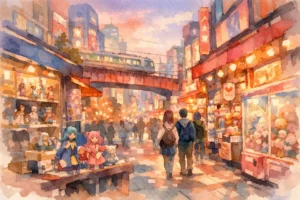

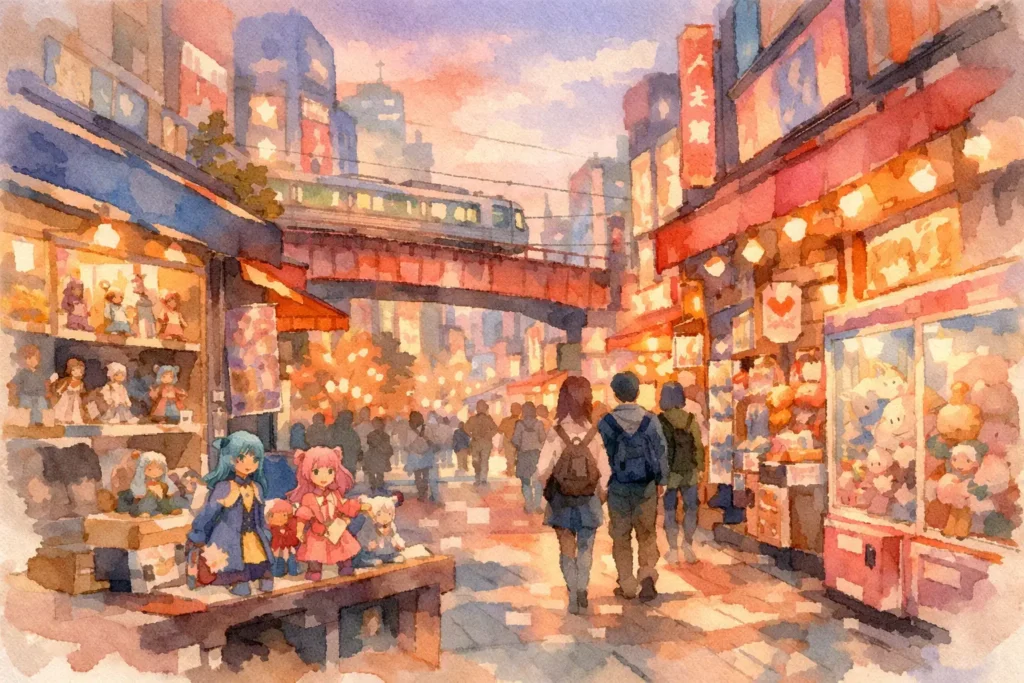
Akihabara anime shopping begins before the first purchase. Step out near the station and the neighborhood announces itself in layers: glowing signs, game music drifting from upper floors, display cases filled with beloved characters, and narrow side streets where a single shelf can hold the item you have spent years hoping to find. For fans, it is a vivid retail district. For travelers, it is also a window into how manga, anime, games, illustration, and collecting became such a dynamic part of contemporary Japanese culture.
The joy of Akihabara is not simply buying more. It is learning to browse with patience. A limited-edition figure behind glass, an art book with a beautifully designed cover, or a well-loved older keychain can carry a story about a series, an era, and the communities that keep these works meaningful long after their original release.
Why Akihabara Feels Different
Akihabara grew famous as Tokyo’s electric town, once closely associated with radios, appliances, and electronics. That spirit of specialized enthusiasm remains, even as anime, manga, games, collectibles, and hobby culture have reshaped its streets. The district feels less like one enormous mall than a vertical city of interests, where several floors of a building may each serve a different kind of fan.

This concentration changes the experience. A new release may appear in a polished flagship-style store, while a few blocks away a secondhand shop has older figures, out-of-print books, character goods, and unexpected treasures. Competition can create good choices, but it also means prices vary. The first item you see is not always the best value, especially for pre-owned collectibles.
Akihabara is most captivating when approached as a place of discovery rather than a checklist. The displays are part of the atmosphere: carefully arranged figures, colorful promotional art, racks of character merchandise, and entire walls devoted to a single franchise. Even travelers who do not identify as collectors often leave with a clearer sense of anime’s visual language and its extraordinary reach across Japanese popular culture.
Where to Begin Your Akihabara Anime Shopping
Start close to Akihabara Station, then give yourself permission to wander beyond the busiest facades. Major stores are useful for new releases, official merchandise, books, Blu-rays, and clearly organized sections by series. They are an easy first stop if you have a specific title in mind or want to see what is currently popular in Japan.
For rarer or older items, explore the multilevel hobby stores and secondhand specialists scattered through the district. These shops can be thrilling precisely because their inventory changes constantly. One visit might reveal a discontinued model kit, a vintage cel-style item, a convention-exclusive figure, or a small piece of merchandise that never had an international release.
Do not judge a building by its ground floor. In Akihabara, an elevator ride or a climb up a modest stairwell can lead to several floors of figures, dolls, trading cards, art books, or retro games. Look at directory signs near entrances, and remember that a quiet upper level may hold the most focused collection in the building.
New, Pre-Owned, and Prize Figures
The distinction between new and pre-owned is central to shopping well. New items offer the confidence of sealed packaging and current retail pricing, although popular releases can sell quickly. Pre-owned items may cost less, but condition matters. Japanese resale shops are often impressively specific about box wear, missing accessories, discoloration, or damage, so read the tags rather than assuming every item is pristine.
A pre-owned label does not automatically mean poor quality. Many collectors in Japan take excellent care of their purchases, and an opened figure can look nearly new. At the same time, the box may be part of the collectible value, particularly if you plan to display it in its packaging or resell it later. Decide whether you are buying for personal joy, display quality, or long-term collecting before comparing prices.
Prize figures deserve their own category. Originally made as arcade prizes, they are generally more affordable than premium-scale figures and can be wonderfully expressive. Their finish and detail may be simpler, but they make approachable souvenirs and let you bring home a favorite character without dedicating much of your budget or suitcase to one purchase.
Books, Art, and Smaller Finds
Anime shopping does not need to mean large boxes. Akihabara is an excellent place to look for manga, illustration collections, animation reference books, magazines, postcards, acrylic stands, pins, and stationery. Art books can be especially rewarding for travelers interested in Japanese design, character creation, background art, and the craft behind animation.
Japanese-language books are still valuable even if you are not fluent. Production sketches, color studies, interviews, and visual layouts often communicate across language barriers. Check the publication date if you are seeking a specific edition, and inspect used books for attached store labels or notes on condition.
Small goods are easier to pack, but they can quietly multiply. A handful of keychains and blind-box items takes little space individually, then suddenly fills a bag. Set a rough limit before entering the most tempting aisles.
A Smarter Way to Browse
Akihabara rewards curiosity, yet a little structure protects both your wallet and your time. Take a photo of an item’s price and condition label when you find something special, then compare it at one or two other stores before committing. This is particularly worthwhile for scale figures, older merchandise, and items with prices high enough to affect the rest of your trip.
Be realistic about luggage. Figure boxes can be surprisingly large, and delicate goods need careful protection. If you intend to buy a major collectible, consider bringing a foldable tote, keeping space in a checked bag, or choosing an item you can safely carry on. Ask staff if a purchase can be wrapped, but do not expect every store to have a shipping service that suits international travelers.
Bring your passport if you may qualify for tax-free shopping. Eligibility, minimum purchase requirements, participating stores, and procedures can differ, so confirm the details at the register. It is best viewed as a possible benefit, not as the reason to buy something you do not truly want.
Cash remains useful in smaller settings, although card and contactless payment are common at many larger stores. Keep receipts until you have checked your purchases at your hotel. If an item includes interchangeable pieces, it is wise to make sure the box contains what the label promises before your final day in Tokyo.
Etiquette That Makes the Experience Better
The atmosphere can be energetic, but good browsing manners matter. Handle items gently, especially display products and boxed figures. If something is in a locked case, ask staff for assistance rather than trying to inspect it yourself. Photography rules vary widely, so watch for signs and ask when uncertain.
Avoid opening sealed packages before purchase. For blind-box merchandise, the surprise is part of the product, and weighing or aggressively feeling packages is inconsiderate. In crowded aisles, keep bags close and step aside when you want to study a shelf. These small habits make the district more enjoyable for staff, local shoppers, and fellow visitors.
There is also no need to perform expertise. Whether you know every animator’s credit or are buying your first piece of character merchandise, Akihabara welcomes focused enthusiasm. A favorite story is enough reason to look.
Make Time for the Streets Between Stores
The best Akihabara anime shopping day includes pauses. Notice the changing soundscape between major avenues and quieter lanes. Look up at the illustrated signs climbing building fronts. Stop for a meal or a coffee when the sensory intensity begins to blur together. The district is more memorable when you give its details room to register.
If you visit on a weekend or during a school holiday, expect larger crowds and give yourself extra time. Weekday mornings can feel calmer, while later hours bring a more electric mood. Neither is objectively better. It depends on whether you prefer efficient browsing or the full, high-energy spectacle of Akihabara after dark.
Leave with one item that feels personal, not merely popular. It may be a finely made figure, a modest art book, or a tiny character charm found on an upper floor. In a district overflowing with images and merchandise, the best souvenir is the one that carries you back to the moment a story you love became part of your own journey through Tokyo.