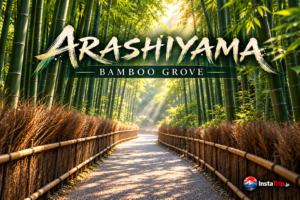

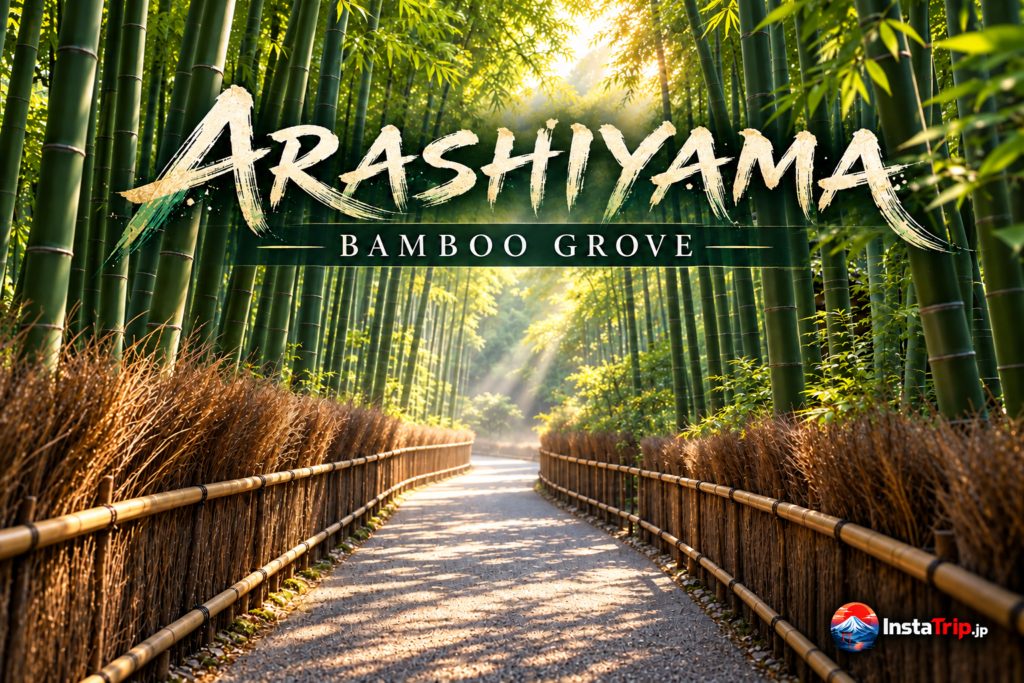
The Arashiyama Bamboo Grove (竹林の小径) experience begins before the famous photographs do. Step beyond the crowds gathered near Kyoto’s Togetsukyo Bridge, follow the lanes toward Saga, and the city seems to soften. Tall bamboo stalks rise in close, luminous columns, their leaves moving overhead with a dry, whispering sound that can feel remarkably distant from the energy of central Kyoto.
This is one of Japan’s most recognizable landscapes, but its appeal is not simply visual. Arashiyama rewards travelers who slow down, arrive with realistic expectations, and treat the grove as part of a wider cultural landscape shaped by temples, gardens, mountains, and the Hozu River.
What Makes the Arashiyama Bamboo Grove Experience Special
The central path through the bamboo is relatively short. That surprises some visitors who have imagined an endless forest. Yet its compact scale is part of the experience: the grove creates an intense passage between the surrounding neighborhoods and the quiet grounds near Tenryu-ji Temple and Okochi Sanso Garden.
Bamboo is not a wild decorative backdrop placed here for visitors. It has long been part of Japan’s practical and aesthetic life, used in baskets, utensils, garden fences, construction, and artistic craft. In Arashiyama, the dense moso bamboo forms a living screen of green and gold, particularly striking when morning light filters through the narrow gaps between stalks.

The sound matters as much as the view. On a calm day, you may hear footsteps on the path, distant train bells, birds, and the soft clatter of bamboo leaves. When the grove is busy, those quieter details are harder to find, but they have not disappeared. They simply ask for more patience.
Go Early, or Choose a Different Kind of Visit
For most travelers, timing determines whether the Arashiyama bamboo grove experience feels contemplative or crowded. Early morning is the strongest choice. Arriving shortly after dawn, before day-trip groups and tour buses fill the area, gives you better light, more room to walk, and a greater chance of hearing the grove itself.
Late afternoon can also be beautiful, especially when the light turns warmer and many visitors begin moving back toward the stations. It is less predictable than morning, particularly in peak travel seasons. Spring cherry blossom weeks, autumn foliage season, weekends, and Japanese public holidays bring especially heavy foot traffic.
Rain changes the mood in a magnificent way. The path can be damp and photography more difficult, but the bamboo appears deeper in color, and the air carries an earthy freshness. A light rain also discourages some casual visitors. Bring an umbrella that is easy to carry without crowding the narrow walkway, and wear shoes with reliable grip.

Do not expect complete solitude at every hour. Arashiyama is an internationally beloved place, and its popularity is part of its reality. The better goal is to find a few unhurried minutes within the movement of the day. Before setting out, check Kyoto City’s sightseeing congestion forecast to choose a less crowded time.
A Thoughtful Route Through the Grove
If you arrive near dawn, walk the open-air bamboo path first, then visit Tenryu-ji Temple (天龍寺) after its garden opens. If you arrive later, visit the temple garden before entering the grove. Founded in 1339 by the shogun Ashikaga Takauji, it was established in memory of Emperor Go-Daigo. Its celebrated landscape garden, designed by the monk Muso Soseki, frames the nearby Arashiyama mountains as borrowed scenery. This idea, known as shakkei, is a refined reminder that a garden does not end at its walls.
Whichever order you choose, pairing the grove with Tenryu-ji gives the route a richer sense of place. Instead of treating the forest as an isolated photo stop, you begin to notice how water, mountain, temple, and vegetation shape one connected setting.
From the grove, continue uphill to Okochi Sanso Garden (大河内山荘庭園) if you have time and energy. The former residence of actor Okochi Denjiro, the garden offers winding paths, carefully composed views, and a gentler rhythm after the famous bamboo corridor. It is an excellent choice for travelers who want the atmosphere of Arashiyama to last longer than a single photograph.
If your schedule allows, walk onward toward Jojakko-ji or the thatched-roof Nison-in Temple in the Saga-Toriimoto area. These quieter temple approaches reveal another side of western Kyoto: stone walls, traditional gates, maple trees, and lanes that feel farther removed from the main sightseeing circuit.
Photography Without Losing the Moment
The bamboo path is visually dramatic, but it asks for a different approach than a landmark viewed from a single overlook. Look upward. Vertical compositions capture the height and density of the stalks, while a wider frame can emphasize the curve of the path and the shifting light.
Early morning brings softer shadows and fewer people. On bright days, the contrast between sunlit leaves and shaded trunks can be strong, so exposure may need adjustment. Overcast weather is often ideal for capturing the bamboo’s rich green tones without harsh highlights.
More importantly, take a few minutes before reaching for a camera. The most memorable image may be the one you keep privately: leaves trembling against a pale sky, the faint scent after rain, or the sudden stillness when a gap opens in the crowd. The grove is more rewarding when photography supports observation rather than replacing it.
See the grove in a walking video
This Japanese 4K walk shows the bamboo path at a natural pace. The player starts only when you press play.
Respect the Path and the Living Landscape
Arashiyama’s bamboo is beautiful because it is alive and carefully maintained. Stay on marked paths, avoid touching or pulling stalks, and never carve names into bamboo. Even small acts of damage affect a landscape shared by residents, temple communities, workers, and future visitors.
The pathway can become congested, so pause only where you are not blocking others. Keep voices low, especially near temple grounds, and be mindful when using selfie sticks or tripods. A considerate visit is not about rigid silence. It is about recognizing that this is a working cultural landscape, not a studio set.
If you visit nearby religious sites, observe posted guidance on photography and behavior. Temples are places of worship and reflection as well as extraordinary examples of art, architecture, and history. That distinction gives a visit to Arashiyama greater depth.
Practical Details for a Smooth Visit
Arashiyama is in western Kyoto and is easy to reach by rail, though the best station depends on your route. JR Saga-Arashiyama Station is about a ten-minute walk from the grove and convenient for travelers arriving from Kyoto Station. Arashiyama Station on the Randen tram line places you closer to the river and central sightseeing area, while Hankyu Arashiyama Station is useful for travelers coming from Osaka or central Kyoto via the Katsura transfer.
The bamboo path itself is generally free to enter, while nearby gardens and temples charge separate admission. Plan for at least two to three hours if you want to see the grove, Tenryu-ji, and the river area without rushing. Half a day is better for adding Okochi Sanso, a temple walk, lunch, or a visit to the scenic Hozu River surroundings.
Food options cluster around the bridge and main streets, but the busiest spots can involve waits around midday. Consider an earlier lunch, or continue into the quieter Saga area for a more relaxed pause. Seasonal specialties often include tofu dishes, yuba made from soy milk skin, and sweets featuring matcha or local ingredients.
Arashiyama changes dramatically across the year. Spring brings fresh green bamboo alongside blossoms in the wider district. Summer is lush and humid. Autumn surrounds the grove with brilliant maples, while winter reveals a calmer, more spare beauty. The bamboo remains green in every season, offering a vivid contrast to Kyoto’s changing skies and mountains.
Before leaving, cross or pause near Togetsukyo Bridge and look back toward the slopes of Arashiyama Mountain. The bamboo grove may be the reason you came, but the wider view explains why this corner of Kyoto has inspired poets, artists, pilgrims, and travelers for centuries. Give it enough time, and it becomes less a checklist landmark than a quiet encounter with Kyoto’s enduring relationship between nature and design.
Map: Arashiyama Bamboo Grove
Use the map to locate the bamboo path between Tenryu-ji and Okochi Sanso. For more ideas beyond the grove, see our guide to Kyoto temples and the official Saga-Arashiyama area guide.
Paid links