
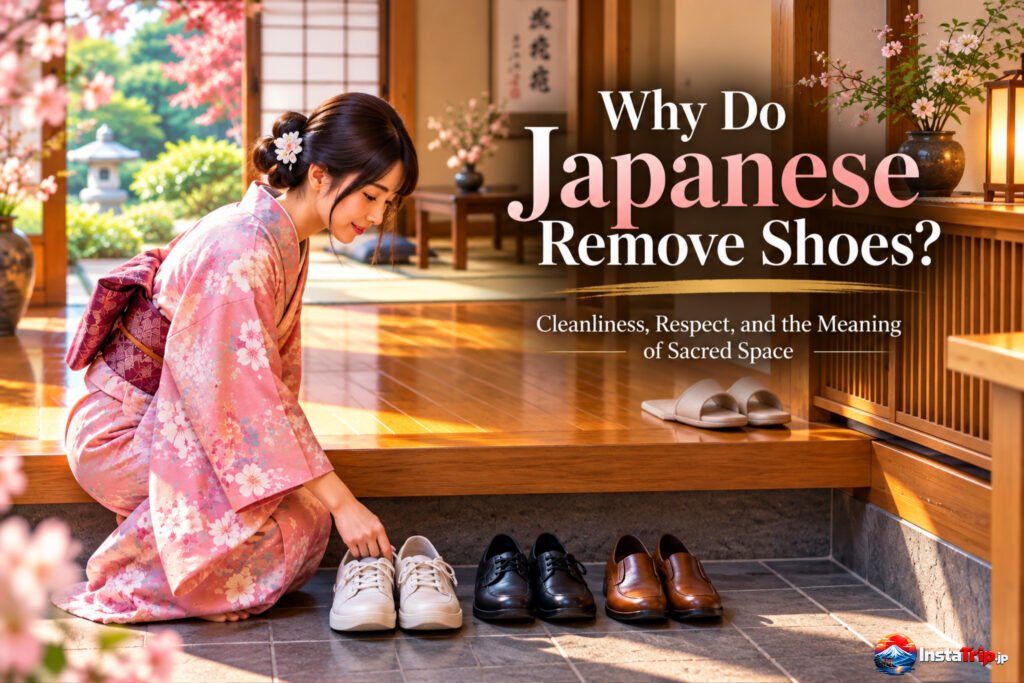
At the threshold of a Japanese home, a ryokan (旅館) inn, or a tatami (畳)-floored room, a small change takes place: shoes come off. For travelers wondering, “why do Japanese remove shoes,” the answer reaches far beyond a rule of politeness. It is a daily expression of cleanliness, comfort, respect, and an enduring awareness that different spaces call for different ways of moving through them.
The genkan (玄関), the lowered entrance area found in many Japanese homes, creates a clear boundary between outside and inside. Step up from it in socks or slippers and you are not simply entering a room. You are entering a space intentionally kept apart from the dust, moisture, and movement of the street. This quiet ritual is one of Japan’s most familiar everyday customs, yet it reveals a fascinating cultural logic that visitors can appreciate almost immediately.
Why Do Japanese Remove Shoes Before Entering?
At its most practical level, removing shoes keeps interiors clean. Historically, Japanese streets were often unpaved, muddy, and shared with animals. Carrying that dirt across a living space made little sense, especially in homes where people sat, ate, slept, and spent time close to the floor.
Traditional Japanese rooms made the distinction even more necessary. Tatami mats, woven from soft rush grass, provide a beautiful, fragrant surface for sitting and sleeping. Outdoor shoes can damage their texture, press dirt into the weave, and make the room less pleasant to use. Even today, a tatami room has a different atmosphere from a hallway or kitchen. Its floor is not merely something beneath your feet. It is part of the room’s furniture, comfort, and character.

That practical habit developed into a broader sense of order. The outdoors is not considered impure in a moral sense, nor are shoes viewed as inherently dirty. Instead, Japanese spaces are often organized by function and level of intimacy. The entrance belongs to the outside world. The interior belongs to home life, rest, hospitality, and shared comfort. Removing shoes acknowledges that transition.
The Genkan: Japan’s Meaningful Threshold
The genkan is among the first details visitors notice when entering a Japanese residence. It is usually set slightly lower than the main floor, often with a small platform or step. Shoes are placed neatly in this lower area, with toes pointing toward the door when possible. This makes them easy to put on when leaving and keeps the entryway orderly for everyone else.
The physical step has symbolic weight. It marks a pause between public and private life. Outside may be vibrant and dynamic, whether it is a busy Tokyo avenue, a rain-soaked Kyoto lane, or a quiet coastal street in Kamakura. Inside is a more protected setting, shaped by domestic routines and the comfort of those who live there.
For guests, this is also an act of consideration. Taking off your shoes says, in effect, that you recognize the home as someone else’s personal space. The gesture is simple, but its thoughtfulness matters. In Japan, good manners are often expressed through such small acts of attentiveness rather than grand displays.

From Earthen Floors to Modern Apartments
The custom has deep roots in traditional architecture. Older Japanese homes commonly had earthen-floor entrance areas called doma (土間), where people could work, store tools, or handle tasks connected to the outdoors. Raised rooms with wooden floors or tatami were kept separate. The architecture itself made shoe removal natural.
Modern apartments may have tile, vinyl, or hardwood instead of tatami, and many households now use Western-style furniture. Yet the genkan remains remarkably consistent. Even in a compact city apartment, the entrance still signals where outdoor shoes belong. It is a living tradition because it continues to make practical sense, not because people are reenacting the past.
Cleanliness, Comfort, and Care for Shared Space
Japanese shoe etiquette is often linked to cleanliness, but the idea is larger than avoiding dirt. It reflects care for a shared environment. Floors may be used for children’s play, stretching, folding laundry, placing cushions, or gathering around a low table. Keeping that surface clean supports the many ways a home is lived in.
This attention can feel especially vivid at a ryokan, a traditional Japanese inn. After arriving from the road, guests leave their shoes at the entrance and change into indoor slippers. The experience immediately shifts the pace of the stay. The polished wood, soft tatami, warm light, and often the gentle sound of slippers in a corridor create a feeling of calm that begins at the door.
The same principle appears in schools, temples, clinics, martial arts dojos, and certain restaurants. It is not a universal rule for every building in Japan, but it is common enough that travelers should remain alert to visual cues. A row of shoes, shoe lockers, slippers, or a raised floor usually provides the answer.
Shoes, Slippers, and Tatami: The Details Matter
Once shoes are off, what happens next depends on the setting. In many homes and traditional accommodations, slippers are available for walking on hard indoor floors. They are worn in hallways and common rooms, then removed before stepping onto tatami. Socks or bare feet are generally preferred on tatami because slippers can scuff or damage the delicate woven surface.
Toilets often have separate slippers. This may surprise first-time visitors, but the logic is consistent: the bathroom is treated as a distinct zone, and its slippers should not travel into the rest of the home. If you see a pair waiting at the bathroom entrance, change into them there and switch back when you leave.
At temples, castles, historic houses, and some galleries, staff may ask visitors to remove shoes to protect old wooden floors, tatami, or delicate interiors. Shoe bags are sometimes provided. Follow the posted instructions, and avoid placing shoes directly on raised wooden surfaces unless directed to do so.
One point of etiquette is worth remembering: do not walk around in socks that are visibly wet or dirty. The goal is not perfection or anxiety. It is simply to leave a space as comfortable for the next person as it was for you.
When Visitors Should Remove Their Shoes in Japan
There is no need to guess nervously at every doorway. Many places make expectations clear, and staff will gladly guide you if needed. Still, travelers are likely to remove shoes in several settings: private homes, ryokan, tatami rooms, some traditional restaurants, temples with interior halls, schools, daycare centers, and martial arts studios.
Restaurants vary widely. A ramen shop with counter seating may allow shoes, while a small izakaya with a raised tatami section may not. In some venues, you will remove shoes only before entering a particular seating area. Modern hotels, department stores, museums, and most cafés generally do not require it.
If you are invited into someone’s home, wear clean socks without holes. This small preparation is useful and respectful. Slip-on shoes can also make arrivals easier, particularly on a day spent visiting multiple temples, homes, or traditional inns. Comfort matters, but so does being ready for the rhythm of the places you enter.
How to Remove Shoes at a Japanese Entrance
The practical goal is to keep outdoor footwear off the indoor floor. Pause at the threshold, look for the host’s instructions and follow the arrangement provided rather than assuming every building works identically.
- Stay in the lower entrance area while removing outdoor shoes.
- Step onto the clean raised floor without placing your socked foot on the outdoor floor first, where practical.
- Leave shoes neatly to the side or in the designated locker.
- Use indoor slippers if offered, and remove them before stepping onto tatami.
- If separate toilet slippers are provided, change back before leaving that space.
The JNTO etiquette guide explains the entrance, tatami and slipper customs. If balance or mobility makes the change difficult, ask for a seat or assistance. Cleanliness should not require an unsafe maneuver.
Helpful Japanese Words
| Word | Meaning |
|---|---|
| Genkan (玄関) | Entrance area |
| Doma (土間) | Traditional earthen-floor or similar ground-level work space |
| Tatami (畳) | Traditional floor mats |
| Kutsu (靴) | Shoes |
| Surippa (スリッパ) | Slippers |
For a first inn stay, pair this with our ryokan booking guide. If your day includes temple visits, our Kamakura temple route explains how to pace the outing.
Watch: A Modern Japanese Home’s Interior Spaces
This Cozy Houses in JAPAN architectural tour shows a home in Kanagawa (神奈川), with a Japanese-style room and several floor levels. It offers visual context for how interior spaces are arranged, rather than a step-by-step shoe-removal lesson. It shows one designed home; do not assume all Japanese homes have the same layout.
Japanese Shoe Etiquette FAQ
Should I remove shoes in every Japanese building?
No. Follow signs, shoe lockers, the host or staff. Shops and many modern public buildings normally keep shoes on.
Can I wear indoor slippers on tatami?
Remove them before entering tatami areas unless staff specifically instruct otherwise.
Are bare feet always acceptable?
Expectations vary. Clean socks are a practical choice for visits, especially when a venue asks visitors to avoid bare feet.
Do I have to buy special shoes?
No. Comfortable footwear that you can remove easily is enough for most sightseeing. Choose support and fit before convenience.
Useful travel items (paid links): If needed, browse clean comfortable socks or supportive slip-on walking shoes. Use suitable items you already own.
A Custom That Changes How You See Japan
Shoe removal can appear strict from the outside, especially when travelers are juggling bags, umbrellas, and unfamiliar slippers. Yet it becomes intuitive once you see how closely it is tied to Japanese daily life. The custom protects floors, honors homes, preserves traditional materials, and creates a gentle distinction between the public world and a more intimate interior.
It also offers a revealing way to experience Japan beyond its magnificent shrines, neon-lit neighborhoods, and celebrated cuisine. At a doorway, culture is not displayed behind glass. It is practiced in a small, ordinary movement: pause, step out of your shoes, and enter with care.
The next time you encounter a genkan or a line of slippers, let it slow you down for a moment. That threshold is an invitation to notice the thoughtfulness built into Japan’s everyday spaces – and to become part of it, one respectful step at a time.