

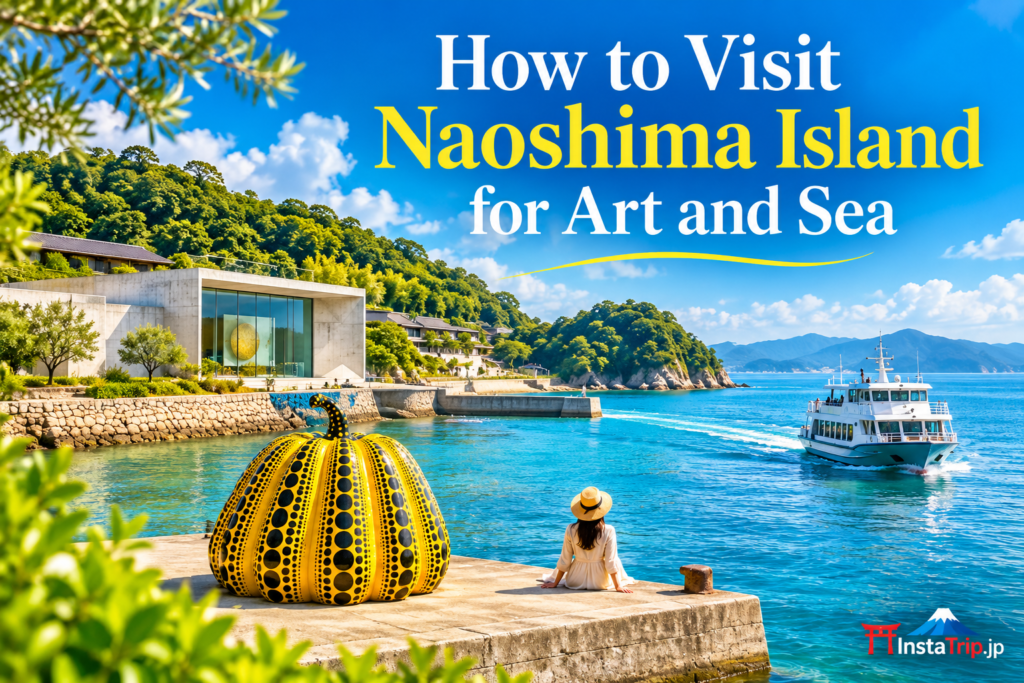
A yellow pumpkin facing the Seto Inland Sea, a concrete gallery carved into a hillside, a quiet fishing village where old homes hold contemporary art: Naoshima makes its first impression long before you reach the museum entrance. Knowing how to visit Naoshima island means planning for more than transportation. This small island in Kagawa Prefecture moves at the pace of ferry crossings, changing light, and the unhurried discovery of art in the landscape.
Naoshima is one of the best-known islands of the Setouchi region, celebrated for a remarkable dialogue between contemporary art, architecture, and everyday island life. Its museums and installations are world-famous, but the experience is not a checklist. Allow time to walk, look outward across the water, and notice how an artwork changes when the weather, tide, or silence around it changes too.
How to visit Naoshima island from Japan’s major cities
Most international visitors approach Naoshima through either Uno Port in Okayama Prefecture or Takamatsu Port in Kagawa Prefecture. Both are straightforward gateways, and the better choice depends on the rest of your Japan itinerary.
From Tokyo, Kyoto, Osaka, or Hiroshima, the most common route is to travel by Shinkansen to Okayama Station. From there, take a local train toward Uno, usually with a transfer at Chayamachi, then walk a short distance from Uno Station to the port. Ferries and passenger boats connect Uno with Miyanoura Port, Naoshima’s main arrival point. The sea crossing is brief, but it creates a genuine sense of leaving the mainland behind.

Takamatsu is equally practical, especially if you are exploring Shikoku. Ferries depart from Takamatsu Port for Miyanoura, with a longer but scenic ride across the Seto Inland Sea. On clear days, the horizon becomes part of the journey: low islands, working boats, and shifting bands of blue lead you toward Naoshima.
Ferry frequency, departure piers, and operating times can change by season, day of the week, or weather conditions. Check the current schedule shortly before travel, and do not plan a tight museum reservation immediately after your expected arrival. A little extra time protects your day from a missed connection, a line at the terminal, or an unexpectedly captivating view from the deck.
Choose the right port and area to stay
Naoshima has two main visitor areas, and choosing between them shapes the rhythm of your visit. Miyanoura is the ferry-port district, making it the easiest base for arrivals, departures, casual meals, and access to buses. It is also home to the striking red pumpkin by Yayoi Kusama, an instantly recognizable welcome to the island.
Honmura, on the eastern side, feels more residential and intimate. Traditional wooden houses, narrow lanes, small cafes, and the Art House Project give this area a quieter character. Staying here is especially rewarding for travelers who want to experience Naoshima after day visitors have left, when the streets become still and the island’s village life feels closer.

The southern Benesse House area is where several major art destinations sit within a dramatic coastal setting. It offers the most immersive art-and-architecture atmosphere, although it is less convenient for inexpensive dining and late-evening errands. If your accommodation is there, plan meals and transport carefully.
For a first visit, one night is the minimum worth considering. A day trip can cover selected highlights, but it often feels rushed because ferry times, museum reservations, and the island’s geography all require patience. Two nights allow you to divide the island naturally: southern museums one day, then Honmura and Miyanoura the next. During weekends, holidays, school vacation periods, and the Setouchi Triennale, rooms can disappear well in advance.
Build your art itinerary around reservations
Naoshima’s cultural identity grew through the Benesse Art Site Naoshima, a long-running vision that brings art, architecture, nature, and local communities into conversation. The island is not an open-air theme park. Many works are deliberately encountered in small numbers, in quiet spaces, or within buildings where the architecture is as meaningful as the collection.
Chichu Art Museum is the visit most likely to require advance planning. Designed by architect Tadao Ando and largely built underground, it uses natural light to transform the experience of works by Claude Monet, James Turrell, and Walter De Maria. Timed entry reservations are often necessary, and arriving late may mean losing a carefully planned slot.
The Benesse House Museum combines hotel, museum, and coastal landscape in one captivating setting. Nearby, the Lee Ufan Museum offers a more contemplative encounter between sculpture, painting, stone, sky, and Ando’s restrained architecture. These sites are close enough to pair, but they should not be hurried. Give yourself time to sit outdoors and let the setting register.
In Honmura, the Art House Project transforms former homes, a shrine, and other village spaces into site-specific artworks. Each building has its own atmosphere, from darkness and water to mirrors, color, and sound. It is a different kind of art experience from a conventional museum because the lanes between works are part of the encounter.
Museum closing days and ticket rules vary. Many facilities have regular closures, commonly on Mondays or on days when Monday falls near a holiday, though schedules differ by site and season. Confirm opening days, entry procedures, photography policies, and whether bags must be stored before you go. Naoshima rewards preparation, but it also rewards leaving one or two open hours for an unplanned stop.
Getting around without losing the day
Naoshima is compact on a map, yet its hills, coastal roads, and limited transit make distances more substantial than they appear. Public buses link Miyanoura, Honmura, and the southern museum district, while special shuttle services may operate around major art sites. They are useful, but a missed bus can reshape an entire afternoon.
A bicycle provides freedom for travelers who enjoy riding, particularly between Miyanoura and Honmura. Electric bicycles are the wiser choice for most visitors because some routes are steep and summer humidity can be intense. Rental stock is limited on busy days, so reserve ahead if cycling is central to your plan.
Walking is ideal within each district rather than across the whole island. Explore Honmura on foot, take time around the southern museums, and use a bus, bike, or taxi to connect the larger zones. Taxis are limited, so they are not a dependable last-minute solution during crowded periods.
If you have only one day, select a realistic combination such as Chichu Art Museum, Benesse House Museum, and the Lee Ufan Museum, or focus on Honmura’s Art House Project with time for Miyanoura. Trying to see every major site in a single visit turns one of Japan’s most reflective art destinations into a race between bus stops.
What to bring and how to travel thoughtfully
Bring comfortable shoes, a refillable water bottle, rain protection, and a charged phone or camera. Coastal weather can shift quickly, and shade is limited on some routes. Carry some cash as well, particularly for small shops, lockers, and local transport, although payment options vary by business.
Naoshima remains a lived-in island, not only an arts destination. Keep voices low in residential lanes, avoid entering private property for photographs, and follow museum instructions closely. Some spaces ask visitors not to photograph, touch, or speak loudly. These requests are not restrictions on the experience. They help preserve the stillness and concentration that make the art so powerful.
Food options are concentrated around Miyanoura and Honmura, with fewer choices near the southern museums. Eat early, make a reservation where possible, or keep a simple snack with you. This matters most on busy weekends, when a delayed lunch can cut into a reserved entry time.
Naoshima Planning Update: Museum Tickets and Ferries
Add the Naoshima New Museum of Art to your shortlist. Designed by Tadao Ando, it expands the island’s contemporary art offering with work from artists across Asia. Choose it as part of your Honmura-area day rather than adding another rushed stop to an already full itinerary.
Use the official museum ticket reservations and opening calendar for your exact date. The calendar lists a temporary closure of the new museum from November 24 to December 12, 2026; check again before booking transport.
For boats, check Shikoku Kisen’s official routes, timetables and fares and the Naoshima Tourist Association access guide. Ferry and passenger-boat departures are separate services; confirm your port, pier and final return departure. Do not plan the last museum entry so close to the final boat that a late bus could leave you stranded.
A Manageable Naoshima Day Trip
- Arrive at Miyanoura with time for orientation and onward transport.
- Choose a southern museum route or a Honmura art route around your reserved entry times.
- Allow time for lunch, walking and bus connections.
- Return to the port with a buffer before your selected boat.
Useful names: 直島 (Naoshima), 宮浦 (Miyanoura), 本村 (Honmura) and 地中美術館 (Chichu Art Museum). Keep the Japanese name of your destination on your phone for checking signs and asking directions.
Useful Gear for Naoshima
A refillable bottle and light daypack suit an island day. Confirm museum bag-storage rules and keep valuables with you when using lockers.
Useful travel items (paid links): Refillable insulated bottles · Lightweight daypacks.
Watch: Naoshima: The Island of Art
This 4K travel video offers a visual introduction to Naoshima’s island setting. Use the official links above for current transport, ticket availability and opening days.
How to Visit Naoshima Island: FAQ
Can Naoshima be visited in one day?
Yes, with a selective itinerary and suitable boat connections. An overnight stay gives you more time for museums and the island’s quieter hours.
Should I book museum tickets in advance?
Use the official reservation system to check each facility’s entry requirements and availability. Avoid relying on arriving without a ticket at popular timed-entry museums.
Is Naoshima fully open on Mondays?
Schedules vary by facility and holiday. Check the official opening calendar rather than treating Monday as one island-wide rule.
Do I need a bicycle?
No. You can combine buses and walking, allowing extra time for connections. Bicycles are an option where riding is permitted; check route restrictions and rental availability.
Can I photograph inside the museums?
Rules differ by artwork and space. Follow posted instructions and ask staff before photographing. For considerate travel photography, see our street photography guide.
Give Naoshima room to surprise you
The most memorable part of Naoshima may not be the artwork you expected to see. It may be the ferry horn across the harbor, the fragrance of pine on a quiet path, or the sight of a small shrine beside a contemporary installation. Plan the essential ferry and museum details, then leave enough space for the island to set its own pace. On Naoshima, slowing down is not time lost. It is part of seeing.