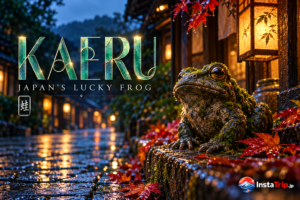

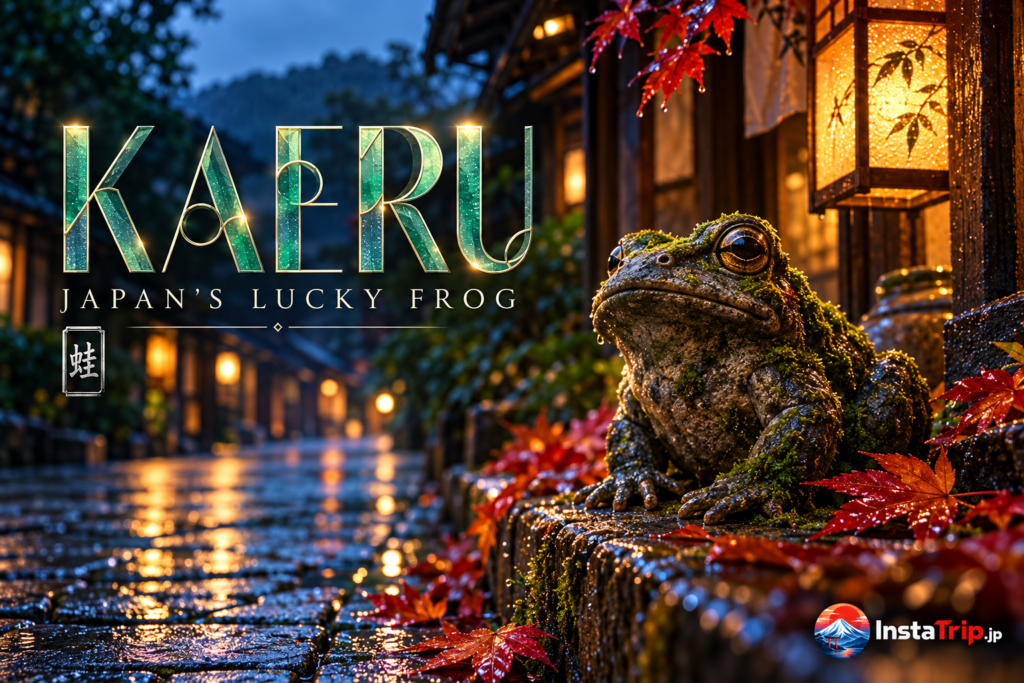
At the edge of a Kamakura shop, a small frog sits beside the doorway. Perhaps it is glazed ceramic, perhaps weathered stone. You might walk past without giving it a second thought—until you learn the wish hidden in its name. In Japanese, kaeru (蛙) is a frog. It also sounds like “to return” (帰る, 返る). Suddenly that little creature at the entrance seems to be waiting for someone to come back.
Why is a frog lucky in Japan?
The sound kaeru ties a familiar animal to several hopes: 無事帰る (buji kaeru), to return home safely; お金が返る (okane ga kaeru), money coming back; and 若返る (wakagaeru), to become young again. The words are a play on sound, not a promise that a figurine changes fate. A frog tucked into a wallet, perched by a counter or given to a traveler can carry a wonderfully human message: come back safely, and come back again.
That is why you may encounter frog figures among the engimono (縁起物), objects associated with good fortune, in places such as Kamakura. An ornament in a shop does not by itself identify a particular Kamakura shrine or ritual. The meaning can depend on who placed it there and whether it is a souvenir, a shop decoration or a shrine-issued charm.
One name, several wishes: 蛙・帰る・返る
- 蛙 (かえる) — the frog itself.
- 帰る (かえる) — to go back home. A gentle wish for someone setting off on a journey.
- 返る (かえる) — to be returned or come back. This lends itself to wishes for money or something lent to find its way back.
- 若返る (わかがえる) — to feel young again, a further twist on the sound gaeru.
At Futami Okitama Shrine, these are more than abstract examples: its listed frog charms include one for 金運 (financial fortune), another for 無事かえる (returning safely), and a 若かえる守 for the rejuvenation pun. Availability can change, so check with the shrine when visiting.

The shrine where the frogs really gather
On the coast of Ise in Mie Prefecture, Futami Okitama Shrine (二見興玉神社) is famous for the Meoto Iwa (夫婦岩), two rocks joined by a sacred rope. Along the grounds, frog offerings and figures make the wordplay tangible. The shrine’s own account connects the frogs with older beliefs about the sea and rain as well as pilgrims praying to return safely from their journey. Its explanation of the donated frogs also mentions hopes that money and other things will return.
At the temizuya (手水舎), the purification basin, water emerges from the mouth of a frog regarded there as a messenger of Sarutahiko Ōkami (猿田彦大神). You encounter the image before proceeding to pray. What began as a pun becomes part of the physical rhythm of the visit: sea, wind, water, a frog, and the hope of finding your way home.
A short look at Futami Okitama Shrine and its seaside setting. Play when you wish.

And why would a shop keep a frog near its door?
A shopkeeper can read kaeru as a wish for customers to return. That is an appealing interpretation of a frog by a doorway, though the intention behind an individual figure is best asked of its owner. In Matsumoto, there is a more visible town-wide example: Nawate Street (縄手通り) has adopted the frog as its symbol, linked in the city’s tourism account to tree frogs once found in the nearby Metoba River. Its little shops, frog figures and river story give the animal a whole street to inhabit.
A frog souvenir bought in Kamakura and a shrine charm from Ise may look alike in a photograph. They are not identical in origin or purpose. If you are looking for an omamori (お守り), obtain it from the shrine or temple that offers it; if you love a handmade frog in a shop, enjoy it as an engimono or a reminder of the journey.
Is the three-legged money toad the same creature?
Look closely at the feet. A three-legged toad, sometimes shown with coins, points toward the Chinese-origin 蟾蜍 (senjo) and 三足の蛙 (sansoku no kaeru) tradition, associated with auspiciousness and gathering wealth. Kyoto metalcraft workshop Seikadō describes such a three-legged incense burner as a Chinese mythical creature transmitted to Japan. It may be displayed in a Japanese business, but its story should not be folded into every four-legged kaeru charm or every shrine frog.
That difference makes the objects more interesting, not less. Two frogs can stand at two shop entrances and invite two different stories: one asks for a safe return; another gathers fortune. If you see one in Kamakura, count the legs, notice any coin, and ask what the owner calls it.
A small thing to carry home
Japan’s lucky frog is quietly moving because its wish begins with leaving. The traveler can go, the customer can step out, money can be spent, and time can pass. The little frog waits with the hope that something precious will kaeru—return. Alongside the beckoning maneki-neko and the resolute Daruma, it belongs to Japan’s lively vocabulary of good fortune. But perhaps its kindest meaning is the simplest: 無事帰る. Come home safe.
Paid links
Map: Futami Okitama Shrine, Ise
二見興玉神社 · 575 E, Futami-chō, Ise, Mie Prefecture. This is the documented frog shrine described above; the Kamakura ornaments in the opening are an observation, not a claim about a specific local shrine. See the shrine’s official grounds guide before visiting.