
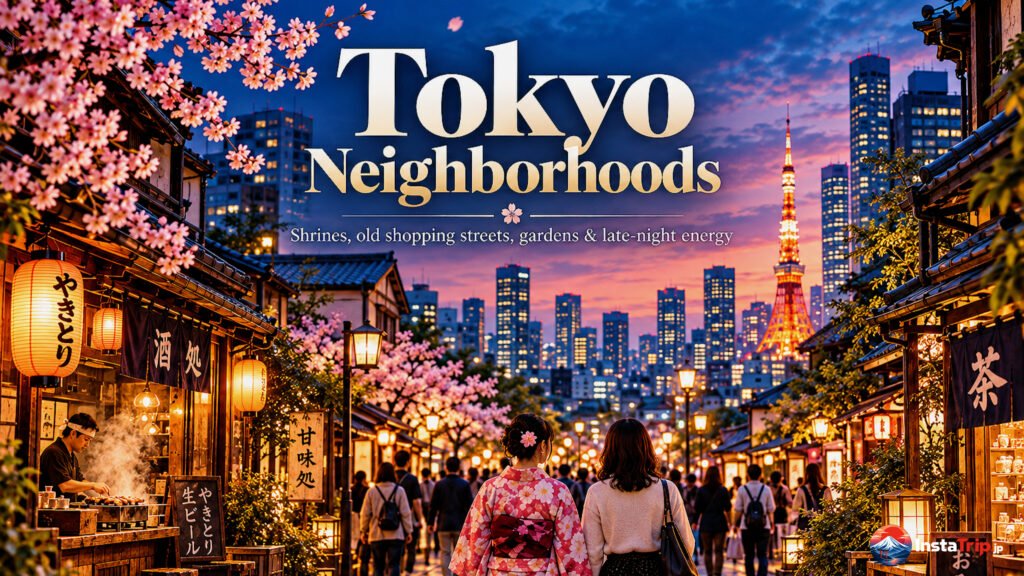
Tokyo neighborhoods are not simply stops on a map. Each has its own rhythm, palette, and relationship with the past: incense drifting from a temple gate in Asakusa, glass towers reflecting evening light in Marunouchi, vinyl bars tucked above Shinjuku streets, or a quiet lane in Yanaka where old wooden homes still shape the view. Choosing where to spend your time can transform a Tokyo visit from a checklist into a more personal encounter with the city.
Tokyo is immense, but it rarely feels like one uniform metropolis. The railway network makes movement remarkably easy, yet the character of each district rewards slowing down. A morning in a historic neighborhood, an afternoon among art and fashion, and an evening in a luminous entertainment district can feel like three entirely different versions of Japan.
How Tokyo Neighborhoods Shape Your Experience
The most rewarding way to understand Tokyo is to think in contrasts. The city has centuries-old temple grounds beside contemporary architecture, refined department stores close to narrow alleyways, and peaceful green spaces within reach of some of the world’s most dynamic nightlife. No single neighborhood represents all of Tokyo, and that is precisely its fascination.

First-time visitors often gravitate toward major sights, understandably. But the atmosphere between those sights matters just as much. The small restaurants beneath train tracks, neighborhood shotengai shopping streets, seasonal displays in shrine precincts, and the changing soundscape of commuter stations reveal everyday Tokyo. Build your itinerary around a few areas rather than racing across the city for every famous landmark.
Where you stay also depends on the kind of Tokyo you hope to experience. Shinjuku suits travelers drawn to movement and late nights; Ueno and Asakusa offer easier access to traditional culture and museums; Ginza and Tokyo Station place design, dining, and transport at the center of the trip. There is no universal best choice, only a neighborhood whose pace feels right for you.
Asakusa: Tokyo’s Timeless Temple Quarter
Arrive early to see a quieter side of the area, when shop shutters are still rising and temple grounds feel more spacious. Later, the neighborhood becomes vibrant with snack stalls, souvenir shops, rickshaw tours, and families moving toward the Sumida River. Nearby streets reveal another pleasure: traditional craft stores, modest eateries, and views toward Tokyo Skytree, a striking symbol of the city’s modern skyline.

Asakusa is ideal for travelers who want a strong sense of old Edo, the historical name for Tokyo, while remaining close to contemporary city life. It can be crowded around midday, especially on weekends, but early mornings and evenings offer a more reflective mood.
Ueno and Yanaka: Museums, Markets, and Older Tokyo
Ueno is one of Tokyo’s most generous cultural districts. Ueno Park gathers major museums, ponds, walking paths, and seasonal blossoms in a setting that encourages an unhurried day. The park’s cultural institutions make this neighborhood especially rewarding for art lovers and history-minded travelers, while Ameya-Yokochō nearby offers a far more energetic counterpoint with market stalls, street food, and compact shops.
A short journey away, Yanaka feels quieter and more intimate. Its lanes, temples, cemeteries, small galleries, and local cafés preserve an atmosphere that recalls residential Tokyo before the city’s rapid postwar transformation. This is not a frozen historical district. People live and work here, which is why its modest details – flowerpots outside doorways, neighborhood bakeries, a cat resting beside a shop entrance – feel so captivating.
Pairing Ueno with Yanaka creates a memorable contrast: grand public culture in the morning, then the gentle texture of everyday life in the afternoon. It is particularly appealing for photographers, walkers, and visitors who prefer discovery over spectacle.
Shibuya and Harajuku: Youth Culture in Constant Motion
Shibuya is often introduced through its famous crossing, where waves of people pass beneath enormous screens and glowing storefronts. The scene is genuinely exhilarating, especially after dark, but Shibuya’s appeal extends beyond one intersection. It is a district shaped by music, fashion, restaurants, evolving architecture, and the constant movement of one of Tokyo’s busiest stations.
Walk beyond the main crossing toward quieter slopes and side streets, where independent boutiques, coffee shops, record stores, and small bars create a more layered experience. Shibuya changes quickly, and that constant reinvention is part of its identity. For some travelers, it represents Tokyo at its most dynamic. For others, its intensity is best enjoyed in short, vivid bursts.
Harajuku, within walking distance, offers a different creative energy. Takeshita Street is known for youthful fashion and colorful crowds, while nearby Omotesandō feels more polished, with bold architectural facades, designer boutiques, and galleries. Meiji Jingu lies close by, framed by a forested approach that creates a remarkable pause from the commercial streets outside.
This area is best appreciated through contrast. Spend time observing the experimental style and commercial energy, then walk to Meiji Jingu with a quieter frame of mind. The transition says much about Tokyo’s ability to hold exuberance and contemplation within a few blocks.
Shinjuku: The Electric Heart of the City
Shinjuku is Tokyo at full volume. Towering buildings, giant rail platforms, department stores, cinemas, office workers, nightlife crowds, and food-filled lanes converge in a district that can feel overwhelming at first. Yet its scale is also what makes it magnificent. Shinjuku is not one experience but many, arranged around one of the city’s most important transport hubs.
West Shinjuku presents a more vertical, business-oriented landscape, with skyscrapers and broad avenues. East Shinjuku is brighter, louder, and more entertainment-focused, especially around Kabukichō and the neon-lit streets near the station. Golden Gai, with its tightly packed collection of tiny bars, offers a very different scale, though visitors should remember that some establishments have specific policies, limited seating, or cover charges.
For relief from the energy, Shinjuku Gyoen National Garden provides expansive lawns, formal garden styles, and seasonal beauty. This contrast is essential to Shinjuku’s character: a place where one of the world’s busiest urban centers sits near carefully tended landscapes.
Ginza and Marunouchi: Design, Craft, and Tokyo Elegance
Ginza is often associated with luxury, but its deeper appeal lies in design, craftsmanship, food culture, and architecture. Department store basements are destinations in their own right, filled with beautifully presented sweets, prepared foods, and regional specialties. Galleries and flagship stores display an attention to detail that makes even window-shopping feel like a visual experience.
Just east of Ginza, the Kabuki-za theater represents a living connection to kabuki, one of Japan’s great classical performing arts. Even travelers without time for a full performance can appreciate the theater’s presence as part of the neighborhood’s cultural fabric.
Marunouchi, around Tokyo Station and the Imperial Palace, has a more composed character. Red-brick Tokyo Station combines historic grandeur with the efficiency of a modern rail gateway, while the surrounding business district is ideal for a refined evening walk. This is a strong base for travelers who value convenience, excellent dining, and access to both central Tokyo and day trips beyond the city.
Roppongi and Odaiba: Contemporary Tokyo After Dark
Roppongi is known for nightlife, but it also holds some of Tokyo’s most compelling contemporary art spaces and ambitious urban architecture. It is a neighborhood for travelers who want to see how art, design, international dining, and evening energy meet in one concentrated district. The pace can be polished and cosmopolitan, with a different feeling from the dense, improvised vitality of Shinjuku.
Across the water, Odaiba offers broad promenades, futuristic buildings, entertainment complexes, and wide views of Tokyo Bay. Its spaciousness can feel surprising after central Tokyo’s compressed streets. Visit when you want a visual change of scale: water, bridges, dramatic sunsets, and a skyline that seems to stretch without end.
Let the City Reveal Itself Slowly
Tokyo rewards a little structure and plenty of room for chance. Choose one neighborhood for the morning, another for the afternoon, and leave time to follow a side street, step into a small café, or linger at a shrine gate as the light changes. The city’s great landmarks will remain unforgettable, but often it is the neighborhood between them that stays with you longest.
![[商品価格に関しましては、リンクが作成された時点と現時点で情報が変更されている場合がございます。]](https://hbb.afl.rakuten.co.jp/hgb/574e3107.38c21b6e.574e3108.03167e3d/?me_id=1402903&item_id=10000190&pc=https%3A%2F%2Fthumbnail.image.rakuten.co.jp%2F%400_mall%2Ff131067-taito%2Fcabinet%2Fhenrei%2Ftravel%2F8000-002-t03.jpg%3F_ex%3D128x128&s=128x128&t=picttext "[商品価格に関しましては、リンクが作成された時点と現時点で情報が変更されている場合がございます。]")