
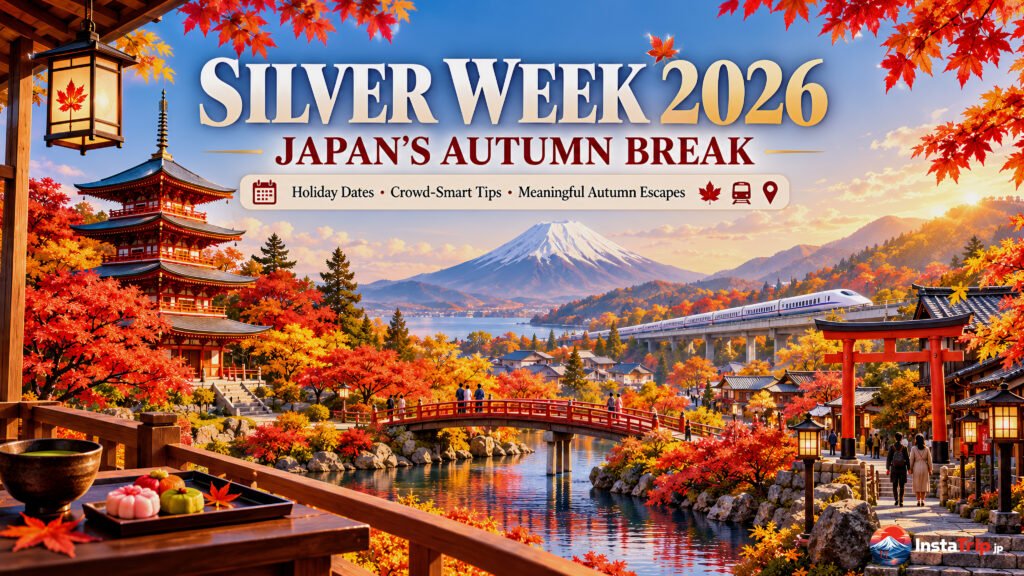
Silver Week 2026 brings one of Japan’s most anticipated autumn pauses: five consecutive days, from Saturday, September 19 through Wednesday, September 23. For travelers, it is a rare chance to see Japan in a festive, energetic mood as late-summer heat begins to soften and the first signs of fall appear. It is also a period when Japan’s rail platforms, famous landmarks, mountain towns, and hotel lobbies become exceptionally busy.
The appeal is easy to understand. This is a holiday stretch made for reunions, short escapes, museum visits, and long-awaited journeys across the country. A morning at a Kyoto temple, a dazzling night in Tokyo, or a quiet walk along the coast in Kamakura can feel especially vivid in the clearer September light. The trade-off is simple: spontaneous travel becomes harder. A well-planned Silver Week trip can be magnificent; an unplanned one may involve sold-out trains and longer-than-usual lines.
Silver Week 2026 Dates: September 19-23
Silver Week is not one single official holiday in the way that Japan’s New Year period is. It is an informal name for a fortunate alignment of public holidays, weekends, and occasionally a bridge holiday. In 2026, the calendar creates a five-day break:

- Saturday, September 19 and Sunday, September 20 are the weekend.
- Monday, September 21 is Respect for the Aged Day, a national holiday observed on the third Monday of September.
- Tuesday, September 22 becomes a Citizen’s Holiday because it falls between two national holidays.
- Wednesday, September 23 is the Autumnal Equinox Day.
That Tuesday is what makes the 2026 calendar particularly significant. Under Japan’s holiday law, a weekday placed between two national holidays becomes a holiday itself. For residents, it creates a valuable early-autumn break. For visitors, it means peak demand across much of the country.
A season shaped by reflection and family time
The holidays also carry meaning beyond a convenient long weekend. Respect for the Aged Day, known in Japanese as Keiro no Hi, is a time to honor older generations and recognize their contributions to family and community. Autumnal Equinox Day, Shubun no Hi, is connected to the seasonal balance of day and night and has long associations with visiting family graves and remembering ancestors during the autumn higan period.
Travelers will not necessarily see a single nationwide festival attached to Silver Week itself. Its character is more intimate and varied: families gathering, residents returning home, and people taking advantage of the calendar to reconnect with nature, heritage, and one another. Approaching temples, cemeteries, and memorial spaces with quiet consideration is especially appropriate at this time.

Where to Experience Silver Week 2026
Japan does not pause during Silver Week. Department stores, restaurants, museums, and major attractions often remain open, though hours can change and crowds can be intense. The best destination depends on whether you want to join the vibrant holiday movement or step slightly beyond it.
Tokyo: Dynamic city energy, with strategic timing
Tokyo is at its most dynamic during a national holiday break. Asakusa may be crowded from early morning as visitors make their way toward Sensō-ji, while Ueno’s museums and park spaces attract families and art lovers. Ginza remains polished and lively, and Shibuya and Shinjuku continue at their usual high-energy pace long after sunset.
The secret is not avoiding Tokyo but adjusting your rhythm. Visit popular sites shortly after opening, reserve timed-entry exhibitions when available, and make lunch earlier or later than the usual noon rush. A sunrise walk beside the Sumida River, a neighborhood coffee stop in Yanaka, or an evening view from Tokyo Skytree can offer breathing room around a fuller itinerary.
Kyoto, Nara, and Kamakura: Heritage at a busy moment
Historic destinations are beautiful in late September, but they require patience during a holiday period. Kyoto’s temple districts, Nara Park, and Kamakura’s most celebrated shrines can be especially crowded from midmorning through the afternoon. The experience is still deeply rewarding if you make space for quieter details: the sound of a temple bell, moss darkened by recent rain, incense drifting through a gate, or the changing texture of light on old wooden architecture.
Choose one major landmark for the day rather than racing through a long checklist. Then balance it with a lesser-known lane, garden, small museum, or local meal. In Kamakura, this can mean pairing the Great Buddha area with a slower walk through residential streets or toward the sea. In Kyoto, it might mean beginning in a temple neighborhood at dawn and spending the afternoon in a less central district.
Nature and smaller cities: A gentler counterpoint
For travelers who want a calmer Silver Week, destinations outside the headline routes can be especially compelling. Kanazawa offers refined gardens, craft traditions, and historic streets without the scale of Tokyo. Nikko brings together sacred architecture and forested landscapes, though advance planning is still essential. In Hokkaido, the seasonal shift can feel more pronounced, with crisp air arriving earlier than in Japan’s southern cities.
Coastal Kanagawa also offers a refreshing alternative. Enoshima and Fujisawa can be busy on clear days, yet the ocean breeze and wide views provide a different kind of holiday atmosphere. Hakone remains popular, especially for ryokan stays and mountain scenery, so it rewards travelers who secure lodging and transport early.
Plan Ahead Without Overplanning
Silver Week is a time when a few reservations make an enormous difference. High-speed rail seats, domestic flights, popular hotels, rental cars, and limited-entry attractions can sell out well before the holiday. If your trip includes a fixed arrival airport or an important event, book those core pieces first.
At the same time, leave room for discovery. Japan’s most memorable moments are often unplanned: a neighborhood festival banner outside a shopping street, an impeccably arranged seasonal sweet in a café, or a small gallery found while sheltering from a brief rain shower. Reserve your major transport and accommodations, then allow the daily details to unfold.
Train travel deserves special attention. The busiest travel days are often at the beginning and end of the break, when people leave large cities or return home. Reserved seats offer reassurance, particularly for long routes such as Tokyo to Kyoto, Osaka, Hiroshima, or Hakata. If you are comfortable with flexibility, traveling very early in the morning or later in the evening can make the journey feel less compressed.
For hotels, consider staying near a convenient local rail line rather than directly beside the most famous attraction. A neighborhood a few stops away can offer a more relaxed evening, stronger value, and a more everyday view of city life. It depends on your priorities: first-time visitors may value central access, while repeat visitors may prefer atmosphere and space.
What to Pack for Japan in Late September
Late September is a transitional season. Tokyo, Kyoto, Osaka, and much of central Japan can still feel warm and humid during the day, while mornings and evenings become more comfortable. Northern and mountainous areas may be noticeably cooler. A light layer, breathable clothing, comfortable walking shoes, and a compact rain jacket are sensible choices.
Typhoon season can also extend into September. A storm will not define every trip, but travelers should build some flexibility into tightly scheduled days. If rain arrives, Japan offers excellent alternatives: galleries, contemporary art museums, covered shopping arcades, sento bathhouses, cafés, and department-store food halls all reveal a different, equally fascinating side of daily life.
Make Space for the Meaning of the Season
Silver Week is not Japan’s most visually dramatic autumn period. The celebrated peak foliage of maples and ginkgo trees generally comes later, varying by region and elevation. Yet that is precisely part of its appeal. September offers a threshold moment, when summer’s intensity begins to recede and the country shifts toward cooler, more contemplative months.
Rather than treating the break only as a crowded travel window, let it shape the pace of your visit. Start early. Accept that a famous temple may be shared with many others. Pause for a seasonal meal, notice the changing light, and seek one quiet place each day. Silver Week 2026 can be a brilliant introduction to Japan not because everything is empty, but because the country is fully alive in the rhythm of its own autumn holiday.
![[商品価格に関しましては、リンクが作成された時点と現時点で情報が変更されている場合がございます。]](https://hbb.afl.rakuten.co.jp/hgb/574e3685.cabbaef8.574e3686.a399bfc8/?me_id=1363741&item_id=10000245&pc=https%3A%2F%2Fthumbnail.image.rakuten.co.jp%2F%400_mall%2Ff094072-nasu%2Fcabinet%2Fnasuonsen%2F11675-30030419-01a.jpg%3F_ex%3D128x128&s=128x128&t=picttext "[商品価格に関しましては、リンクが作成された時点と現時点で情報が変更されている場合がございます。]")