

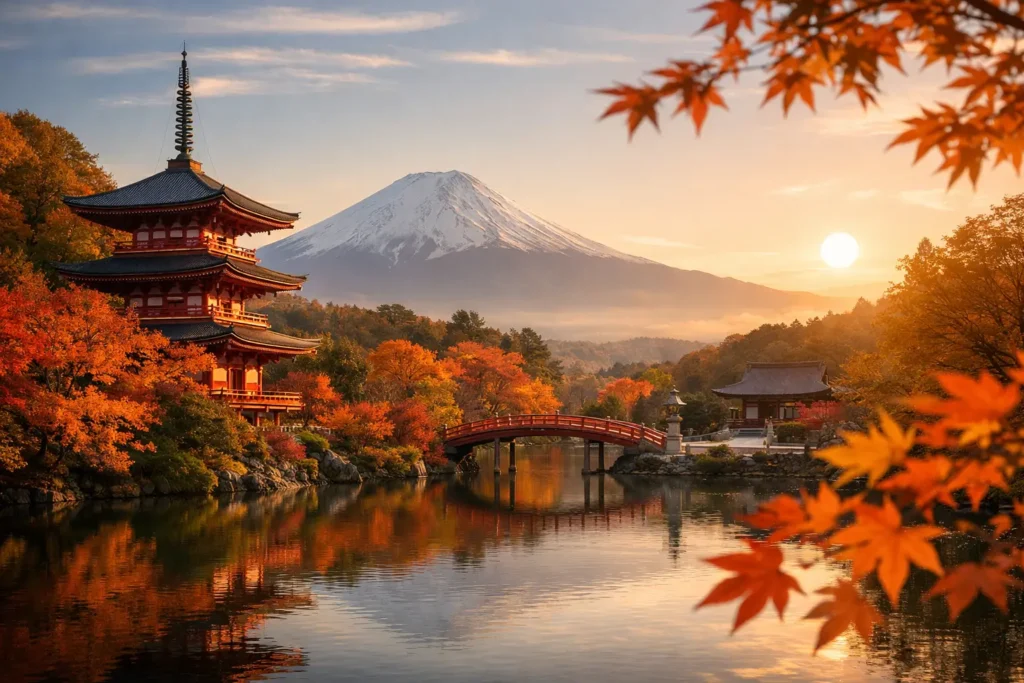
On a late-September day when daylight and darkness come into near balance, Japan pauses for Shubun no Hi (秋分の日), the Autumnal Equinox Day. It is a national holiday, but its atmosphere is often quieter than a parade-filled festival: a moment for family, memory, seasonal change, and the soft beauty of early autumn. For travelers, it offers a revealing view of Japan beyond the bright energy of major matsuri – one shaped by reflection as much as celebration.
What Is Shubun no Hi (秋分の日)?
Shubun no Hi is observed on the date of the autumnal equinox, usually September 22 or 23, although the exact day changes according to astronomical calculations. Japan’s National Holidays Act defines its purpose as a day to “respect ancestors and mourn the dead.” That wording gives the holiday its distinctive character. Rather than centering on spectacle, it creates space to acknowledge the generations that came before.
The equinox itself has long carried meaning in Japan. As summer heat begins to fade and the sky turns brilliantly clear, the season shifts toward harvest time, crimson maple leaves, and cooler evenings. The day’s nearly equal hours of light and dark can feel especially fitting for a tradition concerned with the connection between the visible world and those who have passed on.

Shubun no Hi falls within aki no higan, the autumn Higan period. Higan lasts seven days: three days before the equinox, the equinox itself, and three days after. Its counterpart, haru no higan, takes place around the vernal equinox in spring. The word higan is often understood as “the other shore,” a Buddhist image for enlightenment and the realm beyond ordinary suffering, while this everyday world is described as “this shore.”
A Season of Remembrance, Not a Single Ceremony
During Higan, many families visit ancestral graves, clean the area around the grave marker, offer flowers, light incense, and take a quiet moment in prayer or remembrance. Others visit a family Buddhist temple or prepare a home altar with fresh flowers and offerings. These practices are deeply personal, and how they are observed varies by family, region, and religious background.
For visitors, this distinction matters. Shubun no Hi is not a public performance created for tourists. It is a living period of family observance. A temple may feel especially active, with local residents arriving to pray, but it may also feel calm and intimate. The most meaningful way to experience the holiday is to move with consideration: speak softly, follow posted instructions, and avoid photographing worshippers or family graves without clear permission.
The spiritual dimension is often connected to Buddhism, yet the holiday also reflects a broader Japanese respect for ancestors and continuity. This is one reason it resonates far beyond formal religious practice. In many homes, the gesture can be as simple as remembering a relative, sharing a seasonal sweet, or making time to return to the place where one’s family is buried.

Ohagi and the Taste of Early Autumn
One of the most recognizable foods associated with autumn Higan is ohagi, a sweet made with glutinous rice and usually coated in anko, a gently sweet red bean paste. Its spring counterpart is often called botamochi. The recipes can be nearly identical, but the seasonal names traditionally evoke different flowers: autumn hagi, or bush clover, and spring botan, or peony.
You may see ohagi in department-store food halls, neighborhood confectionery shops, supermarkets, and temple-area stalls around the holiday. There is no single required style. Some versions are covered with smooth red bean paste, while others feature roasted soybean flour or black sesame. Their modest appearance is part of their appeal: a familiar seasonal food that carries memory without needing elaborate ceremony.
Where Travelers Can Feel the Season
Tokyo’s large temples can offer an accessible introduction to the contemplative mood of Higan. At places such as Sensō-ji in Asakusa, the vivid gates, incense smoke, and steady movement of worshippers create a powerful contrast between ancient practice and one of the world’s most dynamic cities. The temple remains a major visitor destination, so it will not necessarily be quiet, but Shubun no Hi can invite a more observant way of being there.
In Kyoto, temple districts and older cemeteries can feel especially evocative as summer gives way to autumn. Yet the most affecting encounters may happen away from famous landmarks: a small neighborhood temple with fresh chrysanthemums at its entrance, a local sweet shop displaying ohagi, or a train platform filled with families making a day trip home.
Cemetery visits themselves require particular care. Cemeteries are not sightseeing sets, and some are closely tied to active temples, local communities, or private family plots. If a cemetery is open to the public, remain on paths, do not touch grave markers or offerings, and keep cameras put away unless photography is clearly welcomed. A respectful pause is more appropriate than an attempt to turn a private space into a travel image.
Nature also becomes part of the experience. Around the equinox, the first signs of Japan’s celebrated autumn color are beginning to appear in cooler mountain regions, though peak foliage arrives later in many cities. Along riverbanks and country paths, clusters of red spider lilies, known as higanbana, often bloom around this time. Their dramatic color makes them instantly memorable, but they also appear near fields and graves, carrying associations with transition and remembrance.
Planning Around the Autumn Equinox Holiday
Because Shubun no Hi is a national holiday, many offices and schools close. It can create a long weekend when paired with Saturday and Sunday, making trains, domestic flights, and popular urban attractions busier than usual. If you are traveling between Tokyo, Kyoto, Osaka, or other major destinations, reserve key transport and accommodations early when the date creates a holiday break.
At the same time, it is not a uniform shutdown. Restaurants, shops, museums, and major attractions frequently remain open, especially in large cities. Hours can change, however, and independently run businesses may close so families can observe the holiday. The practical lesson is simple: confirm plans before setting out, especially for smaller galleries, local restaurants, and rural destinations.
The holiday’s mood also depends on where you are. In central Tokyo, it may register as an extra day for shopping, museums, and parks. In a smaller town, you may notice more families at temples and cemeteries, or quieter streets around midday. Neither experience is more “authentic.” They reflect the way national traditions live differently across Japan.
How to Visit Temples Respectfully
A few small choices go a long way. Dress neatly, keep your voice low, and observe the flow of people before approaching a main hall. At a temple purification fountain, follow the instructions if you know them, but do not worry about performing a ritual perfectly. Watching respectfully is preferable to rushing through gestures for a photo.
If incense is available, follow local cues and any signs. Avoid blocking worshippers, and never step into a prayer space simply to get a better view. At some temples, visitors may encounter special Higan services, but these are religious observances rather than entertainment. You are welcome to appreciate the setting, sounds, and architecture while allowing the ritual to belong to the people participating in it.
Why Shubun no Hi Matters
Japan is often introduced through its thrilling contrasts: lantern-lit temple approaches and neon crossroads, centuries-old craftsmanship and futuristic design, crowded rail stations and silent gardens. Shubun no Hi reveals another contrast, one that is more intimate. A public holiday can be nationwide, yet its meaning unfolds privately through a flower placed at a grave, a bowl of incense ash, a family train ride, or a piece of ohagi shared at home.
For travelers drawn to Japan’s cultural depth, the day is a reminder that the calendar is not only a schedule of events. It is a rhythm that shapes food, travel, family life, prayer, and the changing landscape. If your visit coincides with Shubun no Hi, leave room for an unhurried temple visit, a seasonal sweet, and a little attention to the softer side of the season. Early autumn in Japan has a captivating way of making reflection feel like part of the journey.
![[商品価格に関しましては、リンクが作成された時点と現時点で情報が変更されている場合がございます。]](https://hbb.afl.rakuten.co.jp/hgb/574e4926.c2c19ba6.574e4927.912a99a4/?me_id=1362198&item_id=10000804&pc=https%3A%2F%2Fthumbnail.image.rakuten.co.jp%2F%400_mall%2Ff012025-hakodate%2Fcabinet%2Fimgrc0081004513.jpg%3F_ex%3D128x128&s=128x128&t=picttext "[商品価格に関しましては、リンクが作成された時点と現時点で情報が変更されている場合がございます。]")