
A Hakone ryokan experience review is not really about judging a room by its square footage or counting amenities. It is about the moment a city itinerary gives way to tatami underfoot, mountain air beyond a shoji screen, and the gentle rhythm of a stay shaped around bathing, dining, and rest. In a region celebrated for its volcanic landscapes, hot springs, and views toward Mount Fuji, a traditional inn can turn one night into one of the most vivid memories of Japan.
The short answer is yes: for travelers who want more than a place to sleep, a Hakone ryokan is often worth the investment. But the experience depends enormously on the property, its location, and what you expect from it. A ryokan is not a Western-style resort dressed in Japanese décor. Its appeal lies in the rituals, quiet details, and sense of place that reward a slower kind of travel.
What a Hakone Ryokan Stay Actually Feels Like
Arrival often begins with a small but meaningful transition. Shoes come off at the entrance, luggage disappears with an attendant, and a welcome sweet with green tea may arrive shortly afterward. The room is usually spare in the most intentional way: woven tatami mats, low furniture, a tea set, seasonal flower arrangement, and perhaps a view of forested slopes, a garden, or a river rushing through the valley.

That simplicity is not a lack of comfort. It reflects an aesthetic that values space, seasonality, and calm. Many rooms are rearranged while guests dine: the low table is moved aside and futons are laid out, transforming the same room from a daytime sitting area into a nighttime retreat. For first-time visitors, sleeping on a futon may sound novel rather than luxurious. Yet a well-prepared futon on tatami can be remarkably comfortable, especially after a long soak in an onsen.
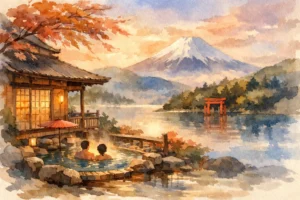
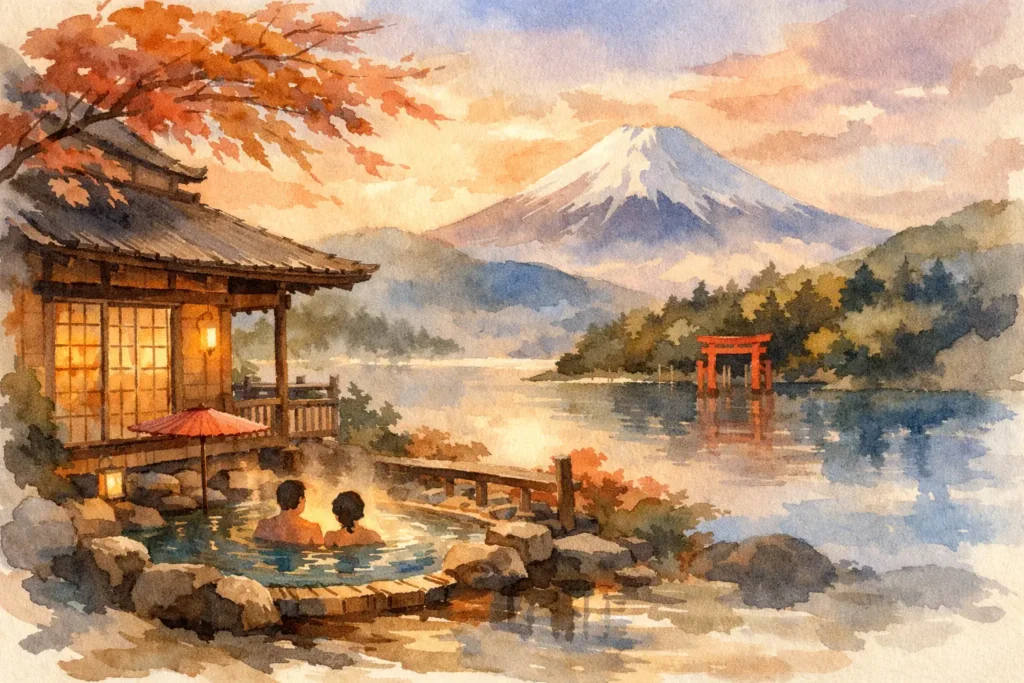
The defining feature, naturally, is the bath. Hakone is one of Japan’s great hot-spring regions, with waters drawn from its volcanic landscape. Some inns have expansive communal baths with open-air rotenburo facing trees or hillsides. Others offer intimate private baths, sometimes reservable by the hour, or rooms with their own open-air tub. Each version creates a different mood: communal bathing feels traditional and restorative, while a private bath suits couples, families, and travelers who prefer more privacy.
The Pleasure Is in the Pace
A ryokan stay has a built-in schedule, and that is part of its charm. Dinner may begin early, often around 6:00 or 6:30 p.m. Breakfast follows at a similarly civilized but fixed hour. For travelers used to spontaneous late-night meals and packed sightseeing plans, this can feel restrictive. For others, it is a welcome invitation to stop rushing.
Kaiseki-style dinner is usually the centerpiece. Rather than one oversized entrée, the meal unfolds in a sequence of carefully composed courses that may include sashimi, simmered vegetables, grilled fish or meat, soup, rice, pickles, and a seasonal dessert. The finest meals feel connected to both the region and the time of year: bamboo shoots in spring, mountain vegetables in early summer, mushrooms in autumn, or warming broths during colder months.
Not every ryokan meal will be extraordinary, and this is one of the experience’s real trade-offs. A historic, moderately priced inn may serve a satisfying but conventional dinner, while a high-end property may present extraordinary ingredients and meticulous craftsmanship at a much higher rate. If food is central to your Japan trip, choosing a ryokan known for its cuisine can be worth prioritizing over a larger room or a more convenient location.
Breakfast is usually Japanese-style, with rice, grilled fish, miso soup, pickles, tofu, egg, and small seasonal dishes. It can feel wonderfully grounding, though travelers who strongly prefer pastries and coffee should check what is offered. The point is not to imitate a familiar hotel breakfast. It is to begin the day through a distinctly Japanese table.
The Onsen Ritual Deserves Your Attention
For many international visitors, shared bathing is the most unfamiliar part of the stay. The etiquette is straightforward, but it matters. Guests wash thoroughly at the shower stations before entering the bath, then soak without bringing soap or towels into the water. Small towels are used for modesty while walking around the bathing area and are kept out of the bath itself.
The atmosphere is generally quiet, not ceremonial in a formal sense, but considerate. This is a space for relaxing rather than swimming, taking photos, or speaking loudly. After a day spent riding Hakone’s trains, cable cars, and ropeways, sinking into mineral-rich water as evening settles over the mountains can feel almost timeless.
Tattoo policies vary. Some ryokan welcome tattooed guests in their communal baths, some request that small tattoos be covered, and others limit access. Private baths can be an excellent alternative, but availability and rules differ by property. It is best to confirm this before reserving rather than hoping for flexibility on arrival.
Where You Stay Changes the Experience
Hakone is not a single compact town, and a ryokan’s setting shapes the entire stay. Hakone-Yumoto is the easiest area to reach from Tokyo and works well for a short, first-time visit. Its riverside atmosphere, shops, and transport connections make it convenient, though it can feel busier than more elevated parts of the region.
Gora offers a mountain setting with access to art museums, scenic rail travel, and the Hakone Ropeway. It is a compelling choice for travelers who want to combine an onsen stay with a fuller day of exploring. The terrain is steep in places, however, and moving luggage can be less effortless than the map suggests.
Lake Ashi and Motohakone offer a more open, scenic character, with shrine gates near the water and, on clear days, dramatic Mount Fuji views. These areas can feel especially magnificent in the early morning before day visitors arrive. The trade-off is that transportation is slower and dining options outside the ryokan may be limited, so a dinner-inclusive plan makes particular sense.
The Details That Make or Break a Stay
The best ryokan is not automatically the most expensive one. A meaningful stay comes from matching the inn to your priorities. If you dream of bathing beneath the trees without sharing the space, look for a room with an open-air bath or a property with reservable private baths. If you want the full traditional feeling, a long-established inn with tatami rooms, multi-course dinner, and communal baths may be more rewarding than a sleek contemporary hotel.
It is also wise to read the practical details carefully. Many traditional properties have stairs, limited elevator access, and set check-in times. Dinner-inclusive bookings may require arrival by late afternoon. Dietary accommodations are possible at some ryokan but are not universal, particularly for vegan diets or severe allergies, and advance notice is essential.
A ryokan can also be surprisingly quiet after dinner. There may be no bar, no late-night restaurant, and no entertainment program. That is not a flaw. It is the point. Bring a book, open the window if the weather allows, make tea, wear the provided yukata, and let the evening become unhurried.
Is a Hakone Ryokan Worth the Price?
For a single night, the rate can seem high compared with a standard hotel. Yet it often includes dinner, breakfast, bathing facilities, attentive service, and an experience that cannot be separated from Hakone’s landscape. When viewed as lodging plus a carefully staged culinary and cultural evening, the value becomes clearer.
That said, it may not suit every night of a Japan itinerary. Travelers on a tight budget may prefer a simple hotel in Hakone-Yumoto and a day visit to an onsen. Families with very young children, guests with limited mobility, or anyone uncomfortable with fixed meal times may be happier at a modern hotel. There is no wrong choice, only a question of what kind of Hakone you want to remember.
The most captivating ryokan stays are the ones that leave room for stillness. Arrive before sunset, take your first bath before dinner, and wake early enough for one more soak while the mountains are quiet. Hakone offers plenty to see, but a ryokan reminds you that Japan can be experienced most deeply when you finally stop moving.