
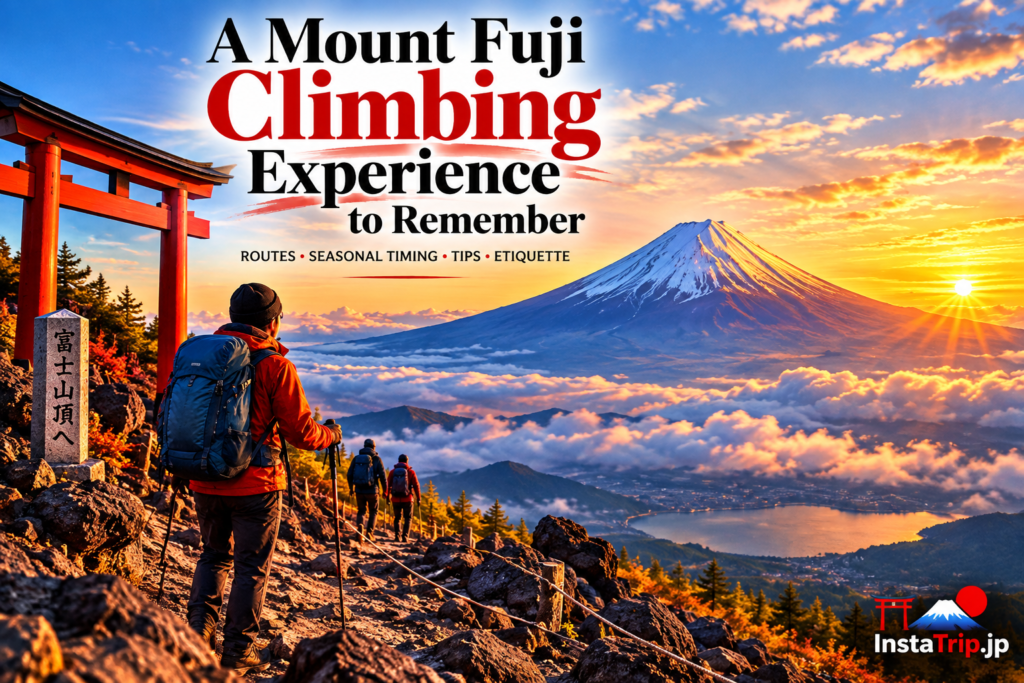
At 3,776 meters, Mount Fuji is not a mountain that reveals itself all at once. In the darkness before dawn, its volcanic slope can feel almost endless: a slow procession of headlamps, crunching gravel, cold wind, and steady breaths. Yet a Mount Fuji climbing experience is far more than a physical challenge. It is an encounter with Japan’s most recognizable peak as a living landscape of spiritual meaning, natural force, and collective determination.
For many visitors, reaching the summit is a long-held dream. The mountain’s near-perfect silhouette has inspired artists, pilgrims, poets, and travelers for centuries. Climbing it offers a more intimate perspective. You do not simply photograph Fuji from a lake or a distant Tokyo rooftop. You feel its changing weather, its severe beauty, and the quiet excitement shared by strangers walking upward through the night.
Mount Fuji Climbing 2026 at a Glance
- Mountain: 富士山 (Fujisan), 3,776 m — Japan’s highest peak.
- 2026 climbing season: 吉田ルート (Yoshida) and 須走ルート (Subashiri): July 1–September 10. 富士宮ルート (Fujinomiya), 御殿場ルート (Gotemba), and the summit crater-rim route: July 10–September 10.
- Hiking fee: ¥4,000 per climber on all four official routes in 2026.
- Restricted entry: 2:00 PM–3:00 AM for climbers without a mountain-hut reservation.
- Mountain huts: 山小屋 (yamagoya) reservations are separate from mountain-entry registration and should be booked early for busy dates.
- Sunrise: 御来光 (goraikō) is spectacular, but a daytime ascent is often safer and less exhausting.
- Current status: the 2026 climbing season has ended and the summit trails are closed. Do not attempt a normal tourist ascent outside the designated season.
Before every climb, check the Official Website for Mt. Fuji Climbing. Dates, weather, access, trail closures, registration systems, and transport can change.
Why Mount Fuji (富士山) Feels Different From Other Climbs
Mount Fuji is often described as accessible because its official climbing routes require no technical mountaineering skills in the normal summer season. That is true, but it can also be misleading. The ascent is demanding, high, cold, and exposed. Its broad volcanic terrain has little shade, and the final approach can be steep, rocky, and crowded during peak periods.

What gives the climb its distinctive atmosphere is the mountain’s place in Japanese culture. Fuji has long been revered as sacred, closely connected to the traditions of Fujisan Sengen shrines and to pilgrimage. Today’s hikers arrive with athletic goals, cameras, and carefully planned itineraries, but the old sense of ascent as a meaningful act has not disappeared. At trailheads and mountain stations, you may notice small shrines, torii gates, and the understated rituals of people beginning a journey with respect.
The summit itself is not a dramatic pointed peak. It is the rim of a vast volcanic crater. Standing there, above a sea of cloud, can feel magnificent and unexpectedly quiet, even when other climbers are nearby. The view is never guaranteed, but that uncertainty is part of Fuji’s character.
Choose Your 富士登山 Route: 吉田, 富士宮, 須走, or 御殿場
For 2026, the 吉田ルート (Yoshida) and 須走ルート (Subashiri) operated from July 1 to September 10, while 富士宮ルート (Fujinomiya), 御殿場ルート (Gotemba), and the summit crater-rim trail operated from July 10 to September 10. The official hiking fee was ¥4,000 per climber, and entry between 2:00 PM and 3:00 AM was restricted for climbers without a mountain-hut reservation. The 2026 season has now ended, and the official site lists the summit trails as closed. Outside the designated season, conditions become dramatically more dangerous and normal tourist climbing should not be attempted.
Four principal routes lead upward: Yoshida, Subashiri, Gotemba, and Fujinomiya. Each creates a different rhythm for the day or night.

Yoshida: Social, Lively, and Well Served
The Yoshida Trail, approached from the Yamanashi side, is the best-known choice and often the most practical for first-time climbers. It has the greatest number of mountain huts and facilities, plus a lively, communal atmosphere. That convenience comes with a trade-off: the route can become very crowded, especially on weekends and around the peak summer holiday period.
For some travelers, the line of lights moving up the mountain is part of the magic. For others, it can make the journey feel less solitary than expected. Starting on a weekday or choosing a less busy point in the season can make a real difference.
Fujinomiya, Subashiri, and Gotemba: Different Ways Up
The Fujinomiya Trail, on the Shizuoka side, is the shortest route in distance, though it is also steep and follows the same path for much of both ascent and descent. It suits hikers who prefer a more direct approach and are comfortable with sustained uphill terrain.
Subashiri begins lower on the mountain and includes a forested opening that offers shade and a gentler start before joining the higher slopes. Its descent features long stretches of loose volcanic scree, which can be fast but tiring on the knees. Gotemba is the longest and generally the quietest route, with wide-open volcanic landscapes and a deep sense of scale. It is best for well-prepared hikers who have time, stamina, and a preference for fewer crowds.
There is no universally best route. The right choice depends on fitness, transportation plans, tolerance for crowds, and whether mountain huts are available where and when you need them.
Mount Fuji Route Comparison
| Route | Trailhead | Ascent | Approx. climb | Best for |
|---|---|---|---|---|
| 吉田ルート (Yoshida) | 2,305 m | 6.8 km | ~6 hr | First-timers who want more huts and services |
| 富士宮ルート (Fujinomiya) | 2,400 m | 4.3 km | ~5 hr | Shorter, steeper route from Shizuoka |
| 須走ルート (Subashiri) | 2,000 m | 6.9 km | ~7 hr | Forest scenery and a quieter lower section |
| 御殿場ルート (Gotemba) | 1,440 m | 10.5 km | ~9 hr | Strong hikers who want space and fewer crowds |
These are standard route figures published by the Official Website for Mt. Fuji Climbing. Actual times depend on fitness, crowds, weather, altitude response, rest stops, and hut plans.
Mount Fuji 2026 Rules You Need to Know
- 入山料 / Hiking fee: ¥4,000 per person on all four official routes in 2026.
- Entry restriction: climbers without a 山小屋 (mountain-hut) reservation cannot enter between 2:00 PM and 3:00 AM.
- Yoshida daily cap: the 吉田ルート gate can also close when daily climbers reach 4,000.
- Registration: mountain-entry registration and payment are separate from booking a mountain hut.
- Off-season: the 2026 climbing season is over and summit trails are closed. Do not treat autumn, winter, or spring Fuji as a normal tourist hike.
These rules come from the Official Website for Mt. Fuji Climbing and the 2026 Yoshida Trail notice. Always check the official site again before your trip because access systems and dates can change from year to year.
御来光 (Goraikō): Is a Sunrise Climb Worth It?
Seeing sunrise from Mount Fuji’s summit, known as 御来光 (goraikō), is the iconic image of the climb. The horizon begins as a pale band of color, then the sun rises over distant ridges and cloud cover while the mountain’s shadow stretches dramatically across the land below. On a clear morning, it can be one of Japan’s most captivating natural spectacles.
But arriving for sunrise usually means climbing through the night or sleeping in a mountain hut before an early final ascent. Neither option is effortless. Night climbing requires navigation in darkness, colder temperatures, and careful pacing when tired. Mountain huts provide a valuable rest point, but they are simple, communal accommodations rather than private alpine retreats. Space is limited, sleep may be short, and reservations are essential during busy dates.
A daytime ascent is an excellent alternative for travelers who value visibility, a calmer pace, and a better sense of Fuji’s changing terrain. You may sacrifice the summit sunrise, but you gain daylight views and reduce the strain of hiking while sleep-deprived. The experience is not lesser. It is simply different.
Prepare for Altitude, Weather, and a Long Descent
Fitness matters, but acclimatization and pacing matter just as much. The trail begins at substantial elevation, then rises into thin air. Headache, nausea, dizziness, and unusual fatigue can signal altitude sickness. Going slowly, staying hydrated with safe Japanese tap water, eating small snacks, and pausing at mountain stations can help. If symptoms intensify, descending is the sensible choice. The summit will still be there on another visit.
Fuji’s weather can shift with startling speed. The official climbing site notes that temperature drops by roughly 0.6°C for every 100 meters of elevation gained, before wind chill is considered. A warm afternoon at the fifth station can give way to biting wind, rain, and near-freezing conditions near the top. Proper clothing is not optional. Bring layers, a waterproof outer shell, warm gloves, a hat, sturdy broken-in hiking boots, a headlamp, and enough water and food for your chosen plan. Cash is also useful for mountain huts, toilets, and refreshments, though travelers should not assume every service will operate in every condition.
The descent deserves as much respect as the climb. Loose volcanic gravel places steady pressure on ankles and knees, and fatigue can make small missteps more likely. Trekking poles can be useful, especially for hikers with sensitive knees, but good footing and patience matter more than speed. Save enough energy for the way down.
Useful Gear for Climbing Mount Fuji
Affiliate disclosure: As an Amazon Associate I earn from qualifying purchases.
- Climbing headlamps on Amazon — essential if your plan involves darkness, an early hut departure, or 御来光.
- Waterproof hiking rainwear on Amazon — Fuji is exposed and weather can deteriorate quickly.
- Trekking poles on Amazon — especially useful for controlling fatigue on long volcanic-gravel descents.
Watch: Official 富士登山 Safety Guide
This official Japanese safety video is published through the Official Website for Mt. Fuji Climbing. It explains routes, clothing, rules, and safety for 富士登山, with English subtitles available — much more useful here than a presenter-led travel vlog.
Mount Fuji Climbing FAQ
When can you climb Mount Fuji in 2026?
In 2026, the 吉田ルート and 須走ルート operated from July 1 to September 10. 富士宮ルート, 御殿場ルート, and the summit crater-rim trail operated from July 10 to September 10. The 2026 season has ended, so check official dates again before planning a future climb.
How much does it cost to climb Mount Fuji?
The official 2026 hiking fee was ¥4,000 per climber on all four routes. Mountain-hut accommodation, food, transport, toilets, and equipment are separate costs.
Which Mount Fuji route is best for beginners?
The 吉田ルート (Yoshida Trail) is often the most practical first choice because it has more mountain huts and services. That convenience also makes it the busiest route, so crowd tolerance matters.
Do you need a mountain hut to climb Mount Fuji?
A hut is not required for every daytime ascent, but in 2026 climbers without a hut reservation were restricted from entering between 2:00 PM and 3:00 AM. A hut also gives you a safer rest strategy if you are aiming for 御来光 rather than attempting an exhausting overnight push.
Can beginners climb Mount Fuji?
Many fit beginners climb Fuji during the official summer season, but it should not be treated as an easy sightseeing walk. Altitude, cold, wind, long hours, crowds, and the descent all require preparation. Turn back if conditions or your physical state deteriorate.
Can you climb Mount Fuji after September?
Not as a normal tourist hike. Outside the designated climbing season, summit trails and most facilities are closed and conditions become significantly more dangerous. Follow the official closures rather than relying on social-media reports from experienced mountaineers.
Respecting a Sacred Mountain
Mount Fuji belongs to a national park, a local community, and a spiritual landscape as much as it belongs to the people who climb it. That calls for simple, thoughtful behavior: stay on marked paths, carry out all trash, use designated facilities, and avoid treating the mountain as a backdrop for risky stunts or noisy celebration.
Respect also means being honest about your readiness. Attempting a summit dash without rest, proper clothing, or awareness of the forecast can put pressure on mountain staff and rescue services. In recent years, authorities have introduced measures intended to manage congestion and encourage safer climbing. These are not obstacles to the experience. They protect the mountain and make the journey more rewarding for everyone.
After the descent, the first warm meal, bath, or quiet view of Fuji from below often feels deeply satisfying. You may find yourself looking back at the summit with new appreciation. Its beauty no longer seems distant or decorative. It has weight, weather, texture, and memory.
A Mount Fuji climbing experience does not need perfect weather or a flawless sunrise to stay with you. Walk thoughtfully, prepare seriously, and leave room for the mountain to set its own terms. That is when Fuji becomes more than an icon of Japan – it becomes a personal place of effort, wonder, and lasting perspective.