
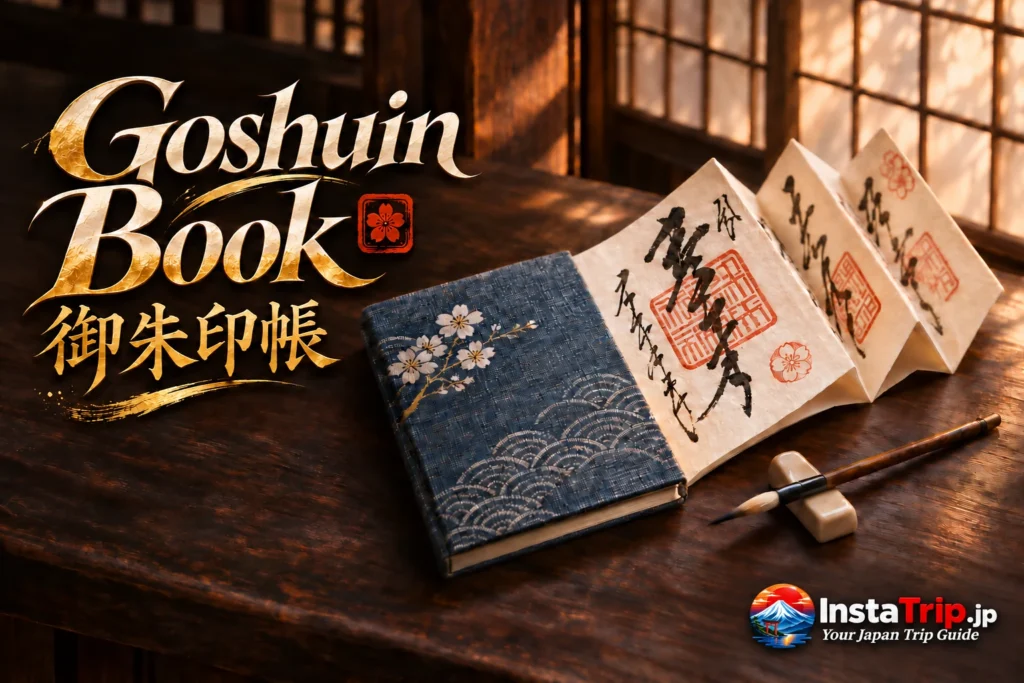
A goshuin book, or goshuinchō (御朱印帳), is a notebook for receiving goshuin (御朱印): seals and inscriptions that record a visit to a Japanese Buddhist temple (寺, tera) or Shinto shrine (神社, jinja). A page may pair red seals with black brush lettering, the date, and the name of the site or a figure worshipped there. The combination changes from one place to the next.
First visit? Pay your respects first, look for the counter marked 御朱印, then offer your book open to a clean page. If the site is handing out separate sheets, keep yours flat and add it to your book later. You can start with a sheet even if you haven’t bought a book.
What is a goshuin book, and what goes inside?
Many goshuinchō use thick accordion-fold paper; the cover might be plain cloth or carry a design connected with the place that issued it. The pages are for worship seals. At a busy site, the page you take home may be a kakioki (書き置き), a prepared loose sheet. It may be handwritten or printed, depending on the site. An inscription written directly in your book is often described as chokugaki (直書き).

One possible origin, described by the Association of Shinto Shrines, is a receipt for a handwritten Buddhist sutra that a worshipper offered at a shrine or temple. The custom gradually came to mark a visit even when no sutra was offered. This history helps explain why the sense of place matters as much as the design on the page.
Goshuin, omamori and station stamps serve different purposes
A goshuin (御朱印) records a sacred visit. An omamori (お守り) is a protective amulet carried for a wish or concern. An eki stamp (駅スタンプ) is a stamp at a railway station, best collected in a separate notebook. Leave your goshuinchō for shrine and temple seals so the attendant can see at a glance what the book is for.
How to receive a goshuin respectfully
- Visit the worship hall first. At a Shinto shrine, see our guide to shrine etiquette. A Buddhist temple follows different customs. Take your cue from posted guidance and keep paths clear for other visitors.
- Find the counter and check reception hours. Look for 御朱印 or 御朱印所. A site can be open even when its seal counter is closed. Have small yen notes and coins ready for the posted offering; amounts and payment methods depend on the site.
- Ask for the seal and follow the attendant’s instructions. Say 御朱印をお願いします (Goshuin o onegai shimasu, “A goshuin, please”). If the attendant asks for your goshuinchō, offer it open to the next appropriate page. Wait quietly and ask before photographing the counter or writing process.
- If there is only a loose sheet, accept it as offered. Ask 書き置きはありますか。 (Kakioki wa arimasu ka?, “Is a separate sheet available?”) if you do not have a book. If the counter is closed or there is a ceremony, come back at a listed time.
The Aichi Shrine Association’s etiquette guide recommends visiting the shrine before asking and remaining quiet while the attendant writes. It is good advice to carry with you even when the details vary between sites.
Two places to start a goshuin book in Tokyo
Sensō-ji (浅草寺), Asakusa: start at Yōgōdō
After visiting the main hall, look to its left as you face it from the courtyard for Yōgōdō (影向堂). Sensō-ji lists two seals there: one for its main object of worship, Shōkanzeon Bosatsu (聖観世音菩薩), and one for Daikokuten (大黒天). You can also ask for a goshuin book at this counter. The temple lists regular reception as 8:00 a.m.–4:30 p.m., with special hours on some observances. Consult the official Sensō-ji goshuin page and our Asakusa guide.

Meiji Jingū (明治神宮), near Harajuku: look for Nagadono
For goshuin, the shrine lists Nagadono (長殿), the reception area in front of Kaguraden (神楽殿), from 9:00 a.m. until the gates close. The counter location can shift, so check the signs on the day. Meiji Jingū lists a ¥500 goshuin and a ¥1,500 original book on its offerings page; treat these as an example and confirm the price of the option you request. See the current reception notice and official grounds map.
Choosing and caring for your goshuinchō
For a first book, choose a size that lies flat in your day bag and leaves room for any sheets you expect to add. A book from a shrine or temple you have already visited makes a meaningful starting point. If you have a loose sheet, take it home flat, keep it dry and attach it after checking whether the paper or book needs special care. If an attendant inserts a protective sheet over wet ink, leave it in place as directed. Acid-free mounting corners can secure loose sheets without gluing the whole page (paid links).
Can you use one goshuin book at shrines and temples?
Start with one dedicated book if you like, but ask if a particular site has its own requirements. A pilgrimage route or a temple may ask for a particular book or layout. For context on the two traditions, see Japanese temples versus shrines.
Can you get a goshuin without a book?
Yes, if the counter offers a loose sheet. You can also ask whether they have a goshuinchō if you want to start one at that site. Bring a small flat envelope to carry a separate seal away without folding it.
Map: Sensō-ji’s goshuin counter
Start at Sensō-ji’s main hall and then find the Yōgōdō counter west of it. For the shrine example, plan a separate stop near Harajuku.
Open Yōgōdō Hall in Google Maps · Directions to Meiji Jingū Kaguraden
If your first trip ends with two seals and a dozen empty pages, you have somewhere to pick up the next visit. A small book can build a surprisingly vivid record of the places where you stopped.