
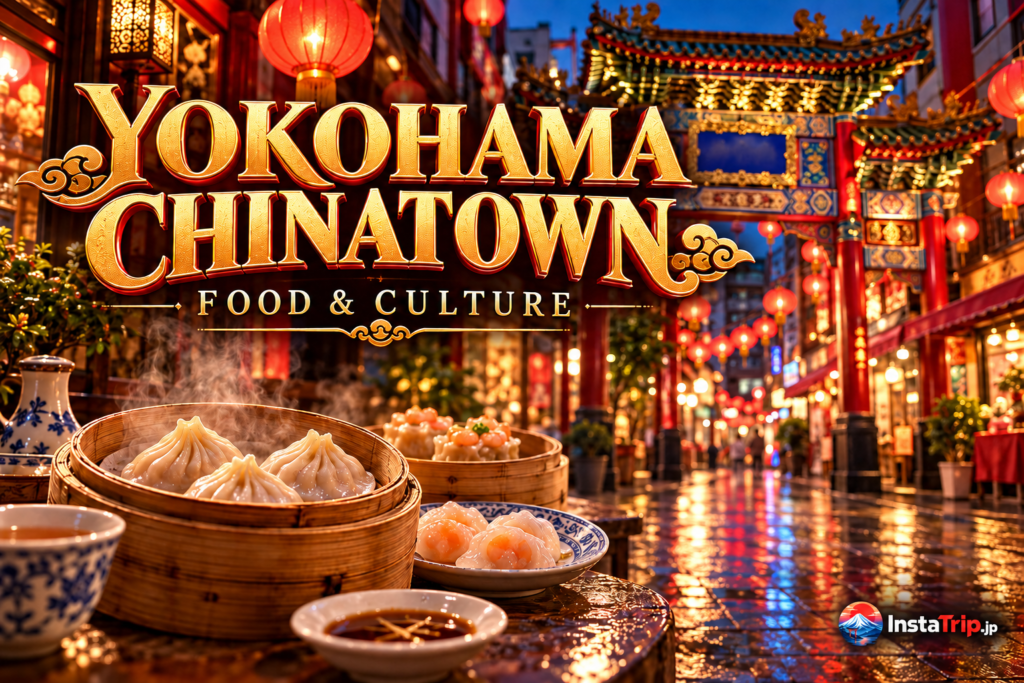
Steam drifts from bamboo baskets, sesame clings to warm pastries, and bright red gates frame streets alive with conversation. A Yokohama Chinatown food experience is not simply a chance to eat well. It is an encounter with one of Japan’s most vivid international neighborhoods, where generations of Chinese communities have shaped the flavors, rituals, and visual character of Yokohama.
Less than an hour from central Tokyo, Yokohama Chinatown feels wonderfully distinct from the capital’s fast-moving rhythm. More than 600 shops, including restaurants, snack counters, and other businesses fill its compact streets, ranging from grand banquet halls to tiny counters selling one perfect snack. The choice can be exhilarating, but the most rewarding visit comes from slowing down: notice the incense near the temple gates, look up at the colorful ornamentation, and leave room for dishes that reveal more than one culinary tradition.
Why Yokohama Chinatown Tastes Different
Yokohama’s port opened to international trade in 1859, drawing Chinese merchants, craftspeople, cooks, and laborers to the growing city. Their community developed near the waterfront, and food became one of its most enduring expressions. Chinatown expanded through periods of hardship and renewal, becoming the magnificent district visitors know today.
That history matters at the table. The cuisine here includes influences associated with regions of China, especially Cantonese cooking, while also reflecting the long relationship between Chinese food and Japanese dining culture. Some restaurants preserve highly regional specialties; others serve dishes adapted over decades for local tastes. Neither approach is automatically more “authentic.” The better question is what kind of meal you want: a refined multi-course dinner, a familiar crowd-pleaser, or a quick taste of the neighborhood’s bustling street-food energy.

The district is also more than a restaurant zone. Its ornate gates signal entry into a living cultural landscape, while Kanteibyo, a richly decorated temple dedicated to the deified historical figure Guan Yu, remains an important spiritual center for the community. A meal feels fuller when paired with a quiet moment in this captivating setting.
Start With a Walk, Not a Menu
Enter through one of Chinatown’s elaborate gates and let appetite guide the first circuit. The main streets can be lively from late morning onward, especially on weekends and holidays, but the smaller lanes often hold the more intimate surprises: a restaurant window displaying roast meats, a shop shaping dumplings by hand, or a bakery selling delicate sweets.
Do not commit to the first menu that catches your eye. Walk for 20 minutes, observe where people are eating, and decide whether the atmosphere suits your plans. Restaurants with large all-you-can-eat dim sum menus can be fun for groups and hungry travelers, while smaller establishments may offer a more focused meal. Lines are not a flawless measure of quality, but they can be useful when they move steadily and are filled with local families as well as visitors.
For the most relaxed experience, arrive on a weekday or just before the busiest lunch period. Weekends bring a dynamic, festival-like mood, but popular snack stalls and dining rooms can have long waits. Dinner is ideal if you want to settle into a shared meal rather than graze between sightseeing stops.

The Essential Flavors to Try
Dim sum and steamed dumplings
Dim sum is an inviting place to begin, particularly for first-time visitors. Look for shumai, the open-topped dumplings often filled with pork and shrimp, or translucent har gow with a sweet, springy shrimp filling. Xiao long bao, the soup-filled dumplings often associated with Shanghai, demand a little patience: lift one carefully, place it on a spoon, pierce the wrapper, and sip the hot broth before eating.
Freshness makes a meaningful difference. Dumplings are at their best when they arrive directly from the steamer, their wrappers tender and their aroma immediate. Order modestly at first. Chinatown rewards curiosity, and a meal built around too many baskets can leave no room for its other pleasures.
Roast meats, noodles, and richer plates
For a more substantial lunch or dinner, Cantonese-style roast meats offer deep savory satisfaction. Char siu pork, roast duck, and crispy-skinned pork can appear with rice, noodles, or as part of a larger table spread. The contrast of lacquered skin, succulent meat, and plain rice captures the appeal of this style of cooking: rich flavors balanced by restraint.
Noodle dishes vary enormously. A clear soup may feel restorative after a morning of walking, while stir-fried noodles bring smoke, texture, and concentrated flavor. If a menu offers a specialty tied to a city or province in China, it can be worth choosing that dish over a broad, generic selection. Focused restaurants often reveal their personality most clearly through the food they are known for.
Street snacks with real character
Sampling takeaway snacks is part of the neighborhood’s contemporary appeal. Pause to eat without blocking the street or shop entrances, and dispose of packaging responsibly. It works best as a tasting strategy, not an entire meal. Large steamed pork buns are the classic choice, soft and snowy on the outside with a fragrant, savory center. Sesame balls, fried and chewy with a sweet filling, offer a different kind of comfort.
You may also see colorful tanghulu-style fruit skewers, egg tarts, sesame pastries, and grilled skewers. These are easy to share, and sharing is the smartest way to sample more than one item. Just be aware that some snacks are designed for visual impact as much as culinary depth. A towering bun or dramatically colored dessert can be joyful, but a simple freshly made dumpling may be the more memorable bite.
Beyond the Familiar: Chinese-Japanese Food Culture
One of the district’s fascinations is that it exists within Japan while maintaining strong connections to Chinese heritage. The flavors may be new to travelers who know Chinese food primarily through restaurants in the United States, and they can also differ from food found in China itself. Recipes travel, adapt, and gain new meanings in new places.
This is especially visible in dishes that feel at home in Japan, such as ramen-inspired noodle bowls or Japanese-style interpretations of Chinese classics. They belong to the broader story of chuka, a term often used for Chinese cuisine as it has developed in Japan. Enjoy them for what they are rather than treating them as substitutes for a meal elsewhere. Yokohama Chinatown’s value lies precisely in this layered identity.
If you have dietary needs, communicate them clearly and politely before ordering. Menus may identify common allergens or vegetarian options, but broths, sauces, and dumpling fillings can contain ingredients that are not obvious. Meat-free choices are available at some restaurants, though vegetarian dining is generally easier with advance planning than with spontaneous street-food browsing.
Pair Food With the Neighborhood’s Sacred Spaces
After eating, walk toward Kanteibyo and take time to absorb its elaborate dragons, painted beams, and incense-filled atmosphere. Visitors are welcome to observe respectfully, and the temple offers a meaningful counterpoint to the lively commercial streets outside. Food, faith, migration, and trade have all helped form this neighborhood; seeing only the snack stalls misses part of its enduring story.
Nearby Masobyo, dedicated to Mazu, the goddess associated with seafarers, also reflects Yokohama’s maritime connections. These spaces are not decorative backdrops for photographs. They are places of worship, so keep voices low, follow posted guidance, and avoid obstructing those who have come to pray.
A Simple Chinatown Food Walk (横浜中華街)
Begin at Motomachi-Chūkagai Station (元町・中華街駅); the neighborhood is about a minute away. JR Ishikawachō (石川町駅) is another useful entrance, around five minutes on foot. Follow Chūkagai Ōdōri (中華街大通り), glance down the smaller lanes before choosing a restaurant, and save room for a pork bun (nikuman, 肉まん) or a small plate of dumplings. One shared dim sum meal plus a couple of carefully chosen snacks is usually more satisfying than collecting the largest portions at every stall.
- First circuit: compare menus on the main street and side lanes, then choose your anchor lunch.
- Slow stop: visit Kanteibyō (関帝廟), dedicated to Guan Yu, and nearby Masobyō (媽祖廟), associated with the sea goddess Mazu. Check their own visitor guidance before entering.
- Final taste: try Chinese tea, an egg tart, or a sesame sweet; keep takeaway eating clear of entrances and busy pedestrian flows.
For current shop choices and an English neighborhood map, use the Yokohama Chinatown Association guide. Opening days differ by shop; the city’s official food guide is useful for narrowing the choices.
Map: Yokohama Chinatown
Walk the Streets Before You Go
This 4K street walk shows the neighborhood’s actual scale and atmosphere; it is a visual preview rather than a restaurant endorsement.
Paid links
If you want to keep exploring these flavors at home, browse a dim sum cookbook or a Chinese tea set.
How to Make the Most of Your Yokohama Chinatown Food Experience
The best approach is to plan one anchor meal and leave room for two or three smaller discoveries. Begin with a light snack if you arrive hungry, choose a restaurant for dim sum or roast meats, then finish with a pastry or tea. This rhythm avoids the common mistake of filling up on oversized street food before reaching a proper dining room.
Traveling with friends makes the district especially rewarding because Chinese meals are built for sharing. Choose contrasting dishes: one steamed, one roasted or stir-fried, one vegetable dish, and perhaps a noodle or rice plate. Solo travelers can focus on a noodle shop, a dim sum lunch, or a compact set menu rather than forcing a banquet-sized order.
Come with an open appetite and a little discernment. Not every storefront has to become a stop, and the busiest lane is not always the most delicious. Follow the aromas, seek dishes made with care, and let the neighborhood unfold at its own vibrant pace. By the time you leave beneath the glowing gates, Yokohama Chinatown will feel less like a checklist stop and more like a flavorful chapter in the city’s living history.