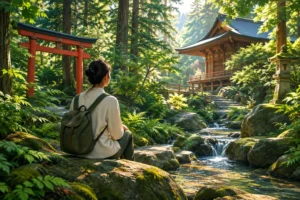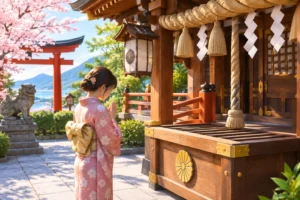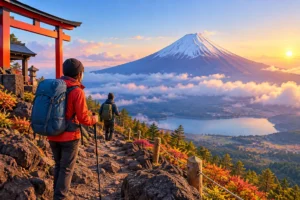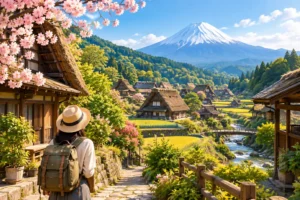

The last train leaves the city, rice fields begin to catch the afternoon light, and Japan changes pace. Rural tourism Japan is not simply about finding a quieter view or an old-fashioned village. It is an invitation to encounter the living landscapes where food, craft, spirituality, and seasonal rhythms still shape daily life – often in ways that reveal a more intimate side of the country.
For travelers who know Japan through Tokyo’s electric energy, Kyoto’s temples, or Osaka’s dynamic streets, the countryside offers a captivating contrast. Mist rises over cedar forests, small rail stations open onto mountain valleys, and a meal can tell the story of a single river, field, or fishing port. The experience is less about checking off attractions and more about paying attention.
Why rural tourism in Japan feels different
Japan’s rural regions are often described through the idea of satoyama: a traditional landscape at the edge of mountains and settlements, shaped by the relationship between people and nature. It can include terraced rice paddies, irrigation canals, woodlands, farmhouses, and shrine paths. Satoyama is not a museum piece. It is a working environment, maintained through cultivation, forestry, festivals, and community knowledge.
That distinction matters. A visit to a countryside town may bring travelers close to magnificent scenery, but its deeper value lies in understanding the human presence within it. A thatched roof needs skilled hands. A local dance survives because residents rehearse it. A bowl of pickles reflects the vegetables available in a particular climate and the preservation methods developed there over generations.

Many rural communities also face aging populations and declining numbers of residents. Thoughtful travel can support local inns, family-run restaurants, craftspeople, guides, and transportation networks. Yet respect is essential. The goal is not to treat a village as a picturesque backdrop, but to arrive with patience, spend locally, and recognize that everyday life continues beyond the visitor’s experience.
Landscapes that tell Japan’s story
Mountain villages and the architecture of endurance
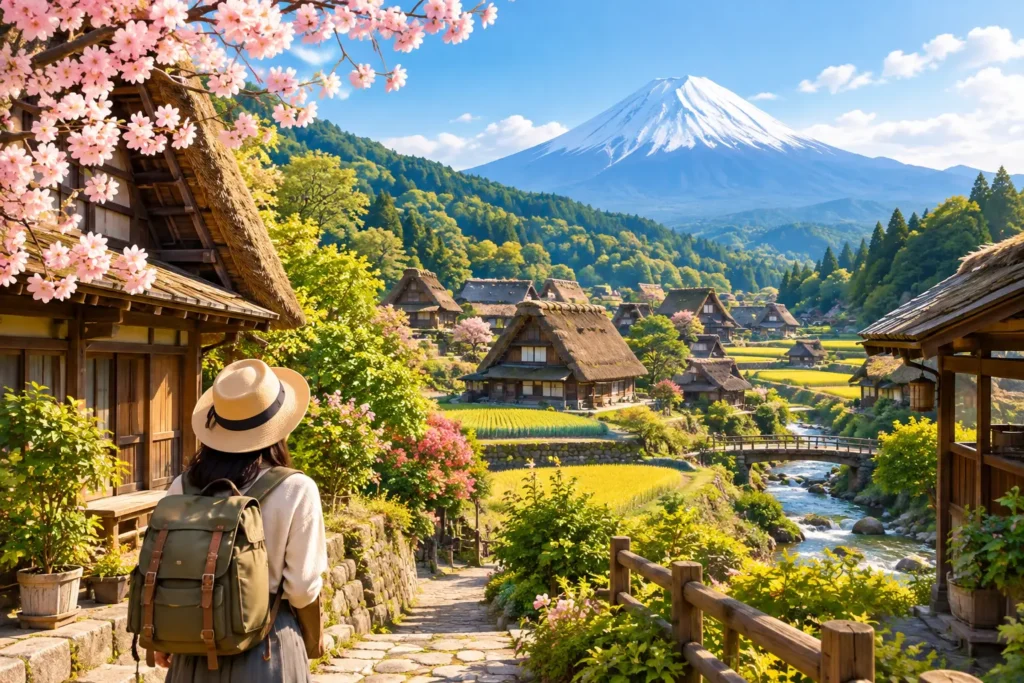
In the steep valleys of Gifu, villages such as Shirakawa-go are known for gassho-zukuri farmhouses, whose dramatically sloped thatched roofs were designed to withstand heavy snow. Their silhouette is instantly recognizable, especially in winter, but the architecture becomes even more meaningful when seen as a response to climate, family life, and agricultural work.
Further south, Tokushima’s Iya Valley offers another kind of mountain Japan. Its roads curve above deep green ravines, small settlements cling to slopes, and vine bridges evoke older ways of crossing the landscape. This is a destination for travelers who appreciate stillness, hiking, and the sensation of being far from Japan’s great urban centers. It also demands realistic planning: buses can be infrequent, driving requires confidence, and a night or two is far more rewarding than a rushed day trip.
Rice terraces, water, and changing seasons
Terraced fields are among the most memorable sights in rural Japan, but their appearance shifts radically through the year. In spring, flooded paddies reflect the sky like a mosaic of mirrors. Summer brings vivid green. Autumn turns hillsides gold, while winter can leave the contours bare and quietly dramatic.

In places such as Niigata, Nagano, and parts of the Noto Peninsula, rice-growing landscapes reveal how closely agriculture and water management are connected. Even a brief walk along narrow field paths can show the precision behind a scene that appears effortless from afar. Always remain on designated routes, however. Fields and irrigation channels are workplaces, and access can change with planting and harvest schedules.
Islands, coastlines, and fishing communities
Rural Japan is not only mountainous. Along the Seto Inland Sea, small islands and coastal towns offer a gentler rhythm shaped by ferries, tides, citrus groves, and fishing harbors. The atmosphere can feel remarkably different from the alpine interior: bright water, stone lanes, weathered boats, and small shrines facing the sea.
These places are especially rewarding for travelers interested in contemporary art, cycling, and local food, but their appeal should not obscure the realities of island life. Grocery choices may be limited, restaurants may keep irregular hours, and ferries are part of the timetable rather than an inconvenience to overcome. Slowing down is the point.
Rural stays are a cultural experience, not just accommodation
A night at a family-run ryokan, farmhouse stay, or minshuku can transform a countryside itinerary. These accommodations are often simpler than a luxury city hotel, but they offer something far more place-specific: regional cooking, warm baths, tatami rooms, and conversations with hosts who know the area’s weather, roads, and traditions.
Dinner may feature river fish, mountain vegetables, handmade soba, locally raised beef, or seafood brought in that morning. The meal is not merely a tasting menu. It is a map of the region’s resources and culinary memory. Dietary needs can usually be accommodated with advance notice, but travelers should communicate clearly when booking rather than assume substitutions will be available in remote areas.
Farm stays can be particularly meaningful when activities are offered with care. Planting rice seedlings, harvesting vegetables, making miso, or learning a local craft gives visitors a better sense of the labor behind familiar Japanese foods and objects. Participation should feel like an exchange, not a performance. Follow instructions, ask before taking close photographs, and accept that weather or farm work may change the plan.
How to travel well beyond the cities
The most memorable rural journeys leave room for uncertainty. A roadside shop may have the best apple juice you taste all trip. A temple bell may carry across a valley at dusk. A station attendant may point you toward a footpath that never appeared in your itinerary. These encounters become possible when the schedule is not packed too tightly.
At the same time, rural travel needs more preparation than a weekend in Tokyo or Kyoto. Train service can be limited, buses may run only a few times each day, and rental cars are valuable in regions with scattered sights. If driving, learn basic local road rules, expect narrow lanes, and avoid assuming that navigation apps account for seasonal closures. In snowy areas, winter tires and weather checks are not optional details.
Cash remains useful in smaller towns, even as card payments become more common across Japan. It is also wise to carry water, charge your phone before setting out, and download any essential maps or translation tools in advance. English support varies widely. A few Japanese phrases, a polite greeting, and a willingness to communicate patiently can go a long way.
Timing changes everything. Spring brings blossoms and fresh mountain greens, while summer is alive with fireworks, Bon dances, and humid evenings scented with grass and rain. Autumn is ideal for harvest flavors and luminous foliage. Winter can be extraordinarily beautiful in snow country, though it requires flexibility and suitable clothing. There is no universally best season – the right moment depends on whether you seek festivals, hiking, food, snow, or quiet.
The etiquette that protects the experience
Rural hospitality in Japan is often generous and understated. Returning that care begins with small choices: speak quietly in residential lanes, do not enter fields or private property without permission, and keep drones away unless explicit rules allow them. At shrines, temples, and community events, observe before acting. Some ceremonies welcome visitors; others are primarily for local participants.
Photography deserves special attention. Ask before photographing people, especially elders, craftspeople, and anyone at work. Never assume a beautiful farmhouse or garden is public simply because it is visible from the road. These gestures are simple, but they distinguish genuine cultural curiosity from consumption.
Buying directly from a small producer, choosing a local guide, or staying an extra night can also have more impact than chasing a long list of famous spots. Rural travel works best when visitors value presence over speed.
A slower route into Japan
The countryside does not offer one single, timeless version of Japan. It is modern and historic, resilient and vulnerable, quietly ordinary and often magnificent. You may see a farmer checking messages beside a centuries-old field, a contemporary art installation in a former school, or a festival costume preserved with extraordinary care.
That is the enduring beauty of rural travel here. Beyond the cities, Japan’s culture is not placed behind glass. It is cooked, repaired, planted, celebrated, and carried forward in daily life. Leave enough space in your journey to notice it.