
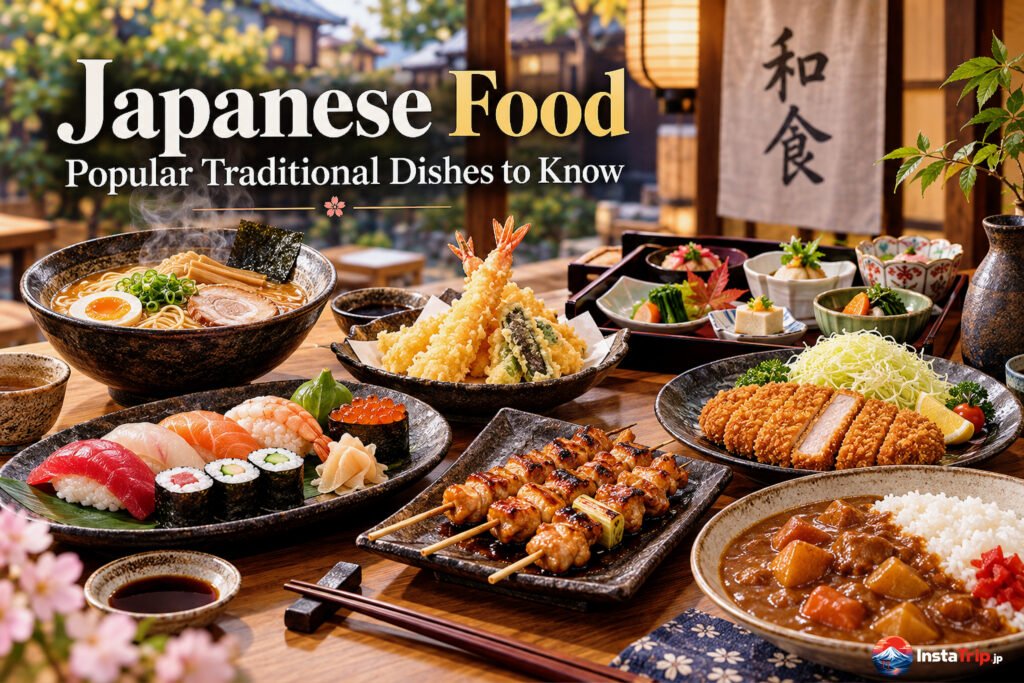
A steaming bowl of ramen beneath Shinjuku’s neon, a quiet sushi counter in Tokyo, an Osaka griddle alive with the scent of savory batter: Japan’s food culture changes dramatically with the setting. Japanese food: the most popular traditional dishes you should know are not simply a checklist of famous meals. They are a vivid introduction to regional ingredients, seasonal rhythms, craftsmanship, and the everyday pleasures that shape travel across the country.
Many dishes now recognized worldwide have evolved through local adaptation, foreign influence, and generations of Japanese cooks refining flavor and presentation. Knowing what to order makes a visit more rewarding, but understanding why a dish matters can turn an ordinary meal into one of the most memorable moments of a trip.
Japanese Food: Traditional Dishes That Define a Journey
Sushi: Japan’s celebrated expression of season and skill
Sushi is often the first dish travelers associate with Japan, yet it is far more varied than the neat pieces of fish over rice found abroad. At its center is shari, vinegared rice seasoned with remarkable precision. The seafood, vegetables, egg, or cooked toppings are important, but the balance between rice temperature, texture, acidity, and topping is what gives sushi its quiet complexity.

Nigiri, hand-pressed rice topped with seafood, is the classic counter experience. Makizushi, or rolled sushi, is more casual and widely available, while chirashizushi presents colorful ingredients scattered over a bowl of rice. In Tokyo, Edomae sushi developed around seafood from Edo Bay and preservation techniques such as marinating, curing, and simmering. That history explains why exceptional sushi is not always about raw fish alone.
At a small sushi bar, follow the chef’s lead when ordering omakase, a meal chosen by the chef. In a relaxed neighborhood restaurant or train-station shop, choose what appeals to you. Both settings are part of Japan’s sushi culture.
Ramen: A regional bowl with endless character
Ramen arrived in Japan through Chinese culinary influence, then became one of the country’s most dynamic comfort foods. Its foundation is a powerful combination of broth, noodles, tare seasoning, aromatic oil, and toppings. A bowl may look simple, but its character can shift completely from one prefecture to the next.

Tokyo-style ramen often favors a clear soy sauce broth with curly noodles. Hakata ramen from Fukuoka is known for rich, creamy tonkotsu broth made from pork bones and thin straight noodles. Sapporo is celebrated for warming miso ramen, particularly welcome during Hokkaido’s long winter, while Kitakata ramen in Fukushima is loved for its broad, springy noodles and gentle soy-based soup.
Slurping noodles is generally accepted and often practical when ramen is served hot. What matters most is eating promptly: noodles continue to soften in the broth, and a ramen bowl is designed to be enjoyed at its peak.
Tempura: Lightness achieved through discipline
Tempura can be one of Japan’s most surprising dishes because the finest versions feel delicate rather than heavy. Seafood and vegetables are coated in a thin batter and fried quickly, creating a crisp shell that preserves their flavor. Shrimp is iconic, but seasonal vegetables such as sweet potato, lotus root, shiso leaf, eggplant, and mushroom can be just as captivating.
Tempura has historical ties to cooking methods introduced from abroad in the sixteenth century, but Japanese cooks transformed it into a highly refined craft. At a dedicated tempura restaurant, pieces may arrive one at a time so they can be eaten immediately. Dip lightly in tentsuyu, the accompanying sauce, or use a small pinch of salt when offered. Too much sauce can hide the freshness and careful frying.
Soba and udon: Two noodle traditions, many local identities
Soba and udon reveal Japan’s affection for texture. Soba, made primarily from buckwheat flour, has an earthy aroma and can be served chilled with dipping sauce or warm in broth. In Nagano, where the mountain climate suits buckwheat cultivation, Shinshu soba is a regional specialty with deep roots.
Udon is thicker, softer, and satisfyingly chewy. Sanuki udon from Kagawa is famous for its firm bite and simple, clean broth, while Kyoto-style udon is often gentler in flavor. Whether hot or cold, noodle dishes are wonderfully adaptable: a quick lunch at a standing counter can be as authentic and satisfying as a leisurely meal in a traditional dining room.
The dishes that bring people together
Okonomiyaki: Osaka and Hiroshima on a plate
Okonomiyaki is often described as a savory pancake, but that translation barely captures its appeal. Its name loosely suggests cooking what you like, and the dish is built around a cabbage-rich batter cooked on a hot griddle with ingredients such as pork, seafood, noodles, and egg. It is finished with a glossy sweet-savory sauce, Japanese mayonnaise, seaweed flakes, and bonito flakes that seem to dance in the heat.
Osaka-style okonomiyaki mixes many ingredients directly into the batter. Hiroshima-style okonomiyaki builds distinct layers, commonly adding noodles and a fried egg. Neither is the single correct version. They are proud regional expressions, best enjoyed in the energetic atmosphere of a specialist restaurant where the grill becomes part of the experience.
Yakitori: The pleasure of charcoal and simplicity
Yakitori means grilled chicken, usually served in small skewers from an izakaya or dedicated grill house. The range goes well beyond chicken breast: thigh, skin, meatballs, wings, and vegetables each offer different textures and flavors. Skewers are typically seasoned with salt or tare, a glossy sweet-savory sauce.
Yakitori is one of the most approachable ways to experience Japan’s evening dining culture. Order a few skewers at a time, share plates, and enjoy the changing aroma of charcoal smoke. In busy districts such as Shinjuku or Yokohama, the compact warmth of a yakitori counter can feel like a world apart from the surrounding city lights.
Tonkatsu and curry rice: Beloved comfort, Japanese style
Tonkatsu, a breaded and deep-fried pork cutlet, belongs to yoshoku, a category of dishes shaped by Western culinary influence and adapted in Japan. It is usually served with finely shredded cabbage, rice, miso soup, and a thick fruit-forward sauce. The contrast of crisp panko coating and tender pork makes it a favorite at casual restaurants across the country.
Japanese curry rice is another yoshoku classic. Compared with many South Asian curries, it is typically thicker, milder, and gently sweet, served with rice and often paired with a tonkatsu cutlet. It may not be ancient cuisine, but it is undeniably traditional in the sense that it has become part of Japanese home cooking, school lunches, and everyday restaurant life.
The quieter foundations of Japanese dining
The famous dishes are only part of the story. A traditional meal is often anchored by rice, miso soup, pickles, and small side dishes. These modest elements reflect a principle seen throughout Japanese food culture: harmony matters. A salty pickle can brighten rice; miso soup offers warmth and depth; a seasonal vegetable dish may balance a rich main course.
Kaiseki, Japan’s multi-course seasonal cuisine, expresses this principle at its most formal. It is not defined by extravagance alone. A kaiseki meal is carefully composed around seasonality, ceramics, color, texture, and sequence. In Kyoto, where refined court and tea traditions have influenced dining for centuries, kaiseki can be a magnificent way to encounter the aesthetics of Japanese hospitality. It is also an experience that requires time, budget, and curiosity, so it is not essential for every itinerary.
For a more accessible glimpse of the same sensibility, look for teishoku, a set meal that usually combines rice, soup, a main dish, and small sides. It is one of the clearest windows into a balanced everyday Japanese meal.
How to eat with curiosity and respect
Japan rewards travelers who follow their appetite rather than chasing only the most photographed dishes. Visit a local soba shop near a temple town, try fresh seafood in a coastal market, or order the regional specialty that a small restaurant does best. A short menu is often a promising sign, not a limitation.
A few small habits help. Say itadakimasu before eating if you feel comfortable doing so, use the shared serving utensils when they are provided, and avoid planting chopsticks upright in a bowl of rice, as this resembles a funeral custom. Most importantly, be patient with unfamiliar flavors and forms of service. There is no need to perform perfect etiquette to appreciate a meal sincerely.
The most memorable Japanese dishes are often found where place, season, and appetite meet: a bowl of noodles after rain, grilled skewers shared late at night, or a simple breakfast of rice, fish, and miso soup before a day of discovery. Let each meal be a reason to slow down and notice the Japan around you.
![[商品価格に関しましては、リンクが作成された時点と現時点で情報が変更されている場合がございます。]](https://hbb.afl.rakuten.co.jp/hgb/57881e6b.2e95714f.57881e6c.2faef930/?me_id=1251187&item_id=10000361&pc=https%3A%2F%2Fthumbnail.image.rakuten.co.jp%2F%400_mall%2Fringbellshop%2Fcabinet%2Fcatalog%2Ftaiken_gift%2Fcgshoku_2.jpg%3F_ex%3D128x128&s=128x128&t=picttext "[商品価格に関しましては、リンクが作成された時点と現時点で情報が変更されている場合がございます。]")