
Shichifukujin (七福神): Japan’s Seven Lucky Gods and a Tokyo Pilgrimage
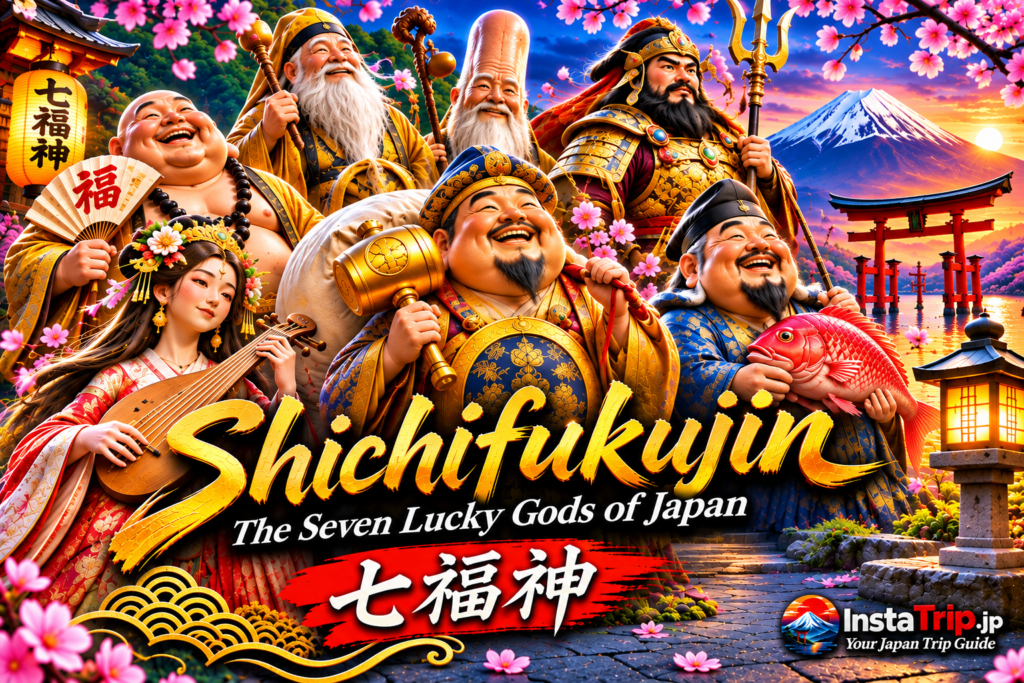
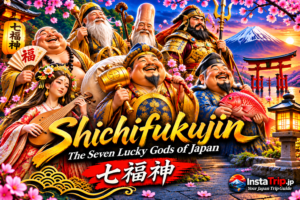
Seven deities. Seven different kinds of good fortune. One treasure boat sailing into the New Year. Few images are as joyful—or as deeply woven into everyday Japanese culture—as the Shichifukujin (七福神), the Seven Lucky Gods. You may recognize them from painted scrolls, shrine decorations, lucky charms, seasonal illustrations, or small figures arranged on a wooden ship. But there is more to the image than a wish for wealth.
Behind the smiling faces is a remarkable meeting of Japanese, Indian, and Chinese religious traditions. And in Tokyo, you can follow a real pilgrimage that turns the legend into an unforgettable walk through temples, shrines, and neighborhood streets.
At a glance: Shichifukujin 七福神 · Seven Lucky Gods · Treasure Ship 宝船 (takarabune) · Prosperity, art, resilience, happiness, and longevity · Featured pilgrimage: Shinjuku Yamanote Shichifukujin, Tokyo.
Watch the Seven Lucky Gods pilgrimage in 4K
This video follows the actual Shinjuku Yamanote Seven Lucky Gods route, with English subtitles and stops at the relevant shrines and temples. It gives readers an immediate sense of the neighborhoods before exploring the mythology.

Who are the Seven Lucky Gods of Japan?
The word Shichifukujin combines shichi (七, seven), fuku (福, good fortune), and jin (神, deity). The grouping became popular during the Muromachi period (1336–1573), eventually uniting seven figures whose roots cross different cultures and faiths. Rather than belonging to one neat mythology, they express the Japanese ability to bring different sacred traditions together.
In artistic representations the seven are sometimes shown traveling on a takarabune (宝船), the treasure ship believed in folklore to carry auspicious gifts. The image became particularly associated with New Year customs, when hopes for the coming year take visual form.
Meet all seven deities and their symbols
1. Ebisu (恵比寿 / 恵比須) — Commerce, fishing, and honest work
Usually smiling beneath his traditional cap, Ebisu holds a fishing rod and a red sea bream (tai, 鯛). He is closely associated with successful trade, a good catch, and the rewards of honest effort. Of the seven, Ebisu is generally regarded as the deity with indigenous Japanese roots. His image is especially familiar to shopkeepers and fishermen.
2. Daikokuten (大黒天) — Prosperity and the harvest
Daikokuten may stand on rice bales, carry a large sack, and raise a uchide no kozuchi (打出の小槌), the lucky mallet. The imagery connects material abundance with food and livelihood. His traditions have complex Indian Buddhist roots, subsequently adapted into Japanese religious culture.

3. Bishamonten (毘沙門天) — Courage, guardianship, and protection
Armored and watchful, Bishamonten looks very different from the smiling gods around him. His symbols often include a weapon and a small pagoda. As one of Buddhism’s Four Heavenly Kings, he evokes the power to defend what matters and to face challenges with resolve.
4. Benzaiten (弁財天) — Music, arts, and eloquence
Benzaiten is the only woman in the usual group of seven. Often pictured with a biwa (琵琶), a Japanese lute, she is associated with artistic skill, speech, wisdom, and good fortune. Her origins connect to the Indian goddess Saraswati, making her a striking symbol of Japan’s centuries-long cultural exchange with Asia.
5. Fukurokuju (福禄寿) — Happiness, status, and long life
Recognizable by a remarkably elongated head, Fukurokuju embodies three wishes suggested by his name: fortune, prosperity, and longevity. He may carry a staff and be accompanied by a crane or turtle, familiar Japanese symbols of a long life.
6. Jurōjin (寿老人) — Wisdom and longevity
Jurōjin is another venerable sage. He often holds a staff and scroll and may appear with a deer. Although Fukurokuju and Jurōjin overlap in some traditions, the usual modern grouping counts them separately. Their resemblance reminds us that the lineup of Seven Lucky Gods has changed over time.
7. Hotei (布袋) — Joy, generosity, and contentment
With a generous smile, round belly, and enormous cloth bag, Hotei is one of the easiest to recognize. He is associated with a Chinese Zen monk and celebrates openness, laughter, and an abundant spirit. Unlike the popular depiction of a laughing “Buddha,” Hotei is not the historical Buddha Shakyamuni.
Why do the Seven Lucky Gods travel on a treasure ship?
The takarabune (宝船) transforms abstract hopes into a single memorable picture: seven companions crossing water with gifts of good fortune. Traditional paintings and lucky items often place them aboard a vessel piled with treasures. It is a festive symbol rather than a promise that riches will arrive simply by owning a decoration.
In New Year customs, the treasure-ship image communicates the wish that the year ahead will be generous in more than one way: opportunity, friendship, health, creativity, and peace of mind. That is why their appeal reaches far beyond people seeking financial success.
A real Tokyo experience: Shinjuku Yamanote Seven Lucky Gods pilgrimage
Tokyo offers several Shichifukujin meguri (七福神めぐり), circuits connecting sites associated with the seven. One practical option is the Shinjuku Yamanote Seven Lucky Gods route, which can be followed throughout the year, not only during New Year. The official Shinjuku tourism guide describes a roughly 6.9 km route with about 1 hour 50 minutes of walking alone; plan a comfortable half day if you intend to stop, appreciate each sanctuary, and collect stamps.
The following seven stops are listed in the order suggested by the Shinjuku Convention & Visitors Bureau, beginning near Shinjuku and finishing at Kagurazaka. You may also reverse the route, depending on your plans.
1. Taisō-ji Temple (太宗寺) — Hotei / 布袋尊
Look for the smiling, round-bellied figure associated with generosity and contentment.
Address: 2-9-2 Shinjuku, Shinjuku City, Tokyo. View this stop on Google Maps.
2. Inari Kiō Shrine (稲荷鬼王神社) — Ebisu / 恵比寿神
Ebisu is the cheerful deity of fishing and commerce, often shown with a sea bream.
Address: 2-17-5 Kabukichō, Shinjuku City, Tokyo. View this stop on Google Maps.
3. Eifuku-ji Temple (永福寺) — Fukurokuju / 福禄寿
The long-headed sage represents happiness, good standing, and longevity.
Address: 7-11-2 Shinjuku, Shinjuku City, Tokyo. View this stop on Google Maps.
4. Itsukushima Shrine, Nuke-Benten (厳嶋神社) — Benzaiten / 弁財天
The goddess of music, eloquence, learning, and good fortune is the pilgrimage’s only female deity.
Address: 8-5 Yochōmachi, Shinjuku City, Tokyo. View this stop on Google Maps.
5. Hōzen-ji Temple (法善寺) — Jurōjin / 寿老人
A sage associated with a long life, often represented with a staff and a deer.
Address: 6-20-16 Shinjuku, Shinjuku City, Tokyo. View this stop on Google Maps.
6. Kyōō-ji Temple (経王寺) — Daikokuten / 大黒天
Find the deity of prosperity associated with rice bales and a mallet.
Address: 1-14 Haramachi, Shinjuku City, Tokyo. View this stop on Google Maps.
7. Zenkoku-ji Temple (善國寺) — Bishamonten / 毘沙門天
Finish with the guardian warrior whose traditions include protection and victory.
Address: 5-36 Kagurazaka, Shinjuku City, Tokyo. View this stop on Google Maps.
Map: where to begin the pilgrimage
The map below centers on Taisō-ji, the first stop in the suggested itinerary. For the full sequence and walking paths, use the official bilingual guide and the individual map links above.
Official seven-stop Shinjuku route, shrine details and access · Tokyo’s official bilingual pilgrimage brochure
Collecting goshuin and small deity figures
A favorite part of the experience is collecting goshuin (御朱印), calligraphic temple and shrine stamps traditionally received as a record of a visit. Some participants collect them in a goshuinchō (御朱印帳), while others use a special paper board. Small deity figurines and a miniature treasure boat may also be offered along the route.
The Shinjuku tourism association lists guidance of 9:00 a.m. to 5:00 p.m. for pilgrimage and stamp reception, with published prices of ¥400 per goshuin, ¥500 per small deity figure, and ¥1,000 for the treasure boat where available. Availability and prices can change, particularly during ceremonies or holidays. Some deity images are only opened for viewing on selected days.
Important seasonal detail: Outside January 1–7, the Benzaiten stamps and related items for Itsukushima Shrine are generally issued at Nishimuki Tenjin Shrine (西向天神社), at 6-21-1 Shinjuku. Check the current official guidance if collecting all seven.
New Year traditions and the best time to visit
Early January is the classic time for a Shichifukujin pilgrimage, as people express their hopes for the New Year. The atmosphere can feel festive, and some special displays or distributions are seasonal. However, the Shinjuku Yamanote circuit is unusual in being organized for visitors year-round, making it easier to fit into a Tokyo itinerary outside the holidays.
Spring and autumn offer pleasant temperatures for an extended city walk. Summer requires sun protection and water. In winter, start early enough to complete the route during reception hours. It is not necessary to rush: respectful pauses at each site are part of the experience.
Practical etiquette at shrines and temples
The seven-stop circuit includes both Buddhist temples and Shinto shrines, so follow the customs posted at each place instead of assuming they are identical. Step aside when others are praying, avoid photographing worshippers without permission, keep noise down, and do not touch religious objects or statues. A goshuin is a devotional memento rather than a novelty stamp to demand from busy staff.
Useful Japanese vocabulary
- 七福神 — Shichifukujin: Seven Lucky Gods.
- 七福神めぐり — Shichifukujin meguri: pilgrimage visiting the seven.
- 宝船 — Takarabune: treasure ship.
- 御朱印 — Goshuin: calligraphic shrine/temple seal.
- 御朱印帳 — Goshuinchō: notebook used for collecting goshuin.
- 打出の小槌 — Uchide no kozuchi: Daikokuten’s lucky mallet.
- 琵琶 — Biwa: traditional lute associated with Benzaiten.
- 縁起物 — Engimono: lucky or auspicious object.
Frequently asked questions
Are the Seven Lucky Gods all Shinto deities?
No. Their origins span Shinto, Buddhism, and traditions with Indian and Chinese connections. Their grouping is one of the fascinating examples of Japan’s layered religious culture.
Does a Seven Lucky Gods pilgrimage guarantee good fortune?
The pilgrimage is a cultural and devotional practice through which participants express wishes for a good year. It is not a guarantee of a particular outcome.
Can I walk the Shinjuku route outside January?
Yes. The official Shinjuku route is available year-round, although some ritual images, stamps, and special objects have limited schedules.
Do I need to visit all seven on one day?
No universal rule requires it. You can appreciate a single temple or make a longer pilgrimage as your energy and interests allow. If collecting special items, check the locations’ reception hours in advance.
Discover more of Mystical Japan
Explore how legends connect with the places people still visit in our Japanese folklore travel guide. Japan’s sacred landscapes, city shrines, and folk traditions offer many ways to understand the country’s cultural imagination.
Curious about the traditions? Explore Seven Lucky Gods figurines and browse goshuin notebooks on Amazon.com. Paid links
Sources and further reading
- Shinjuku Convention & Visitors Bureau — Seven Lucky Gods route and current visiting guidance
- Kyoto City tourism — names and origins of the seven
- JAANUS art history encyclopedia — Shichifukujin iconography
- Kokugakuin University — Encyclopedia of Shinto